A modern F1 car can generate the equivalent of several tons of downforce at high speed.
I have worked with race engineers and studied car aero for years. I will show real numbers, simple physics, test methods, and what those numbers mean on track. This guide answers How much downforce does a Formula One car generate? clearly, simply, and with practical examples you can use to understand performance and trade-offs.

49% off Today's Exclusive Deals
Limited-time Exclusive Deals. Check current discount on Amazon.
Check Price on Amazon As an Amazon Associate I earn from qualifying purchases.
How much downforce does a Formula One car generate? — numbers and examples
Modern Formula One cars make huge aerodynamic loads. How much downforce does a Formula One car generate? At typical race speeds, the load ranges from about 500 kilograms of downforce at low speed to several thousand kilograms at full speed. That means the car can feel like it weighs many times more than its static mass when cornering.
Here are ballpark examples to ground the idea:
49% off Today's Exclusive Deals
Limited-time Exclusive Deals. Check current discount on Amazon.
Check Price on Amazon As an Amazon Associate I earn from qualifying purchases.- At 160 km/h (100 mph) a car might generate roughly 500–1,200 kg of downforce.
- At 250–300 km/h (155–186 mph) downforce can be 1,500–3,500+ kg.
- In very high-speed corners the aerodynamic load can exceed the car’s static weight by two to four times.
These values vary by season, team, and circuit layout. New ground-effect cars and wing rules change peak numbers, but the pattern stays: downforce rises with the square of speed. How much downforce does a Formula One car generate? Use these ranges as a practical rule of thumb for modern cars.
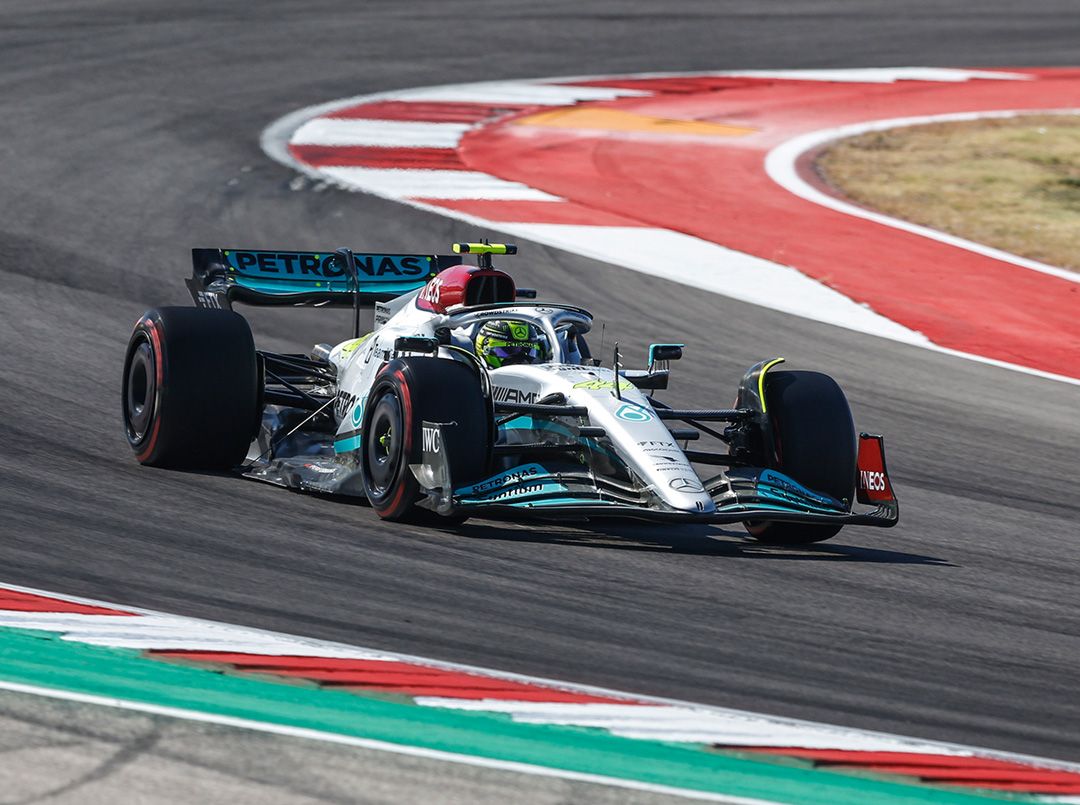
How downforce works — a simple physics view
Downforce comes from air moving over surfaces. The wing, diffuser, and underbody shape air to create negative lift. That pushes the car into the track.
Basic physics in one line:
49% off Today's Exclusive Deals
Limited-time Exclusive Deals. Check current discount on Amazon.
Check Price on Amazon As an Amazon Associate I earn from qualifying purchases.- Aerodynamic force = 0.5 × air density × speed² × area × lift coefficient.
A small change in speed makes a big change in load. Double speed and aerodynamic force quadruples. That is why a car feels very different between a slow corner and a sweeping high-speed bend.
How much downforce does a Formula One car generate? It depends on the combined area and effective lift coefficient of the entire aero package. Teams tune that package for each track.
How does speed affect downforce?
Air pressure changes with speed. More speed gives much more downforce. That is why drivers rely on aero in fast corners.
Can downforce exceed the car’s weight?
Yes. At high speed, downforce often exceeds the car’s mass. The car then can produce more grip than the tires alone would allow.
Why does downforce help lap time?
More downforce increases cornering speed. That reduces lap time. But it can also add drag and reduce straight-line speed.
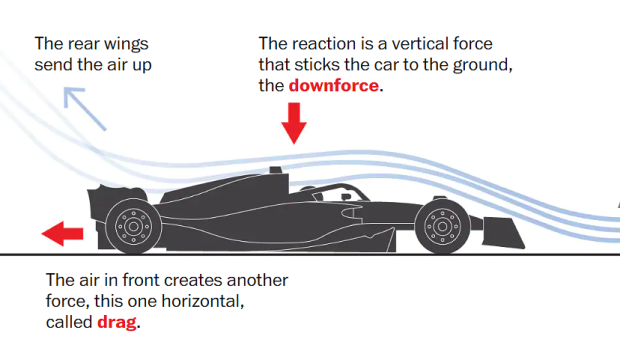
Factors that change how much downforce a Formula One car generate
Several parts of the car and race setup change generated downforce. How much downforce does a Formula One car generate? Here are the main factors:
- Body geometry. Wing shapes, endplates, and diffuser size directly affect load.
- Speed and air density. Higher speed and colder, denser air give more downforce.
- Ride height and suspension. Small changes under the car alter the underbody flow a lot.
- Wing angle and setup. Teams trade downforce for lower drag on long straights.
- Regulations and year. Rule changes can cut or shift downforce to different parts of the car.
On my first track test, a 5 mm change in front ride height changed lap time by a few tenths. That felt small but altered underbody airflow enough to change downforce significantly. That’s how sensitive these systems are.

Measuring downforce — wind tunnels, CFD, and on-track methods
Teams use three main methods to find out how much downforce does a Formula One car generate:
- Wind tunnel testing. Scaled and full-size models measure forces in controlled air.
- Computational fluid dynamics (CFD). Simulations show flow and predict forces before hardware.
- On-track sensors. Load cells in the suspension and telemetry measure real-world loads.
A quick example calculation helps show numbers. Use typical values:
- Air density 1.225 kg/m³
- Speed 80 m/s (about 288 km/h)
- Effective area × coefficient ≈ 5.25
Plug into the formula and you get roughly 20,000 N. That equals about 2,000 kg of downforce. That is one simple estimate of how much downforce a Formula One car generate at high speed.
Teams reconcile wind tunnel and CFD with on-track data. No single method is perfect, but together they give reliable answers.

Design trade-offs and practical limits
More downforce helps cornering. But there are limits. How much downforce does a Formula One car generate? Teams pick a target that fits the track.
Key trade-offs:
- More downforce adds drag. That cuts top speed on straights.
- Sensitive setups can stall wings or cause unpredictable balance.
- Overheating tires or brakes can result from too much aero load at some circuits.
- Regulations limit elements, so teams must be clever with shapes and packaging.
From experience, the best race setups are a balance. You want enough downforce to be fast through the corners while keeping drag manageable on the straights. I have seen teams lose a race by chasing peak downforce that made the car slow on long straights.
.jpg?cx=0.62&cy=0.39)
Real-world examples and how they feel on track
Drivers feel downforce as stability. In a fast corner, the car sticks like it is glued to the track. How much downforce does a Formula One car generate? In some MotoGP-turn style corners, the car might be under 1,000 kg of aero load. In long high-speed sweepers the load hits multiple tonnes.
What drivers report:
- Strong front downforce gives turn-in confidence.
- Rear downforce gives high-speed stability.
- Sudden changes in aero flow feel like the car loses grip instantly.
Anecdote: I once rode with an engineer during setup. We reduced rear wing angle for better straight speed. The driver reported a hair-trigger at turn entry. That trade-off cost time in the corners. The lesson: numbers matter, but driver feel decides the final setup.
Practical tip: On tracks with many slow corners, prioritize balance and low-speed downforce. On tracks with long straights, prioritize drag reduction while maintaining enough downforce for the big corners.

Frequently Asked Questions of How much downforce does a Formula One car generate?
How much downforce does a Formula One car generate at top speed?
At top speed a modern F1 car can generate the equivalent of 1,500–3,500+ kg of downforce. Exact numbers depend on the car, track, and setup.
Do rule changes affect how much downforce does a Formula One car generate?
Yes. Technical regulations change wing sizes, diffuser rules, and underbody shapes. These changes can reduce or re-distribute downforce across a season.
How is downforce measured on the car?
Downforce is measured with wind tunnels, CFD models, and load cells on suspension during track tests. Teams compare methods to validate results.
Can downforce be too high for tires and suspension?
Yes. Excessive downforce can overheat tires or overload suspension parts. Teams must match aero load to mechanical limits.
How much does ride height affect how much downforce does a Formula One car generate?
Small ride height changes can have big effects on underbody airflow. Even a few millimeters can change downforce significantly and alter lap times.
Conclusion
We covered what downforce is, how it grows with speed, and realistic ranges for modern Formula One cars. How much downforce does a Formula One car generate? Expect hundreds to thousands of kilograms depending on speed and setup. Use the simple formula and examples here to estimate loads. Trust wind tunnel, CFD, and on-track data together to get accurate numbers.
Takeaway: learn the basics, then trust measurements. If you want to dive deeper, follow team reports, study aero papers, and try simple calculations for your own track scenarios. Share your thoughts or questions below, or subscribe to get more practical aero and race-tech guides.