If your Jeep Wrangler engine shaking started recently, you're probably wondering if this is a five-minute fix or a four-figure repair. The honest answer? It depends on when it happens and what it feels like.
That sounds like a dodge, but it's really the fastest shortcut to a correct diagnosis.
49% off Today's Exclusive Deals
Limited-time Exclusive Deals. Check current discount on Amazon.
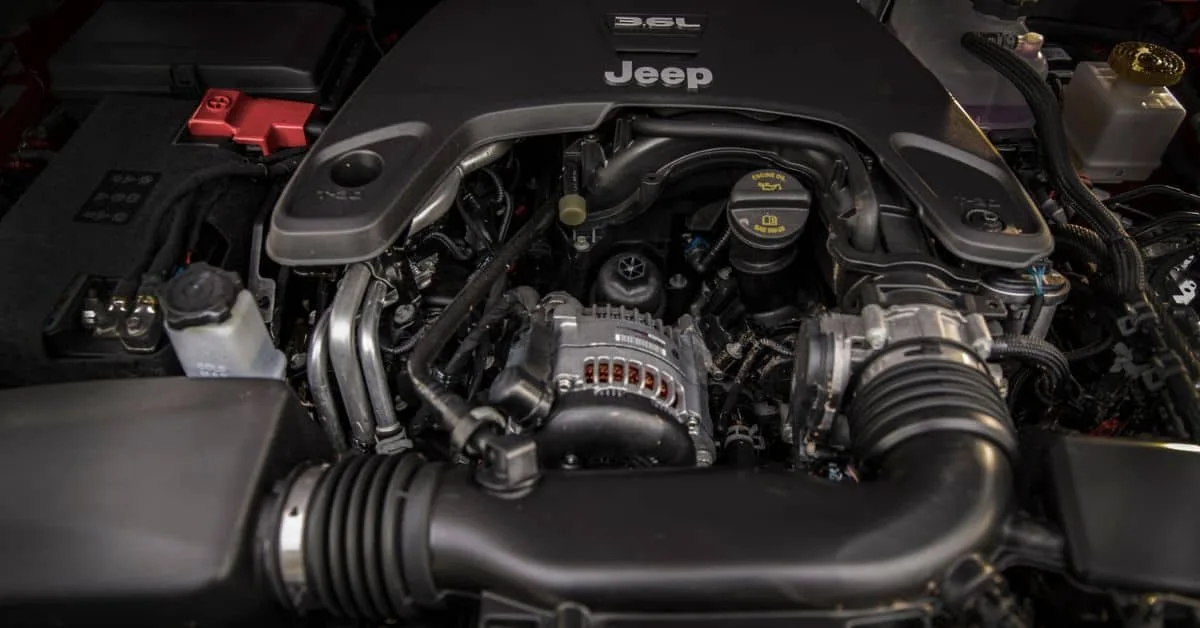
Check Price on Amazon As an Amazon Associate I earn from qualifying purchases.Manufacturer specifications for the 3.6L Pentastar V6, the engine in most Wranglers built after 2012, call for a steady idle between 650 and 800 RPM. As of 2026, that engine still powers a huge share of Wranglers on the road. A shake that settles down once you raise RPM is telling you something specific.
Let's walk through how to hear what it's saying.
49% off Today's Exclusive Deals
Limited-time Exclusive Deals. Check current discount on Amazon.
Check Price on Amazon As an Amazon Associate I earn from qualifying purchases.Image source: Bing (Web (fair-use with source credit))
See If Your Vibration Is Actually Normal
Before you spend a dime on parts, take a breath. Some Wrangler vibrations are completely normal. The 4.0L inline-six in TJ and YJ models has a natural lope at idle that catches people off guard.
That's not a failure, it's the engine's character.
Newer JL models with Auto Stop/Start also give a quick shudder when the engine restarts at a stoplight. That's the system doing its job. It's the random, persistent, or violent shakes that deserve your attention.
49% off Today's Exclusive Deals
Limited-time Exclusive Deals. Check current discount on Amazon.
Check Price on Amazon As an Amazon Associate I earn from qualifying purchases.Watch for these red flags:
- Flashing Check Engine Light or a persistent CEL
- Shake that gets worse as RPM climbs
- Knocking, ticking, or metallic sounds
- Rough idle that hunts up and down
- Vibrations you feel through the seat or steering wheel
If the shake is rhythmic and steady, you're likely dealing with a mechanical issue like worn mounts or a failing harmonic balancer. If it's random and the idle hunts, think vacuum leaks or electrical problems. Fluid leaks or a burning smell mean you should stop driving and get it properly inspected.
The Fastest Way to Narrow It Down: Know EXACTLY When It Shakes
The single most useful question you can ask is: when does it happen? That answer alone eliminates about half of the possible causes. It's the same decision tree your mechanic runs through, just faster because you know the history.
- If it shakes at idle and smooths out when you rev: look at motor mounts, vacuum leaks, a dirty throttle body, or weak fuel pressure.
- If it shakes under acceleration: suspect the ignition system first, specifically coils and spark plugs, then fuel injectors.
- If it shakes at highway speed in a rhythmic pattern: this is often driveline related, not engine related. Check driveshaft U-joints and wheel balance.
- If it shakes only on cold start: a weak battery, a slow fuel prime, or a failing temperature sensor can cause it. On JL models, also check the Auto Stop/Start system.
- If it shakes when you shut the engine off: the harmonic balancer or flexplate is a top suspect.
Run this quick test. Warm the engine up, put it in gear with your foot on the brake, and feel what changes. If the shake gets noticeably worse in gear, engine mounts are the first thing to check.
They're loaded differently in gear than in park, and that load exposes worn rubber almost immediately. If you feel a rhythmic pulse through the seat in gear, transmission trouble could be the real culprit.
The Usual Suspects, Ranked: What's Most Likely vs. What's Exotic
Here's the order of likelihood we see in aggregate owner reports and repair data. Start at the top, not at the worst-case scenario.
| Rank | Suspect | Typical Symptom | Likely Repair Cost |
|---|---|---|---|
| 1 | Ignition misfire (coils, plugs) | Rough idle, CEL flashing, worse under load | $150 – $600 |
| 2 | Engine mounts | Shake in gear, clunk when shifting | $200 – $700 |
| 3 | Harmonic balancer | Violent shake that tracks with RPM | $300 – $800 |
| 4 | Vacuum leak | Hunting idle, high fuel trims, hissing | $100 – $400 |
| 5 | Fuel system / injectors | Rough warm idle, hesitation | $200 – $900 |
Ignition misfires are the most common cause of a real engine shake. A single failing coil on the 3.6L Pentastar makes itself known immediately. Fouled spark plugs from oil carryover are also common on higher-mileage engines.
If you've noticed persistent oil consumption, that fouls plugs fast.
Engine mounts come in second. Wranglers put a lot of stress on mounts, especially if you off-road. A torn or saturated mount transfers vibration straight into the frame, then into your seat.
Transmission-related vibrations sometimes feel identical to a bad mount, especially when you're stopped in gear.

Image source: Web (Bing) / mymovierack.com (Web image (fair-use with source credit))
Harmonic balancers wear out too, especially on older TJ and JK models. A separated rubber ring makes the whole engine shake in a way that's hard to ignore. It's also a safety issue, because a destroyed balancer can throw the belt and stall you mid-drive.
A Step-by-Step Diagnostic Workflow: Codes, Fuel Trims, and Leak Tests
A reasonable DIYer can diagnose most shakes in under an hour with a solid OBD-II scanner. You don't need a $5,000 dealership tool. You need to read the data the engine is already producing.
Step 1: Pull the codes. Plug in your OBD-II scanner and read both stored codes and freeze-frame data. Look for P0300 through P0308, which indicate misfires. The freeze-frame tells you engine speed, temperature, and load at the exact moment the problem started.
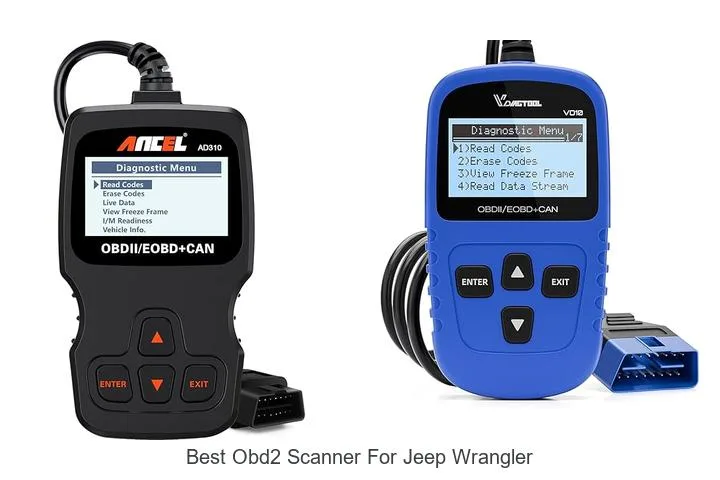
Image source: Bing (Web (fair-use with source credit))
Step 2: Watch the live misfire counter. A stored code alone only tells you which circuit failed. The live misfire graph tells you if the problem is happening right now. If one cylinder misfires steadily, swap its ignition coil with another cylinder and see if the misfire moves.
That confirms a coil failure in minutes.
Step 3: Check your fuel trims. Short-term trims that stay above +15% usually mean unmeasured air is entering the engine. That's a vacuum leak. Long-term trims above +10% can point to a dirty MAF sensor or a restricted fuel system.
Per SAE's OBD-II diagnostic standards, this data is consistent across all modern vehicles.
Step 4: Run a smoke test. Rent a smoke machine from most auto parts stores. Pump smoke into the intake manifold and watch where it escapes. It will find vacuum leaks you'd never spot by visual inspection.
Step 5: Do a compression test if the shake persists. Low compression on one cylinder means internal mechanical wear. That's a much bigger conversation than a spark plug. A coolant leak can also make the engine run warm and misfire, so check fluid levels and hoses first.
Don't Be the Person Who Guesses: 6 Worst Mistakes That Cost Money
The fastest way to turn a $200 fix into a $2,000 repair is to guess wrong and keep driving. Here are the six mistakes we see most often.
- The parts cannon approach. Throwing new plugs, coils, and injectors at a shake without reading any data. That's how people spend $800 to fix a $15 vacuum leak.
- Ignoring a flashing Check Engine Light. A flashing CEL means a severe misfire. Every mile you drive dumps raw fuel into the catalytic converter, which can cost $1,500 to replace.
- Chasing the wrong system. A highway-speed vibration is often a driveshaft, U-joint, or wheel balance issue. Rebuilding the fuel system won't cure that. If you also hear grinding at the wheels when braking, that's another sign the problem lives elsewhere.
- Skipping the ground strap check. Corroded ground straps on JL models cause phantom misfires that make no sense on paper. Clean the straps before you replace expensive sensors.
- Overlooking water damage. If you've been off-roading through deep water, pull the spark plugs and check for moisture before anything else. Water ingestion can bend connecting rods and destroy your engine.
- Buying cheap aftermarket ignition parts. Aggregate reviews show budget coils fail in months. OEM or high-quality branded parts are worth the extra money.
Also, check whether your Wrangler has open recalls related to the engine. NHTSA's vehicle recall database is free, takes two minutes, and catches things like faulty fuel pumps or sensor harness issues that weren't your fault in the first place.
Repair Costs: What You'll Really Spend Fixing a Shake
So what does this actually cost you? It depends entirely on the root cause. Here are realistic numbers from current shop rates and part pricing.
| Repair | Typical Cost Range | Notes |
|---|---|---|
| Single ignition coil replacement | $150 – $300 | Covers part and about an hour of labor |
| Full spark plug set (all six) | $200 – $450 | Rear plugs on the 3.6L take extra labor |
| Engine mounts (both) | $300 – $700 | Fluid-filled mounts cost more than solid rubber |
| Harmonic balancer | $300 – $800 | Parts range wildly by engine generation |
| Vacuum leak repair | $100 – $400 | Includes smoke test and hose replacement |
| Fuel injector replacement (one) | $250 – $500 | Multi-port injectors are pricier on newer models |
Independent shops typically charge $90 to $120 per hour. Dealerships run $130 to $180 per hour. A diagnostic check usually costs one hour of labor, and most shops apply it toward the repair if you authorize the work there.
If the shake turns out to be a transmission problem instead of an engine issue, the budget looks different. A torque converter shudder or a worn flexplate can mimic a misfire perfectly, and those repairs run toward the four-figure range.
Before you authorize anything, check for open recalls through NHTSA's free lookup tool. Some Wrangler years have known engine or fuel-system issues that the manufacturer will fix for nothing. That two-minute search can save you hundreds.
Frequently Asked Questions
Can I keep driving with a rough idle?
Short term, yes, but don't push it. If the Check Engine Light flashes, that's a severe misfire poisoning your catalytic converter. Stop driving and diagnose it.
If the light is steady, you have breathing room, but get it checked within the week.
Why does my Wrangler shake but the check engine light is off?
The engine computer only flags emissions-related faults. A worn motor mount, a failing harmonic balancer, or a tired accessory bearing won't set a code. That's why a physical inspection matters just as much as a scan.
Is the Auto Stop/Start system causing my shake?
A quick shudder on restart is normal, especially in JL Wranglers with the 2.0L turbo or 3.6L eTorque. If the shake continues more than 30 seconds after restart, that's not the system. That's an actual idle issue.
Will a tune-up fix my shaking engine?
Only if the cause is ignition-related. New spark plugs and coils solve misfire shakes. They won't fix a vacuum leak, bad mounts, or a separating balancer.
Diagnose first, replace second.
How do I know if my motor mounts are bad?
Sit in the driver's seat, put it in gear, and hold the brake. If the shake gets worse and you hear a clunk when shifting into reverse, mounts are a top suspect. A visual check for collapsed rubber or fluid leaks confirms it.