Trim differences come down to engine, features, comfort, and price levels.
I’ve studied and driven many Accords over the years, and I’ll walk you through what matters when you ask, What are the differences between Honda Accord trim levels? This guide breaks down engines, tech, comfort, safety, and real-world value. Read on to learn which trim fits your life and budget.

49% off Today's Exclusive Deals
Limited-time Exclusive Deals. Check current discount on Amazon.
Check Price on Amazon As an Amazon Associate I earn from qualifying purchases.
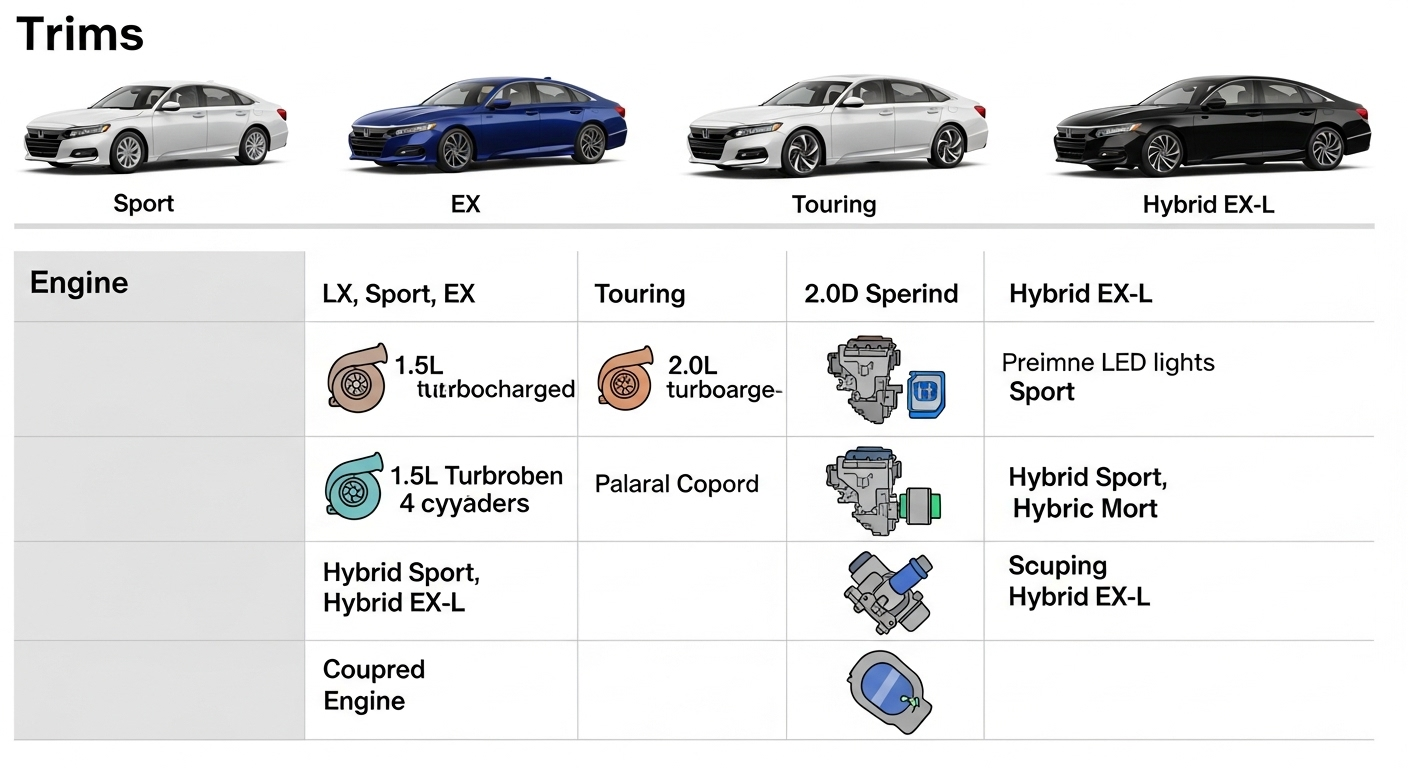
Overview of Honda Accord trim lineup
Honda sells the Accord in a tiered set of trims. Each trim stacks more features, comfort, and cost on top of the last. When buyers ask, What are the differences between Honda Accord trim levels? they usually mean how engines, infotainment, and comfort items change from base to top trim. Knowing the lineup helps you pick the right trade-off between price and features.

49% off Today's Exclusive Deals
Limited-time Exclusive Deals. Check current discount on Amazon.
Check Price on Amazon As an Amazon Associate I earn from qualifying purchases.Key areas that change across trims
When trying to answer What are the differences between Honda Accord trim levels? look at a few clear categories. These let you compare trims quickly and clearly.
- Engine and drivetrain. Different trims offer different engines, and hybrids appear on select trims.
- Transmission. Some trims use CVT, while performance-focused trims may use a multi-speed automatic.
- Comfort and interior. Seat materials, power adjustments, and climate control change by trim.
- Infotainment and connectivity. Screen size, wireless Apple CarPlay/Android Auto, and navigation move up the ladder.
- Safety and driver assist. Honda Sensing is usually standard, but extra driver aids can be reserved for higher trims.
- Wheels and styling. Wheel size and exterior accents often distinguish trims.
- Price and value. Higher trims cost more but add tangible convenience and comfort.

Trim-by-trim breakdown (typical structure)
Below is a clear, plain breakdown of common Accord trims. Exact equipment can vary by model year and market. Use this as a strong starting point when comparing. What are the differences between Honda Accord trim levels? This section shows the typical gap from base to top.
-
LX (base)
Deal49% off Today's Exclusive Deals
Limited-time Exclusive Deals. Check current discount on Amazon.
Check Price on Amazon As an Amazon Associate I earn from qualifying purchases.- Engine and drive: Entry-level engine, efficient four-cylinder, CVT transmission.
- Features: Basic infotainment, cloth seats, manual adjustments in some years.
- Who it’s for: Buyers who want a reliable sedan at the lowest price.
-
Sport / Sport Package
- Engine and drive: Sportier tuning, sometimes larger wheels and firmer suspension.
- Features: Upgraded styling, sport seats, larger wheels, paddle shifters sometimes.
- Who it’s for: Drivers who want a more engaging look and feel without huge cost.
-
EX / EX-L (mid)
- Engine and drive: Often the same engine as LX but with more options available.
- Features: Power seats, heated fronts, better audio, leather on EX-L, more tech.
- Who it’s for: Families and commuters who want comfort and extra convenience.
-
Touring / Touring 2.0T (top)
- Engine and drive: Highest available engine option or hybrid top spec.
- Features: Premium audio, leather everywhere, navigation, advanced assist features.
- Who it’s for: Buyers who want near-luxury features and the best performance.
-
Hybrid trims
- Engine and drive: Hybrid system pairing gas engine with electric motors for higher MPG.
- Features: Often mirrors higher gas trims in comfort and tech but adds eco-focused displays.
- Who it’s for: Drivers focused on fuel savings and smooth city driving.

Performance and fuel economy differences
Engines and systems define much of the difference. What are the differences between Honda Accord trim levels? They often come down to power vs efficiency.
- Base trims favor fuel economy and low cost.
- Mid trims add small power or tuning changes for a livelier feel.
- Top trims may offer a larger or turbocharged engine for more performance.
- Hybrid trims swap power delivery for higher MPG and quieter operation.
From my test drives, lower trims feel lighter and more economical. Higher trims feel firmer and more planted due to suspension tuning and bigger wheels. Hybrids return clearly better city MPG in real use.

Interior, comfort, and tech gaps
Comfort levels rise quickly as you move up. What are the differences between Honda Accord trim levels? Interior materials and tech make a big part of that gap.
- Seat materials: Cloth on base, leather or leatherette on mid and top trims.
- Adjustability: Manual seats on base; 8- or 12-way power seats on higher trims.
- Climate: Single-zone vs dual-zone automatic climate control on higher trims.
- Infotainment: Larger screens, wireless smartphone integration, and premium audio at the top.
- Convenience: Remote start, wireless charging, and hands-free trunk release often appear on higher trims.
I once chose a mid-level trim because heated seats and a better sound system made a long commute much more pleasant. Small comforts matter more than you expect.

Safety features and driver assistance
Honda puts core safety tech in most Accords, but advanced tools often appear on higher trims. When you ask, What are the differences between Honda Accord trim levels? safety equipment is a crucial area to examine.
- Standard safety suite: Most Accords include adaptive cruise, lane keep, collision mitigation by default.
- Upgrades: Blind-spot monitoring, rear cross-traffic alert, and parking sensors can be trim-dependent.
- Comfort vs safety: Higher trims sometimes add driver aids that reduce stress on long drives.
Always check the exact safety list for the model year. Newer Accords may add features across the lineup or change packages.
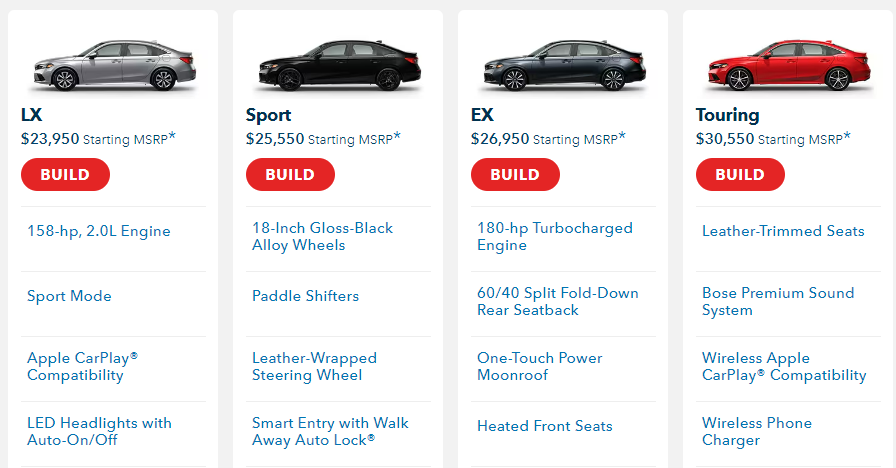
Pricing, value, and resale considerations
Price climbs with added features. What are the differences between Honda Accord trim levels? They reflect both sticker price and long-term value.
- Base trims offer the lowest purchase price and strong resale due to Honda reliability.
- Mid trims usually hit the sweet spot for value, adding useful features without huge premiums.
- Top trims cost more but can hold value if buyers want luxury-like items.
- Hybrids cost more up front but save on fuel and may have better long-term cost of ownership.
When deciding, weigh what you will actually use. You may pay for options you never use.
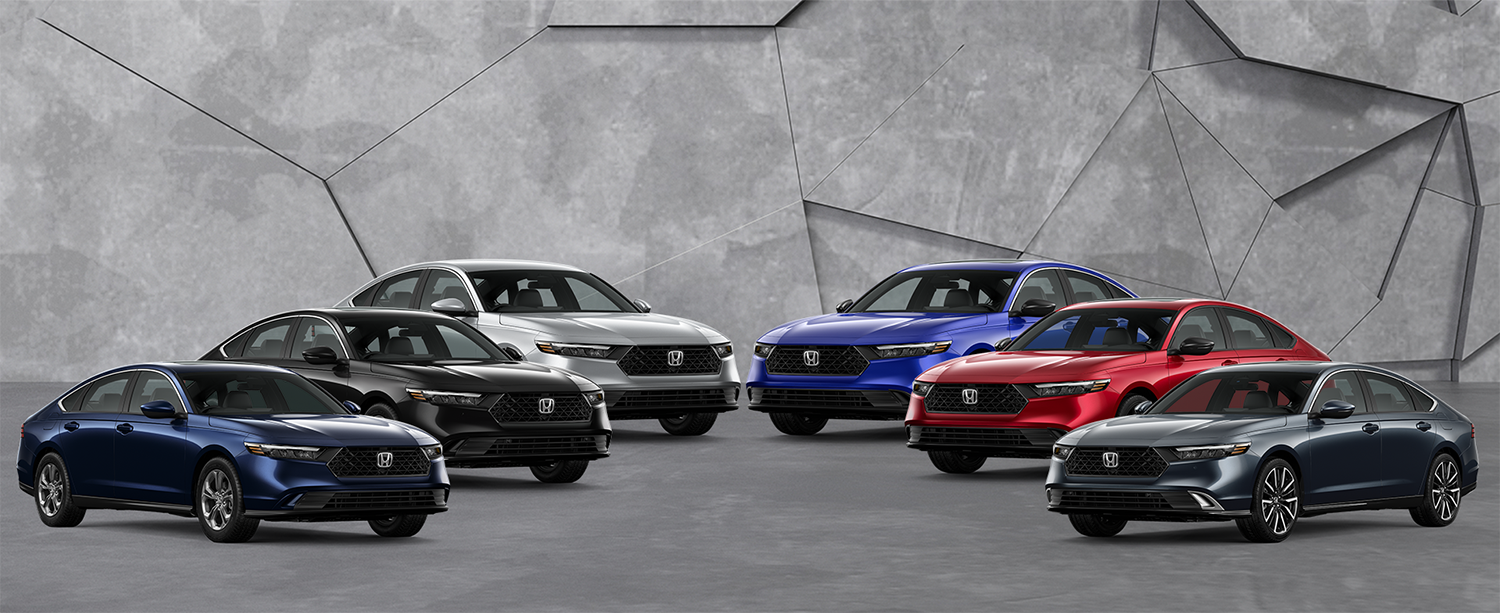
How to choose the right trim for you
Answering What are the differences between Honda Accord trim levels? is easier when you know your priorities. Use this checklist.
- Decide your budget and max monthly payment.
- Choose priorities: fuel economy, performance, luxury, tech.
- List must-have features, then find the lowest trim that includes them.
- Test drive two trims back-to-back to feel the difference in driving and comfort.
- Factor insurance and fuel into your total ownership cost.
I recommend starting with a mid-level trim on test drives. It shows whether you truly need the top options.

Common user questions (PAA-style)
Q: Which trim is best for fuel economy?
A: Typically the hybrid trim or the base 1.5L turbo with CVT offers the best MPG. Hybrids lead in city driving.
Q: Do higher trims improve handling?
A: Yes, higher trims may add stiffer suspension, larger wheels, and better brakes that improve handling. The differences are noticeable on twisty roads.
Q: Is Honda Sensing standard across trims?
A: In recent model years, Honda Sensing is standard on most trims. Check the specific year to confirm.
Frequently Asked Questions of What are the differences between Honda Accord trim levels?
What trim has the most power?
Top-level performance trims or the turbocharged 2.0L option usually deliver the most power. Hybrid trims focus more on efficiency than peak horsepower.
Are hybrid trims more expensive to maintain?
Hybrids can have different maintenance items, but overall maintenance costs are often similar. Fuel savings usually offset any added hybrid-specific maintenance over time.
Does the base trim include modern infotainment?
Base trims include a functional infotainment system with smartphone integration in recent models. Top trims add larger screens and premium audio.
Which trim offers the best value?
Mid-level trims often offer the best balance of features and price. They include practical comforts without the premium cost of top trims.
Can I add features to a lower trim later?
Some features can be added aftermarket, such as premium audio or floor mats, but items like built-in navigation, seat heating, or AWD are harder to retrofit. Choosing the right trim at purchase is usually simpler.
Conclusion
Trim levels change the Accord’s engine, comfort, tech, and price. Compare what you need against what each trim gives. Test drive, check fuel and insurance costs, and pick the trim that fits your daily life and budget. Take action: make a short list of must-haves, try two trims this weekend, and leave a comment about which trim you chose.