Camry trims differ by engine, features, interior comfort, safety tech, and price.
I’ve spent years researching and test-driving compact sedans, and I write this guide to explain clearly what separates each Toyota Camry trim. If you’re asking What are the differences between Toyota Camry trim levels? you’ll find easy-to-read comparisons, real-world advice, and buying tips to match a trim to your needs. Read on to learn the practical differences, ownership realities, and which Camry trim fits your lifestyle.

49% off Today's Exclusive Deals
Limited-time Exclusive Deals. Check current discount on Amazon.
Check Price on Amazon As an Amazon Associate I earn from qualifying purchases.
Overview of the 2024–2026 Toyota Camry trim lineup
Toyota offers multiple Camry trims to suit buyers who want thrift, comfort, sport, or efficiency. The main non-hybrid trims are LE, SE, XLE, XSE, and TRD. Hybrid models are available as Hybrid LE, Hybrid SE, and Hybrid XLE. Higher trims add luxury or sport touches, while TRD focuses on performance upgrades.
What are the differences between Toyota Camry trim levels? At a glance, differences include engine options, suspension tuning, interior materials, tech bundles, and wheel designs. Trim differences also change fuel economy and resale value. Knowing the lineup helps you decide which trade-offs matter most.
49% off Today's Exclusive Deals
Limited-time Exclusive Deals. Check current discount on Amazon.
Check Price on Amazon As an Amazon Associate I earn from qualifying purchases.
Engine, performance, and fuel economy differences
Engines vary by trim and influence performance and MPG. Most base trims use a 2.5-liter 4-cylinder with about 203–206 horsepower. Mid and higher trims or optional packages can feature a 3.5-liter V6 with roughly 301 horsepower. TRD uses sport-tuned suspension and specific exhaust and intake tweaks for stronger throttle feel and sharper handling.
Hybrid trims pair a 2.5-liter engine with electric motors to deliver higher MPG and smoother low-speed torque. Typical combined fuel economy for hybrids is in the mid-40s MPG, while 2.5L non-hybrid trims often achieve high-30s on the highway. V6 trims sacrifice MPG for straight-line power and a more refined high-speed feel.
What are the differences between Toyota Camry trim levels? Fuel economy and throttle response are the largest performance-based variations. If you commute long distances, the hybrid trims save fuel. If you want spirited acceleration, the V6 or TRD are better choices.
49% off Today's Exclusive Deals
Limited-time Exclusive Deals. Check current discount on Amazon.
Check Price on Amazon As an Amazon Associate I earn from qualifying purchases.
Interior features, comfort, and material differences
Lower trims focus on value while higher trims emphasize luxury. The LE includes cloth seats, a basic infotainment screen, and manual adjustments. SE adds sport seats, a sportier steering wheel, and slightly upgraded trim. XLE and XSE upgrade to leather or synthetic leather, larger displays, and more power adjustments for front seats.
Higher trims include features such as heated and ventilated front seats, premium audio systems, panoramic sunroofs, and ambient lighting. Cargo space is similar across trims, but higher trims add sound deadening for a quieter cabin. Trim-specific details, like contrast stitching on XSE or red accents on TRD, change the vibe significantly.
What are the differences between Toyota Camry trim levels? Interior comfort and convenience options are among the most visible and felt differences when you drive daily. Choosing a trim decides whether your Camry feels like a basic commuter or a near-luxury sedan.

Safety, infotainment, and driver-assist differences
Toyota includes Toyota Safety Sense on almost all Camry trims, which bundles lane-keeping assist, adaptive cruise control, and automatic emergency braking. Higher trims add driver-assist refinements, such as blind-spot monitoring, rear cross-traffic alert, and parking assist features.
Infotainment grows larger and more capable up the trim ladder. Base trims have a functional touchscreen with smartphone integration. Mid and top trims offer larger displays, navigation, wireless smartphone charging, and premium audio systems. Software features and screen responsiveness tend to improve in higher trims.
What are the differences between Toyota Camry trim levels? Safety hardware is mostly consistent, but convenience and premium safety options increase with trim level. If advanced comfort tech matters, target XLE/XSE or the Hybrid XLE for the richest package.
Pricing, incentives, and value differences
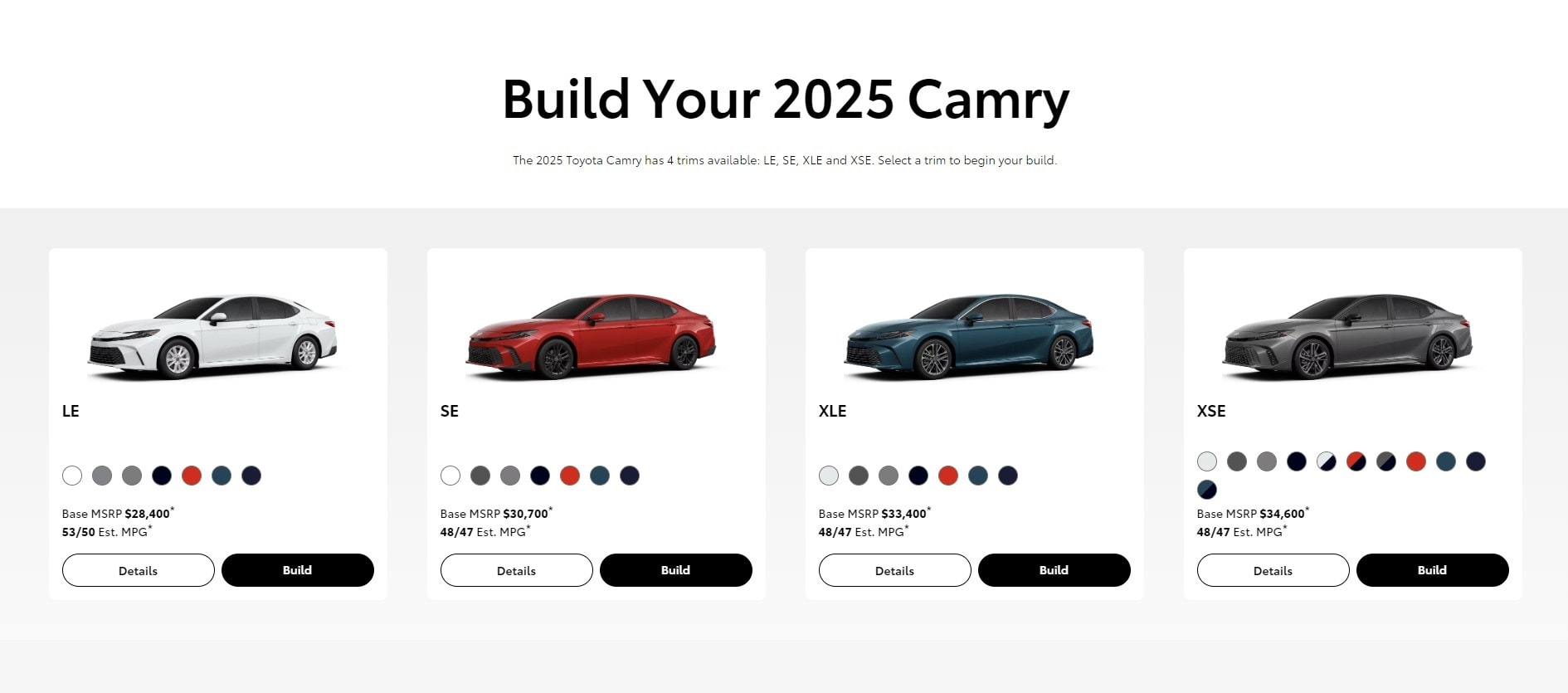
MSRP differences can be substantial between base and top trims. The LE starts as the most affordable, while XLE/XSE and the V6 or TRD options push the price higher. Hybrid trims often cost more upfront than the comparable gas model but can offset cost through fuel savings.
Resale value is strong across Camry trims due to Toyota’s reputation. However, high-demand features like leather, navigation, and hybrid drivetrains can preserve value better. Certified Pre-Owned warranties and dealer incentives vary, so compare total ownership cost, not just MSRP.
What are the differences between Toyota Camry trim levels? Price moves reflect added features and performance. Decide early which features you need to avoid paying for unwanted upgrades.

Which trim fits your needs — practical buyer profiles
Choose the trim that matches your priorities and budget. Consider these profiles:
- Budget-focused commuter
- Choose: LE or Hybrid LE
- Why: Low sticker, strong MPG, essential safety tech.
- Sporty daily driver
- Choose: SE or TRD
- Why: Sport-tuned suspension, sharper styling, stronger engine feel.
- Luxury-minded buyer
- Choose: XLE or Hybrid XLE
- Why: Leather seating, advanced tech, quieter cabin.
- Balanced family car
- Choose: XSE or Hybrid SE
- Why: Mix of handling, comfort, and fuel savings.
From my experience test-driving multiple Camry trims, buyers often undervalue test-driving the exact trim they plan to buy. A small change like a sunroof or upgraded seats can shift your daily comfort. Try both hybrid and gas versions to feel the difference in throttle and quietness.
What are the differences between Toyota Camry trim levels? Match the trim to daily usage: commute, family driving, or spirited weekends.
Ownership costs, reliability, and long-term considerations
Toyota Camry is known for reliability across trims. Routine maintenance costs are moderate, and parts availability is strong. Hybrid trims may have higher initial maintenance costs for battery-related components in the long run, but many show excellent longevity with proper care.
Insurance and tires differ by trim due to engine size and wheel options. TRD or V6 models may cost more to insure and require higher-grade tires. Check fuel savings versus extra cost if choosing a hybrid; high-mileage drivers recoup the premium faster.
What are the differences between Toyota Camry trim levels? Long-term costs hinge on engine choice and added tech. Consider expected mileage, insurance, and the local climate before choosing trim-specific options.

Frequently Asked Questions of What are the differences between Toyota Camry trim levels?
What main engines are available across Camry trims?
Most trims use a 2.5-liter four-cylinder. Higher trims or options include a 3.5-liter V6, and several trims offer a hybrid powertrain that pairs a 2.5-liter engine with electric motors.
How much does a TRD trim change the driving experience?
TRD adds sport-tuned suspension, unique styling, and performance-focused brakes and tires. It feels firmer and more engaging than SE or LE, at the cost of a firmer ride and slightly lower fuel economy.
Are hybrid trims worth the extra cost?
If you drive many highway miles or have a long daily commute, hybrids typically save money on fuel over time. If annual mileage is low, the upfront premium may not pay back quickly.
Do top trims include all safety features?
Most active safety features come standard across trims through Toyota Safety Sense, but higher trims add blind-spot monitors, parking sensors, and driver-assist convenience features. Always check the specific trim’s standard and optional equipment list.
Is the V6 still available and who should buy it?
Yes, the V6 is offered on select non-hybrid trims or as an option. Buyers who prioritize acceleration and towing capacity should consider the V6, while efficiency-focused buyers should choose a hybrid or 4-cylinder.
How does resale value vary by trim?
Resale value is generally strong across the Camry lineup, but hybrids and well-equipped trims can hold value slightly better. Condition, mileage, and market demand for fuel-efficient vehicles also affect resale.
Conclusion
Choosing the right Camry trim means weighing engine type, comfort features, tech, safety, and total cost of ownership. Track your needs: commute length, driving style, and budget to pick the best fit. Test drive trims you shortlist, compare real-world MPG, and factor long-term costs before you buy.
Take action: test drive at least two trims, check dealer offers, and ask for a detailed equipment list. Share your priorities in the comments or subscribe for more buying guides and hands-on tips.