Jeep Wrangler steering wheel shaking isn't just a nuisance. It's the Jeep's suspension or steering system telling you something has worn out or loosened up. If you've felt a vibration at highway speed, a shimmy when you brake, or a violent wobble after a pothole, you're in the right place.
Manufacturer specifications indicate that the track bar bolts on most Wranglers torque to 125 to 150 ft-lbs. As of 2026, the most common shake triggers are unbalanced tires, loose front-end linkage, and brake rotor runout. Matching the symptom to the right system is the fastest way to a safe, durable fix.

49% off Today's Exclusive Deals
Limited-time Exclusive Deals. Check current discount on Amazon.
Check Price on Amazon As an Amazon Associate I earn from qualifying purchases.Quick Answer
Match the shake to its trigger. Vibration at 55, 70 mph points to tires. Shaking on braking points to rotors or hubs.
A bump-triggered wobble points to front-end linkage. Fix the loose mechanical part first. A new steering damper only hides the problem.
Why Your Jeep Wrangler Steering Wheel Shakes (and Why It Will Get Worse)
Your Wrangler rides a solid front axle. Both wheels are tied together, and the steering linkage is a chain of parts: the drag link, tie rod, track bar, and steering damper. Each of those parts uses bushings or ball joints.
49% off Today's Exclusive Deals
Limited-time Exclusive Deals. Check current discount on Amazon.
Check Price on Amazon As an Amazon Associate I earn from qualifying purchases.When one wears out, the axle can move side to side, and that motion hits the steering wheel in your hands.
A lot of drivers think the steering stabilizer is the fix. It's not. The stabilizer just masks the vibration, like a pillow over a fire alarm.
The actual problem is mechanical play somewhere in the linkage.
It also gets worse, quickly. A loose track bar bolt hammering against its mount can wallow out the hole, turning a simple rebush into a welding repair. The cost jumps from $50 to $400 for that alone.
49% off Today's Exclusive Deals
Limited-time Exclusive Deals. Check current discount on Amazon.
Check Price on Amazon As an Amazon Associate I earn from qualifying purchases.The same goes for worn ball joints, which flatten their sockets and spread play to neighboring joints.
Catching it early also protects your brake system. The wobble puts stress on the wheel bearings and brake pads. Once those start wearing unevenly, you end up with the same kind of trouble as worn brake components.
On a solid axle, that trouble shows up as even more wheel shake.
The 3-Minute Self-Diagnosis: Which Type of Shake Do You Have?
Before you buy anything, answer one question: when exactly does it shake? The trigger eliminates half the possible causes. Use the table below to find your symptom lane.
| Trigger | Likely cause | Character of the shake |
|---|---|---|
| Steady at 55–70 mph | Tire balance, out-of-round tire, mud in wheel | Steering wheel vibration, no pedal pulse |
| Only while braking | Rotor runout, loose wheel bearing | Shake in the wheel and brake pedal together |
| After a bump, then persists | Track bar, tie rod ends, ball joints | Violent side-to-side oscillation |
Then follow the matching path.
- Shakes at speed? Start with tire balance and wheel inspection.
- Shakes on braking? Go straight to rotors, hubs, and bearings.
- Shakes after hitting a bump? Check the track bar and steering linkage.
This step is where owners usually ignore the process. Instead, they replace the steering damper, enjoy a day of smooth driving, and then watch the shake return. The damper hides the symptom.
It doesn't fix the worn part. The three-minute match-up points to the actual failure before any money changes hands.
Speed Vibration at 55–70 MPH? Check Tires, Wheels, and Balance
A steady vibration that shows up around 55 mph and stays until 70 is a tire or wheel issue. The cause is usually a lost wheel weight, a tire that's gone out of round, or mud stuck inside the rim.
Here's a quick way to narrow it down. If the shaking is in the steering wheel, it's the front tires. If it's in the seat, think rear tires.
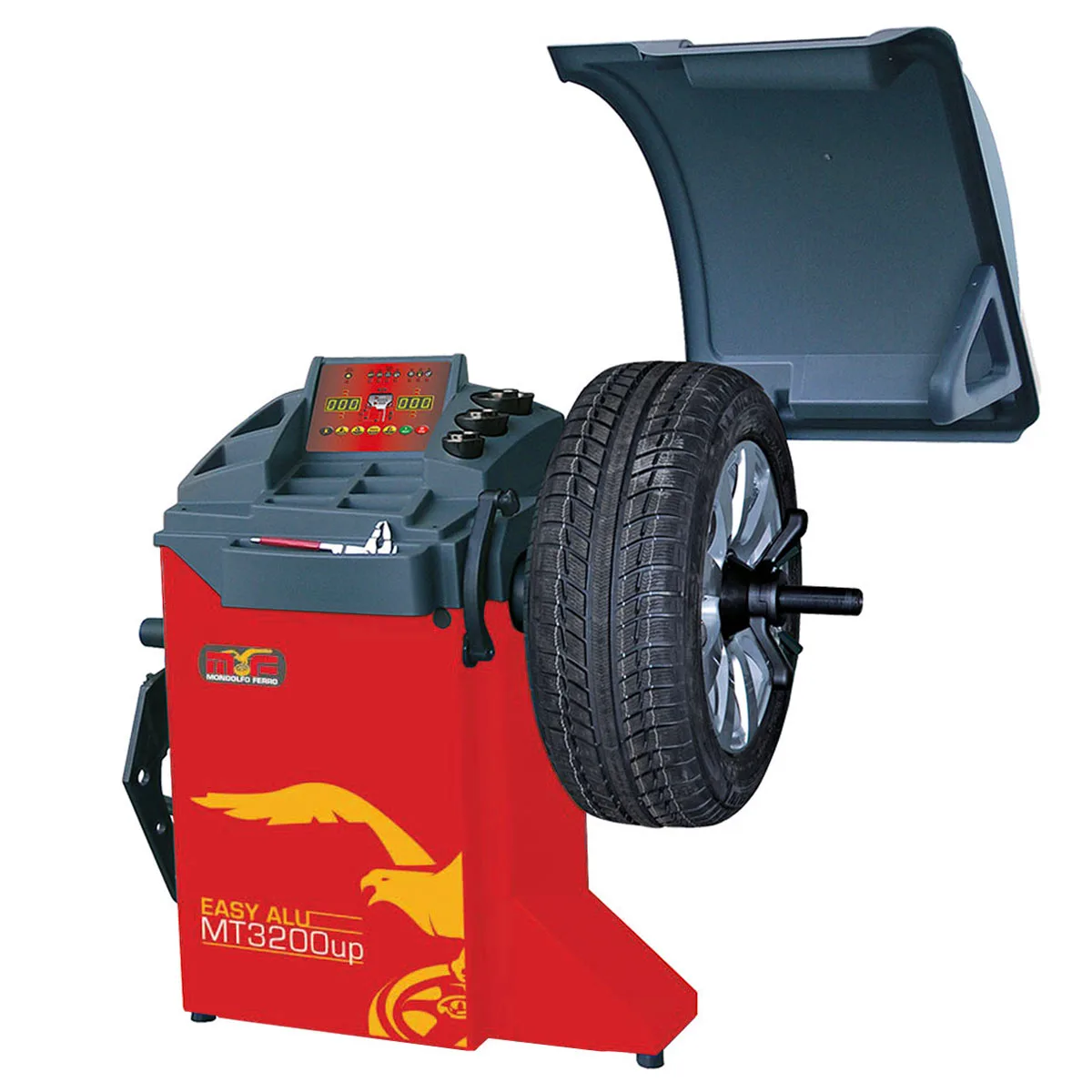
Image source: Bing (Web (fair-use with source credit))
A spin balancer tells a tire tech exactly where to mount new weights. It costs $15 to $25 per tire and takes about an hour. Before you pay, look inside the rims for compacted mud.
Off-road play is famous for packing mud behind the spokes, and dried mud throws a tire out of balance just like a lost weight.
Cold weather causes its own version, too. Tires flat-spot overnight from sitting on a hard surface. The first few miles feel like a rhythmic thump until the rubber warms up.
That's normal. Rebalancing won't fix it, and warming up the tires will.
If a tire is actually out of round, you'll feel a steady bump every revolution, and no amount of balancing will help. The repair is replacing the tire or having the shop confirm it with a runout gauge. For tire safety specs and recall information, the NHTSA website is the definitive source.
Shaking When You Brake? Look at Rotors, Hubs, and Bearings
If the shake only happens when the brake pedal goes down, don't touch the tires. Your problem is likely rotor runout or a loose wheel bearing.
Braking clamps the pads hard against the rotors. If a rotor has a high spot, the pads hit that bump every rotation, sending a pulse through the steering wheel and brake pedal. The fix is resurfacing or replacing the rotors, plus fresh pads if they're worn.
Do a quick check before ordering parts. Jack up the wobbling corner and grab the tire at 12 and 6 o'clock. Push and pull hard.
Movement means the wheel bearing is worn. Grab at 9 and 3 o'clock. Play there points to the tie rod or steering linkage.
Rotor runout also comes from something simple: over-tightened lug nuts. A shop that zips your wheels on with an impact wrench can warp a rotor. Your lug nuts should be torqued to about 95 ft-lbs for most Wrangler trims, never just yanked tight.
If you hear grinding or a deep growl along with the shake, that's a different level of urgency. Metal-to-metal contact means the pads are gone and the rotor is being scored. That's on the same severity spectrum as a failing brake system, and it deserves immediate attention.
Bump-Induced "Death Wobble"? Focus on the Front End Linkage
Death wobble is the one that gets your heart rate up. You hit a bump and the front end goes into a violent, low-frequency oscillation. The steering wheel thrashes side to side.
It feels like the axle is going to fall off. Once it starts, it keeps going until you slow down.
The most common trigger is a loose track bar. That bar's job is to center the axle beneath the frame. When the frame-side bolt loosens or the bushings crack, the axle shifts side to side, sending the whole front end into a cycle.
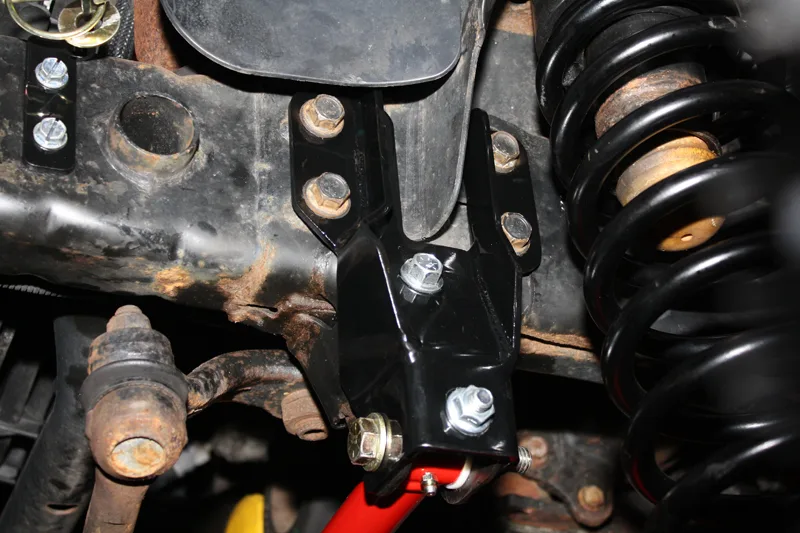
Image source: Bing (Web (fair-use with source credit))
Torque specs are critical. The factory spec for these bolts sits between 125 and 150 ft-lbs. Serious off-roaders re-torque them after every muddy trip.
If the bolt works loose, it hammers against the mount and wallows out the hole. You're then looking at a weld repair, not a new bolt.
The steering stabilizer should not be your first move. It's designed to dull the oscillation, but once the wobble sets in, the stabilizer gets destroyed by the motion it tries to control. The real fix is removing the slack in the linkage: new tie rod ends, drag link, or ball joints, plus a proper alignment.
If your Wrangler sits on a lift, check the caster angle too. A lift without caster correction leaves the front axle kicked wrong, and that alone can produce a borderline death wobble.
If the front end feels loose even with the parts replaced, the axle-side track bar mount may be wallowed or the frame-side bracket cracked. That's the kind of failure you don't want to discover on a shoulder lane. When the wobble is severe enough to snap a steering joint, you also risk losing brake control entirely.
That's why experts recommend fixing any wobble before it damages the brake system.
Common Mistakes That Turn a $200 Fix into a $2,000 Repair
The fastest way to overspend is skipping the symptom check and throwing parts at the Jeep. It happens constantly. A Wrangler starts wobbling, so the owner buys a new steering stabilizer.
It feels great for a day. Then the wobble comes back harder.
Here is what the budget killers look like.
- Replacing the steering stabilizer first. The wobble will return, and you've spent $80 to hide a worn part instead of fixing it.
- Guessing torque values by feel. Track bar bolts that are too loose cause death wobble. Too tight can shear the bolt. Use a torque wrench and the factory spec.
- Skipping a post-lift alignment. If you changed the caster angle, skipping the alignment leaves the axle geometry off. That alone can trigger a bump-induced wobble.
- Reusing worn tie rod ends to save cash. A half-sloppy joint puts play right back into the system.
- Hitting lug nuts with an impact gun. Over-torquing warps rotors and causes brake-induced shakes.
Another quiet mistake is ignoring the small clues. If you hear squealing up front while the wheel shakes, you already know the pad wear is part of the picture. Fix it early while it's a $50 pad job, not a $400 rotor and caliper job.
When to DIY, When to Call a Pro, and What It Actually Costs
Our research, combined with typical shop rates, puts most Wrangler shake repairs in a predictable range. The cost depends entirely on which part is loose or worn.
| Job | Do it yourself? | Shop cost |
|---|---|---|
| Tire rebalance | Not worth buying a balancer | $40–70 |
| Front end alignment | Needs a rack and specialty tools | $90–120 |
| Rotor replacement | Hard but doable with basic tools | $250–450 |
| Track bar bushings and bolt | Moderate, needs a torque wrench | $150–300 |
| Ball joints | Requires a press, tough DIY | $400–700 |
| Full death wobble rebuild | Experienced owners only | $800–2,000 |
If you have jack stands, a torque wrench, and a weekend, handle the track bar and rotors. Leave alignments and ball joint pressing to a shop. An alignment rack gives you caster and toe numbers you simply can't measure on the floor.
If the shake comes with a nasty grinding noise, don't spend a dollar on suspension until you check your pads. A rotor that's already scored needs replacement, and that expense changes your whole repair order.
Frequently Asked Questions
Can a steering damper fix death wobble?
No. A damper dulls the oscillation but does not remove the slack causing it. The wobble will return, often damaging the new damper.
Fix the worn linkage first, then replace the damper if you want a more comfortable ride.
How much does it cost to fix a shaking Jeep Wrangler?
Between $50 and $2,000 depending on the cause. A tire rebalance costs around $60. A loose track bar runs about $200.
A full front-end rebuild with ball joints, tie rod ends, and an alignment can hit $1,500 or more. Get the symptom diagnosis right first.
Is it safe to drive with a shaking steering wheel?
Not really, especially if it's death wobble. The oscillation can snap a steering joint or break a track bar bolt. At highway speed, that's a loss-of-control event.
Treat any persistent shake as the same urgency as a brake failure. Slow down and park it until you inspect the front end.
Why does my Jeep shake only at 65 mph?
That speed-based vibration is almost always tire balance or an out-of-round tire. The rotating mass hits a resonant frequency in that range. At 65 mph, the discrepancy shows up as a steady wheel vibration.
Under or above that speed, it fades. A spin-balance check confirms it in minutes.