Your Subaru Outback engine misfire is one of those problems that feels scarier than it usually is. It could be a $20 spark plug. It could also be a head gasket that costs thousands.
The truth is, a misfire follows a predictable diagnostic path. If you can read a trouble code and swap a few parts, you can pinpoint the cause in under an hour.

49% off Today's Exclusive Deals
Limited-time Exclusive Deals. Check current discount on Amazon.
Check Price on Amazon As an Amazon Associate I earn from qualifying purchases.Per OBD-II standards, every misfire generates a diagnostic trouble code that tells you exactly which cylinder is falling out of line. That code, combined with freeze frame data, is your starting map. As of 2026, the Subaru Boxer engine uses a coil-on-plug ignition system, which makes cylinder-level diagnosis simpler than old distributor-based setups.
Image source: Bing (Web (fair-use with source credit))
49% off Today's Exclusive Deals
Limited-time Exclusive Deals. Check current discount on Amazon.
Check Price on Amazon As an Amazon Associate I earn from qualifying purchases.Quick Answer
A Subaru Outback engine misfire means one or more cylinders aren't burning fuel properly. The most common cause is a worn ignition coil or fouled spark plug. Connect an OBD-II scanner, read the P030x code to identify the cylinder, and swap the coil to confirm.
Fix it promptly. A flashing check engine light means stop driving immediately to avoid catalytic converter damage.
Flashing Check Engine Light vs. Steady Light: The First Triage Call
A flashing check engine light means the misfire is severe. Raw fuel is dumping into the exhaust, where it can destroy your catalytic converter within minutes. Pull over and shut the engine off.
Treat it like a sudden brake failure. You don't keep driving to limp home.
49% off Today's Exclusive Deals
Limited-time Exclusive Deals. Check current discount on Amazon.
Check Price on Amazon As an Amazon Associate I earn from qualifying purchases.A steady light is a different situation. The engine has stored a fault code, but it's still running well enough to drive to a shop. Don't ignore it for weeks, though.
Every mile with a constant misfire sends unburned fuel into the engine oil. That dilutes lubrication and can wear out bearings.
Here's the triage rule:
- Flashing CEL: stop driving, fix it now.
- Steady CEL with rough idle: drive to a nearby shop, avoid long trips.
- Steady CEL with no symptoms: schedule a diagnosis this week.
In our research, most flashing-light cases trace to a single faulty ignition coil. That's good news. Coils are cheap and easy to swap.
Driving on a flashing light, though, is the fastest way to turn a $100 repair into a $2,000 one. A steady misfire never fixes itself. It only gets worse.
Pull the Codes: What P0300, P0301, and the Freeze Frame Data Tell You
Plug an OBD-II scan tool into the port under the dashboard. On Subaru Outbacks, a cylinder-specific misfire shows up as P0301, P0302, P0303, or P0304. The end number identifies the failing cylinder.
A P0300 means multiple cylinders are misfiring randomly, which points to a vacuum leak, a fuel delivery issue, or a failing mass airflow sensor.
| Code | Meaning | Most likely suspect |
|---|---|---|
| P0301 | Cylinder 1 misfire | coil or spark plug on cyl 1 |
| P0302 | Cylinder 2 misfire | coil or spark plug on cyl 2 |
| P0303 | Cylinder 3 misfire | coil or spark plug on cyl 3 |
| P0304 | Cylinder 4 misfire | coil or spark plug on cyl 4 |
| P0300 | Random / multiple misfire | vacuum leak, fuel pressure, MAF sensor |
Don't skip the freeze frame data. It's a snapshot the ECU saved when the code was set. It logs coolant temperature, engine speed, vehicle speed, and throttle position.
If the freeze frame shows the misfire happened at 2,500 rpm under load, you can reproduce that condition on a test drive. Watch live misfire counters to catch intermittent faults that come and go.
Search the NHTSA database for recalls and technical service bulletins tied to your exact model year. Subaru sometimes issues updated spark plug specs for known misfire patterns.
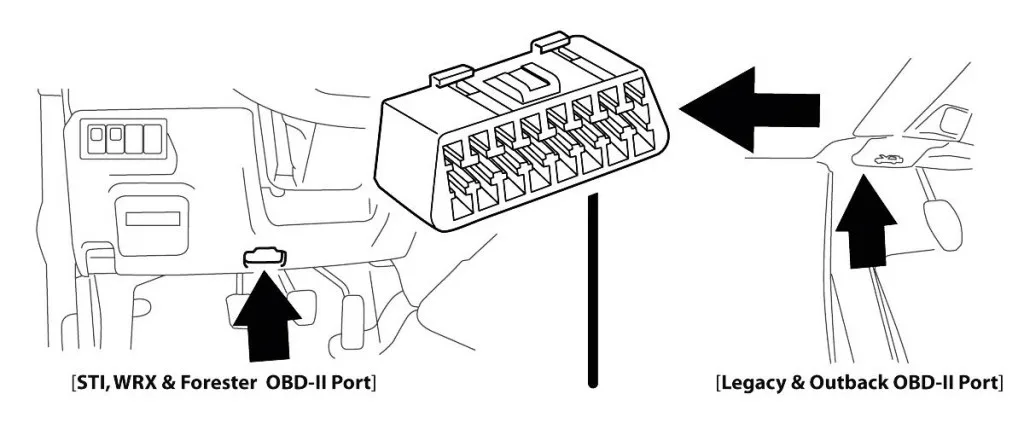
Image source: Bing (Web (fair-use with source credit))
The Decision Tree: Swapping Coils, Spark Plugs, and Injectors to Find the Bad Cylinder
This is the core diagnostic workflow. It works on nearly every Subaru Outback and takes about an hour.
- Start with the cylinder the code points to.
- Swap that ignition coil with the coil on the adjacent cylinder.
- Clear the codes and drive the same route.
- If the misfire moves to the other cylinder, you've found a bad coil.
- If it stays put, swap the spark plug to another cylinder and repeat.
If both the coil and plug check out, the next suspect is the fuel injector, a valve clearance problem, or low compression. The unplug-and-listen method helps. With the engine running, unplug the electrical connector on the suspected cylinder's coil.
If the idle gets worse, that cylinder was contributing. If nothing changes, you've confirmed the dead hole.
Intermittent misfires need a different approach. Check the freeze frame data, then watch live misfire counters while you recreate those exact conditions. The count will climb on one cylinder while the engine shakes.
That's your confirmation.
The single most common cause in our research is a worn ignition coil, with a fouled spark plug a close second. Both are cheap. A quality replacement coil runs roughly $60 to $90.
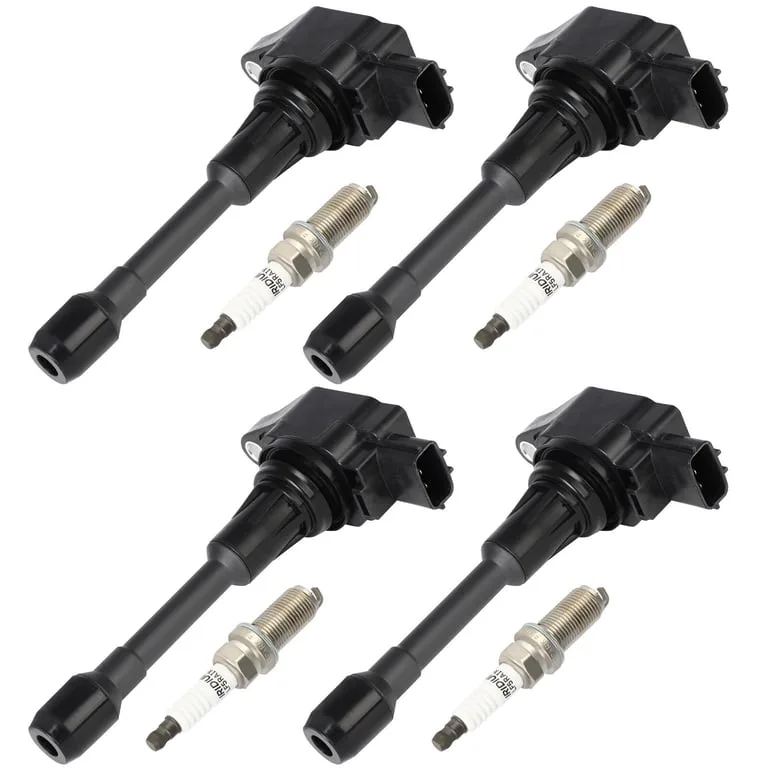
Image source: Bing (Web (fair-use with source credit))
When It's Mechanical: Compression Tests, Valve Clearance, and Oil Consumption Quirks
If swapping parts doesn't move the misfire, the fault is mechanical.
Start with a compression test. Remove the ignition coil and spark plug, then disable the fuel system. Crank the engine four or five times and read the gauge.
You want around 120 psi or more per cylinder, with no more than 10% variance between cylinders. If one reads low, add a teaspoon of oil to the bore and retest. The number jumps on worn rings but stays low on a burnt valve or head gasket failure.
Valve clearance is a known Subaru issue. The FB25 engine tends to tighten exhaust valves as miles pile up. When clearance disappears, you get a misfire that behaves exactly like a bad coil.
A valve adjustment is a shim-in-bucket job that often means removing camshafts. That's professional-level work unless you have serious tooling.
Oil consumption can foul plugs too. Worn valve seals or piston rings let oil creep into the combustion chamber. If you're constantly topping up oil, check for a leaking gasket or bad PCV valve.
They make everything worse.
Watch the cooling system as well. Overheating warps heads and cracks gaskets. If your cooling fan isn't kicking on when the engine warms up, fix that first.
Chasing a misfire on an overheating engine is wasted effort.
Repair Costs and Replacement Parts: What a Fair Fix Costs
Once you've found the root cause, the pricing picture gets clear. Here are realistic ballpark numbers as of 2026.
| Repair | Part cost (DIY) | Shop labor | Total at a shop |
|---|---|---|---|
| Spark plug set | $50-$100 | 1-2 hours | $200-$400 |
| Single ignition coil | $50-$150 | 0.5-1 hour | $150-$300 |
| Fuel injector | $100-$250 | 1-2 hours | $300-$500 |
| Valve adjustment | $50-$100 (shims) | 3-5 hours | $600-$1,000 |
| Catalytic converter | $400-$900 | 2-3 hours | $1,200-$2,500 |
| Head gasket repair | $200-$400 | 10-15 hours | $1,800-$3,000 |
Use the right parts. Subaru specifies NGK plugs for most FB-series engines. Iridium or laser iridium versions last far longer than cheap copper ones.
Spark plug torque is around 18 ft-lbs on the FB25. Overtightening cracks the plug. Undertightening lets it back out.
Skip bargain ignition coils. Generics often die within months. In our research, OEM or trusted suppliers like Denso and NGK hold up far better.
The extra $40 now saves a second repair later.
If the misfire already killed your catalytic converter, you're dealing with emissions equipment. The EPA regulates catalytic converter replacements, and many states require CARB-compliant units. That's when the bill really climbs.
Catching a misfire early is the cheapest fix in the book.
Common Mistakes That Turn a Simple Misfire Into a Bigger Problem
The cheap repair window closes fast. Ignore the warning for a few days, and you're no longer replacing a coil. You're replacing a catalytic converter.
The typical failure chain is always the same. A flashing light, a few days of denial, a big invoice.
These mistakes are all avoidable.
Driving on a flashing check engine light. This is the one that ruins catalysts. Shut it off and arrange a tow.
Replacing parts without a swap test. Coils and plugs are the cheapest suspects. Move them between cylinders before buying anything. A five-minute test saves $150 in wrong parts.
Fitting cheap generic coils. The bargain coil fails at the worst moment. Stick with OEM, Denso, or NGK. Paying $60 once beats $25 twice.
Skipping the spark plug torque spec. The FB25 wants roughly 18 ft-lbs. Too tight cracks the insulator. Too loose and the plug backs out.
Use a torque wrench.
Ignoring small fluid leaks. If you're always chasing an oil drop or noticing coolant loss, a fresh coil won't fix the misfire for long. The root cause is mechanical. Even a struggling cooling fan can overheat the engine and warp a head.
Fix the leak before the ignition part.
If you're also noticing your car making unusual transmission noise or slipping between gears, don't assume it's all one problem. A misfire doesn't usually cause those symptoms.
Frequently Asked Questions About Subaru Outback Engine Misfires
Can I drive with a flashing check engine light?
No. A flashing light means a severe misfire is dumping raw fuel into the exhaust. Shut the car off and arrange a tow.
A short tow is far cheaper than replacing a catalytic converter. That's the difference between roughly $500 and $2,500.
How do I know which cylinder is misfiring?
Read the code. P0301 means cylinder 1, P0302 means cylinder 2, and so on. The freeze frame data tells you the engine speed and load when the fault happened.
A scan tool with live misfire counters confirms which cylinder is the weak link.
Do I need to replace all four ignition coils at once?
No. Replace the faulty one. If the others are over 80,000 miles, budget for the full set eventually.
But a single coil swap takes about 30 minutes. You're not saving meaningful labor by doing all four at once.
Why is my Outback shaking at idle but the code says random misfire?
A P0300 random misfire points to a system issue rather than a single failed part. Vacuum leaks, a dirty mass airflow sensor, or weak fuel pressure are the usual triggers. Inspect intake hoses first.
Clean the MAF and check fuel trim values with your scan tool.
Will a misfire damage the engine if I keep driving?
Yes. Raw fuel washes oil off the cylinder walls, scoring them. That lowers compression and raises oil consumption.
You'll also smell fuel on the dipstick. Fixing it early saves the engine. Waiting turns a $200 job into a $2,000 one.