You're standing in the garage, staring at a puddle of blue-green coolant underneath the engine. That's the moment every Subaru Outback owner dreads. A Subaru Outback coolant leak is not just a maintenance annoyance.
It's a warning that can take out the whole engine if ignored. The good news is most leaks start small and are very fixable when caught early.

49% off Today's Exclusive Deals
Limited-time Exclusive Deals. Check current discount on Amazon.
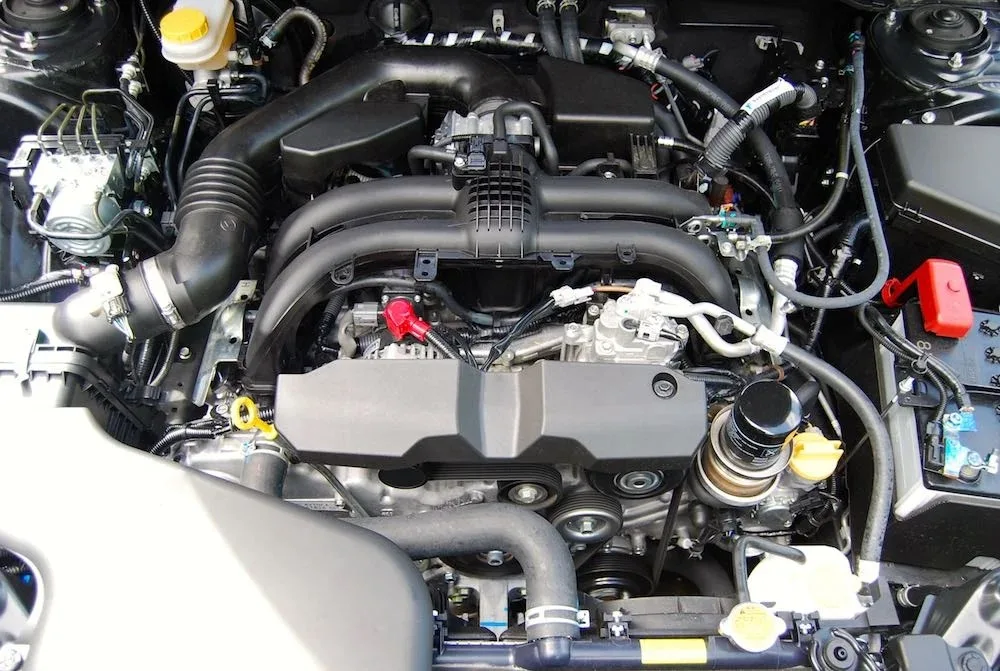
Check Price on Amazon As an Amazon Associate I earn from qualifying purchases.The Boxer engine's horizontally opposed design changes how coolant flows and, more importantly, how leaks hide. As of 2026, the factory fill spec for most Outbacks is Subaru's blue Long Life Coolant, a phosphate-free formula engineered for aluminum engines. Knowing what you're looking at before you start pouring coolant in matters more than the repair itself.
Here's how to approach it.
49% off Today's Exclusive Deals
Limited-time Exclusive Deals. Check current discount on Amazon.
Check Price on Amazon As an Amazon Associate I earn from qualifying purchases.Image source: Bing (Web (fair-use with source credit))
Quick Answer
A Subaru Outback coolant leak means coolant is escaping the sealed cooling system. Common sources are the radiator, water pump, hoses, crossover pipe, and head gaskets. On 1999 to 2010 Outbacks, head gasket failure is the most notorious cause.
Don't just top it off. Pressure testing the system finds the exact leak.
Why a Coolant Leak in a Subaru Outback Isn't a "Top It Off" Fix
Topping off coolant is a temporary bandage, not a fix. The cooling system runs at up to 16 PSI when hot, so every leak is a pressure leak. Coolant escapes.
49% off Today's Exclusive Deals
Limited-time Exclusive Deals. Check current discount on Amazon.
Check Price on Amazon As an Amazon Associate I earn from qualifying purchases.Air gets in. Air pockets create hot spots, and hot spots warp aluminum heads.
If you keep topping off, you're masking the symptom. The actual leak gets worse. A loose hose clamp that drips a few drops a day becomes a cracked hose that dumps coolant in minutes.
Long-term reliability data shows this pattern over and over.
Here's the math. A $30 coolant refill every month adds up. A pressure test, the proper diagnostic, runs $75 to $150.
A head gasket repair on an Outback lands between $1,500 and $3,500. Catching the leak early is the difference between a clamp replacement and an engine teardown.
If you want to keep driving while you schedule the repair, check the overflow tank daily. Never open the radiator cap when the engine is hot. The system is pressurized and can spray boiling coolant.
But that's still a stopgap. The right move is diagnosis, and our research on coolant loss shows the same pattern: early leaks are cheap, ignored leaks are not.
The Six Usual Suspects: Where Outbacks Leak Coolant
Before you panic, know the usual suspects. A coolant leak in a Subaru Outback can come from six main places. Each leaves a different trail of evidence.
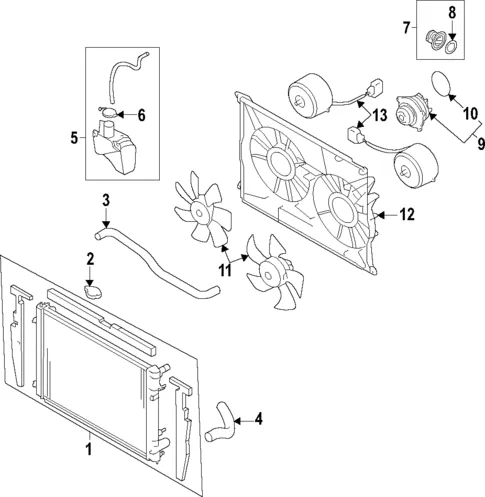
Image source: Bing (Web (fair-use with source credit))
| Leak Point | What You'll Notice | Repair Cost |
|---|---|---|
| Radiator | Plastic tank cracking at the seam, coolant on the front crossmember | $400 to $900 |
| Water pump | Weep hole drips, coolant below timing cover, occasional chirping | $500 to $1,200 |
| Hoses | Soft or swollen rubber, crusty deposits at clamp ends | $100 to $300 |
| Coolant crossover pipe | Slow seep under intake manifold, often mistaken for oil leak | $200 to $600 |
| Thermostat housing | Wetness around the housing base, steam after shutoff | $150 to $400 |
| Head gaskets | External drip on engine block or internal symptoms (next section) | $1,500 to $5,500 |
Notice the pattern. Plastic-tank radiators crack around 80,000 to 120,000 miles. Water pumps on older EJ engines are timing-belt driven, so the bearing wears and the seal weeps.
The crossover pipe is a plastic piece under the intake manifold, and its O-rings harden over time. And if your radiator fan not spinning is also part of the problem, the engine runs hotter and accelerates every other failure.
External vs. Internal Leak: What Your Symptoms Are Telling You
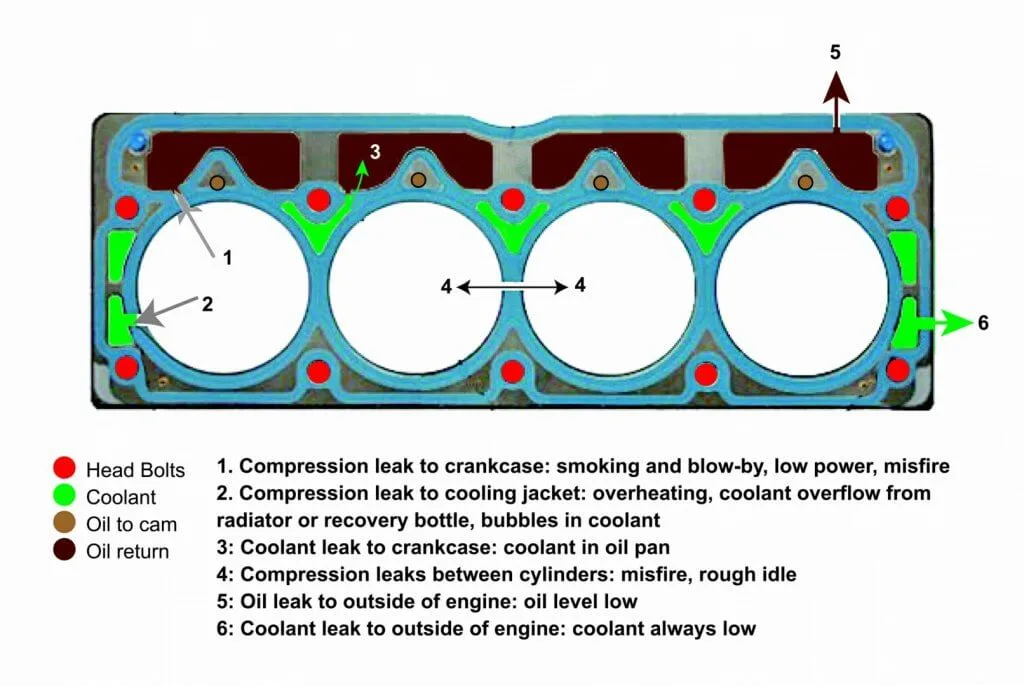
Image source: Bing (Web (fair-use with source credit))
A coolant leak is either external or internal, and the two are very different problems. External leaks drip onto the ground or dry onto the engine. Internal leaks stay hidden, burning coolant inside the combustion chamber or mixing it with oil.
Use your senses. If you smell sweet antifreeze in the engine bay, that's external. If the exhaust puffs white smoke, especially after startup, that's internal.
If the oil on the dipstick looks like a milkshake, coolant has contaminated the oiling system. And if the heater blows cold air from the vents, the coolant level is probably too low to reach the heater core.
Here's the if/then logic. A small external seep on a hose is a $100 fix. An internal leak that pressurizes the cooling system can blow a hose under load.
A leak that lets coolant into a cylinder can hydro-lock the engine. The difference between these outcomes is cheap to find and expensive to guess.
There's also the ugliest case. The radiator's internal CVT cooler can fail, letting coolant and transmission fluid mix. That's a full transmission replacement.
If you also notice hard shifts, the leak might not be engine-only.
The Subaru Head Gasket Problem: The One Every Owner Dreads
The head gasket is the thin seal between the engine block and the cylinder head. On the EJ25 engine, used in Outbacks roughly from 1999 to 2010, it's the most common coolant leak source. The horizontally opposed layout puts extra stress on the gasket, and the factory design was prone to failure over time.
Head gasket leaks show up two ways. External leaks seep coolant down the side of the engine block and leave a sweet smell after a drive. Internal leaks push combustion gases into the cooling system or push coolant into the cylinders.
You might see bubbling in the overflow tank, white exhaust smoke, or milky oil on the dipstick. That milky oil alone is enough reason to stop driving immediately.
Cost is the big fear. A head gasket replacement at an independent Subaru shop runs $1,500 to $3,500. Dealerships charge $3,000 to $5,500.
The repair usually includes machining the heads and replacing nearby parts, so it's not just a gasket swap. Newer Outbacks with the FA24 engine have a much stronger gasket design, which is why 2020 and later models rarely show this failure.
We recommend checking the NHTSA complaint database for your exact model year. Subaru also issued multiple technical service bulletins about cooling system parts, so a VIN check at the official Subaru website can reveal known issues.
How to Diagnose It Step by Step (Without Taking Anything Apart)
You don't need to disassemble anything to find most coolant leaks. Start with a cold engine and a clean flashlight. Look for dried coolant stains that look white, crusty, or rusty-colored.
Trace them upward to find the highest wet point, which is usually the source.
Step by step: Step 1, check the overflow tank level against the cold fill line. Step 2, pressure test the cooling system to 16 PSI with a hand pump kit. Watch for a pressure drop and listen for hissing.
Step 3, add a UV dye kit if the leak is tiny, then scan with the light. Step 4, run a combustion leak test on the coolant. If the fluid turns from blue to yellow, exhaust gases are entering the cooling system, which confirms an internal head gasket leak.
These checks take about an hour and answer the two questions that matter: where is the leak, and is it safe to drive. A fast pressure drop means a major leak. A slow drop means you have time to shop around.
And if the diagnosis points to a head gasket, don't wait. Driving even short distances can warp the heads and turn a $3,000 repair into a $6,000 engine replacement.
What Repairs Actually Cost and How to Avoid Overpaying
A Subaru Outback coolant leak repair cost depends entirely on the source. A cracked hose with a loose clamp is a $50 DIY fix. A radiator replacement runs $400 to $900.
The crossover pipe O-ring replacement sits around $200 to $600. Head gaskets are the real expense, landing anywhere from $1,500 to $5,500.
Don't walk into a shop without knowing whether your leak is external or internal. Get two written estimates minimum. Ask if the quote includes resurfacing the cylinder heads, since skipping that step causes a second failure within 20,000 miles.
Also confirm the workmanship warranty. Two years or 24,000 miles is the baseline for a proper head gasket job.
Labor is where prices diverge fastest. Independent Subaru specialists charge $100 to $150 per hour. Dealerships charge $150 to $225.
The crossover pipe job is mostly labor, so a specialist usually wins on price. Shops that work on Boxer engines daily also catch hidden damage faster.
One more shortcut. If the heater blows cold at idle, coolant has dropped. That confirms loss even before you see a puddle, and it tells you the leak is real.
And before you book anything, check the NHTSA complaint database for your exact model year.
When to Drive It, When to Park It, and When to Call a Pro
Use this rule of thumb. A slow external seep with a steady temperature gauge means you can drive carefully to a repair shop. One or two drips a day is not an emergency.
Any sign of internal leakage changes the answer completely. Stop driving and have it towed.
White smoke from the exhaust means stop. A temperature gauge creeping past center means pull over right away and shut the engine off. Internal leaks pressurize the cooling system, and overheating warps the aluminum heads.
That single mistake pushes a $3,000 head gasket job into a $6,000 engine replacement.
Call a professional when there is a sweet smell inside the cabin, a damp passenger floor mat, or windshield fog that won't clear. Those are heater core symptoms. The repair requires dashboard removal, and it is not a beginner job.
The same logic applies to compounding failures. If you're losing coolant and the brakes feel off, the car isn't safe. A coolant leak alone is serious.
A coolant leak plus brake system issues is a reason to park it and call a tow.
Frequently Asked Questions
Can I use green coolant in my Subaru Outback?
No. Subaru's blue Long Life Coolant is phosphate-free and formulated for the aluminum Boxer engine and its gaskets. Standard green coolant contains additives that can gell, clog the heater core, and degrade seals over time.
Stick with the OEM blue spec from the owner's manual.
How long can I drive with a Subaru coolant leak?
A slow external drip is drivable for a short trip to a shop if the temperature gauge holds steady. If you see white smoke, milky oil, or any sign of overheating, stop immediately and call for a tow. Those symptoms mean internal leakage, and the engine is at risk.
Why is coolant leaking from the bottom of my Outback?
The two most common sources are the water pump weep hole and the plastic end tanks on the radiator. Both sit low on the engine and drip directly to the ground. A cooling system pressure test at 16 PSI will pinpoint which one before you buy any parts.
How much does a Subaru head gasket replacement cost?
Independent Subaru shops charge $1,500 to $3,500 for a head gasket replacement. Dealerships charge $3,000 to $5,500. The price usually includes resurfacing the heads plus a new water pump and timing belt, since the labor overlaps.
Get at least two quotes before booking.