A Subaru Outback steering wheel shaking isn't just annoying. It's your car telling you something is off. The vibration could be as simple as a lost tire weight or as serious as a failing wheel bearing.
Either way, you need to figure out when and where the shake happens before spending money on parts.

49% off Today's Exclusive Deals
Limited-time Exclusive Deals. Check current discount on Amazon.
Check Price on Amazon As an Amazon Associate I earn from qualifying purchases.Subaru's Symmetrical All-Wheel Drive system requires all four tires to stay within roughly one-quarter inch of each other in circumference. One mismatched tire can trigger vibrations through the steering column at highway speeds. That's why identifying the cause matters just as much as fixing it.
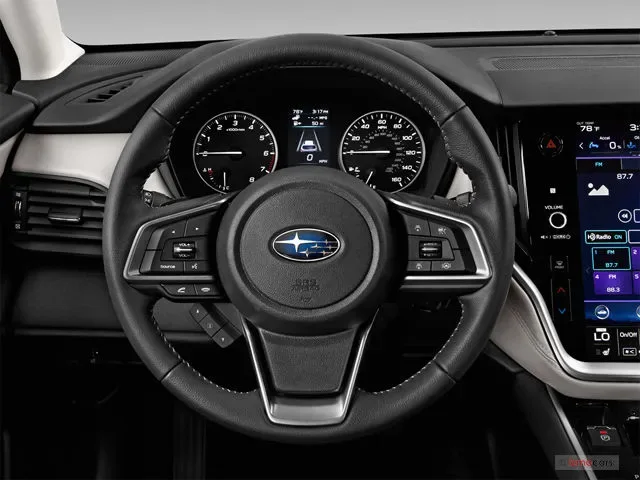
Image source: Bing (Web (fair-use with source credit))
49% off Today's Exclusive Deals
Limited-time Exclusive Deals. Check current discount on Amazon.
Check Price on Amazon As an Amazon Associate I earn from qualifying purchases.Quick Answer
A Subaru Outback steering wheel shaking usually points to tires, rotors, or suspension. A road-force balance often solves it for $20 to $50. If it happens only during braking, your rotors may need resurfacing or replacement.
Start with tire pressure and lug nut torque. Those free fixes work more often than you'd expect.
Diagnose the Shake in One Question: When Does It Happen?
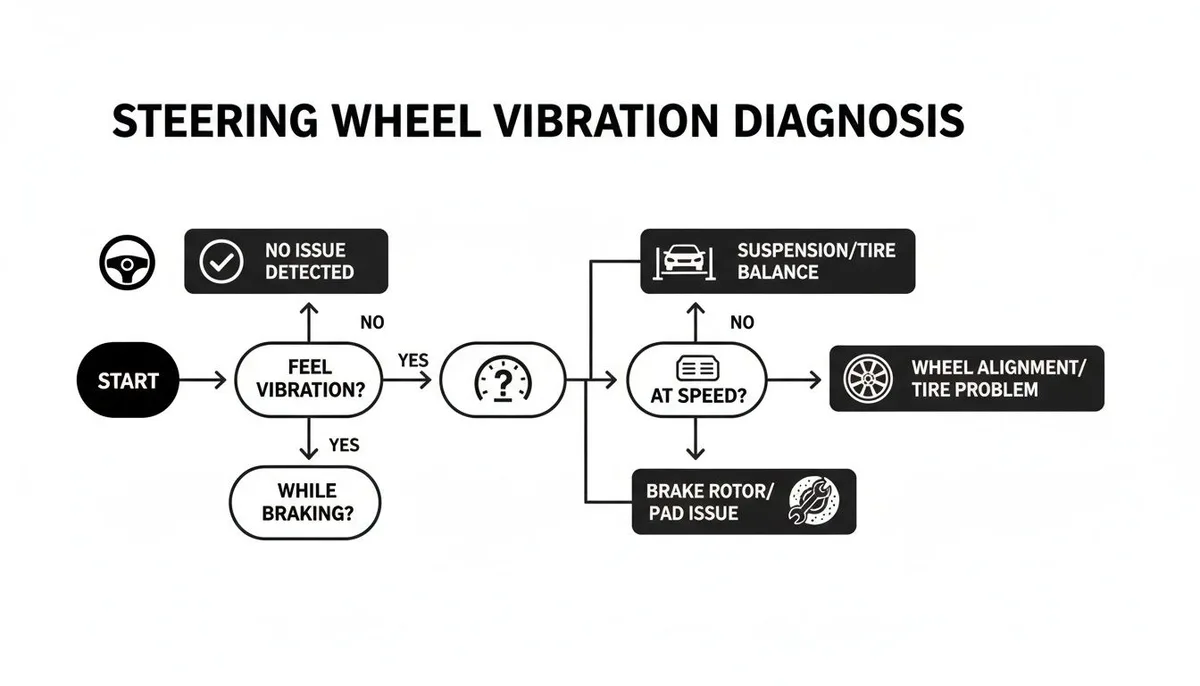
Image source: Bing (Web (fair-use with source credit))
49% off Today's Exclusive Deals
Limited-time Exclusive Deals. Check current discount on Amazon.
Check Price on Amazon As an Amazon Associate I earn from qualifying purchases.The question is simple: when does the shaking start? Your answer cuts the list of possible causes in half. Most complaints about Subaru Outback steering wheel shaking fall into four buckets.
| Symptom | Likely Cause | Urgency |
|---|---|---|
| During braking only | Brake rotors, pad deposits, caliper | Fix soon, affects stopping |
| At highway speed, no braking | Tire balance, bent wheel, wheel bearing | Fix soon, worsens over time |
| While accelerating from a stop | CV axle, engine mounts, CVT | Depends on severity |
| On rough roads only | Suspension bushings, tie rods, ball joints | Fix when convenient |
During braking only. Front brake rotors are the prime suspect. Rotor thickness variation, commonly called warped rotors, causes the steering wheel to pulse when you press the brake pedal.
At highway speed, with no braking. This points to tire balance, a bent wheel, or a worn wheel bearing. The shake worsens as speed climbs, then eases past a certain point.
While accelerating from a stop. Think drivetrain. CV axle joints, worn engine mounts, or transmission mount wear can send vibration straight through the steering column.
Over rough roads but fine on smooth pavement. Suspension play is the likely cause. Worn control arm bushings, tie rod ends, or ball joints let the front end bounce and shimmy.
Where you feel the vibration matters too. A shake in the steering wheel usually signals a front-end issue. A vibration you notice in the seat often traces to a rear wheel or driveline component.
This decision tree approach mimics how the National Highway Traffic Safety Administration categorizes vehicle complaints. It focuses your diagnosis instead of replacing parts at random.
Shaking Only When Braking? Rotors, Pad Deposits, and Caliper Issues
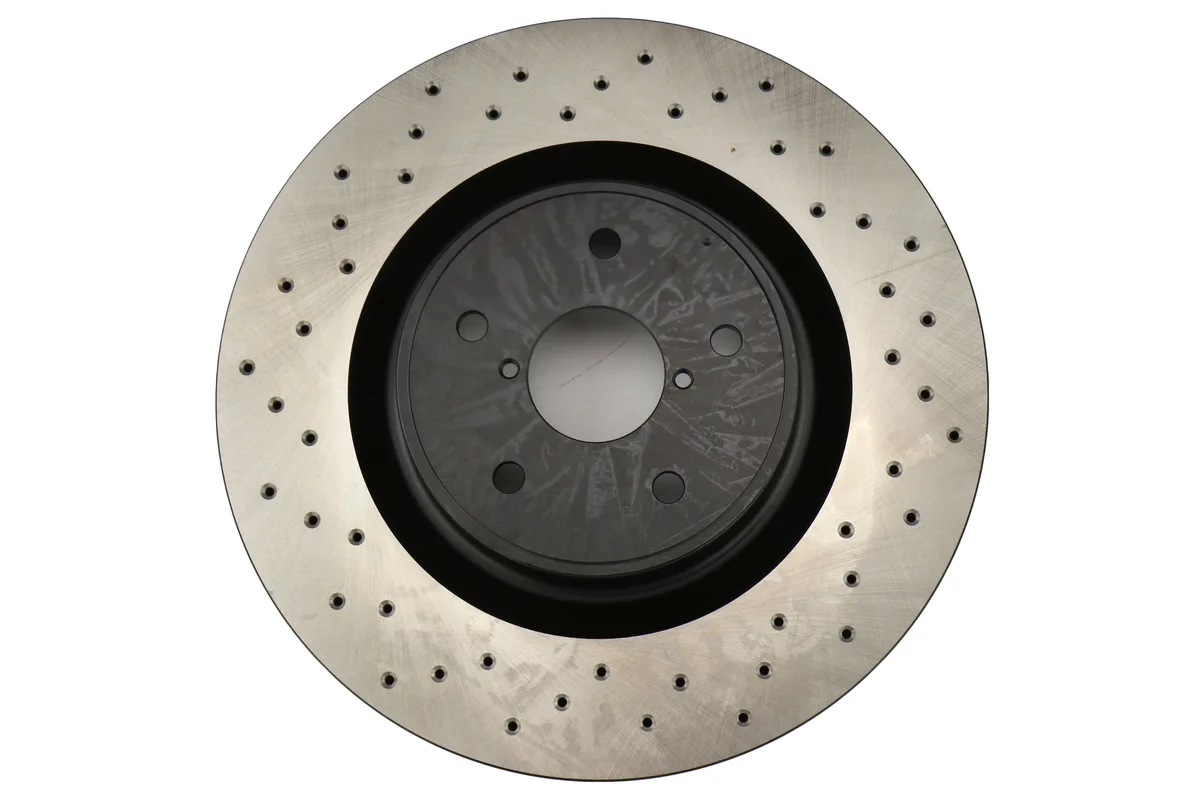
Image source: Bing (Web (fair-use with source credit))
If your Outback's steering wheel shakes only when you press the brake pedal, start with the rotors. Brake rotors develop uneven thickness over time, even when they look perfectly smooth. That unevenness causes the pulsing sensation through the steering wheel.
Three things commonly cause brake-related shake:
- Rotor thickness variation (DTV). Anything beyond 0.001 inch of variation, per factory service specs, shows up as vibration through the wheel and pedal.
- Pad material deposits. Hard braking from highway speed leaves transfer material on the rotor. The pad bonds to the rotor in spots, creating uneven contact.
- Seized caliper slide pins. When pins corrode, the caliper drags on one side. This accelerates uneven pad and rotor wear.
Older Outbacks, especially 2005 to 2009 models, are more prone to premature rotor warping due to thinner factory rotor specs. Newer models from 2015 onward hold up better, but aggressive driving still shortens rotor life.
If you notice squealing before the shake develops, pad wear is already advanced. Our guide on car brakes squeaking covers early warning signs.
As of 2026, a full front brake job with pads and rotors typically runs $300 to $600 at an independent shop. Dealer pricing lands higher. Resurfacing rotors, when they're thick enough to save, costs roughly $100 to $150 per axle.
If you hear a metal-on-metal grinding noise, check our breakdown on car brakes grinding for emergency steps.
Shaking at Highway Speed? Tire Balance, Bent Wheels, and Wheel Bearings
Highway-speed shaking with no braking almost always traces to the wheels or tires. Here's how to narrow it down.
Tire imbalance is the most common cause. Factory balance weights get knocked off, especially in car washes or on rough roads. A standard spin balance costs $15 to $25 per wheel.
For Outbacks with all-terrain tires, a road-force balance at $20 to $50 per wheel gives more accurate results. Road-force machines measure radial force variation, not just weight distribution, which matters when tires aren't perfectly round.
Bent wheel rims cause a persistent wobble. Alloy wheels bend more easily than steel after pothole hits. Inspect the inner lip of each wheel with the tire deflated.
Even a slight bend throws off balance permanently until repaired or replaced.
Worn wheel bearings produce a growling or humming noise that gets louder with speed. They can also cause steering looseness alongside vibration. On newer Outbacks, the hub and bearing are a sealed unit.
Replacement runs $200 to $400 per side, parts and labor included.
Snow or mud packed inside the wheel barrel is common on winter-driven Outbacks in northern climates. It throws off balance dramatically. Pull the wheel and inspect the inner barrel.
A thorough cleaning sometimes fixes the entire problem for free.
If the vibration started right after a tire rotation, verify lug nut torque with a torque wrench. Always use a manual torque wrench, never an impact wrench. Over-tightening distorts brake rotors and leaves the wheel sitting unevenly.
Shaking During Acceleration? CV Axles, Drivetrain Mounts, and AWD Torque
Steering wheel vibration that appears when you press the gas but disappears when you coast points to the drivetrain. Several Outback-specific issues live in this category.
CV axle joints wear out over time, especially on high-mileage models. The outer joint develops play that sends vibration through the steering column under acceleration. You might also hear a clicking sound during tight turns.
A failed CV axle needs prompt replacement. It can leave you stranded.
Engine and transmission mounts deteriorate with age. When the rubber isolators crack, engine vibration passes directly into the chassis and up through the steering column. On Outbacks with the Lineartronic CVT, worn mounts are a well-documented issue around 80,000 to 120,000 miles.
CVT torque converter shudder affects certain model years. The transmission shudders at light throttle, usually between 15 and 30 mph. It's not technically a steering wheel shake, but many owners describe it that way.
Subaru issued technical service bulletins addressing this on select years. A transmission slipping diagnosis can help determine whether your Outback falls into this category.
Propeller shaft center support bearing wear causes vibration at highway speeds under load. This part supports the rear driveshaft on AWD models. Replacement costs $150 to $350 depending on whether you go aftermarket or OEM.
If you notice drivetrain noise alongside the vibration, internal wear is likely progressing. Our guide on car transmission making noise covers the most common related symptoms.
Step-by-Step Home Diagnostic Workflow: From Test Drive to Torque Wrench
You don't need a full shop to narrow down the cause. This workflow helps you pinpoint the problem area with basic tools.
Step 1: The test drive. Drive your Outback on a smooth road. Note the exact speed where shaking starts and stops. Press the brake gently at that speed.
Does the shake change or stop? That tells you if it's brake-related.
Step 2: The tire swap. Rotate the front tires to the rear. Drive the same route at the same speed. If the shake moves to the seat or disappears, the problem is in the front tires or wheels.
Step 3: The visual check. Inspect each tire for uneven wear, bulges, or embedded objects. Check the wheel rims for bends or damage. Look inside the barrel for packed mud or snow.
Step 4: The torque check. Use a torque wrench to verify lug nuts are tight. Check the specification on your door placard or owner's manual, usually 80 to 100 ft-lbs. Verify tire pressure against the placard number while you're at it.
Step 5: The shake test. With the car on jack stands, grab the wheel at 12 and 6 o'clock and push or pull. Any looseness indicates a wheel bearing or ball joint problem. Grab at 3 and 9 o'clock and repeat.
Play here points to tie rod wear.
Step 6: The brake inspection. Remove the front wheels and look at the rotors. Run a fingernail across the surface. Deep grooves or a lip on the outer edge means it's time for new rotors.
If the shake happens during braking and your brakes aren't working properly, stop driving and get it fixed immediately.
This process takes about 45 minutes in your driveway. It saves you a shop diagnostic fee of $100 to $150 just to identify the problem.
Common Mistakes Outback Owners Make: AWD Tire Matching and Skipping Measurements
The biggest mistake Outback owners make is replacing just one tire on an all-wheel-drive system. Subaru's Symmetrical All-Wheel Drive demands that all four tires maintain nearly identical circumference. A variance beyond roughly one-quarter inch forces the drivetrain to work harder.
It can cause vibrations and, in severe cases, damage the center differential.
Mixing a brand-new tire with three worn ones does exactly that. The fresh tire measures taller than the worn set. Your Outback compensates by binding the drivetrain.
That sends a subtle shudder through the car, often mistaken for a steering wheel shake.
Subaru is explicit about this in its owner resources. Keeping all four tires within specification on Symmetrical All-Wheel Drive systems isn't optional. Subaru documents the circumference tolerance in the owner's manual.
Other common mistakes:
- Skipping the two-stage test drive. You need a clean run at steady speed, then a braking run, then an acceleration run. One pass won't separate the causes.
- Using an impact wrench on lug nuts. Over-tightening distorts brake rotors and makes the wheel sit unevenly. Use a manual torque wrench every time.
- Not measuring rotor thickness. You can't see minimum thickness. The stamped spec on the rotor hub is the number that matters.
- Assuming a wheel alignment cures everything. Alignment fixes tire wear and pulling, not road-force imbalance or bent wheels.
Verify your tire sizes match the factory placard. Outbacks use trim-specific sizes ranging from 225/60R17 to 245/65R17. Keeping all four the same spec prevents drivetrain vibration that mimics a wheel problem.
Decision Guide: What You Can DIY vs. When to Head to a Shop
Some fixes belong in your driveway. Others need a lift, specialized tools, and factory service manual access. Here's the honest breakdown.
| Task | DIY? | Why |
|---|---|---|
| Tire balance check | No | Needs a calibrated balancer |
| Lug nut torque check | Yes | Just a torque wrench |
| Tire rotation | Yes | Jack stands and 30 minutes |
| Brake rotor replacement | Yes | Basic hand tools and new rotors |
| Rotor thickness measurement | Maybe | Needs a micrometer |
| CV axle replacement | Challenging | Needs an axle nut socket |
| Wheel bearing replacement | Hard | Press tools often required |
| Road-force balance | No | Specialized machine |
Start with the free stuff. Check air pressure, inspect tires, verify lug nut torque, and run the test drive protocol from earlier. If the shake persists, you've eliminated the cheap causes.
Brake rotor and pad replacement on an Outback is genuinely DIY-friendly. The rotor slides off the hub and the caliper bolts are accessible. You'll need a breaker bar, a torque wrench, and brake cleaner.
Budget two to three hours for the front axle.
Leave wheel bearing replacement to a shop unless you have a hydraulic press. The hub assembly on newer Outbacks requires precise force for installation. Getting it wrong risks damage that's expensive to fix.
A road-force balance is worth the $20 to $50 per wheel just for the diagnosis. The machine measures radial force variation. It can identify an out-of-round tire that a standard spin balance misses.
Frequently Asked Questions
Is it safe to drive my Outback with a shaking steering wheel?
Mild shaking at highway speed can wait a few days for diagnosis. A violent or worsening shake means stop driving immediately. It can indicate a failing wheel bearing, a separated tire belt, or loose steering components.
All of those create dangerous conditions at speed.
Can a wheel alignment fix steering wheel shake?
Rarely. Alignment corrects tire angles, which affects pulling and uneven wear. Shaking typically comes from tire imbalance, bent wheels, brake rotors, or suspension wear.
Check those first. Alignment only helps if worn suspension parts caused uneven tire wear that's now vibrating.
How much does it cost to fix a shaking steering wheel?
That depends on the cause. Tire balancing runs $20 to $50 per wheel. Brake rotors cost $300 to $600 per axle installed.
A wheel bearing replacement lands around $200 to $400 per side. CV axle replacement runs $200 to $450 per axle. Shop diagnostic fees typically range from $100 to $150.
Why does my Outback shake after mounting new tires?
The most common cause is improper balancing or the tire bead sitting unevenly. Drive a few miles, then recheck lug nut torque with a torque wrench. If the shake continues, ask the shop to road-force balance.
Some new tires also arrive with factory defects despite looking perfect.
Can mismatched tires damage my Outback's AWD system?
Yes, if the circumference difference exceeds manufacturer tolerance. Subaru specifies that all four tires stay within roughly one-quarter inch of each other. Beyond that, the drivetrain binds, causing vibration and potential center differential damage.
Replace tires in full sets whenever possible.