That dashboard light is on again. Your Toyota Camry tire pressure light is glowing, and your first instinct might be to just reset it and drive on. But that simple light is a safety feature mandated by Federal Motor Vehicle Safety Standard 138, and ignoring it can lead to poor handling, reduced fuel economy, or a blowout.
The real issue isn't the light itself. It's what triggered it.
49% off Today's Exclusive Deals
Limited-time Exclusive Deals. Check current discount on Amazon.
Check Price on Amazon As an Amazon Associate I earn from qualifying purchases.Most Camrys require 32 to 36 PSI when tires are cold. The exact number lives on a sticker inside your driver's door jamb, not on the tire sidewall. Understanding that difference is the first step to solving this safely.
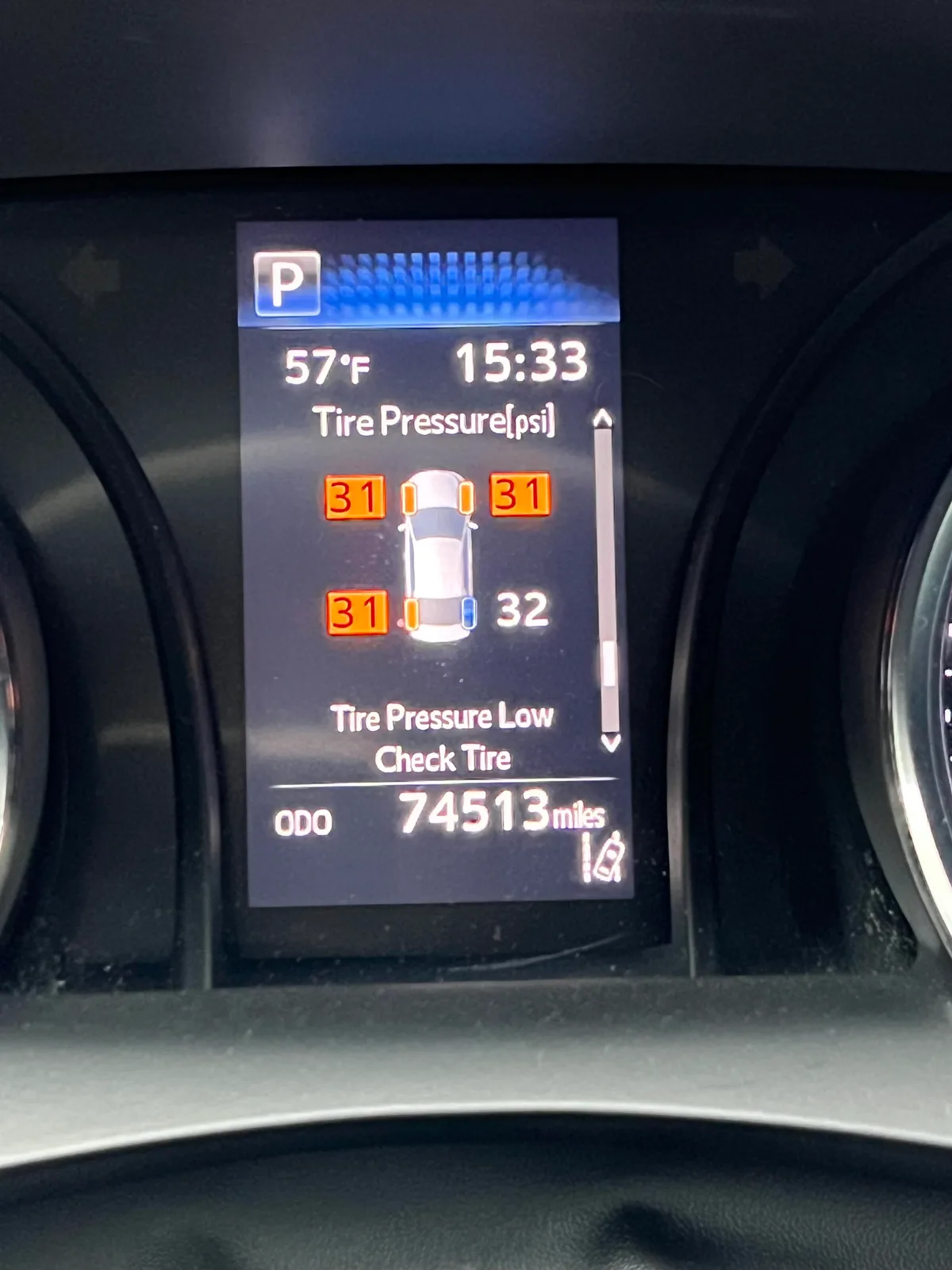
Image source: Bing (Web (fair-use with source credit))
49% off Today's Exclusive Deals
Limited-time Exclusive Deals. Check current discount on Amazon.
Check Price on Amazon As an Amazon Associate I earn from qualifying purchases.Quick Answer
A Toyota Camry tire pressure light means one or more tires is below the recommended PSI. Do not just reset the light. Pull over safely and check all four tires with a digital gauge.
Inflate any low tires to the number on your door jamb sticker. Then perform the TPMS reset procedure to turn the light off. If the light persists after resetting, you likely have a failing sensor or a slow leak that needs professional attention.
The Most Dangerous First Move (and the Right One)
The biggest mistake drivers make is pressing the TPMS reset button before checking tire pressure. That's like taping over a smoke detector because it's beeping. You're masking a critical warning.
If you have a slow leak from a nail, resetting the light lets pressure keep dropping. That leads to rim damage, a blowout at highway speed, or loss of vehicle control.
49% off Today's Exclusive Deals
Limited-time Exclusive Deals. Check current discount on Amazon.
Check Price on Amazon As an Amazon Associate I earn from qualifying purchases.What to do instead:
- IF you are driving at speed, reduce speed gradually and pull over at the first safe spot.
- IF you are parked, do a visual inspection first. Look for obvious damage, a flat tire, or an object stuck in the tread.
- THEN grab a digital tire gauge and measure all four tires. Compare each reading to the door jamb sticker.
- IF a tire is low, inflate it. If it goes flat again quickly, you have a leak that needs repair, not just air.
- ONLY AFTER confirming all tires are correct should you hit the reset button.
Driving on a significantly underinflated tire is dangerous. The tire flexes excessively, generating heat that can cause structural failure. A tire can look perfectly fine while being 8 PSI low.
Trust the gauge, not your eyes.
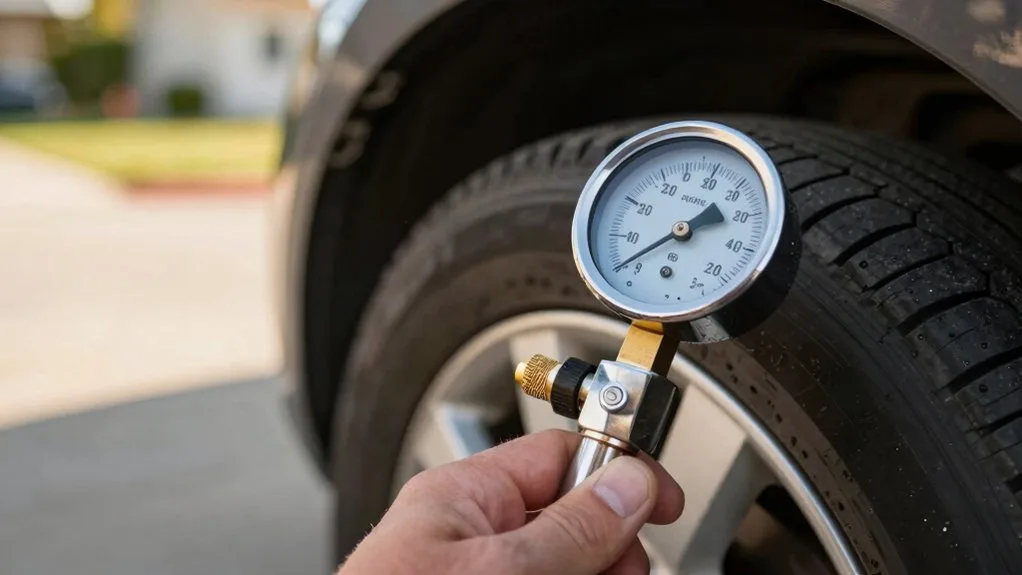
Image source: Bing (Web (fair-use with source credit))
How to Check, Correct, and Reset Your Tire Pressure
Once you've confirmed a tire needed air and filled it, you need to reset the TPMS system. The process is straightforward but must happen in the right order.
Step 1: Get the Right Pressure
Start with cold tires (driven less than a mile). The tire pressure placard on your driver's side door jamb lists PSI for front, rear, and spare tires. Ignore the "MAX PSI" number on the tire sidewall.
That's the tire's maximum, not your car's recommendation.
Step 2: Inflate All Tires
Use a reliable gauge to verify pressure after filling. Even if only one tire was low, check the others. A quick pass takes under two minutes.
Step 3: Perform the TPMS Reset
For most Toyota Camrys (2007 and newer):
- Turn the ignition to "ON" without starting the engine.
- Press and hold the TPMS reset button. It's usually under the steering wheel or in the glove box. Hold until the dashboard light blinks three times.
- Release the button.
- Drive for 10 to 30 minutes above 15 mph. The sensors need this time to recalibrate and communicate with the vehicle's computer.
If the light flashes for a minute then stays solid, that usually signals a system malfunction, not low pressure. You may be looking at a dead sensor battery or a receiver problem.
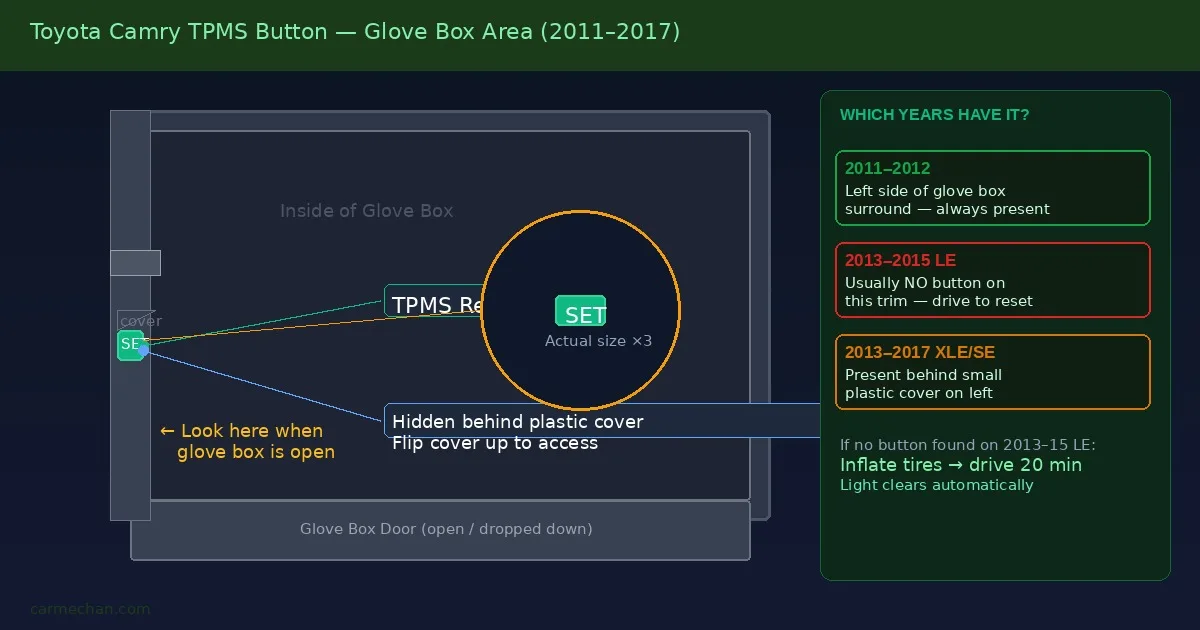
Image source: Bing (Web (fair-use with source credit))
If you've dealt with tire pressure warnings on other vehicles, the process may differ slightly. The approach for a Kia Sportage tire pressure warning follows a similar logic but uses a different button location and hold time. Always check your specific owner's manual.
When the Light Won't Go Off: Sensor Failure vs. Slow Leak
You've inflated the tires and performed the reset. The light is still on. Now you need to figure out what's actually wrong.
TPMS Sensor Malfunction:
- The light may flash for about a minute on startup, then stay solid.
- Sensor batteries are non-replaceable. The whole unit must be swapped.
- Most sensor batteries last 5 to 10 years. Older Camrys from 2007 to 2012 are hitting that range now.
- A scan tool can pinpoint which sensor failed. This is typically a tire shop job.
Persistent Slow Leak:
- The light returns steadily after driving.
- You added air, but it leaks out over hours or days.
- Common culprits: a nail in the tread, a damaged valve stem, or a bead leak where tire meets rim.
- Spraying soapy water on the tire, valve, and rim reveals leaks as bubbles.
A flashing TPMS light that eventually goes solid is the classic symptom of sensor failure. A steady light that comes back after inflation points to a leak. Knowing the difference saves you time and money at the shop.
Other dashboard warning lights can share root causes with sensor communication issues. If you notice a backup camera glitch or bluetooth connectivity problem at the same time, a broader electrical issue may be at play.
Costly Mistakes That Could Leave You Stranded
Beyond the initial reset, several habits cause repeated TPMS warnings or expensive repairs.
Overinflating tires: After dealing with an underinflation scare, some people pump in too much air. Overinflation shrinks the tire's contact patch, leading to harsh rides, poor handling, and center-tread wear. Always verify with a gauge after filling.
Ignoring seasonal temperature drops: Tire pressure drops about 1 PSI for every 10°F decrease in ambient temperature. That's why the light often appears in late fall. A tire set perfectly at 70°F reads low on a 30°F morning, even with zero puncture.
Just add air.
Using the wrong replacement sensor: Toyota systems are particular. A sensor must match the correct radio frequency (typically 315 MHz) and be programmed to your vehicle's ECU. Generic sensors may not communicate properly.
Stick with OEM or manufacturer-approved equivalents.
Forgetting the spare: Your spare tire has a TPMS sensor and a required pressure, usually 60 PSI for compact spares. If you use the spare and the light comes on, the same check-and-reset process applies. A soft brake pedal can also signal underinflated tires affecting overall vehicle dynamics.
Skipping diagnosis when the light persists: If you've checked, filled, and reset but the light returns within days, a sensor is likely dying. Resetting it repeatedly delays repair and can mask a developing leak simultaneously.
What Real TPMS Repairs Actually Cost
Understanding repair costs helps you budget and avoid overpaying. Prices vary by region and shop type, but here's what to expect as of 2026.
Single Sensor Replacement:
- OEM sensor installed: $150 to $250
- Aftermarket sensor installed: $80 to $150
- Programming fee (if not included): $50 to $100
Full Set of Four Sensors:
- OEM installed and programmed: $500 to $900
- Aftermarket installed and programmed: $300 to $500
Valve Stem Replacement:
A damaged valve stem is far cheaper. Expect $15 to $30 per tire including labor.
TPMS System Diagnosis:
Most shops charge $50 to $100 to scan and identify the failing sensor. Many apply this fee toward the repair.
| Repair Type | DIY Cost | Shop Cost |
|---|---|---|
| Air fill-up | Free to $5 | $10 to $15 |
| Valve stem replacement | $10 to $20 | $25 to $50 |
| Single sensor replacement | $50 to $100 | $150 to $250 |
| Full sensor set (4) | $200 to $400 | $500 to $900 |
Ways to save: buy sensors online and have a shop install them. Tire retailers often offer free TPMS resets with new tire purchases. Ask about bundled sensor deals when replacing all four tires.
And keep a quality gauge and portable inflator in your trunk. An inflator costs $30 to $50 and prevents TPMS emergencies. If you notice transmission slipping or steering vibration alongside tire warnings, address everything together during one shop visit to save on diagnostic fees.
Frequently Asked Questions
Why is my TPMS light on but all tires look fine?
A tire can be 5 PSI low and still appear normal. The light activates from drops too small to see. Temperature changes are the most common cause.
Always check with a gauge rather than relying on appearance.
How much does it cost to reset the tire pressure light?
Resetting it yourself is free. Three button presses and a short drive. If a shop does the diagnostic scan, expect $50 to $100, often waived if you have them do the repair.
Can I drive with the tire pressure light on?
Short distances at reduced speed are okay to reach a safe checking spot. Do not continue normal driving, especially at highway speeds. Underinflated tires overheat and can fail without warning.
Does cold weather cause the TPMS light to come on?
Yes. Pressure drops roughly 1 PSI per 10°F decrease in temperature. A tire inflated perfectly in summer may trigger the light on a cold morning.
Adding air usually resolves it immediately.
How long do Toyota Camry TPMS sensors last?
Most last 5 to 10 years. The internal battery is sealed and non-replaceable, so the entire sensor must be swapped when it dies. Models from 2007 to 2012 are entering this failure window.
Do all Toyota Camrys use the same reset procedure?
Most models from 2007 onward use a hold-the-button method. Newer trims with updated displays may use a menu path instead. Always check your owner's manual for the exact steps for your model year.