Honda Civic engine overheating is one of those problems that can go from "slightly concerning" to "engine-destroying" in a matter of minutes. If your temperature gauge is climbing past the midpoint or that red warning light just flicked on, you need to act fast. The good news is that most overheating situations have a straightforward cause, and many of them are catchable before real damage happens.
Honda's recommended operating coolant temperature sits between 195°F and 220°F (90°C to 105°C). Once the engine pushes past roughly 240°F, you're in the danger zone for warping the cylinder head or blowing the head gasket. Here's what to do the moment your Civic starts running hot, and what's likely causing it.
49% off Today's Exclusive Deals
Limited-time Exclusive Deals. Check current discount on Amazon.
Check Price on Amazon As an Amazon Associate I earn from qualifying purchases.Pull Over Immediately: The First 60 Seconds When Your Civic Overheats
The moment you see that temperature gauge climb into the red or the coolant warning light activates, pull over safely and shut the engine off. This is non-negotiable. Continuing to drive even a quarter mile at full operating temperature overheat can cause thousands in damage.
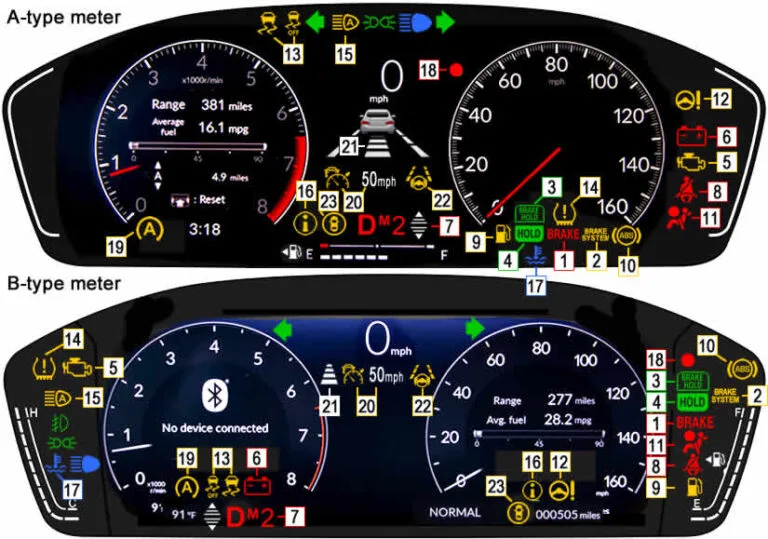
Image source: Bing (Web (fair-use with source credit))
49% off Today's Exclusive Deals
Limited-time Exclusive Deals. Check current discount on Amazon.
Check Price on Amazon As an Amazon Associate I earn from qualifying purchases.Here's exactly what to do in the first 60 seconds:
- Turn off the A/C immediately. The air conditioning puts extra load on the engine and adds heat. Killing it reduces thermal stress right away.
- Turn the heater on full blast, max fan, hot setting. This sounds counterintuitive, but the heater core acts as a secondary radiator. It pulls heat out of the coolant and dumps it into the cabin. It might buy you a few extra minutes.
- Pull over to a safe spot off the road. A flat surface is best. You don't want to check coolant on a slope.
- Turn the engine off and let it cool for at least 30 minutes. Do not pop the hood immediately. The cooling system is pressurized, and hot coolant under 13 to 16 psi of pressure can spray out and cause severe burns within seconds.
Once things have cooled, you can start looking for obvious problems. Check the coolant reservoir level first. If it's low or empty, that's your starting clue.
If you see coolant puddled under the car, you've got a leak somewhere. The Kia Sportage coolant leak guide covers leak identification steps that apply equally here.
The critical thing to remember: never open the radiator cap on a hot engine. Wait until you can comfortably hold your hand on the upper radiator hose. That's when it's safe enough to check.
49% off Today's Exclusive Deals
Limited-time Exclusive Deals. Check current discount on Amazon.
Check Price on Amazon As an Amazon Associate I earn from qualifying purchases.Why Your Honda Civic Engine Is Overheating: The 7 Most Common Causes
In our research across NHTSA complaint databases, Honda technical service bulletins, and aggregate repair shop data, seven causes account for the vast majority of Civic overheating cases.
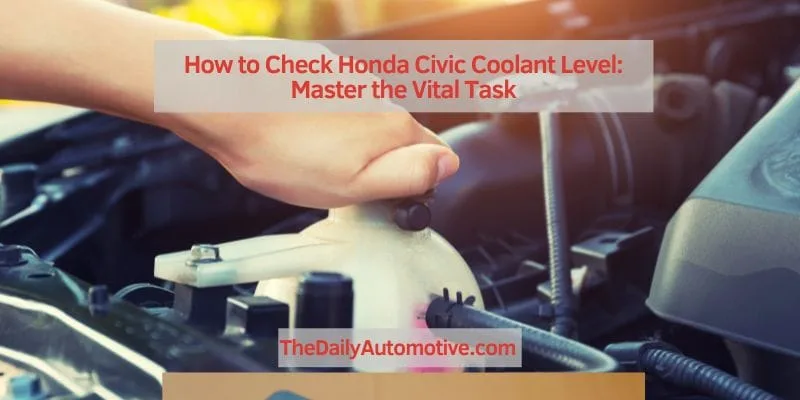
Image source: Bing (Web (fair-use with source credit))
Low or Empty Coolant
This is the most common culprit. The coolant level drops because of a slow leak, evaporation from a bad radiator cap, or simple neglect during maintenance intervals. Without enough coolant circulating, the engine can't shed heat.
Stuck Thermostat
The thermostat is a small valve that opens and closes to regulate coolant flow between the engine and radiator. When it gets stuck in the closed position, hot coolant can't reach the radiator to cool down. Per Honda service specifications, the thermostat on most Civics opens between 176°F and 186°F (80°C to 86°C).
If it never opens, temperatures spike fast.
Failed Radiator Fan
The radiator fan pulls air through the radiator when the car isn't moving fast enough for natural airflow. If the fan motor burns out, the fuse blows, or the relay fails, the engine overheats at idle or in traffic but might feel fine on the highway. This is worth ruling out early.
Fan problems often get misdiagnosed as something more expensive. If you're dealing with a related electrical issue, our Kia Sportage alternator problem breakdown covers how to test automotive electrical components step by step.
Clogged Radiator
Over time, sediment and mineral scale build up inside the radiator's narrow coolant passages. This restricts flow and reduces the radiator's ability to dissipate heat. Radiators on the 10th and 11th generation Civics use plastic end tanks crimped to an aluminum core.
The plastic cracks with age and heat cycling, causing internal blockage or external leaks.
Failed Water Pump
The water pump circulates coolant through the engine. On the 1.5T engine found in 10th and 11th generation Civics, Honda switched to an electric water pump. When the pump's internal impeller wears out or the motor fails, coolant flow drops and the engine overheats.
A telltale sign is overheating at idle with normal temps at highway speed.
Head Gasket Failure
This is the big one. When the head gasket fails, combustion gases push into the cooling system, creating pressure that overwhelms the radiator cap and displaces coolant. You'll often see bubbles in the reservoir, a sweet exhaust smell from the tailpipe, or milky oil on the dipstick.
Sustained overheating can also cause head gasket failure, so it sometimes becomes a vicious cycle.
Faulty Coolant Temperature Sensor
The ECT sensor tells the engine computer what temperature the coolant is at. A bad sensor can send incorrect readings, causing the ECU to mismanage the cooling fan or fuel mixture. In some cases, the sensor fails entirely and the dashboard gauge reads cold while the engine is actually cooking.
How to Safely Check the Most Common Causes Yourself
You don't need to be a trained mechanic to rule out the most obvious causes. Here's a practical workflow based on Honda service manual procedures.
Start with visual inspection (engine cold, key off):
- Check the coolant reservoir level. The plastic tank near the radiator should show coolant between the MIN and MAX marks. If it's below MIN, that's your first problem.
- Look under the car for wet spots, dried coolant stains (often greenish or blue), or damp hoses.
- Inspect the upper and lower radiator hoses for cracks, bulges, or soft spots. Squeeze them gently. They should feel firm but not rock-hard.
Next, test the radiator fan:
Turn the key to the ON position (don't start the engine). The radiator fan should kick on within a few seconds in most conditions. If it doesn't, check the fuse first.
Then check the relay. If both are good, the fan motor itself is likely dead.
Check coolant condition:
Pull the reservoir cap (when cold) and look at the coolant. It should be a consistent color matching Honda Type 2 (blue) or Honda Type 3 coolant. If it looks rusty, brown, or has oily film floating on top, you've got contamination issues.
Oily coolant on the 1.5T engine is a red flag for the known fuel dilution problem that affects oil-coolant interaction in direct-injection engines.
Scan for codes:
If you have an OBD2 scanner, plug it in and look for coolant-related trouble codes. Common ones include P0128 (thermostat below regulating temperature), P2185 (ECT sensor circuit high), and P0116 (ECT sensor circuit range). These codes narrow the diagnosis significantly.
| Code | Meaning | Likely Cause |
|---|---|---|
| P0128 | Coolant temp below thermostat threshold | Stuck-open thermostat or low coolant |
| P0116 | ECT sensor circuit range/performance | Faulty sensor or air in system |
| P2185 | ECT sensor circuit high input | Wiring issue or failed sensor |
If your Mazda has similar heating issues, the Mazda CX-5 heater not working guide walks through thermostat and heater core diagnosis that applies to any vehicle.
Which Honda Civic Generations Have the Most Overheating Problems
Not all Civics overheat equally. Certain model years and engine configurations have well-documented patterns.
8th Generation (2006 to 2011): The 1.8L R18 engine is generally reliable for cooling. The most common issues are radiator cap failure and coolant hose deterioration around 120,000 miles. Radiator replacements are straightforward and affordable on this generation.
9th Generation (2012 to 2015): Similar to the 8th gen but with slightly improved cooling system components. The thermostat housing on some models developed minor leaks. Overall, overheating complaints are relatively low for this generation.
10th Generation (2016 to 2021): This is where things get interesting. The 1.5T turbocharged engine brought performance gains but introduced new cooling challenges. The electric water pump is more complex than a traditional mechanical one.
Honda issued technical service bulletins related to coolant concentration and oil dilution in cold climates, where fuel mixes with engine oil and degrades lubrication. Aggregate NHTSA complaints for overheating are noticeably higher on 2016 to 2018 models specifically.
11th Generation (2022 to present): Honda addressed several 10th gen issues, but the 1.5T thermal management system remains more sensitive than the older 2.0L naturally aspirated setup. Owners in hot climates should monitor coolant levels more frequently.
A few patterns hold across all generations:
- Plastic radiator end tanks crack more often on cars with 100,000+ miles
- Using non-Honda coolant types can accelerate aluminum corrosion in the engine block
- The cooling system bleed procedure is critical after any coolant service. Air pockets cause localized hot spots that trigger the temperature spike even when the system is full
The Mazda CX-5 radiator problem guide covers the same age-related radiator degradation that affects Honda Civics with plastic-tank radiators.
When You Should Stop DIY and Take It to a Shop
Some overheating fixes are weekend projects. Others require professional equipment and expertise. Knowing the line saves you time and prevents turning a $200 fix into a $2,000 one.
Safe to DIY:
- Coolant top-off or flush (straightforward on all generations)
- Thermostat replacement (accessible on the 1.8L and 2.0L engines)
- Radiator fan fuse or relay swap
- Coolant temperature sensor replacement
- Hose inspection and replacement
Take it to a shop:
- Water pump replacement on the 1.5T engine (requires timing chain removal, not a driveway job)
- Head gasket repair or replacement (requires engine teardown and machine work)
- Radiator replacement on models where the AC condenser must be removed first
- Any overheating伴随milky oil or persistent combustion leak test failure
- Electrical diagnosis when the fan doesn't work and fuses/relays check out
A block test (combustion leak detector) costs about $30 to $50 at most shops and definitively tells you whether exhaust gases are entering the cooling system. If you're not sure whether your head gasket is blown, this test settles it. A head gasket replacement on a 10th gen 1.5T Civic typically runs between $1,000 and $2,500 depending on labor rates in your area.
If the engine has high mileage and other wear, a used engine swap might make more financial sense than a gasket repair.
If your steering is vibrating alongside other symptoms, that's a separate issue worth investigating through our Kia Sportage steering wheel shaking guide, since drivetrain and cooling problems sometimes overlap in their warning signs.