A Hyundai Tucson starter problem usually shows up in one frustrating moment: you press the button, hear a click, and the engine stays silent. Sometimes the dash lights up fine. The radio plays.
But the crankshaft won't turn. That's when most owners start digging for answers.

49% off Today's Exclusive Deals
Limited-time Exclusive Deals. Check current discount on Amazon.
Check Price on Amazon As an Amazon Associate I earn from qualifying purchases.Manufacturer specifications indicate a healthy 12V battery should rest around 12.6 volts. If it drops below that, the starter may not get enough current to spin the engine. As of 2026, this still trips up Tucson owners of nearly every generation.
The good news is a few simple diagnostics can tell you whether it's a dead battery, a dirty connection, or a worn starter motor.
49% off Today's Exclusive Deals
Limited-time Exclusive Deals. Check current discount on Amazon.
Check Price on Amazon As an Amazon Associate I earn from qualifying purchases.Image source: Bing (Web (fair-use with source credit))
Quick Answer
A Hyundai Tucson starter problem usually comes from three causes. Those are a weak battery, a bad ground, or a failing starter motor. Start with the battery.
Check the trigger signal next. Replace parts only after tests confirm.
What Your Tucson Is Telling You
Your Tucson doesn't hide a starting fault. It gives you clues. The trick is reading them correctly.
49% off Today's Exclusive Deals
Limited-time Exclusive Deals. Check current discount on Amazon.
Check Price on Amazon As an Amazon Associate I earn from qualifying purchases.A loud single click with no crank usually means the solenoid is pulling in but the motor isn't spinning. That often points to a bad starter, a poor ground, or a seized pinion.
Rapid clicking screams low voltage. The relay chatters on and off because the battery can't hold enough current. Slow cranking is another classic sign of a weak battery or corroded terminals.
Intermittent no-starts that work after waiting usually come from heat soak, a worn starter, or a flaky ignition switch.
In our research of owner reports, the most common Tucson symptom is one click then silence. The starter was the culprit in many cases, but not all. If you also have weak accessories, like a horn that barely works, the fault might be a shared electrical issue.
Checking NHTSA's recall database can also show if your generation has known starting complaints.
| Symptom | What it likely means | Next step |
|---|---|---|
| One loud click, no crank | Solenoid engages, starter doesn't spin | Load-test battery, check ground |
| Rapid clicking | Relay cycling due to low voltage | Charge and load-test battery |
| Slow crank | Weak current reaching the starter | Clean terminals, test cables |
| Silence, dash lights work | No start signal reaching the starter | Check fuse, relay, brake interlock |
One more clue matters. When the engine is hot, a failing starter often stops working. It works again after cooling down.
That's heat soak. It's a known pattern in high-mileage Tucson owners, and it points straight at the starter motor.
The Starter Problem Decision Tree: Match Your Symptom to the Next Move
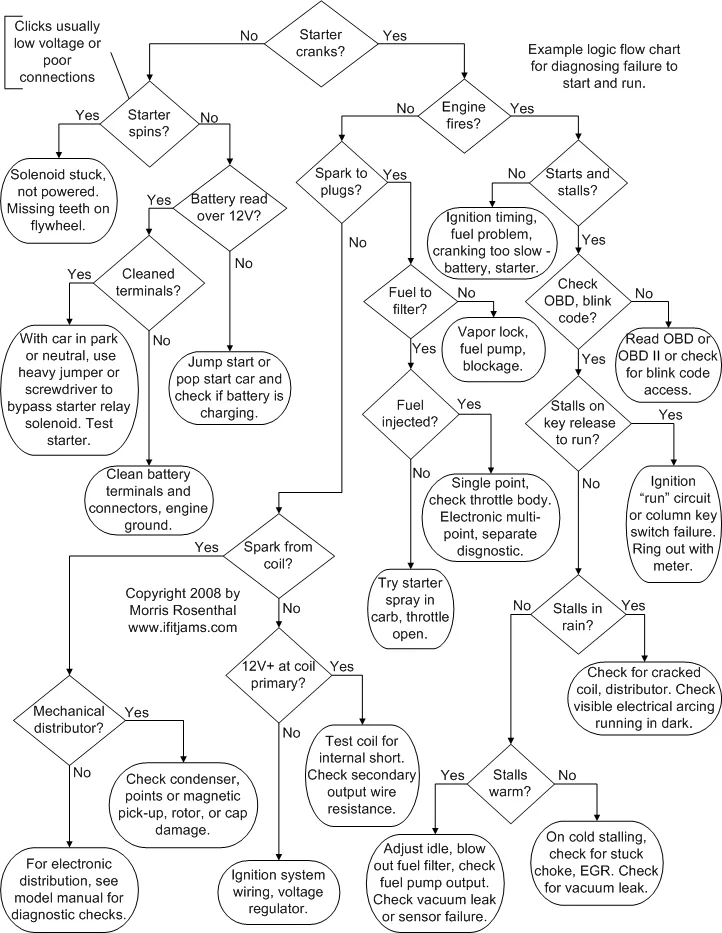
Image source: Bing (Web (fair-use with source credit))
Treat this like a flowchart, not a parts-testing session. Match your symptom to the next step.
If you get one click, then silence: start with the battery. Test it under load. If the battery passes, move to the starter ground cable and wiring.
A bad ground is easy to miss.
If you get rapid clicks: the battery voltage is collapsing under load. Jump-start it if possible. If it starts, drive to a shop for a load test.
Loose terminals make the same sound.
If you get nothing at all: check the starter fuse and relay first. Those are cheap and often ignored. Then test the trigger wire at the starter while a helper holds the key.
If the trigger gets 12V and the starter stays dead, the starter is the problem.
If it starts after a few tries: look for a worn starter motor, a flaky ignition switch, or a failing brake interlock switch on push-button models. Test the brake light circuit first, since that interlock shares the same electrical path.
If the engine cranks but won't start: this isn't a starter problem. Look at fuel, spark, or the immobilizer. The starter only turns the engine.
Use this as your decision guide. The next section turns each branch into hands-on checks.
Step-by-Step Diagnostics: Battery, Fuses, Relay, Trigger, and Starter
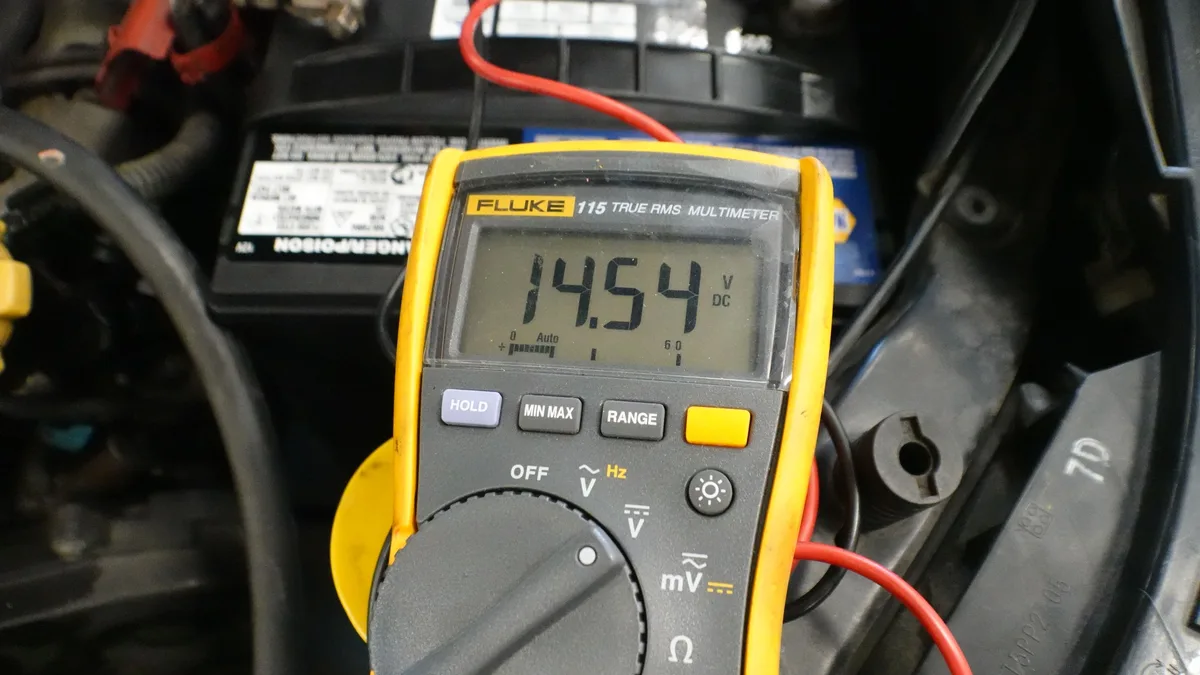
Image source: Bing (Web (fair-use with source credit))
Let's walk through the checks in the order that catches the most problems first.
1. Inspect and clean the battery terminals. Look for white or green corrosion on the posts and cable ends. Loose clamps cause voltage drop even with a new battery.
Clean them with a wire brush and retighten. If you've also noticed dim headlights, a shared ground issue might be at fault.
2. Resting voltage check. Set the multimeter to DC volts. Measure across the battery posts with the car off.
Below 12.4 volts means undercharged. Below 12.0 volts needs a charge or replacement.
3. Load-test the battery. Many parts stores do this for free. A battery can show normal voltage at rest, then collapse under the starter's draw.
4. Check the starter fuse and relay. Find the under-hood fuse box. Swap the starter relay with an identical relay.
Check the fuse with a test light.
5. Test the starter trigger wire. Have a helper turn the key to START while you probe the small trigger wire on the solenoid. It should show near battery voltage.
No voltage means the start signal is breaking down upstream.
6. Test the ground cable. Connect one multimeter lead to the negative battery post and the other to the engine block. Crank and read the meter.
It should stay below 0.5 volt.
This sequence takes about 30 minutes with basic tools. It also stops you from replacing a healthy starter.
Voltage Drop and Bad Grounds: The Misdiagnosis That Wastes Money
Voltage drop is public enemy number one in starter diagnosis. The battery can be healthy. The starter can be new.
But if a corroded cable or loose ground stops current, the engine won't crank.
Corrosion on the battery terminals creates resistance. Resistance chokes current before it reaches the starter. The same happens with a rusty engine ground strap.
The starter gets enough juice to click the solenoid, but not enough to spin the motor.
Here's how to check your ground circuits. Perform a voltage drop test on both the positive and negative cables while cranking. Manufacturer guidelines say each side should show less than 0.5 volt.
More than that means resistance is stealing the power.
Pay attention to the negative battery cable where it connects to the engine block. High-mileage Tucsons often develop a poor ground connection there. There's also a body ground strap that can corrode.
Cleaning these connections costs little and sometimes fixes a no-crank instantly.
This is why voltage drop creates weird, intermittent faults. Turn signals stop working, then work again, often trace back to a loose ground. The same logic applies here.
The best way to verify a ground problem is to run a temporary jumper cable from battery negative to the engine block. Try starting. If it fires up, you've found your fault.
That's a $10 fix instead of a $500 starter replacement.
Starter Replacement Reality: Parts, Labor, DIY vs Pro
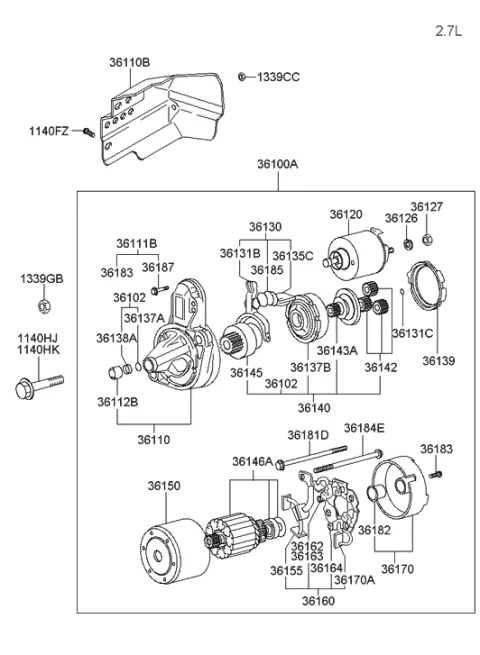
If diagnostics point to a dead starter, replacement is the fix. The starter motor itself isn't repairable. A rebuilt unit saves money, but OEM offers the most reliable fit.
Aggregate repair reports put Tucson starter parts between $200 and $500. Labor runs 1.5 to 3 hours depending on the engine and mounting location. Total shop cost often lands between $400 and $800.
A DIY job costs just the part, plus a few hours.
| Option | Parts cost | Labor | Total estimate | Best for |
|---|---|---|---|---|
| Dealership | $350-500 | $150-300 | $500-800 | Warranty coverage, peace of mind |
| Independent shop | $250-400 | $150-250 | $400-650 | Lower cost with professional work |
| DIY replacement | $200-400 | Your time | $200-400 | Confident home mechanics |
Before buying, know which Tucson generation you have. The 3rd gen (2016-2020) and 4th gen (2021-present) mount the starter differently. A rebuilt unit from a reputable supplier usually carries a warranty.
A cheap no-name starter sometimes fails quickly.
Also confirm the transmission's neutral safety switch isn't the real issue. If the car starts in neutral but not park, the switch is at fault. That's a much cheaper repair.
In many cases, gear selector misalignment can make the same no-crank symptom appear.
If the starter sits under an intake manifold, labor jumps. Some Tucson engines require removing parts to reach it. Your Hyundai owner's manual can point you to the exact starter location and relay box.
In that case, a professional might be worth the cost.
Common Mistakes That Leave Tucson Owners Stranded (or Broke)
The biggest mistake is swapping parts without testing first. A dead starter gets blamed, a new one goes in, and the car still won't crank. The real problem was corroded battery terminals the whole time.
Skipping the fuse and relay is another costly shortcut. These are the cheapest, fastest checks on the car. Most people jump straight to the starter motor instead.
Always verify the simple stuff first.
Heat soak fools plenty of owners. The car starts fine when cold but dies after a drive. After cooling off, it fires right up.
That pattern points to a worn starter motor, not a dying battery. Replacing the battery in this scenario is wasted money.
Push-button Tucson owners often overlook the brake interlock switch. The car won't crank unless the pedal signals the computer. A failing switch creates the exact same symptom.
Check brake pedal response before blaming the starter.
One more trap: the neutral safety switch. If your Tucson starts in neutral but not park, that switch is faulty. A new starter won't fix it.
The switch costs a fraction of what a starter runs.
Real-Life Scenarios and a Final Decision Guide
A 2019 Tucson with 85,000 miles shows one click and no crank. Battery voltage reads 12.3V at rest. Terminals are white with corrosion.
Cleaning them and recharging the battery fixes it. Total cost: zero dollars.
A 2017 Tucson with 110,000 miles rapid-clicks on cold mornings. A load test shows the battery collapsing under the starter's draw. A new battery solves the problem.
Cost lands around $180.
A 2022 Tucson with 30,000 miles won't respond to the push-button at all. The brake lights work fine. The key fob battery is dead.
A $5 CR2032 cell fixes it in seconds.
A 2021 Tucson with 55,000 miles starts cold, then dies when hot. A voltage drop test on the engine ground shows 1.2V during cranking. That's well above the 0.5V threshold.
A new ground cable costs about $30 and solves the fault.
When to call a professional: if the trigger wire receives 12V and the starter still won't spin, the motor is done. If you're not comfortable probing live circuits, a shop diagnosis saves time. On manual models, a failing clutch pedal can also block the start circuit.
Don't overlook it.
Final decision guide: start cheap. Clean terminals. Load-test the battery.
Swap the fuse and relay. Probe the trigger signal. Test the ground path.
Only replace the starter after those checks confirm the fault. That order saves the most money and gets you moving fastest.
FAQ: Hyundai Tucson Starter Problems
Can a dead key fob prevent my Tucson from starting?
Yes. Push-button models won't crank if they can't read the fob. Hold it directly against the start button as a workaround.
If that works, replace the fob battery. A CR2032 cell costs a few dollars and takes seconds to swap.
Why does my Tucson start in neutral but not park?
The neutral safety switch isn't detecting park. Try starting in neutral. If it works, that switch needs adjustment or replacement.
It's a quick, low-cost fix at most shops.
How long does a Hyundai Tucson starter motor last?
Aggregate data suggests Tucson starters last between 100,000 and 150,000 miles. Heavy short-trip use or extreme heat shortens that lifespan. Cold climates stress both the battery and the starter simultaneously.
Is it worth using a rebuilt starter or should I buy OEM?
OEM parts offer the best fit and factory warranty backing. Quality rebuilt units work well for most owners and save money. Cheap no-name starters carry a higher failure rate, per verified buyer reports.
Will jump-starting help if the starter motor is dead?
Jumping helps a weak battery, not a dead starter. If the car cranks slowly or clicks rapidly, try a jump. If you hear one solid click with no crank, the starter motor itself is likely the issue.