Image source: Bing (Web (fair-use with source credit))

49% off Today's Exclusive Deals
Limited-time Exclusive Deals. Check current discount on Amazon.
Check Price on Amazon As an Amazon Associate I earn from qualifying purchases.It's late afternoon on a trailhead. You turn the key in your Jeep Wrangler, and instead of a firing engine you get one weak click from under the hood. The dash lights come on.
The radio plays. But the starter won't budge.
A Jeep Wrangler starter problem almost never has one single answer. The fix depends on what your Jeep is doing when you turn the key. The wrong guess can cost $500 or more.
49% off Today's Exclusive Deals
Limited-time Exclusive Deals. Check current discount on Amazon.
Check Price on Amazon As an Amazon Associate I earn from qualifying purchases.Manufacturer specs indicate a healthy starter draws between 150 and 250 amps during cranking, and battery voltage should not drop below 9.6 volts under load. Before you buy anything, figure out which branch of the diagnosis you're on.
Quick Answer
Most Wrangler starter problems trace back to a weak battery, corroded cables, or a bad ground strap. A failed starter motor usually comes later. Test the battery first, check the TIPM relay, then inspect the starter.
Replace parts only after diagnostics point at them. Jumping straight to a new starter wastes money when the real culprit is electrical.
The Starting Point: What Exactly Is Your Wrangler Doing?
You can diagnose a huge percentage of starter failures just by listening. The sound, or the silence, tells you which component to test first.
49% off Today's Exclusive Deals
Limited-time Exclusive Deals. Check current discount on Amazon.
Check Price on Amazon As an Amazon Associate I earn from qualifying purchases.No click, no crank, no sound at all. If the dash lights come on but nothing happens when you turn the key, power isn't reaching the starter solenoid. That points to the ignition switch, the neutral safety switch, the TIPM relay, or a broken connection. Start at the battery and work forward.
One loud click, then nothing. That single click is the solenoid engaging, but the starter motor isn't turning. Either the motor is seized, the battery can't deliver enough amperage, or the ground cable is corroded beyond carrying the current.
Rapid clicking, like a machine gun. This is the classic weak battery signature. The solenoid chatters because voltage collapses every time it tries to engage. It sounds dramatic, but it's often a 15-minute fix.
A slow, labored crank. The engine turns over lazily, then catches or gives up. That's usually low battery voltage, a failing starter motor, or resistance in the battery cables. A bad ground strap on the engine block causes this too.
Grinding or screeching at startup. The starter gear is hitting the flexplate but not meshing cleanly. That's a worn Bendix, damaged flexplate teeth, or a starter mounted slightly out of alignment. If the flexplate is damaged, replacing only the starter will shred the new one.
Intermittent no-start. It works fine for a week, then dies, then works again. That pattern points to a loose connection, a failing relay, or thermal breakdown inside the starter motor. Heat causes worn windings to expand and lose contact until they cool.
Then there's complete silence with no dash lights at all. That's not a starter problem. That's a dead battery or bad main fuse.
Rule Out the Cheap Fixes First
Before you spend a dime on starter parts, run through the cheap checklist. Our research of common Wrangler no-start complaints shows many turn out to be battery or connection issues, not starter failures.
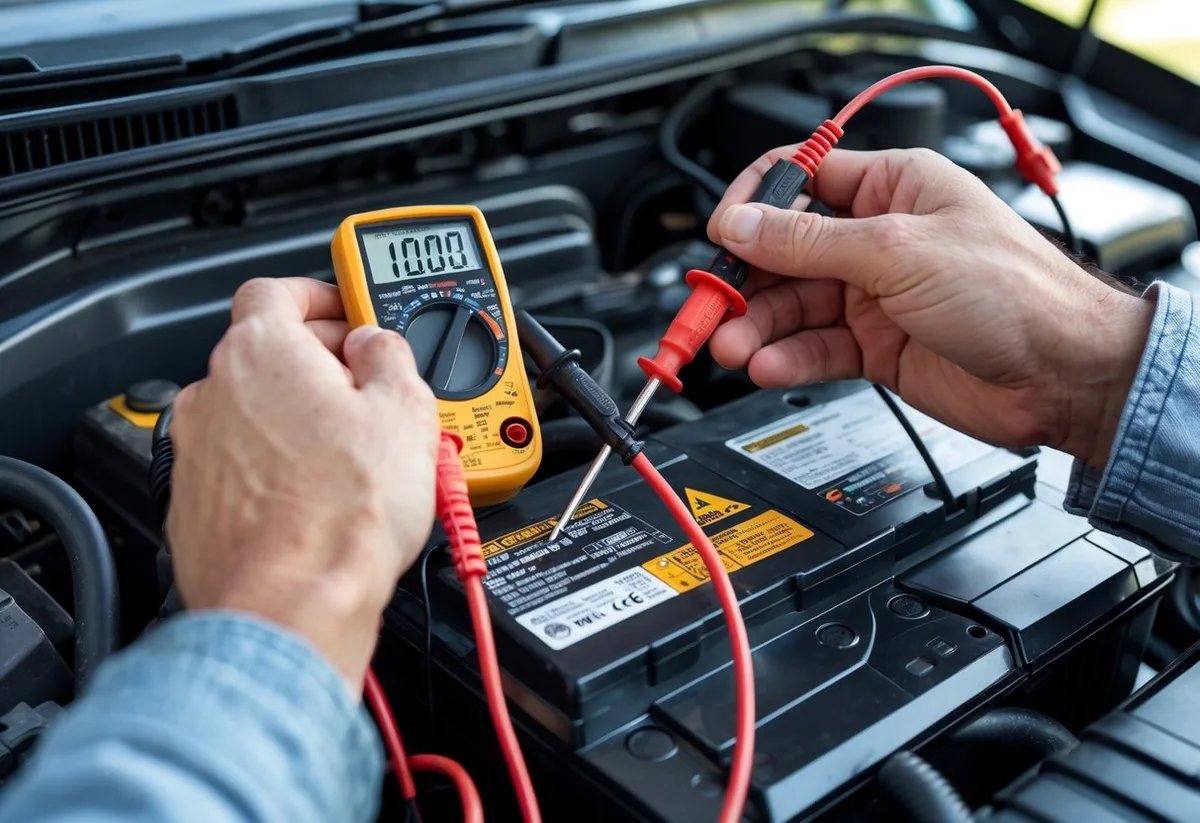
Image source: Bing (Web (fair-use with source credit))
Start with battery voltage. A fully charged battery reads 12.6 volts at rest. Anything below 12.4 is suspect.
But resting voltage alone doesn't tell the whole story. Load testing is what matters. Most parts stores will load-test your battery for free.
A battery can show 12.6 volts sitting still and collapse to 7 volts the second the starter asks for 200 amps.
Next, inspect the terminals. Corrosion is a silent killer. Green and white crust on the posts adds resistance, and resistance means voltage drop.
Clean the posts with a wire brush, reattach the cables snugly, and coat them with dielectric grease.
Then check the ground straps. Wranglers have a main ground cable from the battery negative terminal to the engine block, plus a body ground. Over years of off-road use, these connections corrode at the mounting points.
A visually clean cable can hide a corroded eyelet. Undo it, scrape the contact surface to bare metal, and rebolt it.
Last: the TIPM relay. The Totally Integrated Power Module on JK models (2007 to 2018) is notorious for starter relay failure. The fix is simple.
Open the TIPM fuse box under the hood, find the starter relay, and swap it with the horn or wiper relay. They're identical. If the Jeep starts, you've found your culprit.
A new relay costs about $15.
The Click Diagnosis: Solenoid, Relay, or Starter Motor?
If the battery is healthy and connections are clean, isolate the problem further. The click pattern tells you exactly where to look.
A click from the starter area means the solenoid is getting power and trying to engage. A click from under the TIPM cover means the relay is switching, but power may not reach the starter.
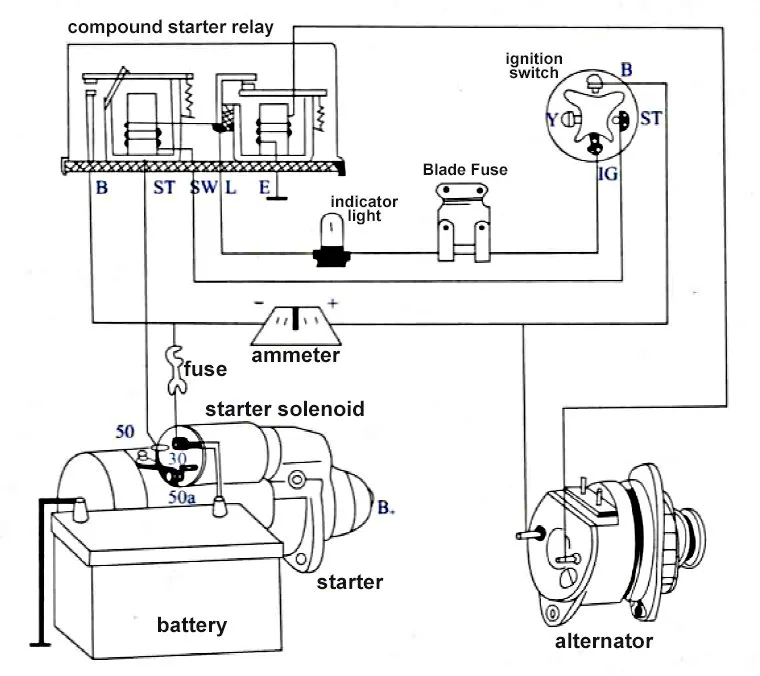
Image source: Bing (Web (fair-use with source credit))
Here's the direct test. With the key in RUN and the transmission in Park, probe the small trigger wire on the starter solenoid with a test light while someone turns the key to START. If the trigger wire shows 12 volts, the starter motor itself is the problem.
If there's no voltage, the fault is upstream in the relay, neutral safety switch, or ignition switch.
You can also bypass the entire circuit for a definitive answer. Using a heavy jumper wire, connect battery positive directly to the starter solenoid's main post. If the starter spins, the problem sits in the relay or wiring.
If it doesn't, the starter unit is dead. This test generates sparks. Disconnect the key first and keep the wire away from moving parts.
For automatic transmissions, test the neutral safety switch if the relay checks out. This switch only allows starting in Park or Neutral. It can drift out of adjustment after years of hard shifting.
For manuals, check the clutch pedal position switch. If either switch fails, the starter never gets the signal. A clutch pedal that feels spongy can also prevent the switch from registering full travel.
Wrangler-Specific Starter Killers
Some starter issues come from quirks unique to the platform. Skip these, and you'll replace a starter only to watch it die again within a year.
TIPM failure on JK models. The TIPM's starter relay contacts can weld shut or fail open. A stuck relay sends power to the starter even after the engine runs, leaving the starter grinding against a spinning flexplate. That destroys the Bendix and flexplate teeth.
Many owners replace the starter twice before realizing the relay was the culprit. The fix is a replacement relay or an aftermarket TIPM rebuild.
Water and mud intrusion. After a deep water crossing, the starter's main battery terminal and trigger connector can corrode from the inside. The plastic looks fine while the spade terminal beneath has turned green. Check and clean these connectors after any serious off-road trip.
Flexplate ring gear damage. The starter gear strikes the flexplate every time you start. Those teeth wear over time. Some owners mistake this for a failing starter, replace the unit, and hear the same grinding continue.
If teeth are chipped or uneven, the new starter won't last.
The 2.0L eTorque difference. JL Wranglers with the 2.0L turbo and eTorque mild-hybrid system don't have a traditional starter. They use a belt-starter-generator that starts the engine through the accessory belt. If your eTorque Wrangler won't start, skip the starter diagnosis and check the 48-volt battery system instead.
Heat soak on the 3.6L Pentastar. Hot-start failures crop up when the engine compartment soaks in summer heat. The starter struggles against a hot, expanded engine. This often traces back to a marginal battery, a poor ground, or heat raising solenoid resistance.
A shifter that won't move into Park compounds the issue by confusing the neutral safety switch.
Corroded mounting surface. Rust-belt Wranglers develop corrosion between the starter housing and bell housing. That creates a poor electrical ground, and the starter can't complete its circuit. Clean the mating surfaces during any starter job.
Replacing the Starter: What to Buy and What It Costs
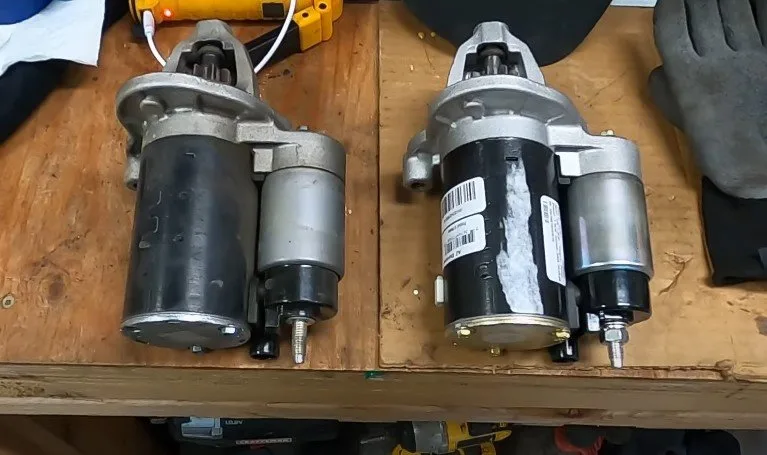
Once diagnostics confirm the starter is dead, you need to decide what to buy.
| Option | Price Range | Realistic Lifespan | Best For |
|---|---|---|---|
| OEM Mopar (new) | $180–$350 | 100,000+ miles | Long-term owners, exact fit |
| Remanufactured (Bosch, Denso, Remy) | $70–$150 | 60,000–100,000 miles | Budget builds, quick fix |
| Aftermarket new (non-OEM) | $80–$200 | 50,000–90,000 miles | Daily drivers on a budget |
Labor at a shop runs $120 to $250 depending on engine. The 3.6L Pentastar mounts low on the passenger side, which adds time. The 3.8L from 2007 to 2011 sits on the driver side, slightly easier.
Dealership diagnostic fees land between $120 and $180.
If the TIPM relay is the confirmed culprit, skip the starter entirely. The fix is a $15 relay and five minutes. A transmission making noise after a starter replacement often means the flexplate was already damaged and the new starter is grinding against worn teeth.
If the flexplate shows damage, budget more. Flexplate replacement means dropping the transmission or removing the transfer case, a multi-hour job. Repair costs run $800 to $1,200.
A $90 starter is cheap. A $1,000 flexplate because you skipped the inspection is not.
Genuine Mopar starters are worth the premium if you plan to keep the Jeep long term. Remanufactured units from name brands are solid middle ground. Bargain no-name starters get mixed reviews for a reason.
A cheap starter that fails means doing the job twice.
Step-by-Step: Swapping the Starter Yourself
You can do this in a driveway with basic tools. Budget about two hours for a first-timer.
- Disconnect the negative battery cable. No exceptions. That prevents more accidents than anything else on this list.
- Raise the Jeep on jack stands. Never rely on a floor jack alone while underneath.
- Locate the starter. On the 3.6L, crawl under the passenger side, low on the bell housing. On the 3.8L, check the driver side. The 4.0L in older Wranglers sits high on the passenger side.
- Remove the electrical connectors. Label them if they look similar. The main battery cable has a larger terminal than the trigger wire.
- Unbolt the starter. Two bolts, typically 15mm or 18mm heads. Reinstall torque is 40 to 50 ft-lbs.
- Drop the starter out. Wiggle gently if it hangs on the bell housing. Don't pry against the flexplate.
- Bench-test the old unit. Connect jumper cables to its main post, ground the case, and touch the trigger terminal to 12V. If it spins, the problem was wiring.
- Inspect the flexplate teeth. Spin the engine by hand at the crankshaft bolt. Chipped or uneven teeth mean the new starter won't last.
For rust-belt Jeeps, hit the bolts with penetrating oil the night before. Anti-seize on the new bolts keeps the next job easier.
Mistakes That Turn a $50 Fix Into an $800 Repair
Most starter horror stories come from skipping one diagnostic step.
Replacing the starter before testing the battery. A battery can read 12.6 volts and still collapse under load. You install a fresh starter, it cranks weak, and you blame the part. The battery was guilty.
Ignoring the TIPM relay on JK models. A stuck relay can engage the starter after the engine fires, chewing up the Bendix and flexplate. A $15 relay swap test prevents all of it.
Skipping the flexplate inspection. A worn ring gear sounds identical to a bad starter. Mount a new starter on damaged teeth, and the grinding continues instantly. That turns a $150 part into a $1,000 transmission drop.
Over-torquing the starter bolts. These bolts thread into aluminum housings. Too much torque strips the threads, forcing a helicoil repair or new bell housing. Tighten to spec, not to feel.
Forgetting the ground strap. A corroded engine ground makes a new starter crank slowly. It's the same mistake as the battery test, hidden in plain sight. A transmission that slips can also mimic a weak starter crank, so verify which system is failing before replacing parts.
Neglecting water recovery. After a deep crossing, mud dries in the starter connector and corrodes the terminals. Clean connectors before the moisture does permanent damage.
Frequently Asked Questions
Why does my Jeep Wrangler click but won't start?
A single click means the solenoid engages but the motor won't turn. That points to a dead battery, corroded cables, or a seized starter. Rapid clicking means the battery can't hold voltage under load.
Check these in order before touching the starter.
Can I jump-start a bad starter?
Only if the battery is weak. If the battery is healthy and the starter motor is truly dead, jumping won't help. The starter needs amperage to spin, and a dead motor won't respond to extra voltage.
If jumping works consistently, replace the battery, not the starter.
Does the JL 2.0L have a starter motor?
No. The 2.0L turbo with eTorque uses a belt-starter-generator instead of a traditional starter. It starts the engine through the accessory belt using the 48-volt battery.
Check the 48V system and belt assembly before anything else.
How do I know if it's the TIPM versus the actual starter?
Swap the starter relay with the horn relay inside the TIPM fuse box. If the Jeep fires up, the relay was the problem. If the click persists, feed 12V straight to the solenoid.
Check the NHTSA recall database for your VIN before spending money on parts.
Why won't my automatic Wrangler start in Park?
The neutral safety switch is the usual suspect. If it drifts out of adjustment, the computer doesn't know the transmission is in Park. That blocks the starter signal entirely.
Check the shifter linkage first if the lever feels loose or sloppy.
Why does my manual Wrangler not crank when I press the clutch?
The clutch pedal position switch likely failed or drifted out of adjustment. The starter won't engage until the switch confirms the pedal is fully depressed. If your clutch pedal feels spongy, it may not travel far enough to close the switch.
Check the switch before replacing the starter.