That clunk you hear from underneath your Jeep Wrangler isn't just an annoyance. It's a signal that something in the suspension has worn out, loosened up, or broken. The noise won't fix itself, and ignoring it can turn a cheap bushing replacement into a major repair.
In our research, most Wrangler suspension noise traces back to a handful of predictable failure points: bushings, ball joints, sway bar links, track bars, and shock mounts. Factory torque specs vary by component and model year, so checking the correct specification for your Wrangler matters as much as finding the loose part. As of 2026, the five-link coil-spring suspension remains the backbone of the TJ, JK, and JL generations.

49% off Today's Exclusive Deals
Limited-time Exclusive Deals. Check current discount on Amazon.
Check Price on Amazon As an Amazon Associate I earn from qualifying purchases.Let's walk through how to find and fix the noise yourself.
Quick Answer
Jeep Wrangler suspension noise usually comes from a worn bushing, a loose bolt, or a failing joint. Common culprits include sway bar links, track bar bushings, ball joints, and control arm bushings. Diagnose by driving with the windows down, bouncing each corner, and prying on joints to check for play.
Torque loose bolts with the weight on the ground. Replace worn parts in pairs.
49% off Today's Exclusive Deals
Limited-time Exclusive Deals. Check current discount on Amazon.
Check Price on Amazon As an Amazon Associate I earn from qualifying purchases.The Problem: Why Your Jeep Wrangler Makes Noise Over Bumps and Turns
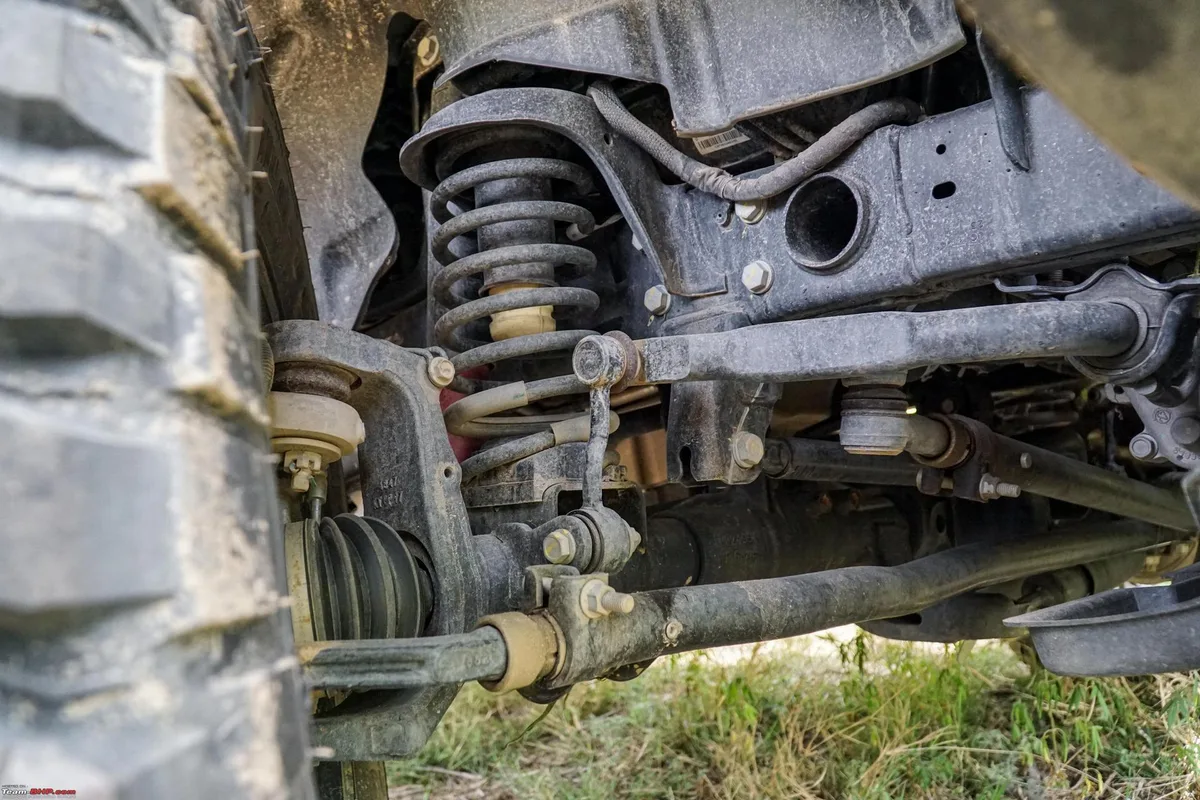
Solid axles, big tires, and a body that flexes off-road: that combination gives the Wrangler its capability, but it also makes the suspension the most likely source of new rattles and clicks. Every joint, bushing, and link takes a beating from road vibration and trail abuse. When one wears out, it creates play.
Play makes noise.
The most common noises break down like this:
- Clunks over bumps usually point to loose links or a worn track bar.
- Squeaks while turning often come from dry ball joints or sway bar bushings.
- Rattles at highway speeds can be anything from a loose end link to a steering stabilizer.
- Creaks in the rear are often spring isolators or control arm bushings.
49% off Today's Exclusive Deals
Limited-time Exclusive Deals. Check current discount on Amazon.
Check Price on Amazon As an Amazon Associate I earn from qualifying purchases.Image source: Bing (Web (fair-use with source credit))
Ignoring that noise is risky. Worn ball joints can break while driving. A loose track bar can trigger death wobble.
If the noise appears only when you press the brakes, the problem may be in the brake system rather than the suspension.
The Decision Tree: Match the Noise to the Likely Suspension Part
You can narrow down the culprit before touching a single bolt. The type of noise, when it happens, and how the Wrangler feels all point in a specific direction. Use this quick reference table as your starting point.
| Noise | When it happens | Likely culprit | Quick check |
|---|---|---|---|
| Clunk | Over bumps or dips | Sway bar link, track bar bushing | Pry bar on the joint to feel for play |
| Squeak | Turning slowly or off-road | Dry ball joint, sway bar bushing | Grease the fitting and test |
| Creak | Weaving or flexing on trails | Control arm bushing, spring isolator | Look for cracked rubber or rust |
| Rattle | Highway speed, washboard roads | Loose end link, shock mount | Try to move the link by hand |
| Groan or pop | Accelerating or braking | Control arm bolt, axle wrap | Torque check all suspension bolts |
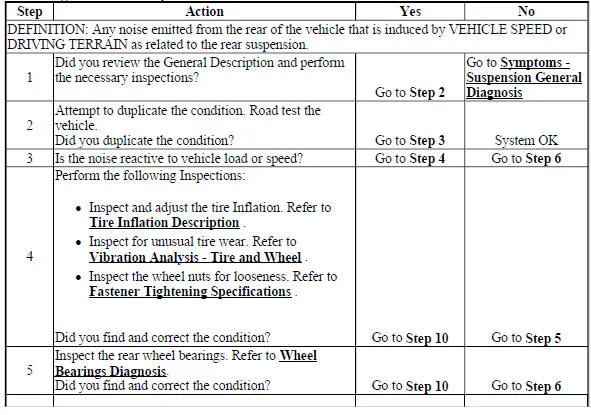
Image source: Bing (Web (fair-use with source credit))
Apply if/then logic. If the clunk happens every time you go over a speed bump, start with the sway bar links. If it only happens on big dips or while off-camber, inspect the track bar.
If the squeak starts when you turn the wheel in a parking lot, grease the ball joints and upper swivel seals first.
Also check for open recalls and technical service bulletins on NHTSA's website before you begin. If the sound is a rhythmic rumble that changes with speed, that could be a driveline noise from the transmission rather than the suspension.
Step-by-Step Diagnosis: How to Confirm the Noisy Component Yourself
Before you replace anything, do a 20-minute check. You'll need a long screwdriver or pry bar, a good flashlight, a floor jack, and jack stands.
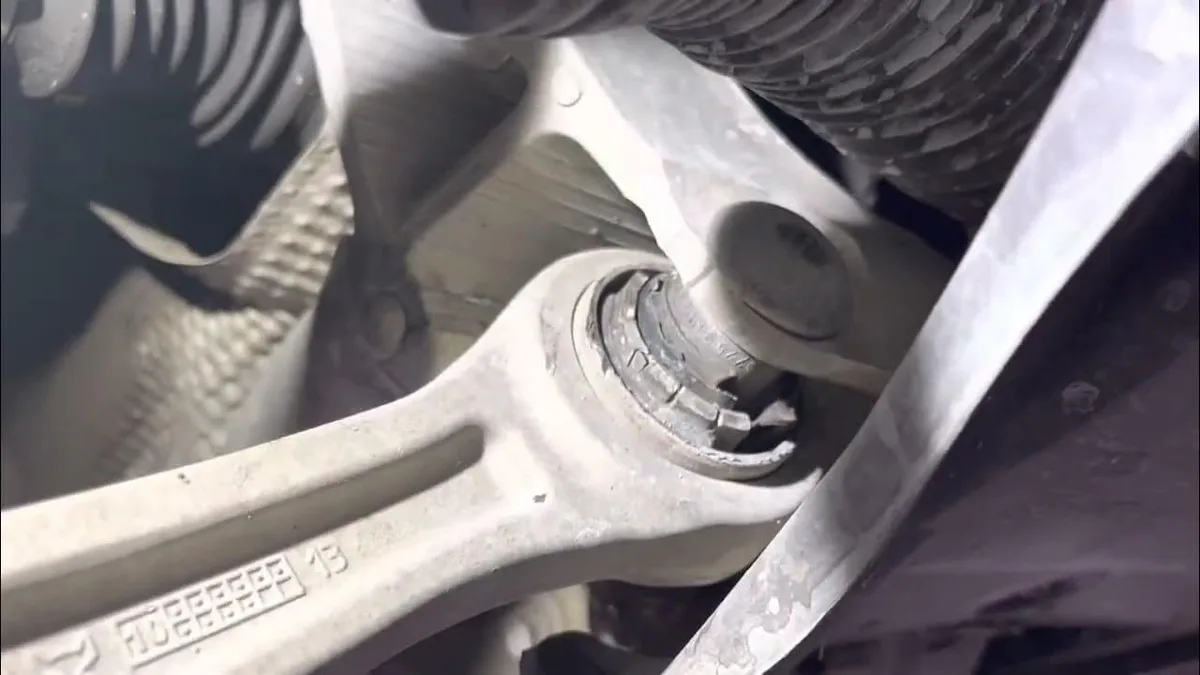
Image source: Bing (Web (fair-use with source credit))
- Listen first. Drive slowly over a bumpy road with the windows down. Note whether the noise comes from the front or rear, and whether it changes when you turn or brake.
- Bounce test. Push down hard on each corner of the Wrangler while it's parked. A clunk on the way back up often means a loose sway bar link or track bar.
- Crawl underneath. Look for torn bushings, wet shocks, rust, or anything that moved when you pry on it. Use the pry bar against each joint to check for play.
- Check the track bar. The frame-side bolt is the usual loosening spot. If the hole is wallowed out, you'll need a bracket replacement kit.
- Check torque. Every control arm bolt on a Wrangler must be tightened with the weight of the vehicle on the ground. That is a common cause of suspension noise.
Manufacturer specifications indicate most control arm fasteners call for between 50 and 160 ft-lbs, depending on model year and location. If you also have a grinding sound when stopping, do the brake inspection separately to avoid chasing the wrong part.
The Fix Guide: Tighten, Grease, Replace, or Get a Pro
Once you've found the loose joint or bushing, the next question is whether to tighten, grease, replace, or take it to a shop. Here's the general rule of thumb.
- Tighten it if you find a bolt that's visibly loose and the threads are still good. Retorque to factory spec, then test drive.
- Grease it if the squeak comes from a greaseable ball joint or sway bar bushing. Inject fresh chassis grease until old grease purges from the seal.
- Replace it if the bushing is torn, the ball joint has play, or the bolt hole is damaged. Replace both sides at once to keep wear even.
- Get a pro if you're unsure whether the component is safe. Also hand it to a shop if you don't have the tools to do the job safely.
Torque matters. A bolt that's too loose creates play. One that's too tight damages bushings and limits articulation.
Use the spec from the factory service manual for your exact model year.
If you hear a metallic scraping that gets worse with speed, that's often brake hardware, not a bushing. Chasing that as suspension work will cost you time and money.
Common Mistakes That Turn a $20 Bushing Into a $500 Repair
The most expensive mistakes happen when the diagnosis is rushed. A simple fix becomes a big repair because something else got damaged along the way.
- Tightening control arms with the wheels hanging. The bushings end up twisted, and they fail early. Always torque with the weight on the ground.
- Replacing one side only. If the left ball joint is gone, the right is usually close behind. Replace them in pairs.
- Ignoring the track bar frame hole. A little movement can wallow out the hole, turning a bolt replacement into a bracket repair.
- Using the wrong lubricant. Use chassis grease for greaseable joints, not brake grease or penetrating spray.
- Skipping the tie rod check. Loose tie rod ends cause noise and steering wander, but they're often overlooked when all attention goes to suspension arms.
If you find a torn boot on a ball joint, that's a replacement job, not a grease job. Dirt and water already got inside. Likewise, a shake that comes on suddenly and violently during a bump could be an early sign of death wobble.
That's a safety issue. Address it immediately.
And remember, suspension work isn't the only thing that hides behind a funny noise. A steady rumble that only happens when you shift could be a transmission noise, not the suspension at all.
Not Suspension? What Else Sounds Like a Suspension Noise
Not every clunk belongs to the suspension. Some noises come from places that just sound like it. That's why a full diagnostic includes more than the control arms and bushings.
Check these non-suspension culprits first if your noise is a one-off or doesn't match a pattern:
| Sound | Likely non-suspension source | How to verify |
|---|---|---|
| Rattle from the back | Hardtop bolts or tailgate latch | Torque the hardtop fasteners and test |
| Thunk on cold starts | Exhaust hanger or exhaust shield | Tap the exhaust to check for looseness |
| Grinding at low speed | Wheel bearing or tire tread | Lift the tire and spin it by hand, listen for gravel |
| Click when turning | Steering box or clock spring | Feel for play in the steering wheel |
A failing wheel bearing often sounds like a low rumble that changes with speed. A brake caliper that's sticking can make a metallic scrape that seems to come from the axle. Both can be misdiagnosed as suspension noise, wasting time and money.
If the noise disappears when you press the brakes, look at the brake system first. If it only happens when shifting, the transmission is a better place to start.
Real-World Examples: Three Noises, Three Fixes
Real-world examples help, so here are three common noise paths from actual owner reports. Each took under an hour to diagnose, and the fixes were straightforward.
Scenario 1: Clunk over every speed bump. A 2018 JL went into the shop with a front-end clunk. The diagnosis was a loose sway bar end link. The bolts had backed off from the factory torque.
Both links were replaced as a pair, and the clunk vanished. Parts cost about $45, and it took 30 minutes.
Scenario 2: Squeak when turning sharp. A 2010 JK was fine on the highway but squeaked in parking lots. The ball joint boot was split, and the joint was dry. Greasing helped for a week, then the squeak returned.
Replacing the upper and lower ball joints on one side cost $300 in parts and two hours of work.
Scenario 3: Creak in the rear on dirt roads. A 2004 TJ creaked every time the body flexed. The spring isolator had cracked and collapsed. Replacing it with a new rubber isolator cost $20 and cured the noise instantly.
These fixes match what aggregate reviews report across the TJ, JK, and JL generations. The takeaway: most suspension noise is a loose or worn joint, not a broken axle.
Frequently Asked Questions
How long does it take to diagnose Wrangler suspension noise?
For a DIY mechanic, a full inspection takes 20 to 40 minutes with basic tools. A shop charges one hour of labor, often between $100 and $200. If the source is hard to find, expect another hour of test driving.
Can I drive with a suspension noise?
Short answer: only long enough to find the cause. A clunk that gets worse or a wobble at highway speed means a safety risk. Drive slowly and carefully to a shop.
If the steering shakes, stop and tow it.
How much does it cost to fix a suspension noise?
It depends on the part. A sway bar link costs $10 to $40. A control arm bushing is $20 to $60.
Ball joints run $100 to $300 per side. Labor adds $100 to $200 per hour at most shops. A complete track bar replacement can hit $400 or more.
What is death wobble?
Death wobble is a violent shaking of the steering wheel and front axle, usually triggered by a bump. It comes from worn track bar bushings, loose bolts, or improper alignment. It's a safety emergency, not a comfort issue.
Fix it before driving again.
Should I replace both sides at once?
Yes, for joints and links. If one side is worn, the other side is close behind. Replacing both sides keeps handling even and prevents a second repair trip.
Bushings and isolators can be replaced individually if only one side is damaged.