Subaru Outback engine stalling is not just an annoyance. It's a safety hazard when it happens mid-turn or at a green light. If you're reading this, you want to know what triggers it and how to fix it without playing parts roulette.
Start with a $30 OBD-II scanner and a little logical sorting.

49% off Today's Exclusive Deals
Limited-time Exclusive Deals. Check current discount on Amazon.
Check Price on Amazon As an Amazon Associate I earn from qualifying purchases.Our research and aggregate owner reports show that most stalling cases trace back to three areas: a dirty throttle body, a failing MAF sensor, or a bad crankshaft position sensor. As of 2026, Subaru's FB25 and FA24 Boxer engines account for most of the online discussion around this problem. The good news is the fix is often cheap and doable at home.
Let's walk through the diagnostic workflow from codes to final repair.
49% off Today's Exclusive Deals
Limited-time Exclusive Deals. Check current discount on Amazon.
Check Price on Amazon As an Amazon Associate I earn from qualifying purchases.Image source: Bing (Web (fair-use with source credit))
The Quick Answer: Why Outbacks Stall and How to Narrow It Down
Subaru Outback engine stalling usually comes from a dirty throttle body, a failing MAF sensor, or a bad crankshaft position sensor. Start by reading the OBD-II codes. Match the codes and stall condition to the right fix.
Don't replace parts blindly.
In our research, the throttle body and MAF sensor show up far more often than any other single cause. Both repairs are affordable and take less than an hour. The remaining stalls split between the crankshaft sensor, fuel pressure issues, and rare electrical faults.
49% off Today's Exclusive Deals
Limited-time Exclusive Deals. Check current discount on Amazon.
Check Price on Amazon As an Amazon Associate I earn from qualifying purchases.Step 1: Read the OBD-II Codes and Freeze Frame Data First
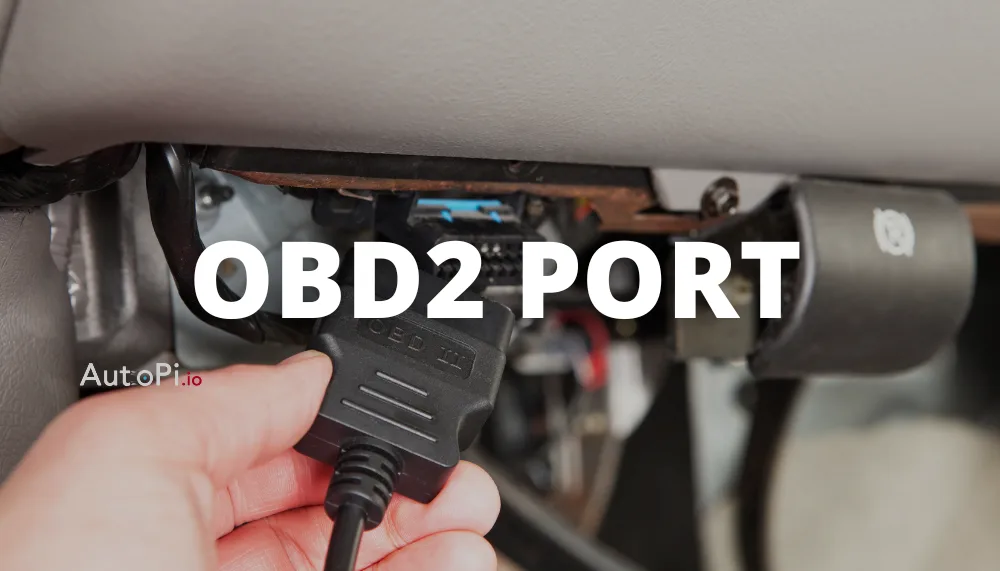
Image source: Bing (Web (fair-use with source credit))
Plug a scanner into the OBD-II port under the dash. Turn the ignition to the ON position without starting the engine. Read the stored and pending codes.
The most common Subaru codes for stalling are P0335 (crankshaft position sensor), P0171 (too lean), and P0506 (idle too low).
Don't skip the freeze frame data. It captures the exact rpm, coolant temperature, and vehicle speed from the moment the stall happened. Use that to match your condition to the right branch in Step 2.
If you see no codes at all, that's still useful. Intermittent stalling often clears codes before you can read them. Move to Step 2 and rely on behavior instead.
Step 2: Match the Stall Pattern to the Likely Fault: Cold Start, Warm Idle, While Driving, or Under Load
| Stall pattern | Most likely cause | Quick check |
|---|---|---|
| Cold start only | Throttle body carbon, coolant temp sensor | Check freeze frame coolant temp |
| Warm idle or stop signs | Throttle body sticking, MAF sensor | Clean throttle body first |
| While driving at speed | Crankshaft sensor, fuel pump | Check for P0335, test fuel pressure |
| Under AC load or turning | Electrical load, torque converter shudder | Turn off AC, test alternator |
If it stalls only when cold, the throttle plate is likely gummed up. Warm-engine stalls point to a dirty MAF or a failed idle control. If the car dies while cruising, suspect the crankshaft sensor or fuel pressure.
If it stalls when the AC compressor kicks in, check the alternator and battery first.
The "while driving" pattern can mimic intermittent transmission trouble, so don't assume it's always an engine fault. And remember, a stall cuts brake assist fast, which makes the car feel more dangerous than it is.
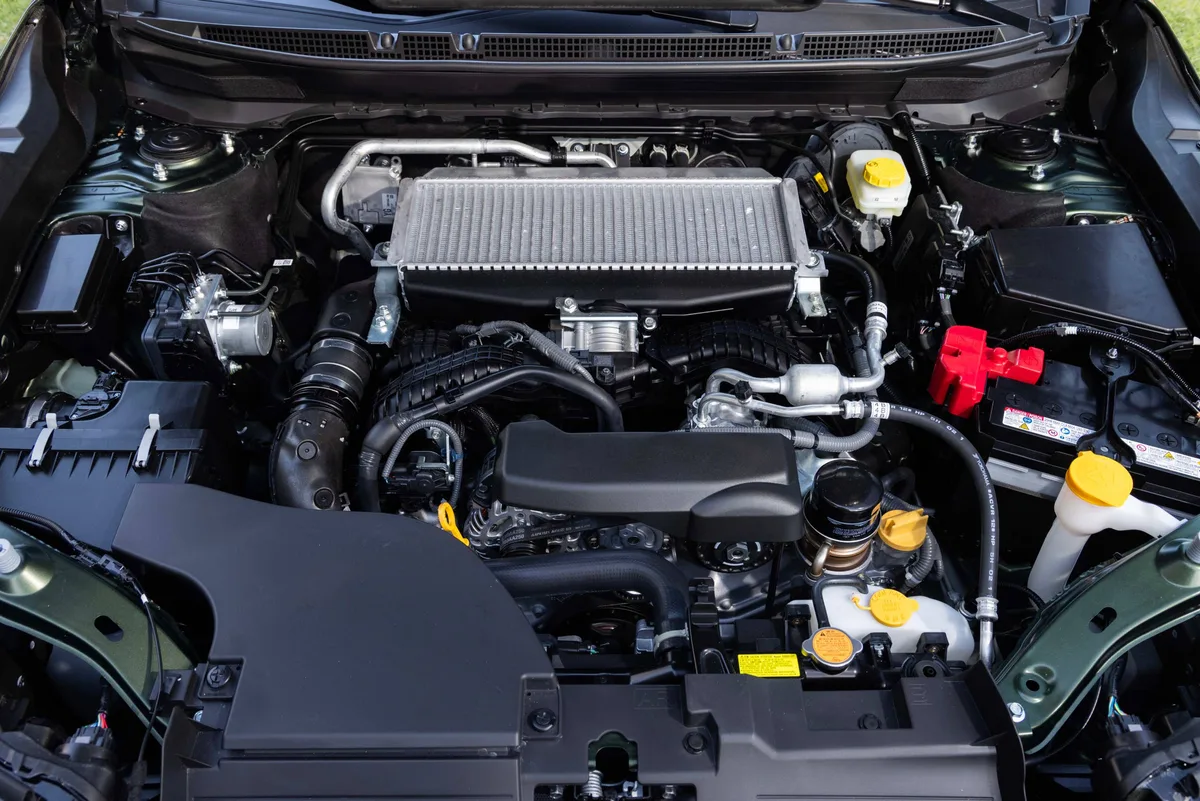
The Usual Suspects: Throttle Body, MAF Sensor, Crank Sensor, and Fuel System
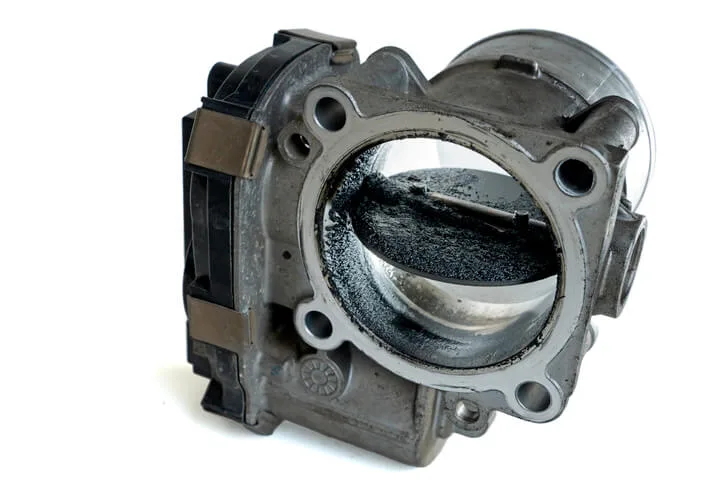
Image source: Bing (Web (fair-use with source credit))
- Throttle body. Carbon buildup on the butterfly plate reduces airflow at idle. Clean it and perform the Subaru idle relearn procedure.
- MAF sensor. A dirty or failed sensor sends wrong air readings, causing lean or rich conditions. Use MAF-safe cleaner and never touch the wire.
- Crankshaft position sensor. This can cut ignition and fuel randomly, especially when hot. It may not log a code until it fails completely.
- Fuel system. Low fuel pressure from a weak pump or clogged filter causes stalling under load and on hot restarts.
Don't ignore the alternator either. If voltage drops below 11.5 volts while idling, the ECU can lose its minimum operating voltage and kill the engine. That's a common hidden cause when stalling only happens with the headlights on.
Before you buy any parts, run a quick search in the NHTSA recall database for your Outback model year. Some stalling issues have official service campaigns that a dealer will address for free.
How to Test and Fix Each One in Order
Work through these steps in sequence. Each one is cheap, reversible, and takes under an hour.
- Clean the throttle body. Remove the intake duct, spray the bore with throttle body cleaner, and wipe away the carbon. Then disconnect the battery for five minutes, reconnect it, and let the car idle for ten minutes. That's the Subaru idle relearn.
- Clean the MAF sensor. Spray the inside with MAF-safe cleaner, let it dry for 15 minutes, and reseat the connector. While you're in there, check the intake duct for cracks or loose clamps. A leak here draws in unfiltered air and causes the same lean stall codes.
- Test the crankshaft sensor. Use a multimeter to read resistance between the terminals. Subaru specs usually fall between 1 and 2 kΩ. Anything outside that range means replacement.
- Check fuel pressure. Hook up a gauge at the rail. The FB25 should show 43 to 55 psi at idle. If pressure drops, replace the filter or the pump.
- Test alternator output. At idle, turn on the headlights and AC. Voltage should stay above 13.2 volts. If it dips under load, the engine can stall and the car may show odd electrical and lighting warnings.
Replace parts one at a time. Test drive after each fix. That stops a simple $50 repair from turning into a $500 guessing game.
Common Mistakes That Turn a $50 Fix Into a $500 Repair
The number one mistake is replacing parts without reading the codes first. Throwing a new MAF sensor at a stalling Outback feels productive. It usually isn't.
You end up with a $200 part and the same problem.
Another classic error is swapping multiple components at once. A friend replaces the throttle body, MAF sensor, and crankshaft sensor in one afternoon. The stall disappears, but they never learn which part fixed it.
Next time, they're blind again. Fix one thing, test drive, repeat.
Cheap aftermarket sensors are a trap too. Aggregated owner feedback shows non-OEM MAF sensors often throw false readings within months. Stick with genuine Subaru or a reputable brand like Denso.
Don't skip the free checks either. A loose battery terminal or a corroded ground strap causes the exact same stall patterns as a failed crankshaft sensor. Verify those first.
Also confirm the radiator fan is spinning properly. A failing fan drags voltage down at idle. That's the same diagnostic logic you'd use for a cooling fan that stops working.
Skipping the idle relearn procedure is the final common mistake. After cleaning the throttle body, the ECU still expects the old carbon-clogged airflow. The engine stalls on the test drive, so you panic and buy sensors.
Just run the relearn before condemning any part.
Subaru Outback Stalling FAQs
Can a dirty air filter cause Subaru Outback stalling?
Yes, but it is not common. A severely clogged filter restricts airflow at idle, which leans out the mixture and can stall the engine. A quick visual check of the filter will point to it.
Replace it every 30,000 miles as routine upkeep.
Why does my Outback stall only when the AC is on?
The AC compressor adds a sudden electrical and mechanical load at idle. If the alternator is weak or the throttle body is dirty, the engine can't compensate. Turn off the AC and watch the rpm.
If the stall disappears, clean the throttle body first, then test the alternator.
How much does it cost to fix a stalling Subaru Outback?
Throttle body cleaning costs around $15 in parts and an hour of your time. A MAF sensor runs $80 to $250. A crankshaft sensor is $40 to $90.
A shop will charge $200 to $500 for diagnosis and labor, depending on the fault.
Will a stalling Outback always show a check engine light?
No. Intermittent stalling can happen without a stored code, especially when the ECU resets itself mid-stall. If the light did not stay on, scan for pending codes anyway.
Freeze frame data and live monitoring often reveal the fault even when no code is saved.
Can a low battery cause stalling in a Subaru Outback?
Absolutely. The ECU needs stable voltage above 11.5 volts to operate correctly. A dying battery pulls voltage down at idle, especially with lights and the AC on.
Load-test the battery first. This causes many mystery stalls that come back from repair shops as no problem found.
Is it safe to drive an Outback that stalls intermittently?
Not really. Each stall cuts power steering and brake vacuum assist, which makes the car harder to steer and stop. If it stalls mid-turn or in traffic, that's a crash risk.
Treat it as a safety issue and diagnose it before regular driving continues.
Final Decision Guide: When to DIY, When to See a Mechanic, When to Walk Away
| Scenario | Recommended action |
|---|---|
| Stored code points to MAF or throttle body, car has under 150,000 miles | DIY |
| P0335 crankshaft sensor code, no other issues | DIY or mechanic |
| No codes, stall happens weekly, basics are clean | See a mechanic |
| Car has 200,000+ miles and multiple other problems | Run the numbers before repairing |
DIY makes sense when you have a code, basic tools, and time. The throttle body, MAF, and crankshaft sensor jobs are all straightforward. Watch a few videos and take your time.
You're looking at under $120 in parts and one afternoon.
If the basics don't fix it, don't go deeper without help. Fuel pump access means dropping the rear seat and floor panel, plus working around the fuel tank area. That's where a mechanic earns their fee.
Same for wiring gremlins that cause random stalls. A professional diagnostic scan logs live data you can't see with a cheap scanner.
Walk away when the repair math stops working. If the car is rusted, burning oil, or leaking oil, a stall diagnosis is just the beginning. Compare repair cost against the Outback's actual market value.
When you've got brake work too, the "cheap fix" story falls apart fast.
Follow the workflow and you'll solve most Outback stalling issues for under $150 and one afternoon of work. Read the codes, match the pattern, clean and test the cheap parts, and only then consider the expensive ones.