Your Toyota Camry engine shaking at idle, during acceleration, or at highway speed almost always traces back to a specific cause. A systematic diagnostic process, done in the right order, narrows it down fast.
Per Toyota's manufacturer specifications, the 2.5L A25A-FKS engine idles between 600 and 750 RPM with virtually no perceptible vibration through the steering wheel or seat. If you're feeling a shake that breaks that threshold, something in the ignition, fuel, or mounting system has changed. Here's exactly what to check and in what order.
49% off Today's Exclusive Deals
Limited-time Exclusive Deals. Check current discount on Amazon.
Check Price on Amazon As an Amazon Associate I earn from qualifying purchases.Quick Answer
A Toyota Camry engine shaking most often signals a misfiring cylinder. Common causes include worn spark plugs, failing ignition coils, or dirty fuel injectors. Damaged engine mounts and vacuum leaks also produce noticeable vibration.
Start by reading diagnostic trouble codes with an OBD-II scanner. Codes P0300 through P0306 identify the specific cylinder at fault.
The Problem: Why Your Camry Engine is Shaking
A shaking Camry engine isn't random. It points to something specific in the combustion chamber, the ignition system, the fuel delivery path, or the engine mounts.
49% off Today's Exclusive Deals
Limited-time Exclusive Deals. Check current discount on Amazon.
Check Price on Amazon As an Amazon Associate I earn from qualifying purchases.
Image source: Bing (Web (fair-use with source credit))
The Camry uses a coil-on-plug ignition system across all modern generations, from the XV40 onward. Each cylinder has its own ignition coil sitting directly on the spark plug. When one coil or plug fails, that cylinder misfires.
A single misfire produces a rhythmic shake you feel through the dashboard, steering wheel, or floorboard. It's often subtle at first and gets worse over weeks.
49% off Today's Exclusive Deals
Limited-time Exclusive Deals. Check current discount on Amazon.
Check Price on Amazon As an Amazon Associate I earn from qualifying purchases.The National Highway Traffic Safety Administration maintains a complaint database where engine vibration and misfire reports appear consistently across Camry model years. The 2007 to 2011 XV40 generation with the 2.4L 2AZ-FE engine had well-documented oil consumption issues that accelerated spark plug fouling and misfire-related shaking.
Misfires aren't the only explanation. Worn engine mounts transfer vibration directly into the cabin, especially under load. A vacuum leak disrupts the air-fuel ratio and causes uneven combustion.
Dirty fuel injectors spray unevenly, starving specific cylinders. Each cause produces a slightly different feel. Learning to read those differences is the first step.
If your steering wheel shakes only at certain speeds, that may point to a tire or wheel balance issue rather than the engine. Rule that out before opening the hood.
Start Here: Identify Your Shaking Symptom
Before replacing any parts, pin down exactly when the vibration happens. The timing tells you where to look.
At idle only, in park or neutral. This usually points to a misfire or a vacuum leak. The engine runs under minimal load, so even a small imbalance shows up clearly. Check for a check engine light first.
Under acceleration from a stop. A failing ignition coil often breaks down under load. So does a weak fuel injector. Added demand exposes components that worked fine at idle.
At steady highway speed. Engine vibration at constant speed could mean a misfire, but wheel balance, tire issues, and warped brake rotors can mimic the same feeling. Transmission shudder also feels engine-related. Rule out drivetrain and wheel issues before tearing into the engine bay.
When shifting into drive or reverse. A sharp jolt followed by vibration almost always means a worn engine mount or transmission mount. The drivetrain loads up and a failed mount lets the engine physically shift against the subframe.
After recent maintenance. If shaking started after a spark plug change, oil change, or air filter replacement, something was disturbed. A loose intake hose or improperly seated ignition coil boot is a common culprit.
Documenting exactly when the vibration occurs gives you a head start on diagnosis. Write it down before spending money on parts.
Decision Tree: From Symptom to Fix
Use this flow to narrow down the cause. Start with the branch that matches your situation.
Does it shake only at idle?
Connect an OBD-II scanner. If you find a P0301 through P0304 code, that cylinder is misfiring. Swap that cylinder's ignition coil with a known good one.
If the code follows the coil, replace it. If the code stays, pull and inspect the spark plug. Look for fouling, cracked porcelain, or excessive gap wear.
No codes but still shaking? Inspect vacuum hoses for cracks, especially around the intake manifold gasket and the PCV valve hose.
Does it shake under acceleration?
This pattern strongly suggests a failing ignition coil or fuel delivery problem. Coils work fine at low voltage demands but break down under higher load. Check for pending misfire codes that only appear during driving.
If present, replace the coil on the flagged cylinder. Also inspect the fuel injector on that same cylinder. A clogged injector starves combustion when the engine demands more fuel.
Does it shake when braking or putting it in gear?
Vibration during braking or shifting usually traces to engine mounts or brake components. To test mounts, have a helper shift between park and drive while you watch the engine from above. Excessive movement or a hard clunk confirms a worn mount.
If it only happens during braking, the brake rotors and pads need inspection. A soft or spongy brake pedal alongside the vibration points even more strongly toward the brake system.
Is the shaking accompanied by a check engine light?
A flashing check engine light signals an active, severe misfire dumping raw fuel into the exhaust. Drive gently to a shop immediately. A steady light with a shake is less urgent but still needs prompt attention.
Pull the codes. They're your roadmap.
Common Diagnostic Mistakes to Avoid
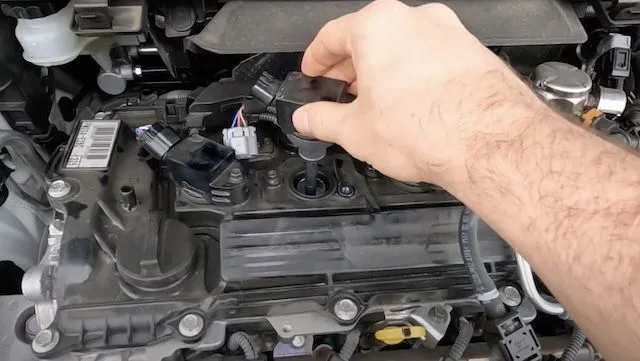
Image source: Bing (Web (fair-use with source credit))
The biggest mistake is throwing parts at the problem without reading the codes first. A basic OBD-II scanner costs around $20 at any auto parts store. Always start there.
It tells you which cylinder is affected and saves you from replacing parts that aren't broken.
Another common error is replacing all four ignition coils when only one has failed. Each coil on the Camry's coil-on-plug system is an independent unit. Unless multiple cylinders show misfire codes, you only need to replace the one that's failing.
Ignoring the spark plug is the third mistake. A bad coil often damages the plug it sits on. If you replace a coil, pull and inspect the plug on that same cylinder.
Cracked porcelain, carbon tracking, or an electrode worn beyond spec means the plug needs replacing too. As of 2026, Toyota recommends spark plug replacement every 60,000 miles for iridium plugs on most Camry engines, per the official Toyota maintenance schedule.
People also overlook vacuum leaks. A cracked hose on the PCV valve or a loose intake clamp costs almost nothing to fix. Yet it gets missed while someone spends hundreds on coils that weren't the problem.
A final error: assuming engine vibration is always an engine problem. If your vehicle's electrical system acts up alongside the shake, voltage fluctuation from a failing alternator could cause rough running. A simple voltage check at the battery should read 13.5 to 14.5 volts with the engine running.
Cost and Time Estimates for Common Fixes
Repair costs vary based on your Camry's model year, parts choice, and whether you handle the work yourself.
| Repair | DIY Parts Cost | Shop Cost (Parts + Labor) | Time Needed |
|---|---|---|---|
| Spark plugs (4-cyl) | $15–$40 | $100–$250 | 30–60 min DIY |
| Single ignition coil | $25–$80 | $150–$350 | 15–30 min |
| Engine mount (1) | $50–$150 | $250–$500 | 1–2 hrs DIY |
| Vacuum hose repair | $5–$20 | $50–$150 | 15–45 min |
| MAF sensor cleaning | $8–$15 (cleaner spray) | $80–$150 | 15 min |
| Fuel injector service | $20–$60 (cleaning kit) | $150–$400 each | 1–2 hrs |
OEM Toyota ignition coils cost significantly more than quality aftermarket options, sometimes double. For a daily-driven Camry over 80,000 miles, aftermarket coils from reputable brands perform reliably. Save the OEM budget for vehicles still under warranty.
A Bluetooth OBD-II scanner runs $20 to $50 and pairs with your phone. That investment pays for itself on the first diagnosis. Many auto parts stores read codes for free, but owning your own scanner lets you clear codes and verify fixes immediately.
Aggregate repair data from 2026 shows most Camry owners spend between $100 and $350 to resolve engine shaking tied to ignition or fuel system faults. The priciest culprit is a worn engine mount, which commonly runs $400 to $800 at a dealership including labor.
DIY-friendly repairs like spark plugs and coil swaps save roughly 50 to 60 percent compared to shop rates. The Camry's coil-on-plug layout makes these jobs accessible with basic hand tools and a torque wrench.
When to See a Mechanic vs. DIY
Some repairs fit an afternoon in your driveway. Others demand a lift, specialty tools, and real diagnostic experience.
Handle yourself:
- Spark plug replacement on 4-cylinder models. The valve cover comes off with a few bolts and the plugs sit right on top.
- Ignition coil swaps. One bolt holds each coil. Pull it, swap it, clear the code.
- MAF sensor cleaning with dedicated MAF cleaner spray. No disassembly required.
- Vacuum hose inspection and replacement. Most hoses are visible and accessible.
Take it to a professional:
- Any repair behind the timing cover or involving the VVT-i actuator system.
- Engine mount replacement on V6 models where access requires removing the intake manifold.
- Fuel injector work on newer direct-injection engines. The high-pressure fuel rail demands specialized tools.
- Intermittent shaking that never sets a code. A technician with a lab scope catches electrical faults a basic scanner misses.
- Anytime the check engine light flashes while driving.
If your Camry is still covered under the Toyota factory warranty, resist the urge to DIY ignition or fuel system work. Unauthorized repairs can complicate warranty claims on related components.
A flashing check engine light signals active misfires dumping raw fuel into the exhaust. Drive gently, keep RPMs low, and get it diagnosed immediately. Continued driving risks destroying the catalytic converter, a repair that commonly exceeds $1,000.
Frequently Asked Questions
What causes a Toyota Camry engine to shake at idle?
A shaking idle most often traces to a misfiring cylinder from worn spark plugs or a failing ignition coil. Vacuum leaks around the intake manifold gasket or PCV valve hose also produce rough idle vibration. Dirty fuel injectors contribute on higher-mileage engines.
Connect an OBD-II scanner and read the codes to pinpoint the cause.
Can I drive my Camry with a shaking engine?
You can drive short distances if the check engine light is steady and the vibration is mild. Avoid highway speeds and hard acceleration. A flashing check engine light means active, severe misfires.
Pull over or drive to a shop at low speed. Sustained driving under severe misfire conditions risks catalytic converter damage.
How much does it cost to fix engine shaking on a Camry?
Most Camry engine shaking repairs fall between $100 and $350 at a professional shop. Spark plugs cost $100 to $250 installed. A single ignition coil runs $150 to $350.
Engine mounts are the priciest fix, commonly $400 to $800 each. DIY repairs cut those costs by roughly half.
Is engine shaking covered under Toyota warranty?
Powertrain defects that cause engine vibration may be covered under the Toyota factory warranty, which spans 5 years or 60,000 miles. Misfires from manufacturing defects qualify. Wear items like spark plugs and ignition coils generally do not, unless failure occurs abnormally early.
Call a Toyota dealership with your VIN to verify your specific coverage.
Can dirty spark plugs cause engine shaking in a Toyota Camry?
Yes. Worn or fouled spark plugs are one of the most common causes of Camry engine shaking. Toyota recommends iridium spark plug replacement every 60,000 miles on most 4-cylinder and V6 engines.
Beyond that interval, electrode wear increases the gap, weakens the spark, and leads to intermittent misfires that produce noticeable vibration.