Your Jeep Wrangler battery keeps dying, and you're tired of jumping it in the driveway. This isn't a random electrical gremlin. It's a pattern with specific causes and a repeatable fix.
Most Wrangler battery issues come down to five things. Weak main battery, failing auxiliary battery, parasitic drain, charging problem, or a driving pattern that never fully recharges. A healthy battery rests at about 12.6 volts, and a parasitic draw above 50 milliamps points to trouble.

49% off Today's Exclusive Deals
Limited-time Exclusive Deals. Check current discount on Amazon.
Check Price on Amazon As an Amazon Associate I earn from qualifying purchases.As of 2026, many Wrangler trims use a dual-battery setup, so let's walk through the symptoms and the workflow step by step.
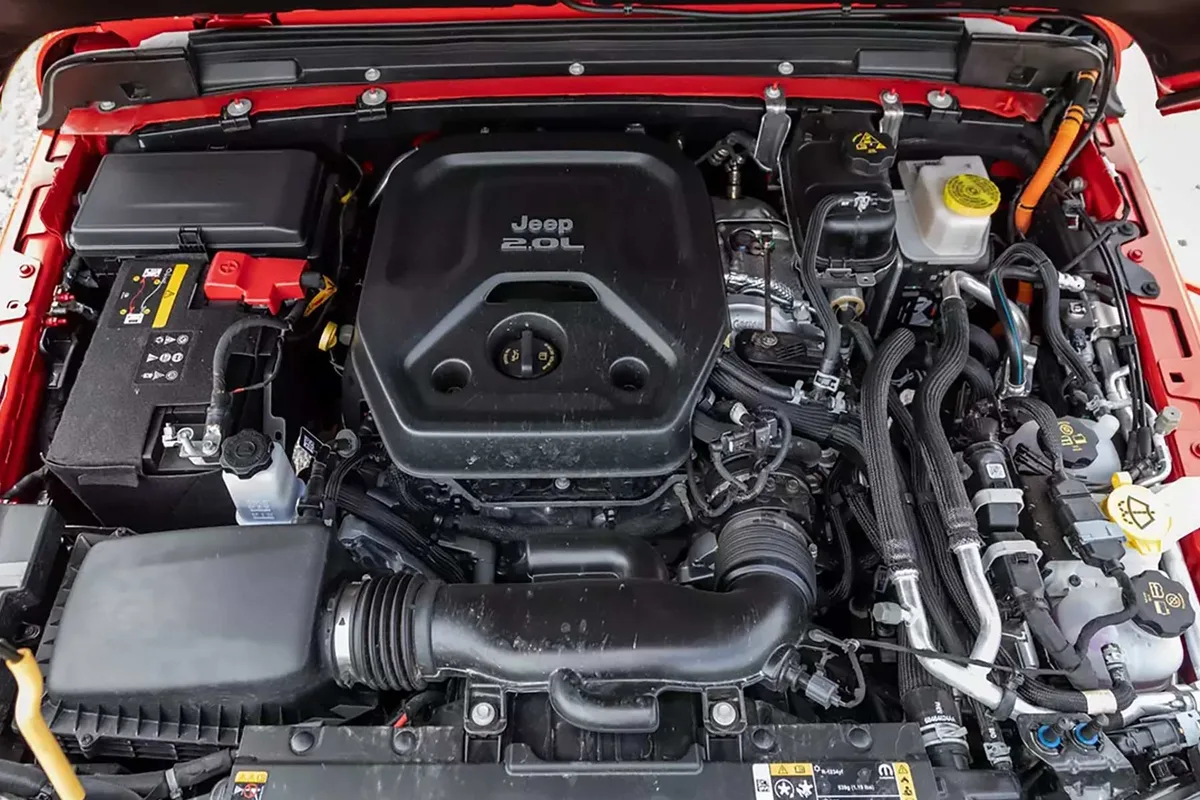
Image source: Bing (Web (fair-use with source credit))
49% off Today's Exclusive Deals
Limited-time Exclusive Deals. Check current discount on Amazon.
Check Price on Amazon As an Amazon Associate I earn from qualifying purchases.Quick Answer
Your Jeep Wrangler battery keeps dying for four common reasons. Faulty auxiliary battery, parasitic drain, charging trouble, or short trips. On JL and JT models, check the auxiliary battery first.
On JK models, suspect the TIPM. Diagnose with voltage and parasitic draw tests, then fix the root cause.
What the Symptoms Are Really Telling You
The way your Wrangler dies is your first diagnostic clue. It tells you which branch of the decision tree to follow.
Overnight Drain vs. Dying While Driving vs. Dead After Sitting
- Battery dead after sitting overnight: parasitic drain or a failing auxiliary battery.
- Battery dies while driving: alternator or charging system problem.
- Battery dead after several days of sitting: normal draw plus a battery that has lost capacity.
- Battery dies in cold weather: weak battery, sulfation, or undersized capacity.
Think about the pattern. If your Wrangler starts fine after a long drive but won't crank the next morning, the charging system is probably fine. Something stays powered up overnight.
49% off Today's Exclusive Deals
Limited-time Exclusive Deals. Check current discount on Amazon.
Check Price on Amazon As an Amazon Associate I earn from qualifying purchases.If it dies while driving, the alternator is the likely suspect.
Cold Weather, Short Trips, and Start-Stop System Clues
Short trips are a silent killer. A typical Wrangler needs 20 to 30 minutes of driving to recover the energy used during startup. If you're doing five-minute hops, the battery never fully recharges.
Over weeks, that becomes chronic undercharging. The Start/Stop system will usually warn you first with a "Battery Charging" message on the dash.
Cold weather amplifies every problem. Cranking pulls more current, and cold electrolyte reduces capacity. Low voltage also makes wipers drag and heater blowers feel weak.
This is why the same marginal battery dies on a freezing morning but survives October.
The 5-Minute Diagnostic Workflow
You don't need a mechanic to find the cause. You need a digital multimeter, a few minutes, and a clear process.
Resting Voltage Test (Engine Off)
Let the Wrangler sit for at least four hours. Overnight is best. Connect the multimeter to the battery terminals, red to positive and black to negative.
Read the voltage.
| Test | Expected Reading | What It Means |
|---|---|---|
| Resting voltage (engine off) | 12.6V or higher | Fully charged |
| Resting voltage | 12.4V to 12.6V | Partially charged, needs topping up |
| Resting voltage | Below 12.2V | Deeply discharged, load test required |
If you see 12.6V and the battery still dies, the problem isn't charge level. Move to the load test.
Load Test and Alternator Output Check
A load test applies a simulated cranking load and measures voltage drop. It's the best way to confirm capacity. You can also check alternator output with the same multimeter.
Start the engine and read voltage across the terminals. You should see 13.8 to 14.7 volts. Below that means the alternator isn't charging.
Above that means it's overcharging.
Quick Parasitic Draw Test
A parasitic draw test finds the circuit that stays live after shutdown. Modern Wranglers have modules that sleep in stages, so wait 30 to 45 minutes.
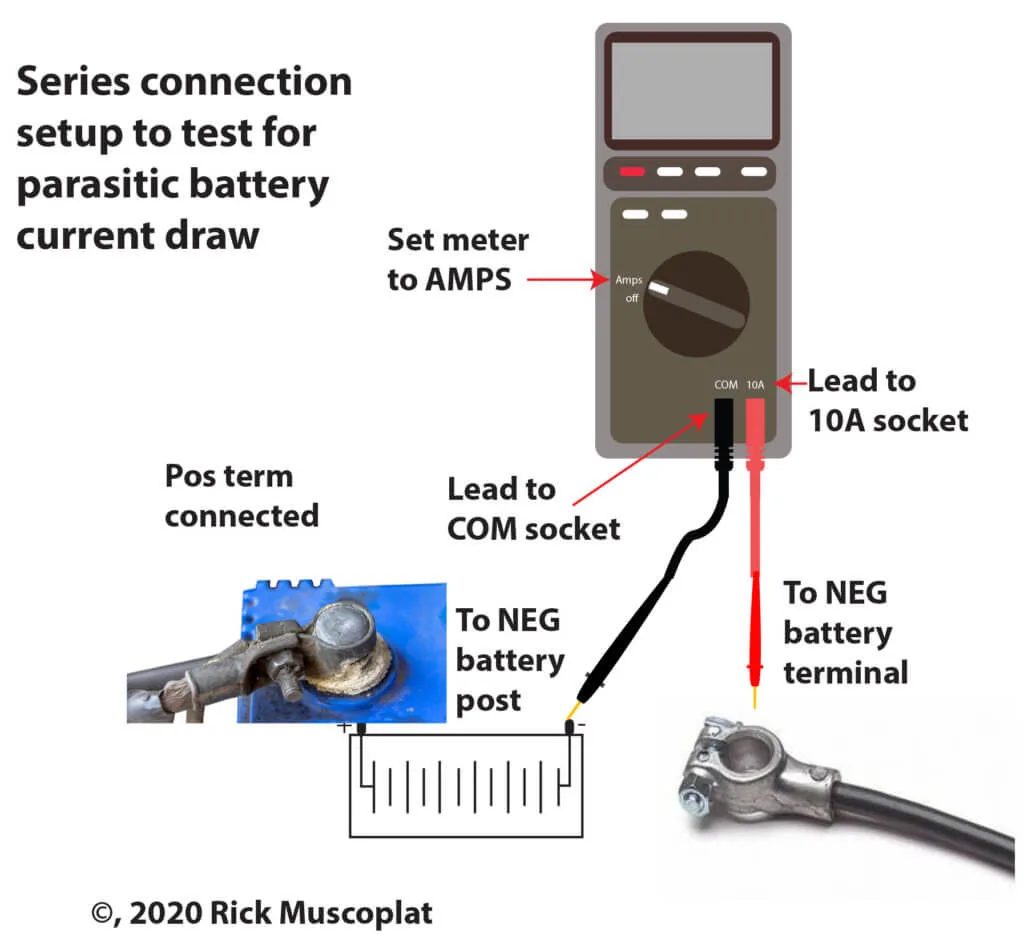
Image source: Bing (Web (fair-use with source credit))
Steps:
- Set the multimeter to the 10A or mA setting.
- Disconnect the negative battery cable.
- Connect the meter in series: one lead to the negative terminal, one to the cable.
- Lock the doors and wait for the modules to sleep.
- Read the current draw. Under 50 milliamps is normal.
If the reading is 150 milliamps or higher, you have a drain. Pull fuses one at a time and watch the meter. When the number drops, you've found the circuit.
The Wrangler Battery Decision Tree
Now that you have test results, follow the branch that matches your symptom.
Branch 1: Auxiliary Battery Failure (JL and JT Models)
Wrangler JLs and Gladiators use a dual-battery system. The auxiliary battery sits behind the main battery and powers the Start/Stop system. When it fails, it creates a continuous drain that kills the main battery overnight.
This is the most common cause of a dead battery on 2018 and newer models.
The classic clue: the Wrangler starts fine after a jump or full charge, then acts dead again within 12 to 24 hours. A load test on the main battery often comes back clean. The fix is replacing both batteries or installing an auxiliary battery bypass.
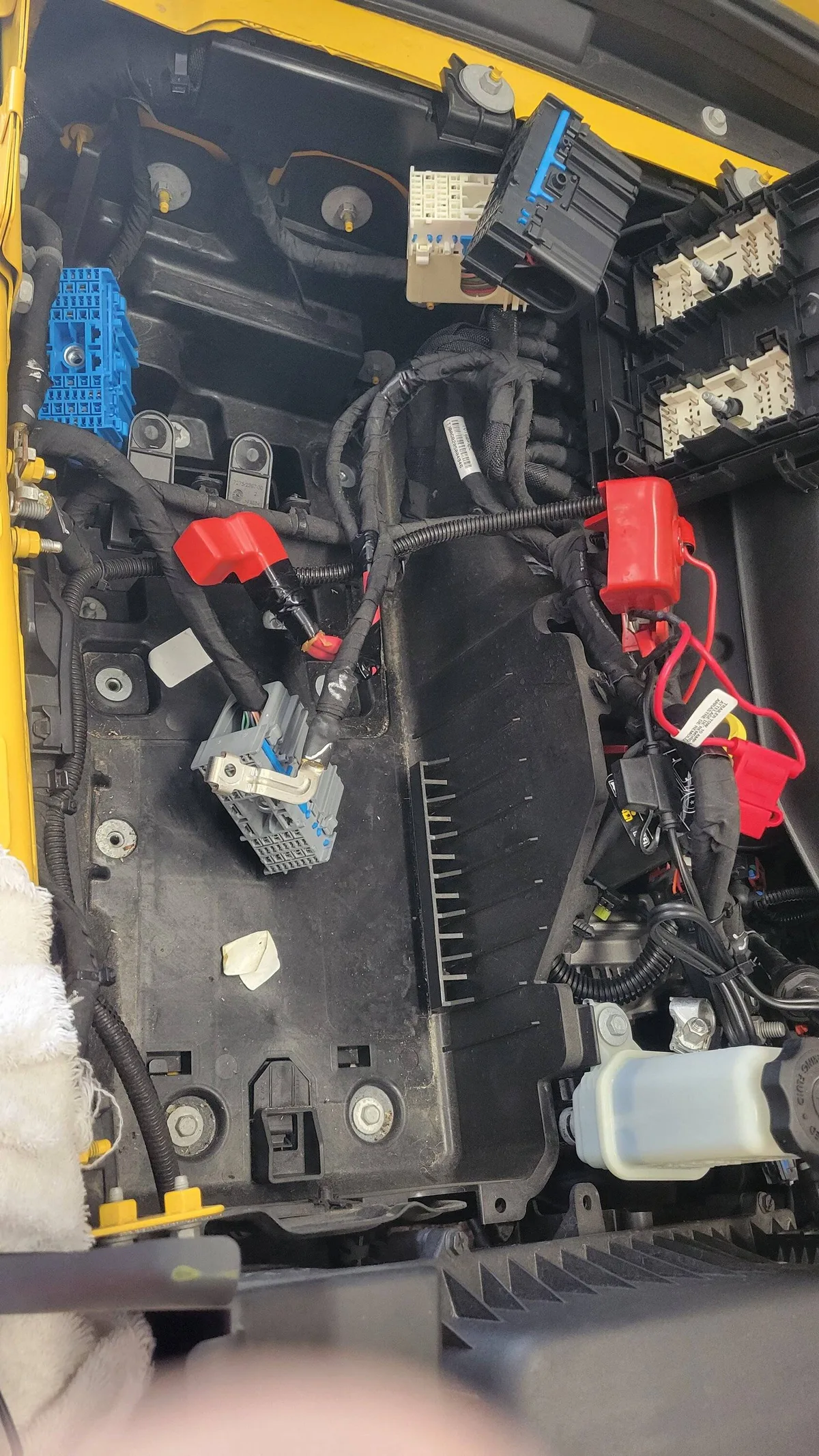
Image source: Bing (Web (fair-use with source credit))
Branch 2: TIPM and Relay Issues (JK Models)
JK Wranglers (2007 to 2018) have a component called the Totally Integrated Power Module, or TIPM. It controls relays for headlights, fuel pump, wipers, and more. A stuck relay can stay energized after shutdown and pull the battery down.
This is most common on 2007 to 2012 models. The fix is replacing the TIPM or having the relay circuit repaired by a specialized shop.
Branch 3: Dying While Driving, Alternator or Charging Logic
Test alternator output first. A bad diode in the alternator drains the battery even with the engine running. Modern Wranglers also use a smart charging system that adjusts voltage based on load.
You might see 13.2 volts at idle, which is normal fuel-saving behavior.
Branch 4: Draining Overnight, Aftermarket Accessories and Wiring
Winches, light bars, radios, and dash cams are the usual suspects. The problem is almost always wiring that taps into a constant power source. Look for wires connected to the fuse box, the OBD-II port, or the battery directly.
Those bypass the ignition switch and stay live 24/7.
Branch 5: Short Trip Daily Driving
Your battery reads 12.6V after a charge but still dies. You're driving too little to recover the startup energy. The alternator needs 20 to 30 minutes to replace what the starter used.
A battery maintainer is the honest fix for this pattern.
Mistakes That Wreck Wrangler Batteries
Our research shows that many battery problems come down to well-meaning owners doing the wrong thing.
Replacing only one battery in a dual-battery system. If you swap the main battery and leave the aux battery, the old one will kill the new one within weeks. Replace both, or bypass the aux battery.
Letting the battery sit deeply discharged. Lead-acid batteries hate sitting below 12.4 volts. Deep discharges cause sulfation, which coats the lead plates and reduces capacity. Put a maintainer on any Wrangler parked for weeks.
Ignoring corroded terminals and loose grounds. A thin layer of corrosion at the terminal adds resistance and mimics a dying battery. Clean the posts with a wire brush and torque the clamps to spec.
Voltage problems show up all over the Jeep. You might notice dim headlights, sluggish power windows, or a weak horn. These are symptoms, not the root cause.
Jump-starting incorrectly. Reverse polarity fries the battery and the Wrangler's electronics. Follow the owner's manual sequence and use a quality jumper pack.
Fixing the symptom, not the cause. A new battery is not the right repair for a parasitic drain. You'll spend $250 and still wake up to a dead Jeep. A brake light stuck on is a classic hidden cause of overnight drain, and it's covered in this brake light repair guide.
Skipping the charging logic. After a battery or aux battery replacement, many Wranglers need a reset so the battery control module recalibrates. A scan tool or a dealer visit clears this in minutes. Lead-acid batteries are also classified as universal waste by the EPA, so recycle the old unit properly.
Fixing It Right: Battery Choice, Specs, and Long-Term Care
If your tests point to a dead battery rather than a drain, the fix is straightforward. But the replacement choice matters more than most people think.
AGM vs. Flooded: Which One for Your Wrangler?
Manufacturer specifications indicate that Wranglers from 2018 onward come with AGM batteries from the factory. AGM stands for Absorbed Glass Mat, and these batteries handle deep discharges better than traditional flooded batteries. They also resist vibration, which matters on a vehicle designed for off-road use.
| Battery Type | Pros | Cons | Best For |
|---|---|---|---|
| AGM | Long lifespan, vibration-resistant, handles deep discharge | Costs more, needs a compatible charger | JL/JT Wranglers, off-road use |
| Flooded | Cheaper, widely available | Shorter lifespan, vulnerable to vibration and deep discharge | Older JK models, budget replacements |
Stick with AGM for 2018 and newer models. The smart charging system is tuned for AGM chemistry, and a flooded battery may not charge properly. It will work, but you'll lose capacity faster.
Correct Group Size, CCA, and Terminal Maintenance
Battery group size is about physical dimensions. Wranglers typically use Group 34 or Group H6/H7. Check the owner's manual before buying, and verify the terminal orientation.
A slightly taller battery can contact the hood latch.
Cold Cranking Amps, or CCA, measures cold-weather starting power. Match or exceed the factory rating. Dropping to a lower CCA saves money but risks weak starts in winter.
Clean the terminals with a wire brush before installing the new battery. Corrosion at the connection point creates resistance, and that resistance mimics a dying battery. Apply a thin layer of dielectric grease to slow future buildup.
Torque the clamps to the spec in the owner's manual, usually around 45 to 55 inch-pounds.
Battery Maintainers and Storage Tips
Any Wrangler that sits for more than two weeks should be on a battery maintainer. These smart chargers monitor voltage and top up the battery only when needed. They prevent sulfation, the leading cause of premature battery death.
A solar maintainer is a clean option for parked Wranglers, especially for overlanding setups where shore power is scarce. Avoid trickle chargers without smart circuitry. They overcharge and boil off electrolyte, which shortens lifespan.
Jeep Wrangler Battery FAQs
How do I know if my auxiliary battery is bad?
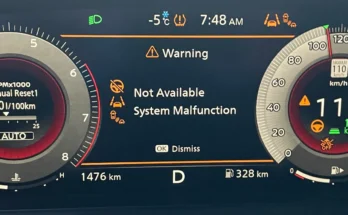
Look for dash warnings like "Start/Stop Unavailable" or "Battery Charging." A failing aux battery often pulls voltage down through the shared system. You'll see a healthy main battery reading but still wake up to a dead Jeep. A dealership scan tool confirms the aux battery's state of health directly.
What is an acceptable parasitic draw?
Under 50 milliamps is normal for a modern Wrangler. Modules like the radio, alarm, and keyless entry need standby power. Draws between 50 and 150 milliamps are borderline and often point to a stuck module.
Draws above 150 milliamps are a confirmed drain that requires fuse-by-fuse isolation.
Can I drive my Wrangler with a dead auxiliary battery?
Yes, but it's a bad idea. The aux battery works with the Start/Stop system and can affect charging behavior. If it fails internally, it can drain the main battery.
Drive only to reach a repair shop. Failing aux batteries sometimes cause voltage spikes that damage the main battery.
How often should a Wrangler battery be replaced?
Most require replacement every three to five years. AGM batteries tend toward the longer end. Extreme heat and cold both shorten lifespan.
If you off-road often, vibration takes a toll too. Test your battery every fall before cold weather arrives.
Why does my Wrangler need a battery reset after replacement?
The battery control module learns the old battery's condition. A new battery with different internal resistance can produce incorrect charging rates. Some Wranglers need an IBS reset using a scan tool.
Your dealer or a quality independent shop can do this in minutes. Skipping it can cause overcharging or undercharging.
The 5-Point Decision Guide
If your Jeep Wrangler battery keeps dying, you now have a clear path. Follow these five branches and you'll find the root cause without guessing.
| Symptom | Likely Cause | First Action |
|---|---|---|
| Dead after sitting overnight | Parasitic drain, aux battery (JL/JT) | Run the parasitic draw test |
| Dead while driving | Alternator, charging logic | Test alternator output |
| Dies in cold weather | Weak battery, sulfation | Load test the battery |
| "Start/Stop Unavailable" warning | Bad aux battery | Scan for aux battery code |
| Healthy voltage but dies repeatedly | Short trips, state of charge | Use a maintainer, drive longer |
The tools are simple: a multimeter, a load tester, and 30 minutes of your time. Diagnose before you replace, and you won't waste money on parts that don't fix the problem.
If the parasitic draw path leads you to a stuck brake light switch, that's a quick repair. Once you've isolated and fixed the source, the battery will hold its charge, and you can stop carrying jumper cables.