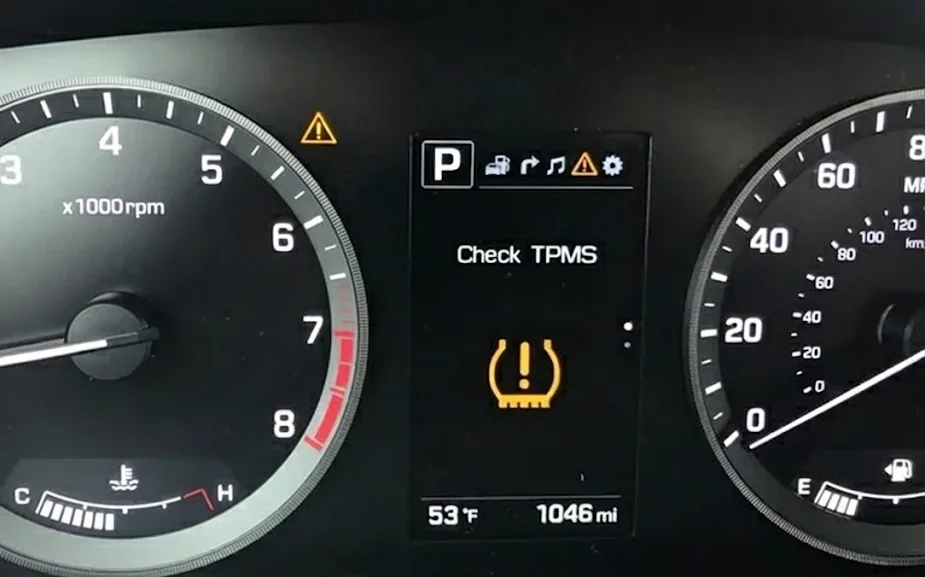
That glow from the dash is the Hyundai Tucson tire pressure light, and it doesn't have to spike your heart rate. It's your Tire Pressure Monitoring System, or TPMS, telling you one or more tires are running below the pressure it considers safe. That's all.
You've got options, and the fix is usually shorter than you think.

49% off Today's Exclusive Deals
Limited-time Exclusive Deals. Check current discount on Amazon.
Check Price on Amazon As an Amazon Associate I earn from qualifying purchases.Manufacturer specifications confirm Tucson models sold in the U.S. warn at roughly 25 percent below the recommended cold pressure, a trigger point set by Federal Motor Vehicle Safety Standard 138. As of 2026, every new Tucson, including Hybrid and PHEV trims, uses direct-sensor monitoring. That warning is your cue to act early, not a mystery.
Let's work through it.
49% off Today's Exclusive Deals
Limited-time Exclusive Deals. Check current discount on Amazon.
Check Price on Amazon As an Amazon Associate I earn from qualifying purchases.Image source: Bing (Web (fair-use with source credit))
Hyundai Tucson Tire Pressure Light
Quick Answer
The Hyundai Tucson tire pressure light means low pressure or a TPMS fault. A steady glow signals underinflated tires. A blinking glow signals a sensor or system problem.
Check the placard, inflate all four tires, and the light usually clears. If it blinks, you need dealer or tire-shop diagnostics.
What the Tire Pressure Light on a Hyundai Tucson Really Means
The TPMS in your Tucson uses a small sensor screwed to the inside of each valve stem. Every few seconds it reports pressure and temperature to the instrument cluster. If any wheel drops low, the system lights the dashboard icon.
49% off Today's Exclusive Deals
Limited-time Exclusive Deals. Check current discount on Amazon.
Check Price on Amazon As an Amazon Associate I earn from qualifying purchases.That icon looks like a tire cross-section with an exclamation mark. Newer trims even display per-tire pressures in the cluster menu.
The light doesn't know why pressure dropped. It only knows it dropped. That could be a cold front, a slow leak, a damaged wheel, or a valve-stem failure.
The system is a tripwire, not a diagnosis. Nobody waits for total brake failure to act, and tire pressure deserves the same respect.
The federal regulation behind this is FMVSS 138, enforced by the National Highway Traffic Safety Administration. It applies to every passenger car sold in the U.S.
The target pressure for most Tucson trims sits between 33 and 35 PSI, printed on the driver's door placard. The number on the tire sidewall is the maximum rating, not the recommendation. Check when the tires are cold, meaning the car has been parked for at least three hours.
Underinflated tires heat up faster, reduce grip, wear unevenly, and drag fuel economy down. That's why the system exists in the first place.
The First Crossroad: Is It Blinking or Solid?
Stop and look at the light before doing anything. That single observation splits the diagnosis into two paths.
A steady light means one or more tires are reading below the threshold. Common causes include a cold snap, a slow leak, or simple air loss over time. A blinking light means the system lost communication with a sensor.
That points to a dead battery, a damaged sensor, or a recent wheel swap without a matching procedure.
Use the if/then logic here:
- If it's steady, check pressures, fill to the placard value, and drive for a few minutes.
- If it blinks, go straight to diagnostics. Inflating won't help.
- If it blinks for about 60 seconds then goes solid, it's still a system fault, not a low-pressure warning.
| Light behavior | What it means | Your first move |
|---|---|---|
| Steady | Low tire pressure | Check and inflate all four tires |
| Blinks, then stays solid | System fault | Get a TPMS sensor scan |
| Blinks continuously | Sensor communication failure | Same as above: diagnostic scan needed |
How to Fix a Steady TPMS Light: Check, Fill, and Clear the Warning
Start with cold tires. That means the car has been parked for at least three hours, or it's first thing in the morning. Warm tires read artificially high and will make you under-fill.
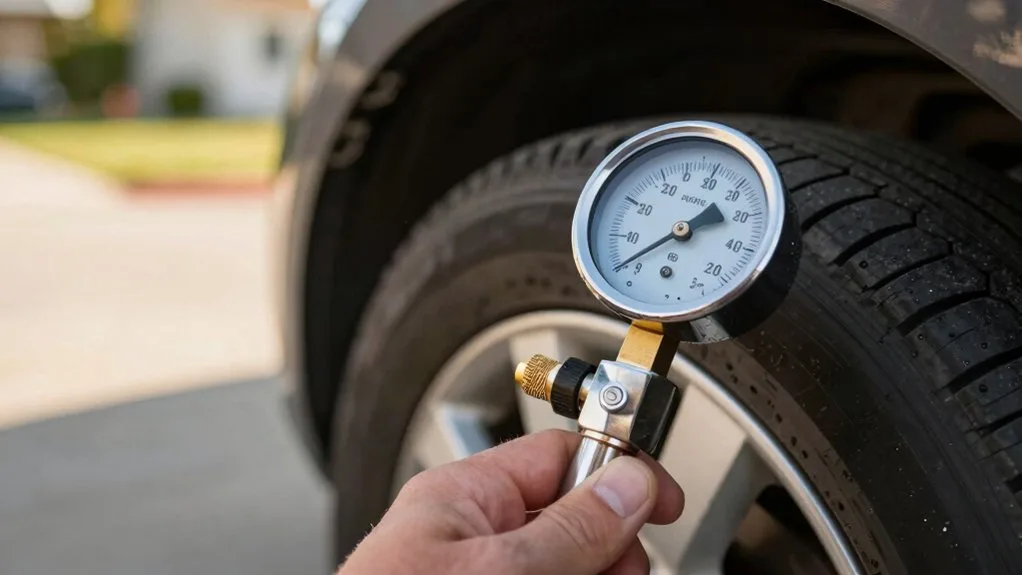
Image source: Bing (Web (fair-use with source credit))
Then follow these steps:
- Read the placard on the driver's door frame. Note the front and rear pressures.
- Unscrew the valve cap and press a tire gauge firmly over the stem. A handheld gauge is more reliable than the built-in readout on a gas station pump.
- Compare the reading to the placard. Add air in short bursts, then recheck.
- Do all four tires, including the spare on models that monitor it.
- Drive a few miles at normal speeds. The light usually clears itself within 10 minutes.
If the light stays on, either you missed a tire or there's a leak. A tire that loses pressure again within days has a puncture or a cracked wheel bead. That kind of slow loss doesn't fix itself.
It's like worn brake pads that scrape every stop: annoying, then expensive, then dangerous.
How to Reset the TPMS on a Hyundai Tucson (Step-by-Step)
Here's a common misunderstanding: you don't always need a reset button. Some Tucson models have a small TPMS reset button under the dash, near the hood release. Others relearn sensor positions automatically, with no button involved.
Your owner's manual is the final word for your model year, and Hyundai's owner portal has the same procedure in digital form.
If your Tucson uses automatic relearn:
- Inflate all four tires to the cold placard pressure.
- Start the engine and drive above 50 km/h (31 mph) for about 10 minutes.
- The system syncs each sensor as you drive. The light clears on its own.
If your Tucson has a physical reset button:
- Turn the ignition to ON with the engine off.
- Press and hold the button until the tire pressure light blinks three times.
- Turn the ignition off, then start the engine and drive until the light goes out.
Don't reduce tire pressure while the tires are hot just to match the placard. Cold pressure is the standard. And if the light comes back after a reset, you're dealing with a sensor fault or a leak, not a calibration problem.
What a Blinking Light Means: Sensors, Faults, and Diagnostics
A blinking TPMS light is the system saying it can't trust its own sensors. It usually blinks for about a minute, then stays solid. Many Tucson trims also show "Check Tire Pressure Monitoring System" on the cluster.
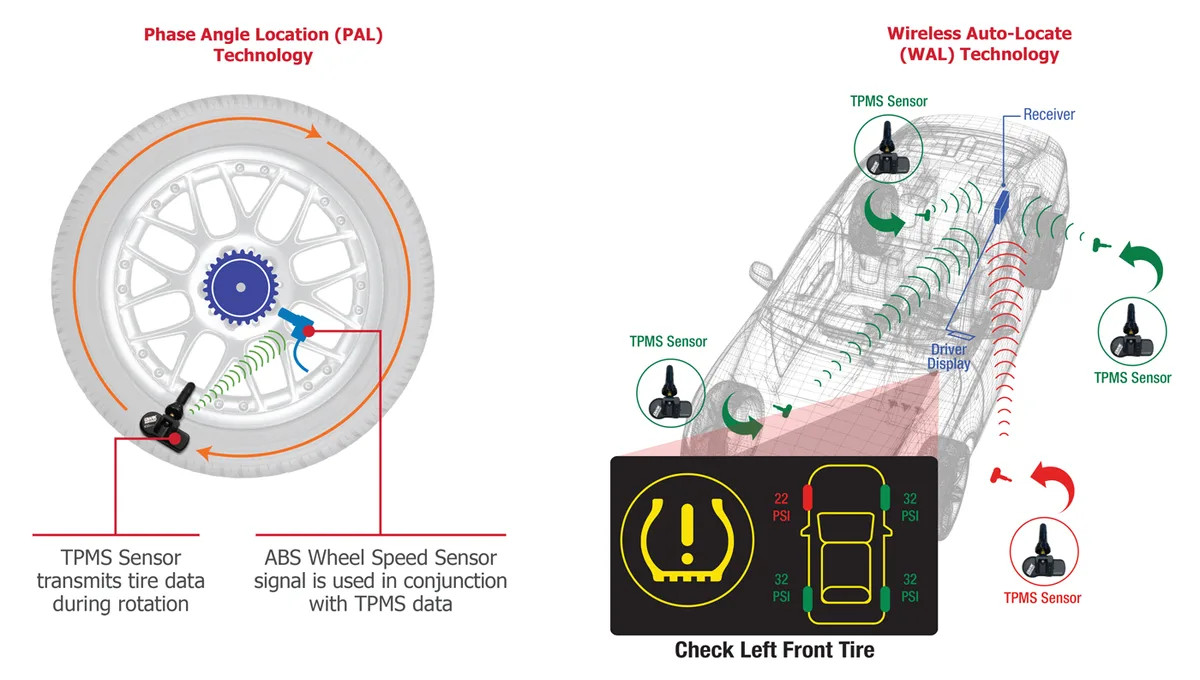
Image source: Bing (Web (fair-use with source credit))
The usual culprits:
- Dead sensor battery. These typically last 7 to 10 years.
- Sensor damage from a hard curb strike or improper mounting.
- A missing sensor after swapping to winter wheels.
- Aftermarket wheels with sensors that were never programmed.
Diagnosing this takes a TPMS scan tool, which reads sensor IDs, pressure, temperature, and battery status. Most tire shops run the scan quickly, and many charge nothing for it.
Replacement cost lands around $50 to $150 per sensor plus installation, depending on your Tucson's model year and trim. Annoying as that price is, a dead sensor won't fix itself. If you skipped the sensor during a wheel change, that's the trigger.
Programming takes under an hour at any decent tire shop.
Also, keep in mind that a blinking light doesn't necessarily mean the tire itself is underinflated. The sensors might be fine, but the system lost its connection. Start with the scan before you buy new sensors.
Common Mistakes and Real-World Scenarios
The most common TPMS mistake is trusting a gas station air pump. Those built-in gauges get beaten up daily, and they read high or low by 3 to 5 PSI. Use a handheld gauge.
They cost pocket change and they're accurate.
Another mistake is ignoring a steady light for weeks. By the time the light glows, a tire is about 25 percent underfilled. That means more heat, worse grip, and uneven wear.
Slow leaks don't heal. A nail in the tread or a cracked bead needs a shop, not air.
Cold weather trips up almost everyone. Our research shows a 10°F drop reduces pressure by roughly 1 PSI. That's why the light often appears on the first cold morning of the season.
Some Tucson owners also assume the spare is monitored. On most trims, it isn't. The compact spare needs its own check, usually around 60 PSI.
The TPMS won't warn you if it's flat.
And if the light blinks right after a tire rotation, the wheels may need a sensor relearn. Some trims auto-relearn, others don't. A quick scan confirms which one you're driving.
Finally, don't reset the system before fixing the leak. The light will return. Treat the warning as information, not an inconvenience.
Low pressure affects the whole car. Steering gets heavy, the ride feels floaty, and stopping distance stretches. It's the same category of neglect as grinding brake noise.
Catch it early, and it's a free fix at any pump.
Safety and Compliance: When to Stop Driving
A steady TPMS light is not an emergency. It's a heads-up. Check the pressure, add air if needed, and drive gently to a shop if you're still unsure.
There are lines you don't cross. If the tire is visibly flat, pull over. If you hear air escaping, stop.
If the car pulls hard to one side, slow down carefully and find a safe spot. Driving on a nearly flat tire at highway speed can cause a blowout.
Tire pressure is a legal safety matter, not a preference. Federal Motor Vehicle Safety Standard 138 mandates these systems because underinflation causes crashes. It's the same logic as brake maintenance.
Worn tires and low pressure multiply brake problems. They extend stopping distance exactly when you need it shortest.
Also respect the load limit. An overloaded Tucson with low tires is a recipe for overheating. Check the placard for both pressure and load ratings.
If the light comes on while towing, pull over and check before continuing.
And watch for other warning lights stacking up. A car with a tire pressure alert and a failed brake light is a car asking for trouble. Fix them together, not one at a time.
Frequently Asked Questions
How long does the TPMS light take to clear after inflating?
Usually under 10 minutes of driving. The sensors transmit continuously. Once pressure reads above the threshold, the icon turns off.
If it stays lit past 15 minutes, recheck all four tires and confirm the placard pressure. A tire that loses pressure right after a fill has a slow leak.
What PSI should my Hyundai Tucson tires be?
Check the driver's door placard. Most Tucson trims call for 33 to 35 PSI when cold. That's the cold pressure, meaning after three hours parked.
The tire sidewall number is a maximum, not a target. Use the placard value, not the tire's molded rating.
Why does my tire pressure light come on in cold weather?
Pressure drops about 1 PSI per 10°F. A tire filled to 35 PSI in September can read 30 PSI in January. That crosses the warning threshold.
Reinflate after a cold snap and the light should clear. This is normal operation, not a sensor fault.
Can I drive with the tire pressure light on?
Yes, if the tire is only slightly low. Head to the nearest pump and inflate. No, if the tire looks flat or you feel heavy vibration.
Pull over and get help. Those are the warning signs of an imminent blowout. Don't push past that limit.
How much does a TPMS sensor replacement cost?
$100 to $200 per wheel, parts and labor included, depending on the model year and shop. The sensor itself runs $50 to $150. Installation and programming add the rest.
The 7 to 10 year sensor battery is usually why they fail. It's not something you can replace at home without a scan tool.



3 Comments on “Hyundai Tucson Tire Pressure Light”