A Volkswagen Jetta brake problem needs your attention right away. The braking system is the single most important safety feature on your car. Ignoring a warning sign risks serious consequences, from expensive component damage to a loss of stopping power.
Brake fluid absorbs moisture over time, which lowers its boiling point and can cause fade during hard stops. Whether you're hearing a noise, seeing a warning light, or feeling something different under your foot, this guide covers what's likely wrong and what to do about it.

49% off Today's Exclusive Deals
Limited-time Exclusive Deals. Check current discount on Amazon.
Check Price on Amazon As an Amazon Associate I earn from qualifying purchases.Quick Answer
A Volkswagen Jetta brake problem usually comes down to worn pads, warped rotors, or a fault in the electronic parking brake system. Common symptoms include grinding noises, pedal pulsation, dashboard warning lights, or a soft brake feel. Repair costs typically range from $300 to $800 per axle depending on parts and labor.
Get it inspected as soon as you notice something off.
49% off Today's Exclusive Deals
Limited-time Exclusive Deals. Check current discount on Amazon.
Check Price on Amazon As an Amazon Associate I earn from qualifying purchases.Image source: Bing (Web (fair-use with source credit))
Common Jetta Brake Problems by Symptom: Noise, Warning Light, Soft Pedal, and More
Your Jetta communicates brake issues through specific signs. Learning to read them helps you act before small problems become expensive ones.
| Symptom | Likely Cause | Urgency |
|---|---|---|
| High-pitched squeal | Worn pad wear sensor | Moderate to High |
| Grinding or growling | Pads completely gone, metal on metal | Immediate |
| Pulsation in the pedal | Warped brake rotor | Moderate |
| "Brake" or ABS warning light | Low fluid, sensor fault, system error | High |
| Soft or spongy pedal | Air in lines, fluid leak, master cylinder failure | High |
| Vehicle pulls to one side | Sticking caliper, uneven pad wear | Moderate |
A soft brake pedal points to a hydraulic issue, not just worn pads. If your pedal sinks toward the floor, do not drive the car. This could mean a leak in the brake lines or a failing master cylinder.
Brake noise can also indicate glazed pads or debris trapped between the pad and rotor. A quick visual check through the wheel spokes often reveals the cause.
49% off Today's Exclusive Deals
Limited-time Exclusive Deals. Check current discount on Amazon.
Check Price on Amazon As an Amazon Associate I earn from qualifying purchases.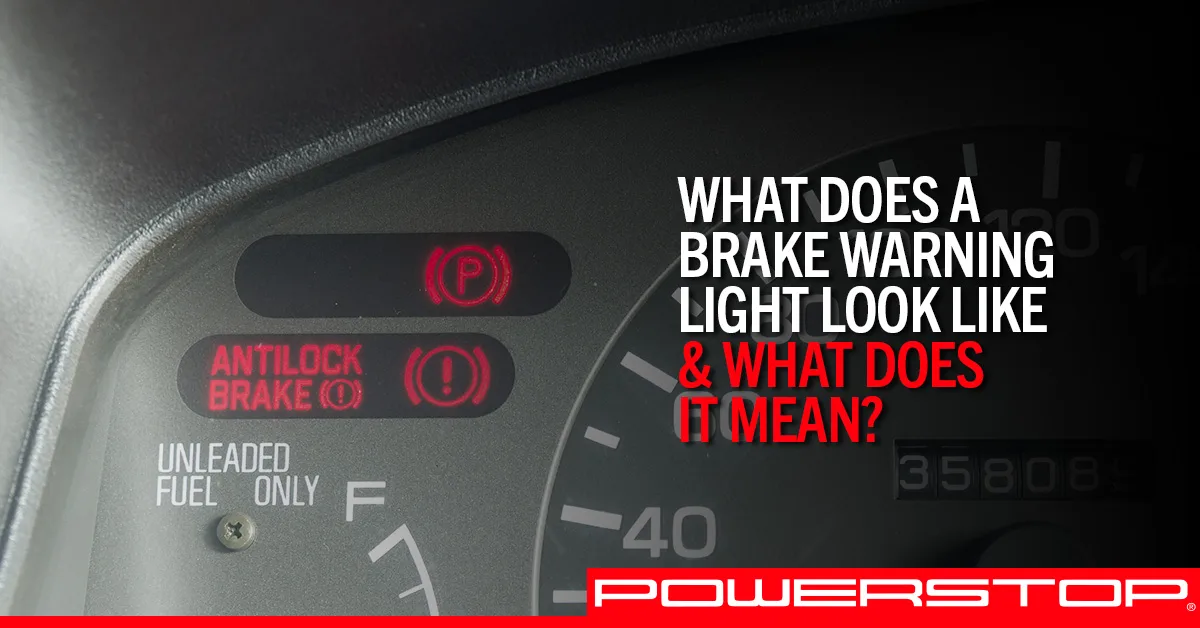
Image source: Bing (Web (fair-use with source credit))
What's Actually Failing: Brake Components and Root Causes Inside the Jetta
Knowing the parts helps you have a real conversation with your mechanic. Your Jetta's front brakes handle roughly 70 percent of the stopping force, which means they wear faster.
Key Components to Know
- Brake Pads: Friction material pressed against the rotor by the caliper piston. They wear down with every stop.
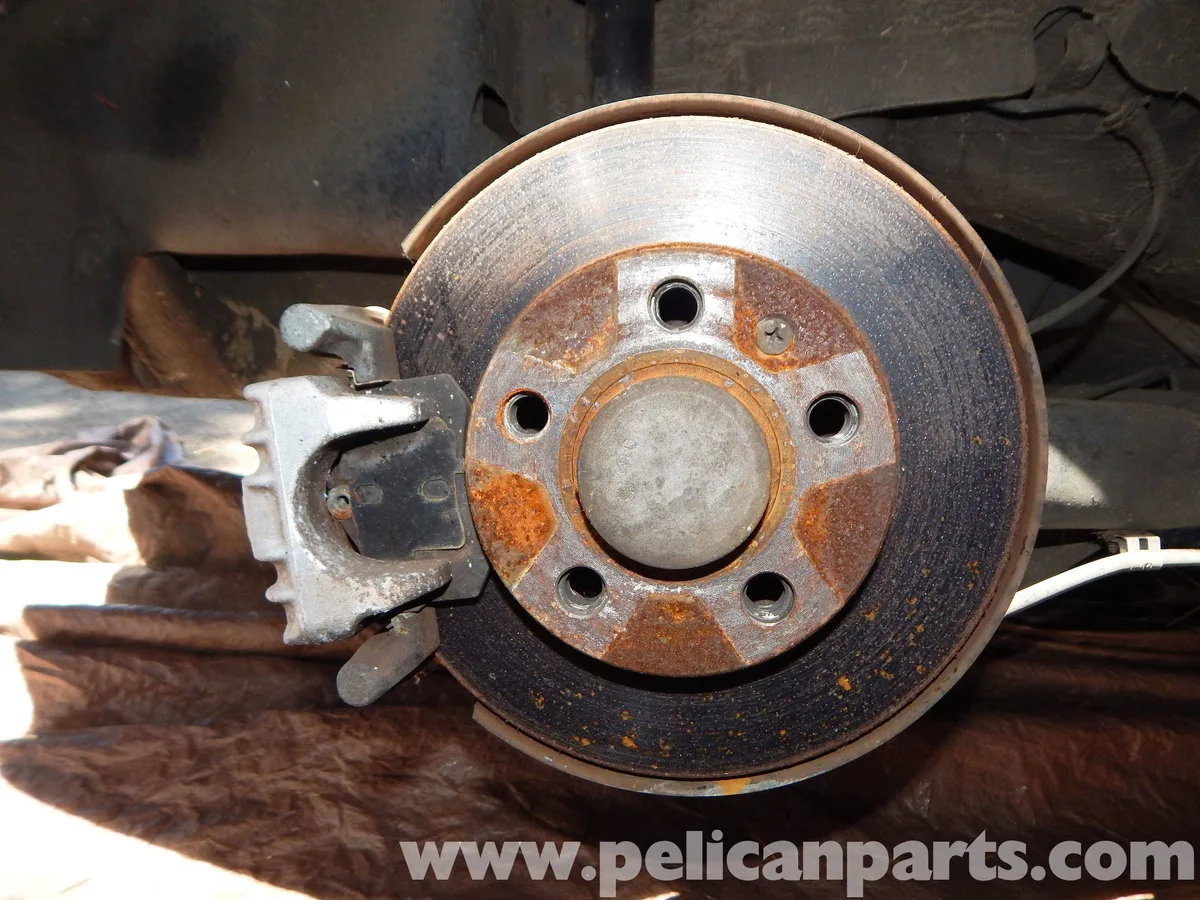
- Brake Rotors: The metal discs bolted to each wheel hub. They warp from heat and wear thin over time.
- Calipers: The housing that squeezes the pads onto the rotor. Slide pins inside the caliper bracket let it move freely. When these seize, the pad drags on the rotor constantly.
- Electronic Parking Brake (EPB): Found on 2010 and newer Jettas. Small motors on the rear calipers engage the parking brake electronically. They require a scan tool to retract for service.
- Brake Hoses and Lines: Rubber hoses and metal lines carry hydraulic fluid from the master cylinder to each caliper. Rubber degrades with age; metal lines corrode in salt-belt regions.
In our research of VW owner forums, premature rear pad wear is a common complaint on Mk6 and Mk7 Jettas. It often traces back to the EPB system not fully releasing, causing the rear pads to drag against the rotor.
A noisy suspension can mask brake sounds. If you hear clunking alongside squealing, both systems need checking.
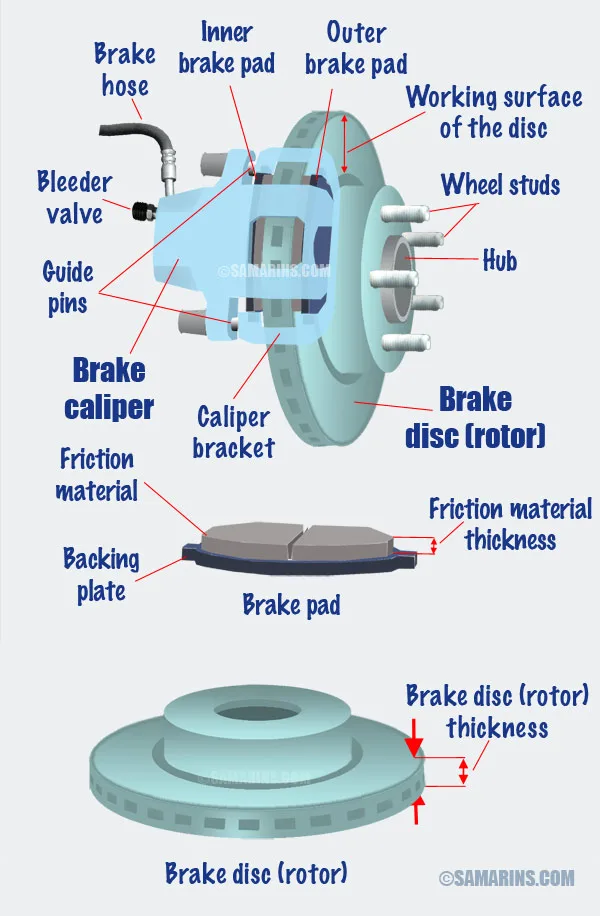
Image source: Bing (Web (fair-use with source credit))
Risk Factors: When a Brake Problem Becomes a Safety Emergency
Some brake symptoms mean you should pull over immediately. Others can wait until your next appointment, but shouldn't be ignored.
Stop Driving and Get Towed If:
- The brake pedal feels mushy or sinks to the floor
- You hear constant metal-on-metal grinding
- The car pulls violently to one side during braking
- Both the red brake light and ABS warning light illuminate at the same time
The National Highway Traffic Safety Administration (NHTSA) tracks brake-related recalls and defects. A seized caliper can overheat enough to ignite brake fluid, creating a fire risk. Even a minor fluid leak can escalate quickly under hard braking.
Yellow brake light on its own? This usually means low fluid or a sensor issue. You can drive carefully to a nearby shop, but check your fluid level first. The reservoir sits on the driver's side of the engine bay.
What to Do Next: A Step-by-Step Diagnostic and Repair Plan
This workflow helps you avoid paying for repairs you don't need.
Step 1: Safe Visual Check
Park on level ground. Use a flashlight. Look through the wheel spokes at the rotor surface and the edge of the brake pad.
You need at least 3 to 4 millimeters of pad material remaining. Check for deep grooves or rust lips on the rotor edge.
Step 2: Low-Speed Test
Find an empty parking lot. Apply the brakes firmly at 15 to 20 mph. Feel for pulsation in the pedal.
Listen for squealing or grinding. Try the parking brake on a slight incline to confirm it holds.
Step 3: Diagnostic Scan
A generic OBD-II reader may pull basic brake codes. However, VW's EPB and ABS systems need manufacturer-specific software. Tools like VCDS or OBDeleven can access these modules.
Many independent shops carry them.
Step 4: Decide on Repairs
- Pads are low but rotors look smooth and are above minimum thickness: replace pads only.
- Rotors are scored, below spec, or you feel pulsation: replace rotors and pads as a set on that axle.
- EPB fault code is present: this often needs a dealer or a specialist with the right diagnostic equipment.
Guesswork costs money. A sticking caliper left unaddressed will destroy a new set of pads in weeks.
Brake Repair Costs: What You'll Actually Pay at the Shop
Pricing depends on your model year, the shop you choose, and which components need replacing.
| Service | Independent Shop | Dealership |
|---|---|---|
| Front pads only | $150–$250 | $250–$400 |
| Front pads and rotors | $300–$500 | $450–$700 |
| Rear pads and rotors | $250–$450 | $400–$650 |
| Full brake fluid flush | $80–$150 | $120–$200 |
| EPB diagnostic and repair | $150–$300 | $250–$500 |
As of 2026, OEM Volkswagen pads and rotors cost about 30 to 50 percent more than quality aftermarket options. Brands like ATE, Textar, and Brembo meet or exceed OE specifications. Budget aftermarket pads work for light daily driving, but they wear faster and generate more dust.
A complete four-corner brake job, meaning pads and rotors at all four wheels plus a fluid flush, runs between $600 and $1,200 at an independent shop. Skipping a routine brake inspection to save $100 can lead to a scored rotor that costs five times that to replace.
Master cylinder replacement runs $400 to $700 parts and labor. A seized caliper costs $250 to $400 per corner. Always get a written estimate before authorizing work.
Mistakes Jetta Owners Make With Brake Repairs
These errors come up constantly in repair shops. Avoiding them saves money and keeps you safe.
Ignoring the Electronic Parking Brake
The Mk6 and Mk7 Jetta use EPB motors mounted on the rear calipers. You cannot compress the piston with a C-clamp like older cars. Forcing it will destroy the motor assembly, turning a $150 pad job into a $600 repair.
Replacing Pads Without Rotors
New pads pressed against a scored or warped rotor won't fix pulsation. The pad needs a smooth, flat surface to bed into. If the rotor is below its minimum stamped thickness, replace both together.
Skipping the Bed-In Procedure
New pads and rotors need a break-in period. Make 8 to 10 moderate stops from 35 mph, then 2 to 3 firmer stops from 45 mph. This transfers an even layer of friction material onto the rotor surface.
Skipping this step causes uneven deposits and vibration.
Using the Wrong Brake Fluid
Volkswagen specifies DOT 4 fluid. DOT 3 has a lower boiling point and absorbs moisture faster. Per VW service documentation, using the wrong fluid type accelerates internal corrosion of calipers, master cylinders, and ABS valves.
Neglecting the Slide Pins
Caliper slide pins need cleaning and fresh high-temperature grease every time you service the brakes. Dry or corroded pins cause the caliper to stick. This leads to uneven pad wear and reduces stopping force on that wheel.
Forgetting the ABS Bleed Cycle
After bleeding brakes on some Jetta models, the ABS module needs a scan-tool bleed cycle. Skipping this leaves air trapped in the ABS valves. The pedal may feel fine during gentle braking but go soft during an emergency stop.
Volkswagen Jetta Brake Problems: Frequently Asked Questions
How often should I replace my Jetta's brake pads?
Volkswagen's general guideline puts front pads at 30,000 to 60,000 miles and rear pads at 40,000 to 70,000. Heavy city driving shortens that range. Many urban drivers need new front pads around 25,000 miles.
Can I drive with a brake warning light on?
The yellow "BRAKE" light usually means low fluid or a sensor issue. You can drive carefully to a shop after checking the reservoir. A red brake light paired with a pulsing or sinking pedal means stop immediately and call for a tow.
Why does my Jetta's brake pedal pulsate?
Pulsation almost always points to warped rotors. Repeated heat cycles and uneven pad deposits make the rotor surface irregular. Replacing the rotors with a fresh set of pads resolves it in most cases.
Do I need a scan tool to change rear brake pads?
Yes, for any Jetta with an EPB system (2010 and newer). The rear caliper pistons must be retracted electronically before you can remove the old pads. Forcing the piston without putting the system into service mode damages the motor.
What does a grinding noise when braking mean?
Grinding means your brake pads are completely worn. The metal backing plate is now contacting the rotor surface. Stop driving as soon as you safely can.
Continuing will score the rotors and push your repair cost significantly higher.
How much does a complete brake job cost on a Jetta?
Based on 2026 shop pricing data, expect $600 to $1,200 for a full four-corner service at an independent shop. Dealerships charge 30 to 50 percent more. The final number depends on whether you need pads only, pads with rotors, or additional hydraulic work like a soft pedal symptom pointing to master cylinder replacement.