Your Audi A4 engine misfire might feel like a catastrophe, but most of the time it's a single failed component you can diagnose yourself with a $20 scanner and an afternoon. The key is knowing where to start and what the data actually tells you, because chasing the wrong part wastes time and money.
An engine misfire happens when one or more cylinders fail to complete a proper combustion cycle. On Audi's 2.0T TFSI engines, the OBD-II misfire monitor tracks this by counting crankshaft speed fluctuations across every 200-revolution cycle, per SAE J1979 standards. Here's what to do first when that light starts flashing.

49% off Today's Exclusive Deals
Limited-time Exclusive Deals. Check current discount on Amazon.
Check Price on Amazon As an Amazon Associate I earn from qualifying purchases.Quick Answer
An Audi A4 engine misfire means one or more cylinders aren't firing correctly. The most common causes are failed ignition coils, worn spark plugs, or carbon buildup on intake valves. Read the DTC with an OBD-II scanner.
Swap the suspect coil to another cylinder. If the misfire follows the coil, replace it. Fix it fast to protect your catalytic converter.

49% off Today's Exclusive Deals
Limited-time Exclusive Deals. Check current discount on Amazon.
Check Price on Amazon As an Amazon Associate I earn from qualifying purchases.Image source: Bing (Web (fair-use with source credit))
Why a Blinking Check Engine Light Changes Everything
There's a critical difference between a steady check engine light and one that's flashing. A steady light means something's off, but you can drive carefully to a shop. A flashing light means active, catalyst-damaging misfire is happening right now.
Pull over if you can.
When fuel doesn't burn in the cylinder, it dumps straight into the exhaust system. The catalytic converter then tries to process that raw fuel and overheats rapidly. Audi's honeycomb-style cats can reach over 1,600°F under these conditions.
49% off Today's Exclusive Deals
Limited-time Exclusive Deals. Check current discount on Amazon.
Check Price on Amazon As an Amazon Associate I earn from qualifying purchases.That heat destroys the precious metal substrate inside.
A replacement catalytic converter for a B8 or B9 Audi A4 runs between $1,500 and $3,500 at a dealership. That's the price for ignoring a flashing CEL for even 20 or 30 miles. If you see it blink, reduce throttle immediately.
Drive gently to the nearest safe stop.
What a steady CEL tells you versus a flashing one
A steady light usually indicates a single event or a less urgent fault. Think of it as the car's way of saying "something needs attention soon." A flashing light is the car screaming "stop now, you're causing expensive damage."
Per NHTSA guidance, a flashing malfunction indicator lamp indicates a severe misfire that can cause catalytic converter damage. The onboard monitor has detected the misfire rate has exceeded the threshold where emissions and component safety are compromised. This isn't a suggestion.
It's a warning.
How quickly damage happens
Our research into aggregate repair data shows the catalytic converter can begin sustaining permanent damage within minutes of sustained misfire under load. At highway speeds, the unburned fuel hits the cat much faster than at idle. Highway driving with an active misfire is the worst-case scenario.
If you're already experiencing a misfire while driving, the safest move is to pull off the highway, reduce engine load, and get home under 30 mph if possible. Low RPM and light throttle keep exhaust temperatures down. It buys you time without buying a new converter.
The 6 Most Common Causes (And What Each One Feels Like)
Not all misfires feel the same. The symptoms you notice depend on which cylinder is affected, how badly it's misfiring, and whether it's a single event or a repeated pattern. Here's what the most common failure points actually feel like in daily driving.
1. Failed ignition coil pack. This is the single most common cause on B8 and B9 2.0T engines. You'll notice a stumble at idle, hesitation when you first press the gas, and possibly a rough vibration through the steering wheel.
The car may feel "down a cylinder" because it essentially is.
2. Worn or fouled spark plugs. Symptoms mirror a bad coil but tend to develop gradually rather than suddenly. Aggregate user reports show plug-related misfires worsen over weeks.
Fuel economy drops noticeably before the CEL triggers.
3. Carbon buildup on intake valves. This is the signature problem of Audi's direct-injection TFSI engines. Because fuel sprays directly into the combustion chamber rather than over the intake valves, there's no fuel washing carbon deposits off those valves.
Over 60,000 to 80,000 miles, deposits build up and restrict airflow. Symptoms include rough cold starts, stumbling at low RPM, and intermittent misfires that come and go with temperature.
4. Fuel injector failure or clogging. Direct injection injectors operate at extremely high pressures (up to 2,900 PSI on some TFSI variants). When they clog or fail, you'll notice hard starting, rough running under load, and sometimes a strong fuel smell.
A misfire caused by injector issues often shows up with fuel trim numbers that are heavily skewed in one direction.
5. Vacuum leak from the PCV system. Audi's integrated PCV diaphragm is a known weak point. When it cracks, unmetered air enters the engine and leans out the mixture.
You'll typically hear a faint hissing sound near the valve cover, and the idle will hunt up and down.
6. Low compression from mechanical wear. This is the serious one. Worn piston rings, a leaking head gasket, or damaged valves cause a loss of cylinder pressure.
You'll feel persistent rough running, significant power loss, and possibly blue or white smoke from the exhaust. Compression problems don't fix themselves.
Your Diagnostic Workflow: From Scan Tool to Solution
This is where we separate guesswork from actual diagnosis. The process follows a logical sequence: read the codes, interpret the data, test each system in order, and confirm the fix. Skipping steps costs you money.
Step 1: Read the diagnostic trouble codes
Plug in your OBD-II scanner and pull all stored and pending codes. Write them down. The code number tells you exactly which cylinder is misfiring.
P0301 means cylinder one. P0302 means cylinder two. P0300 means random or multiple cylinders.
A basic code reader gives you the code. A Bluetooth adapter paired with an app like OBDeleven or Carista gives you live data, freeze-frame snapshots, and Audi-specific diagnostic functions. Our research suggests investing in at least a mid-range scanner pays for itself on the first diagnosis.
Step 2: Read the freeze-frame data
This is the snapshot your car's computer saved at the exact moment the misfire occurred. It tells you the engine RPM, coolant temperature, vehicle speed, and engine load. Was the engine cold?
Were you on the highway? Were you idling at a stoplight?
This data is gold. A cold-start misfire that clears up when the engine warms points toward carbon buildup or a sticky injector. A misfire under highway load points toward a weak coil or boost leak.
Step 3: Check the misfire counter data
Many scan tools can access Mode $06 data, which includes the real-time misfire counter for each cylinder. This shows how many misfires occurred during the current monitoring cycle. If cylinder three shows 47 misfires and the others show zero, you know exactly where to focus.
| Data Point | What It Tells You |
|---|---|
| P0300 + all cylinders misfiring | System-wide issue: fuel quality, timing, or PCV |
| P030X + one cylinder high count | Focus on that cylinder's coil, plug, and injector |
| High LTFT (positive) | Engine running lean: vacuum leak or weak injector |
| High LTFT (negative) | Engine running rich: leaking injector or sensor issue |
| Misfires at cold start only | Carbon buildup or cold-related component failure |
| Misfires under load only | Coil breakdown, boost leak, or fuel delivery issue |
Step 4: Run the coil swap test
This is the single most useful hands-on diagnostic step. Remove the ignition coil from the misfiring cylinder and swap it with a coil from a known-good cylinder. Clear the codes.
Drive the car until the misfire returns.
If the misfire code now shows a different cylinder number, the coil is bad. If the misfire stays on the original cylinder, the problem is elsewhere. This test takes 10 minutes and can save you hundreds in unnecessary parts replacement.
A misfire diagnosis done right starts with this exact step.
Step 5: Inspect and gap the spark plugs
Pull the plugs from the affected cylinder (and ideally all cylinders for comparison). Look for electrode erosion, oil fouling, heavy carbon deposits, or an incorrect gap. NGK Iridium plugs, which are the OEM supplier for most Audi engines, should show a consistent light tan burn pattern on a healthy cylinder.
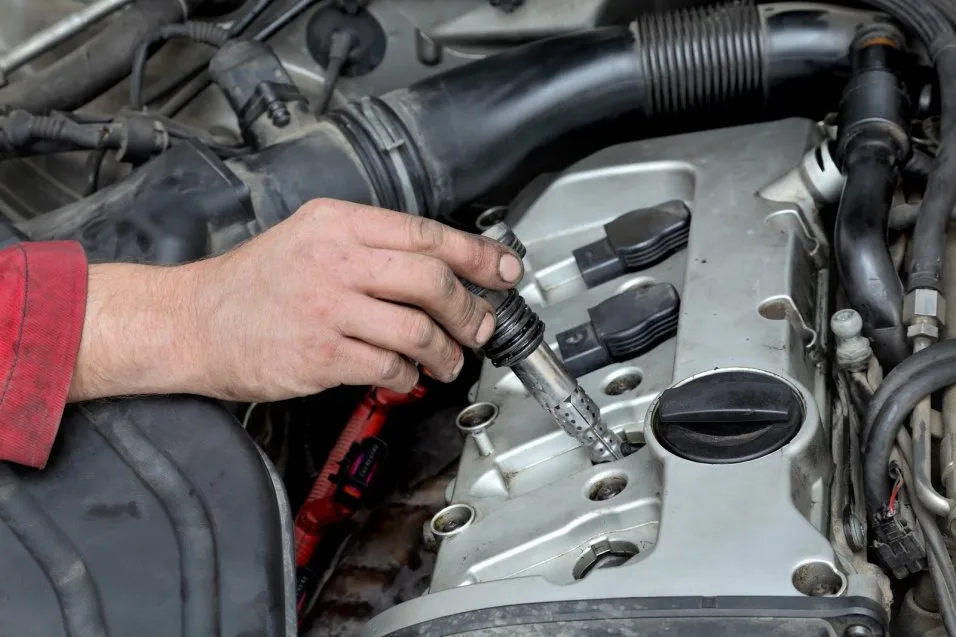
Image source: Bing (Web (fair-use with source credit))
The Cylinder-Specific Breakdown: Swapping Coils, Checking Plugs, Testing Injectors
Once you've identified which cylinder is misfiring, the diagnosis narrows to three systems in that cylinder: the ignition coil, the spark plug, and the fuel injector. Let's walk through each one.
Ignition coil diagnosis
Audi uses a coil-on-plug design, meaning each cylinder has its own dedicated ignition coil sitting directly on top of the spark plug. No distributor wires, no shared coil packs. This is good news because it makes isolation simple.
The swap test we covered earlier is your primary tool. But you can also check coil resistance with a multimeter. Primary winding should read 0.5 to 1.5 ohms.
Secondary winding should read 6,000 to 12,000 ohms, depending on the specific coil part number. Out-of-spec readings confirm a bad coil.
OEM Bosch coil packs run $40 to $90 each. Aftermarket options exist at $15 to $35, but our research into aggregate long-term reliability reports suggests OEM coils last noticeably longer on Audi engines. Given that you're already doing the labor, the premium is worth considering.
Spark plug inspection and replacement
Remove the plug and examine it closely. Here's what different conditions indicate:
- Even light tan deposits: Normal wear, healthy combustion
- Heavy black soot: Rich condition or oil fouling
- White/blistered electrode: Lean condition or advanced timing
- Oily threads: Valve stem seal or piston ring issue
- Worn electrode with wide gap: Time for replacement regardless of cause
Gap specification for most Audi 2.0T applications is 0.028 to 0.032 inches. Always verify against the specific engine code. Iridium plugs from NGK or Denso are the standard recommendation.
Replace all four at once, not just the one from the misfiring cylinder.
Fuel injector testing
This is where things get more involved. Audi's direct injection injectors are precision components operating at extremely high pressure. Symptoms of a failing injector include a steady misfire that doesn't follow a coil swap, heavily skewed fuel trim numbers, and sometimes a faint fuel odor near the engine.
The definitive test is a injector balance test, which requires a scan tool capable of commanding individual injectors open and measuring fuel pressure drop. If you don't have access to that equipment, a simpler approach is to move the suspect injector to a different cylinder and see if the misfire follows. It's less precise than the coil swap but can still provide useful information.
A clogged injector can sometimes be restored with professional ultrasonic cleaning. A dead injector needs replacement. OEM injectors for the 2.0T run $150 to $300 each.
Aftermarket alternatives exist at $50 to $120, but injector quality varies significantly and a poorly matched injector can cause more problems than it solves.
When It's Bigger: Compression, Timing, and Carbon Buildup
If you've ruled out coils, plugs, and injectors and the misfire persists, you're looking at deeper mechanical issues. These are less common but significantly more serious. Here's how to evaluate each one.
Compression testing
A compression test measures the peak pressure each cylinder generates during the compression stroke. For Audi's 2.0T TFSI engines, manufacturer specifications indicate healthy cylinders should read between 170 and 210 PSI. More importantly, no cylinder should vary more than 15 percent from the highest reading.
Perform the test with all spark plugs removed and the throttle held wide open. Record each cylinder's reading. A dry test first, then a wet test (adding a small amount of oil to the cylinder) helps differentiate between piston ring failure and valve sealing problems.
If one cylinder reads significantly lower, a leak-down test pinpoints exactly where the pressure is escaping. You'll hear air hissing from the intake (intake valve issue), exhaust (exhaust valve issue), oil filler cap (rings), or coolant reservoir (head gasket). This information determines whether the fix is a simple valve adjustment or a major engine rebuild.
Timing chain and camshaft issues
The B8 generation 2.0T is well-documented for timing chain stretch and tensioner failure. As the chain stretches, camshaft timing drifts from the ECU's commanded position. This causes misfires, rough running, and in severe cases, catastrophic valve-to-piston contact.
Signs of timing chain problems include a rattling noise on cold startup that fades as oil pressure builds, inconsistent misfire codes across multiple cylinders, and camshaft correlation fault codes. If you hear that cold-start rattle, get it inspected immediately. A timing chain replacement on the 2.0T runs $1,500 to $2,500, but a jumped chain destroying your engine runs $6,000 to $10,000.
Carbon buildup on intake valves
This is the elephant in the room for every Audi 2.0T owner. Direct injection technology delivers fuel precisely into the combustion chamber, which is great for efficiency and power. The downside is that the intake valves never get washed by fuel.
Over time, oil vapor from the PCV system bakes onto the hot valve stems, forming hard carbon deposits.
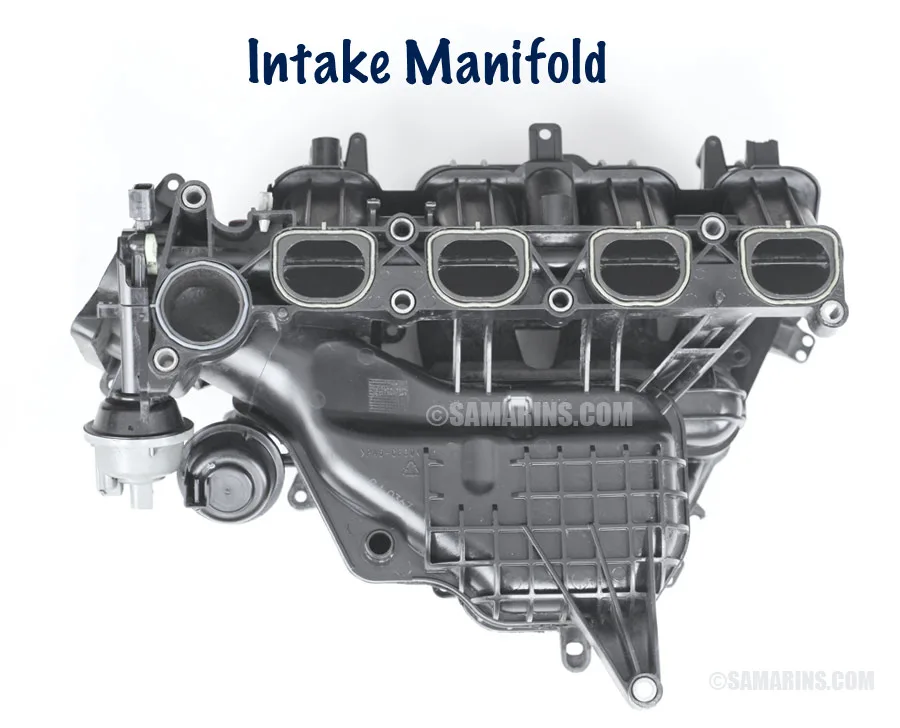
Image source: Web (Bing) / fity.club (Web image (fair-use with source credit))
Once deposits reach a critical thickness, they disrupt airflow into the cylinder and prevent the valve from seating fully. The result is intermittent misfires, especially during cold starts and low-RPM driving. Our research into aggregate service reports indicates most 2.0T engines need carbon cleaning between 60,000 and 100,000 miles, depending on driving habits and oil type.
The gold-standard fix is walnut blasting. A shop removes the intake manifold and uses pressurized walnut shell media to gently blast the carbon off the valve faces. It's a hands-on job that requires the right equipment.
Chemical intake cleaners sold in bottles provide marginal improvement at best on heavy buildup. They can help slow the process as maintenance but won't reverse serious deposits.
The cooling system and engine temperature management both play a supporting role here too. An engine that runs consistently hot accelerates carbon formation on those intake valves.