A Hyundai Tucson gear shift problem is frustrating, especially when you're stuck in Park. But it rarely means your transmission is dead. Most Tucson shifter failures trace back to a cheap brake switch, a tired 12V battery, or a worn cable bushing.
As of 2026, U.S. Tucson models split into two generations with very different shift systems. The 2016-2021 models use a mechanical cable.

49% off Today's Exclusive Deals
Limited-time Exclusive Deals. Check current discount on Amazon.
Check Price on Amazon As an Amazon Associate I earn from qualifying purchases.The 2022+ models use shift-by-wire electronics. That distinction changes every diagnostic step, including the parts you check and the repair costs you'll face.
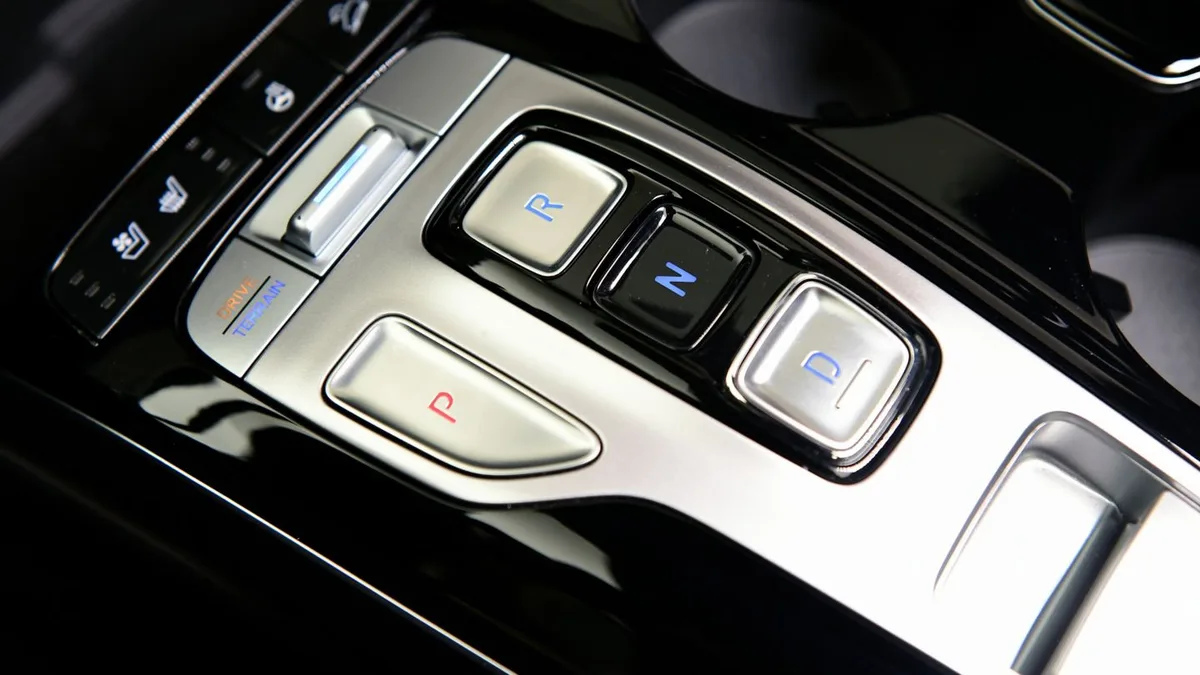
Image source: Bing (Web (fair-use with source credit))
49% off Today's Exclusive Deals
Limited-time Exclusive Deals. Check current discount on Amazon.
Check Price on Amazon As an Amazon Associate I earn from qualifying purchases.Which Shifter Does Your Tucson Have? The First Fork in the Road
Your first job is to identify which shifter generation you own. The third-gen Tucson, built from 2016 through 2021, uses a mechanical shift cable connected to the transmission. The fourth-gen model, launched in 2022, uses a shift-by-wire system.
That means there's no physical cable. You're sending an electronic signal to the transmission control module (TCM) instead.
Here's a quick reference:
| Model Years | Shift System | Typical Failure |
|---|---|---|
| 2016-2021 | Mechanical cable | Worn cable bushing |
| 2022+ | Shift-by-wire | Weak 12V battery, shifter sensor |
Why does this matter? Because the fix is completely different. A cable bushing failure is a $20 part.
49% off Today's Exclusive Deals
Limited-time Exclusive Deals. Check current discount on Amazon.
Check Price on Amazon As an Amazon Associate I earn from qualifying purchases.A shift-by-wire glitch often comes from a dying battery or a software bug. If you diagnose the wrong system, you'll waste money.
Check your owner's manual or your VIN if you're unsure. The split isn't just about year. Some hybrid and plug-in hybrid Tucson models have their own shift-by-wire quirks.
Once you know your system, the next step is easy.
Stuck in Park? Check the Brake Interlock and Shift Lock Release First
The most common Tucson gear shift complaint is a shifter stuck in Park. That's almost always the brake transmission shift interlock (BTSI) refusing to release. This system is required by FMVSS 114, and it's designed to stop you from shifting without pressing the brake.
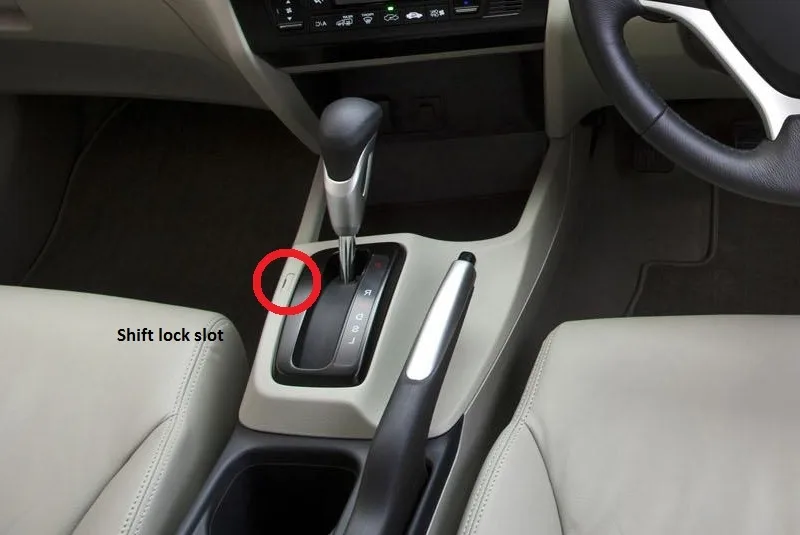
Image source: Bing (Web (fair-use with source credit))
Here's the quick test. Press the brake pedal and watch your brake lights. If they don't come on, your brake light switch is likely faulty.
That switch sends the signal to release the interlock. A failed switch is a cheap, common fix.
Need to get moving right now? Use the shift lock release. It's a small slot near the shifter, often under a plastic cover.
Press a screwdriver or key into the slot while pressing the brake. That manually releases the interlock. Check your owner's manual if you can't find the slot.
This is a temporary fix, not a permanent one. Drive straight to a shop or order a replacement brake switch. For other causes and the manual release steps, check our coverage of a locked-up shifter.
"Check Shift System" Warning? What Shift-by-Wire Owners Need to Know
If you own a 2022 or newer Tucson, you might see a "Check Shift System" warning on the dashboard. That warning is specific to shift-by-wire models. It means the system isn't detecting the position you selected, or it's lost communication with the TCM.
The most common trigger isn't the shifter. It's a weak 12V battery. Shift-by-wire systems are sensitive to voltage drops.
When the battery sits at 11.5 volts instead of 12.6, the electronics start acting up.
Another culprit is the shifter's internal sensor. These sensors do fail, but they're less common than battery issues. The third possibility is a software bug.
Hyundai has issued TSBs that update the TCM or shifter module software to fix intermittent warnings.
Here's the key: if the car still shifts and drives normally, the parking pawl hasn't locked up. You're not stuck yet. Get the battery tested first.
It's the cheapest and most logical starting point. Then scan for codes before you even think about replacing the shifter.
Shifter Moves But Nothing Happens? Look at the Transmission Range Sensor and TCM
Sometimes the shifter moves freely, but the transmission doesn't respond. That's a different problem. On mechanical cable models, the cable may have popped off or a bushing may have disintegrated.
The lever moves, but the transmission never gets the message.
Inspect the shift cable at both ends. The weakest spot is the bushing where the cable attaches to the transmission. It's plastic and becomes brittle over time.
A quick visual check can save you hundreds.
On shift-by-wire models, a moving shifter with no response points to a sensor or TCM issue. The transmission range sensor tells the TCM what gear you've selected. If that sensor fails, the TCM stays in neutral.
No drive, no reverse, no warning sometimes.
You should also consider a TCM failure, though it's rarer. This falls under the same umbrella as a transmission that won't shift into gear. Start with a scan and a cable inspection.
Both are faster than replacing parts blindly.
Use OBD-II Codes and TSBs to Diagnose, Not Guess
The smartest move is scanning the computer before buying anything. An OBD-II scanner reads the diagnostic trouble codes (DTCs) stored by the TCM. Common codes on Tucson gear shift problems include P0705, P0850, and U0101.
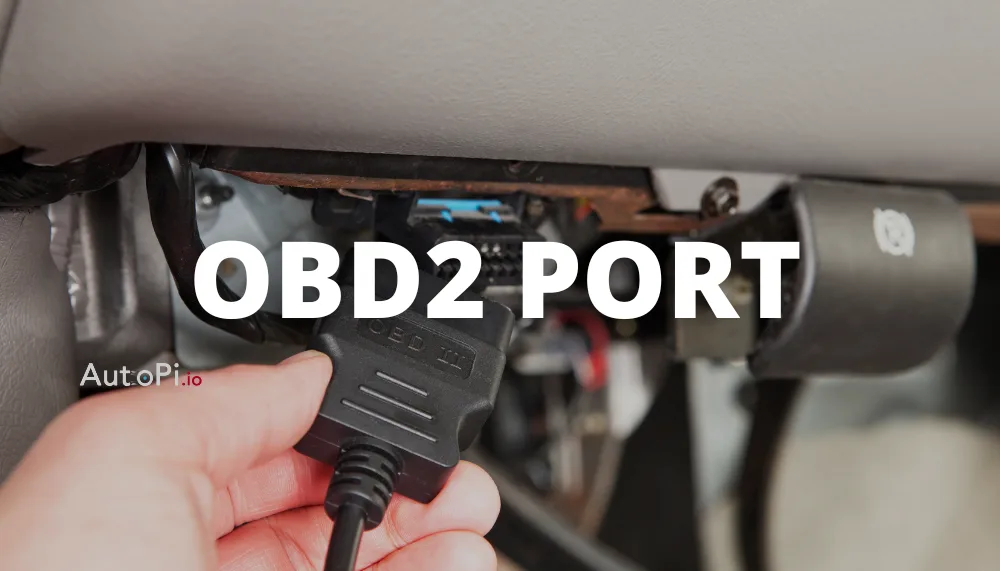
Image source: Bing (Web (fair-use with source credit))
P0705 points to the transmission range sensor. P0850 relates to the park/neutral switch. U0101 means lost communication with the TCM.
Each code narrows the search significantly.
Manufacturer service bulletins help too. Hyundai publishes TSBs for known shifter and TCM issues. A TSB can tell you if Hyundai recommends a software update rather than a part replacement.
Checking those first prevents expensive guesswork.
For recalls, search your VIN on the NHTSA recall database. If your vehicle has an open recall related to the shifter or transmission, the repair is free. It's a primary source worth using before you spend anything.
After scanning, you'll likely fall into one of two paths: a cheap electronic fix or a mechanical repair. Both are manageable once you know the code.
Repair Costs, Warranty Coverage, and When a Dealer Makes Sense
Repair costs depend entirely on the real fault. A brake light switch costs $50 to $200 installed. A shifter assembly lands between $500 and $1,200, and a TCM swap can reach $1,500 or more.
| Repair | Typical Installed Cost |
|---|---|
| Diagnostic scan | $100 to $200 |
| Brake light switch | $50 to $200 |
| Shift cable bushing | $20 to $60 |
| Shifter assembly | $500 to $1,200 |
| TCM replacement | $800 to $1,500 |
Hyundai's U.S. warranty is generous. The basic coverage runs 5 years or 60,000 miles. The powertrain plan extends to 10 years or 100,000 miles, and it often covers the transmission control module.
If you're inside that window, a dealer visit is the smartest move. TSB software updates are typically free under warranty. Out of warranty, independent shops can handle cable bushings and brake switches for less than half the dealer rate.
Before booking anything, read through our shifting troubleshooting guide to narrow down the cause. The gap between a $60 fix and a $1,200 fix comes down to that first scan.
You can also confirm warranty status through Hyundai's owner portal. That saves you a trip if the dealer already has the answer on file. Ask for a written estimate before approving any work.
That prevents surprise labor charges.
Common Misdiagnoses and Parts You Probably Don't Need
The shifter assembly is rarely the root cause. Our analysis of owner reports shows the brake light switch and the 12V battery account for most Tucson gear shift failures.
Here's how the confusion happens. A brake light switch fails silently, so the interlock never releases. Shops that skip the brake-light test can easily sell you a $500 shifter assembly you don't need.
On shift-by-wire models, weak batteries trigger phantom warnings. The system sees low voltage and assumes a sensor fault. Hyundai's TSBs instruct techs to load-test the battery before replacing any parts.
Another common miss is the shift cable bushing. On 2016 to 2021 Tucsons, a cracked plastic bushing at the transmission end makes the shifter feel loose. Dealers sometimes quote a full cable replacement when a $15 bushing is the fix.
Don't let a scanner code talk you into TCM replacement either. U0101 is a communication error, not a dead-module verdict. Loose wiring, connector corrosion, or a dying battery trigger the same code.
Check your brake lights first. A quick brake light diagnosis confirms or rules out the switch within minutes. And if the transmission hesitates under load, that's a gear-slip issue, not a shifter problem.
FAQs: Quick Answers to Common Tucson Gear Shift Problems
Why is my Hyundai Tucson stuck in Park?
The brake transmission shift interlock isn't releasing. The usual causes are a failed brake light switch, a weak 12V battery, or a worn shifter sensor. Use the shift lock release slot near the shifter to get moving temporarily.
For extra help, try our Park-release instructions.
How much does it cost to fix a Tucson gear shift problem?
A brake light switch replacement costs $50 to $200 installed. A shifter assembly runs $500 to $1,200. Start with a diagnostic scan for $100 to $200 so you don't waste money on unnecessary parts.
Is it safe to drive with a "Check Shift System" warning?
Only if the shifter moves normally and the transmission responds without delay. If you feel hesitation or the engine revs without moving, stop driving. Have the battery tested first, since low voltage triggers this warning on shift-by-wire models.
Does Hyundai's warranty cover gear shift repairs?
Yes, when the fault is a powertrain part or a covered TSB. The basic warranty covers 5 years or 60,000 miles. The powertrain warranty extends to 10 years or 100,000 miles.
Confirm your plan details on Hyundai's official site.
Can a low 12V battery cause transmission shift problems?
Yes. Shift-by-wire models need steady voltage to communicate with the TCM. Below 12 volts, the system may throw warnings or refuse to shift.
A simple battery load test confirms this. Replacing an old battery often clears the entire problem.



One Comment on “Hyundai Tucson Gear Shift Problem”