Few things are more frustrating than a Hyundai Tucson power window problem when you're parked in the rain or trying to pay a toll. You press the switch, hear nothing, and watch the glass stay stubbornly in place. The good news is that most of these failures follow a clear pattern.
You can diagnose the cause at home with a multimeter and often fix it for less than $100.
49% off Today's Exclusive Deals
Limited-time Exclusive Deals. Check current discount on Amazon.
Check Price on Amazon As an Amazon Associate I earn from qualifying purchases.The power window circuit in the Tucson typically runs on a 20A or 30A fuse. As of 2026, owners who troubleshoot systematically find the switch or the regulator is the real culprit, not the motor. That means the repair is usually simpler than you'd expect.
Let's walk through how to find your exact fix.
Quick Answer
A Tucson power window problem usually comes from one of five parts. The switch, fuse, motor, regulator, or wiring. Most failures involve the switch or the regulator.
49% off Today's Exclusive Deals
Limited-time Exclusive Deals. Check current discount on Amazon.
Check Price on Amazon As an Amazon Associate I earn from qualifying purchases.Test the fuse first, then the motor. Replace the $50 part before the $200 one.
Quick Diagnosis: What Your Tucson’s Window Is Trying to Tell You
Your window gives you clues before it dies completely. The symptom you're seeing points straight to the failing part. We've mapped the most common signs below so you can skip the guesswork.
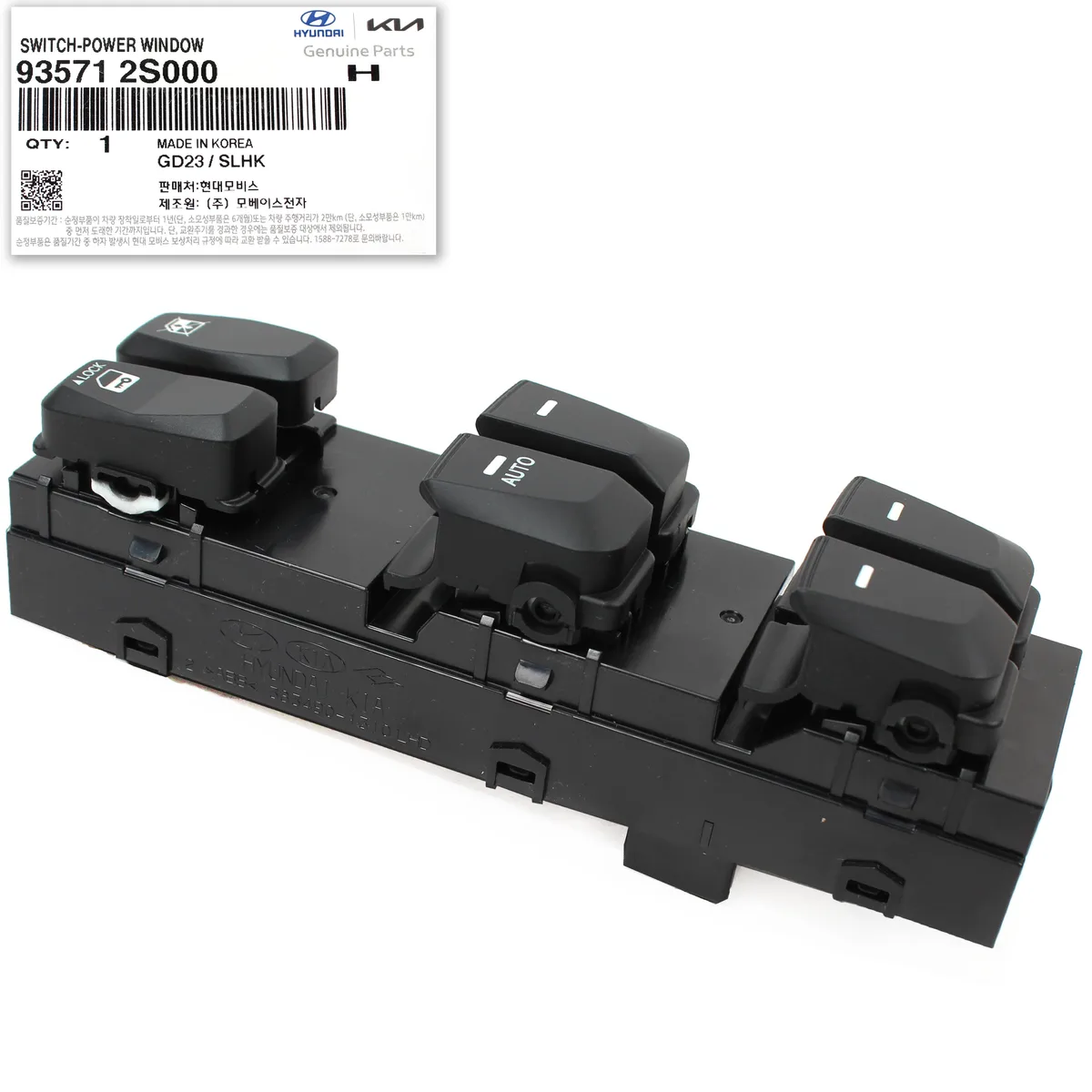
Image source: Bing (Web (fair-use with source credit))
49% off Today's Exclusive Deals
Limited-time Exclusive Deals. Check current discount on Amazon.
Check Price on Amazon As an Amazon Associate I earn from qualifying purchases.| Symptom | Most Likely Cause | Next Step |
|---|---|---|
| One window dead, no sound | Motor or regulator | Test motor with 12V jump |
| All windows dead at once | Blown fuse or master switch | Check 20A/30A fuse first |
| Clicking but no movement | Regulator cable snapped | Remove door panel, inspect |
| Slow or jerky movement | Regulator wear or dry tracks | Lubricate tracks, test again |
| Works from master, not door switch | Door switch failed | Test switch continuity |
| Auto-up stops halfway | Pinch sensor glitch or moisture | Run the reset procedure |
If your window slides down into the door, it's a broken regulator cable. That's not a switch or motor issue. For a deeper look at what can go wrong physically, our guide on stuck glass walks through the mechanical side in detail.
The Usual Suspects: Switch, Fuse, Motor, Regulator, or Wiring
Every Tucson power window failure traces back to one of these five components. Knowing what each one does makes the diagnosis much easier. Here's the breakdown.
The switch. This is the most commonly replaced part. Tucson switches wear out from heavy use, especially the driver's master panel. A dead spot on the contact pad stops the signal from reaching the motor.
The fuse. A single blown fuse kills all four windows at once. Owners often overlook this because they expect a fuse to burn out from a short. More often, it pops from the extra current draw of a tired motor straining against a stuck regulator.
The motor. The motor is a small DC electric unit that spins the regulator. It rarely fails on its own. When it does, you'll usually hear nothing at all when you press the switch.
Testing it directly with battery voltage tells you immediately whether it's alive.
The regulator. This is the mechanical arm or cable system that lifts the glass. The cable version is more common in modern Tucsons. When a cable snaps, the window drops into the door or makes a horrible grinding noise.
This part carries the metal clips that are prone to breakage.
The wiring. The wires running from the body into the door flex every time you open and close it. Over time, they fatigue and break inside the rubber boot. This causes intermittent problems where the window works sometimes and fails others.
This is more common on older Tucsons with high door-cycle counts.
If you suspect the master switch panel, our power window troubleshooting guide covers that specific test in depth.
The Decision Tree: Match Your Symptom to the Right Fix
This is the fastest path to a repair. Work through these branches in order and stop when one matches your situation.
Step 1. Check the window lock button. If you or a passenger pressed the window lock switch on the driver's panel, the rear windows won't respond to their own switches. Press it again to unlock.
This sounds silly, but it's the #1 cause of "both rear windows dead" calls.
Step 2. Check all windows. Do all four windows fail, or just one? If all four are dead, move to the fuse and relay first.
If only one window fails, the problem is local to that door.
Step 3. Listen closely. Press the switch and put your ear near the door. If you hear a motor whirring but no motion, the regulator is almost certainly broken.
If you hear nothing, the motor isn't getting power, which points to a switch, wiring, or motor issue.
Step 4. Test the fuse. Find the power window fuse in the under-dash or under-hood fuse box. A visual check isn't always reliable, so use a multimeter or a test light.
Replace a blown fuse with the same amperage only.
Step 5. Test the motor directly. Disconnect the door switch and apply 12V directly to the motor connector. If the motor runs, the motor is fine and your problem is upstream.
If it doesn't, the motor is dead.
This decision tree mirrors the exact process a pro technician follows. You're not guessing anymore. You're diagnosing.
Test Before You Replace: A 5-Step Diagnostic Workflow
Don't buy a new regulator until you've confirmed the part is actually dead. Here's a simple workflow using a multimeter and a couple of jumper wires.
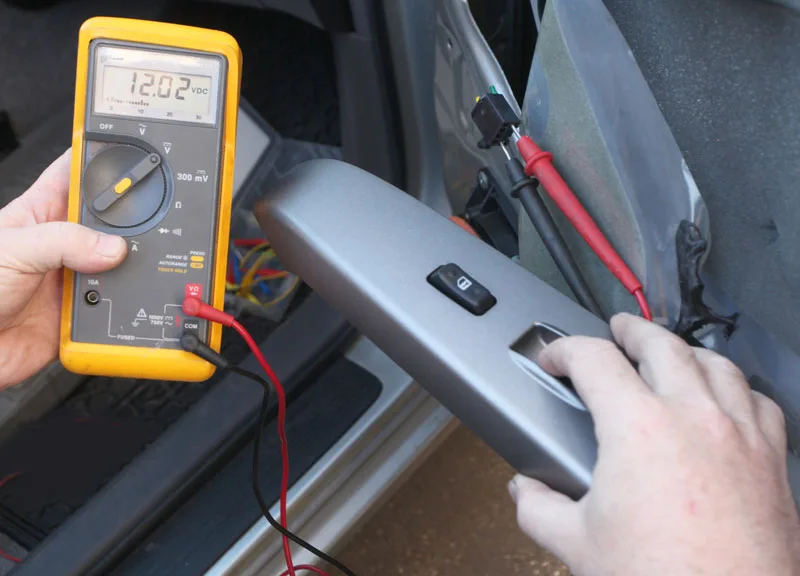
Image source: Bing (Web (fair-use with source credit))
1. Check for power at the switch. Remove the switch panel and probe the supply wire with a multimeter set to DC voltage. You should see battery voltage around 12V with the ignition on.
No voltage means a fuse, relay, or BCM issue upstream.
2. Test the switch output. Press the switch in the down direction and probe the output pin. You should get 12V on one wire.
Press up and check the opposite wire. No voltage means the switch has a dead spot and needs replacement.
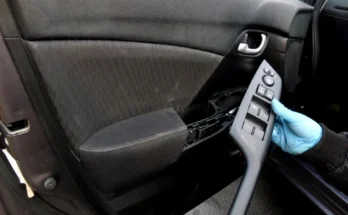
3. Check the wiring boot. Visually inspect the rubber boot between the door and the body. Flex it while testing the window.
If the window stutters or stops while you wiggle the boot, you've found a broken wire. This is a very common failure point on high-mileage Tucsons.
4. Bypass the switch and test the motor. Run two jumper wires from the motor connector to a known-good 12V source. A battery directly is easiest.
The motor should spin in one direction, and reversing the polarity should spin it the other way. A silent motor is a dead motor.
5. Confirm the regulator mechanically. If the motor runs but the window doesn't move, remove the door panel and look at the regulator. A broken cable, bent arm, or stripped plastic clips means the regulator assembly needs to be replaced.
Replacing just the motor here wastes time and money.
This whole process takes about thirty minutes. It saves you from buying the wrong part. If you're also dealing with other electrical gremlins like a failing fan, our radiator fan troubleshooting article follows the same logic.
The Hyundai Auto-Up Reset: Fixing the Most Common Glitch
One issue happens so often it deserves its own section. Your Tucson's one-touch auto-up stops working or the window rolls back down halfway for no reason. You don't need new parts.
You just need to reset the window initialization.
Image source: Web (Bing) / ja.colorkid.net (Web image (fair-use with source credit))
This glitch happens after a battery disconnect, a weak battery, or even a heavy rainstorm that pushes moisture into the switch. The body control module loses track of the window's "zero point." It then triggers the anti-pinch sensor falsely, thinking the glass is pinching something when it isn't.
The reset procedure takes ten seconds. Here's how to do it correctly.
- Turn the ignition to the ON position. You don't need to start the engine.
- Roll the window all the way down and hold the switch for 2 seconds after it bottoms out.
- Roll the window all the way up and hold the switch for 2 seconds after it closes.
- Release the switch.
- Test the auto-up function once. It should roll up fully without stopping.
If the window still reverses halfway, repeat the process one more time. Some newer Tucson models need the exact timing of the three-step reset described in the owner's manual. Per Hyundai's manufacturer documentation, this recalibrates the pinch protection system so it doesn't false-trigger.
This reset fixes at least half of all auto-up complaints we researched. It costs nothing. If it doesn't solve the problem, the switch itself has probably worn out internally.
Check for any related recalls before spending money. A quick search on the NHTSA recall database will show if your model year has a known window issue.
Common Mistakes That Turn a $50 Fix Into a $400 Repair
Skipping the diagnostic step is the biggest mistake we see in owner forums. People buy a regulator, swap it in, and the window still sits dead. Then they're out $150 on a part they didn't need.
That's why testing matters before any replacement.
| Mistake | What It Costs You | Smarter Move | | Replacing the regulator before testing the motor | $150+ wasted on an unnecessary part | Test the motor with a 12V jump first | | Ignoring the wiring boot on older Tucsons | New motor and regulator, still broken | Flex the boot while pressing the switch | | Forcing the window up by hand | Strips the plastic gear inside the motor | Remove the door panel and secure the glass | | Assuming the fuse is fine | Hours lost on a complex diagnosis | Test the 20A fuse with a multimeter | | Buying cheap aftermarket switches | Poor fit, short life, repeated failure | Choose OE-quality or OEM replacement parts |
Another common error is rushing the door panel removal. The plastic clips snap easily. Once broken, the panel rattles and you're buying new clips.
Take your time and use a proper trim tool.
Diagnostic discipline pays off elsewhere too. The same test-before-replace logic applies whether you're chasing a silent horn or a dead cabin fan. Check the simple circuits first and you'll avoid wasted parts.
Power Window FAQ, Repair Costs, and When to Call a Pro
Here are the answers Tucson owners search for most, plus what you can expect to pay.
What does a Tucson power window repair cost?
A new switch runs $30 to $90. A regulator assembly costs $60 to $120 aftermarket, or $150 to $300 from Hyundai. Labor adds $80 to $150 if you use a shop.
Most diagnostic fees run $100 to $150 and apply toward the repair.
Can I drive with my window stuck down?
You can, but it's not smart. Rain, dust, and theft are real risks. A loose regulator can also scratch the glass or damage the inner door.
Secure the glass with tape or a wedge until you can fix it properly.
Why did all my windows stop after a car wash?
Water likely worked its way into the master switch. A wet switch creates a short and kills the contacts. Let the car dry in the sun for a day and retest.
If it still fails, the switch needs replacement.
When should I call a pro instead of doing it myself?
Call a pro if you're uncomfortable removing the door panel or using a multimeter. Also call if the window is stuck and you can't secure the glass safely. A professional can finish the job in about two hours.
That's why you'd also trust professional help for something like a failing brake system, which is another safety-critical repair.


2 Comments on “Hyundai Tucson Power Window Problem”