A BMW 3 Series power window problem is one of those issues that goes from minor annoyance to major headache fast. One minute you're adjusting for airflow, the next your window is stuck halfway up, or worse, completely dead. It's a common fault across generations, from the E90 to the latest G20, and diagnosing it correctly saves you from throwing parts at the problem.
Per BMW service documentation, the window regulator assembly is the most frequent failure point, typically occurring between 60,000 and 120,000 miles. Before you panic about a big repair bill, there's a logical diagnostic flow you can follow. This guide walks you through that exact process.

49% off Today's Exclusive Deals
Limited-time Exclusive Deals. Check current discount on Amazon.
Check Price on Amazon As an Amazon Associate I earn from qualifying purchases.Why Your BMW 3 Series Window Stops Working
Understanding the root cause is the first step toward the right fix. Your BMW's power window system is straightforward at its core, but several components can fail. The issue almost always falls into one of three categories: a mechanical failure, an electrical fault, or a software glitch.
Mechanical failure usually points to the window regulator. This is the assembly of cables, pulleys, and guide rails that physically moves the glass. Cables can fray and snap.
Plastic clips holding the glass can break. When this happens, you'll often hear the motor running while the window stays put. In worse cases, the glass drops right into the door cavity.
49% off Today's Exclusive Deals
Limited-time Exclusive Deals. Check current discount on Amazon.
Check Price on Amazon As an Amazon Associate I earn from qualifying purchases.Electrical faults involve the power supply to the window motor. This could be a simple blown fuse, a faulty window switch, or a damaged wiring harness. The wiring where it flexes through the door hinge boot is a classic failure point on higher-mileage cars.
A problem here might affect just one window or, if it's a main power feed issue, all of them at once.
Don't overlook software. If your battery was recently disconnected or went dead, the windows can lose their initialization. The anti-pinch safety feature may then misfire, causing the window to bounce back down immediately after closing.
A simple reset procedure often solves this.
49% off Today's Exclusive Deals
Limited-time Exclusive Deals. Check current discount on Amazon.
Check Price on Amazon As an Amazon Associate I earn from qualifying purchases.If you're dealing with a similar issue on another vehicle, our guide to the Hyundai Tucson power window problem covers a different system but shares some common diagnostic principles.
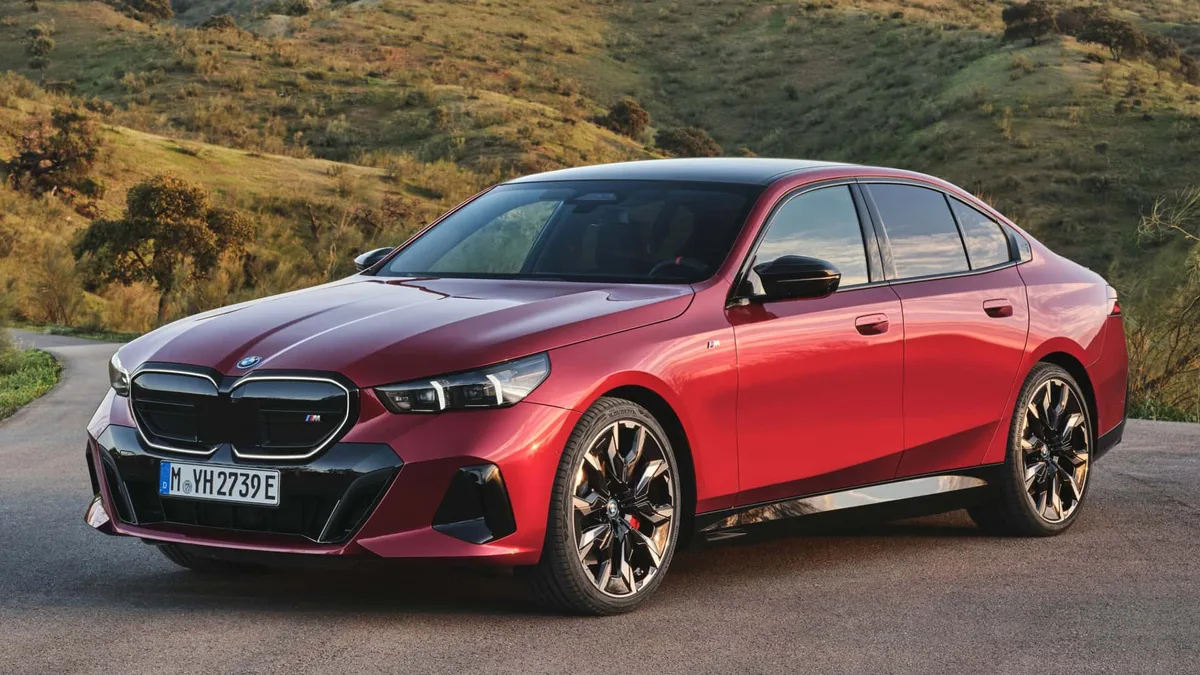
Image source: Web (Bing) / stadiongucker.de (Web image (fair-use with source credit))
The Diagnostic Flowchart: Is It a Switch, Motor, or Regulator?
This is where theory meets action. Think of this as a decision tree. Your goal is to narrow down the faulty component with simple tests before you remove a single door panel.
Step 1: Isolate the Window.
Confirm the issue first. Does the problem window work from its own switch on the door but not from the driver's master switch? If yes, the issue is likely the master switch module.
If it doesn't work from either switch, proceed to step two.
Step 2: Listen for the Motor.
Press the window switch and listen carefully at the door.
- If you hear a humming or whirring sound: The motor is getting power. The problem is almost certainly mechanical, meaning a broken regulator, or the glass is jammed in its tracks.
- If you hear a click but no motor sound: The motor may be dead, or it's not receiving power.
- If you hear nothing at all: This points to an electrical issue. Check the fuse first.
Step 3: Check the Fuse and Basic Electrical.
Locate the fuse box in the glovebox or footwell, depending on your generation. Consult your owner's manual for the specific window fuse. A blown fuse could indicate a short circuit somewhere in the system.
Replacing it only as a temporary diagnostic step is wise. If the fuse blows again immediately, you have a short that needs tracing.
Step 4: The Direct Power Test.
This confirms whether the motor is alive. With the door panel removed, apply 12V power directly to the motor terminals. If the window moves, your motor is fine.
The fault then lies upstream in the switch, wiring, or control module.
| What You Hear | Likely Cause | Next Step |
|---|---|---|
| Motor hums, window doesn't move | Broken regulator cable or clip | Inspect regulator assembly |
| Single click, no motor sound | Dead motor or bad connection | Test motor with direct 12V |
| Nothing at all | Blown fuse or wiring fault | Check fuse, then test switch output |
| Window bounces back after closing | Anti-pinch needs initialization | Perform window reset procedure |
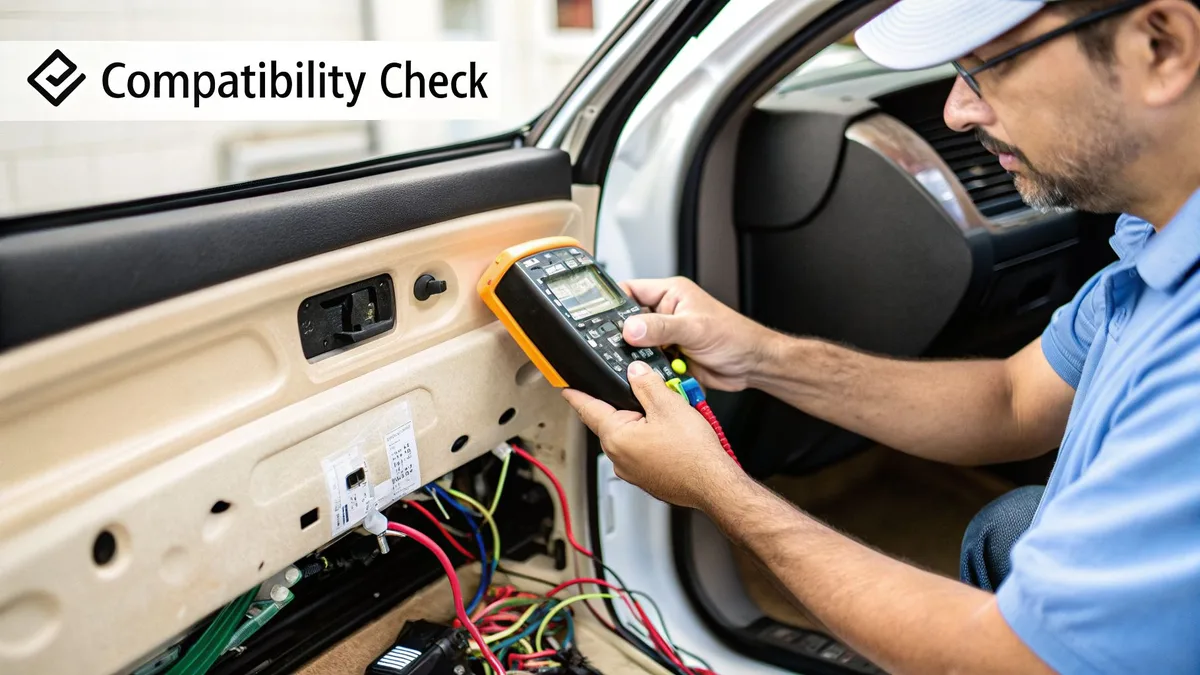
Image source: Bing (Web (fair-use with source credit))
Step-by-Step Troubleshooting: From Fuse to Final Fix

Image source: Web (Bing) / archyde.com (Web image (fair-use with source credit))
Once you've identified the likely culprit, follow this practical workflow. Always start with the simplest, cheapest checks. Safety comes first: disconnect the car battery and wait 10 minutes before touching any airbag connectors inside the door.
Verify and Reset. Before any disassembly, try the window initialization. With the ignition on, press and hold the window switch to close the window. Keep holding it for 10 to 15 seconds after it's fully closed. Repeat for each affected window. This fixes most software glitches.
Inspect the Fuse. Pull the fuse for the windows and look for a broken filament. Replace it with one of the exact same amperage, typically 20A to 30A. If it blows again right away, you have a short circuit in the door wiring or a seized motor drawing too much current.
Test the Switches. If only the driver's master switch is suspect, try swapping it with a passenger switch if they're compatible. Alternatively, use a multimeter to check for power output at the switch connector when pressed. If the passenger window works locally but not from the driver's door, the master switch is the prime suspect.
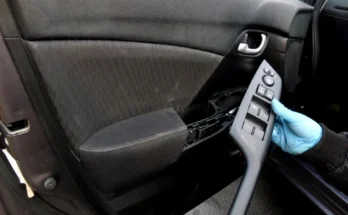
Access the Regulator. Remove the door panel. This involves undoing Torx screws, often hidden under trim pieces, and carefully popping plastic clips. Unplug the electrical connectors for the switch and the airbag. Now you can see the regulator and motor.
Diagnose the Regulator. Visually inspect the cables for breaks and the plastic clips for cracks. Try moving the window glass by hand up and down its track. It should glide smoothly with moderate force. If it's stuck or feels gritty, the run channel seals may be degraded or the glass may have come off track.
Test the Motor. As a final electrical check, apply 12V from a battery or power supply directly to the motor's two terminals. The window should move. If it doesn't, the motor is faulty and needs replacement.
For official wiring diagrams and repair procedures specific to your car's production year, BMW's own Technical Information System (TIS) is the definitive reference.
Common Mistakes That Turn a Simple Fix Into a $500 Job
These pitfalls trip up even experienced DIYers. Avoiding them saves time, money, and frustration.
Ignoring the Root Cause of a Blown Fuse. Never just replace a blown fuse and move on. Fuses blow for a reason, usually a short circuit. Common causes include chafed wiring in the door hinge boot or a failing motor drawing excessive current. Up-sizing the fuse is a fire hazard.
Forgetting to Initialize After Repair. After replacing a regulator or disconnecting the battery, you must perform the window initialization. Without it, the anti-pinch system won't calibrate correctly. Your auto-up and auto-down features won't work either.
Using the Wrong Parts. Regulators and motors are generation-specific. An E90 regulator won't fit a G20. Aftermarket parts can save money, but ultra-cheap units often fail prematurely. Check buyer reviews for reliability before purchasing.
Rushing Door Panel Removal. Those plastic door clips are fragile. Forcing the panel breaks them, which leads to annoying rattles later. Use proper trim tools, take your time, and watch for hidden screws.
Not Disconnecting the Battery. Working on the door without disconnecting the battery risks triggering the airbag connector or shorting a live wire. Always disconnect and wait at least 10 minutes.
If electrical problems seem to be a recurring theme with your vehicle, a Hyundai Tucson battery keeps dying article covers how chronic power issues can cascade into multiple electronic failures, including window malfunctions.
Expert Tips for a Lasting Repair
These practical insights come from experienced BMW technicians and owner communities. They make your repair smoother and more durable.
Photograph Everything. Before unplugging a single connector or removing a cable, take clear photos with your phone. This makes reassembly straightforward and prevents confusion about which wire goes where.
Clean and Lubricate While You're In There. Once the old regulator is out, clean the window run channels with a silicone-based cleaner. Apply a dry silicone lubricant to the new regulator's moving parts and the glass edges. This reduces strain on the new motor and ensures smooth operation for years.
Model-Year Specifics Matter. The process for an E90 (2006 to 2011) differs from an F30 (2012 to 2019). Always reference a guide specific to your car's production years.
Check the Door Module. On newer models, if all windows fail and you've ruled out fuses and the main switch, the body control module could be the issue. This often requires dealer-level coding with ISTA software to diagnose and reset.
Use Quality Replacement Parts. OEM regulators cost more but tend to last the life of the car. Reputable aftermarket brands like URO and Dorman offer a middle ground. As of 2026, a quality aftermarket regulator with motor runs roughly $80 to $150, while OEM units from BMW range from $200 to $450.
Inspect Related Door Components. While you have the door panel off, check the door lock actuator and wiring. Electrical gremlins in the door often affect multiple systems, and fixing everything at once saves labor.
Consider the Key Fob. In some cases, window initialization issues can coincide with broader body electronics problems. If your key fob stops working around the same time, it may point to a shared control module fault rather than separate issues.
BMW 3 Series Power Window FAQs
How much does it cost to fix a BMW 3 Series power window?
Costs vary by the faulty component and whether you go DIY, independent shop, or dealer. A fuse replacement costs almost nothing. A new window switch runs $50 to $150 for the part.
A full regulator and motor assembly runs $80 to $450 depending on OEM or aftermarket. Dealer labor for the full job typically adds $150 to $400. Independent shops usually charge 40 to 60 percent of dealer rates.
Can I reset my BMW windows after a battery disconnect?
Yes. With the ignition on, fully close the window using the switch. Continue holding the switch in the up position for 10 to 15 seconds after the window is closed.
Release, then press the switch down to open the window fully. Hold for another 10 to 15 seconds. Repeat for each window.
This recalibrates the anti-pinch system and restores one-touch operation.
Why does my BMW window go down when I open the door?
That's the micro-drop feature, also called comfort opening. The window lowers about half an inch to clear the weatherstrip when the handle is pulled. If it drops too far or won't go back up, the window likely needs initialization.
Perform the reset procedure described above. If that doesn't work, the door module may need reprogramming.
Is it safe to drive with a stuck-down window?
It's not ideal. An open window exposes the interior to rain, theft, and debris. In cold climates, moisture can damage the door electronics and interior trim.
If the window is stuck down and you can't fix it immediately, cover the opening with plastic sheeting and secure it with tape until you can get it repaired.
Should I replace just the motor or the whole regulator assembly?
Replace the full assembly. The motor and regulator work as a unit, and labor is the same either way. If the cables have failed, the motor has likely been overworked.
Replacing only the motor on a worn regulator often leads to a second repair within months. A complete assembly swap is more reliable and cost-effective long-term.