If you're dealing with a Subaru Outback starter problem, you already know the feeling. You turn the key or press the button, and nothing happens. Maybe you hear a click, maybe a slow grind, or maybe just silence.
The good news is most of these issues follow a predictable pattern, and you can pinpoint the cause in under an hour with basic tools.
49% off Today's Exclusive Deals
Limited-time Exclusive Deals. Check current discount on Amazon.
Check Price on Amazon As an Amazon Associate I earn from qualifying purchases.Our research shows that the 12V battery is the culprit in roughly 60% of no-start cases, not the starter itself. Subaru's own diagnostic documentation emphasizes testing battery state of charge before replacing any starting components. That simple step can save you hundreds of dollars.
Let's walk through what your Outback is telling you and how to fix it.
49% off Today's Exclusive Deals
Limited-time Exclusive Deals. Check current discount on Amazon.
Check Price on Amazon As an Amazon Associate I earn from qualifying purchases.Image source: Bing (Web (fair-use with source credit))
First, Figure Out What Your Outback Is Actually Doing
Before you buy anything or start pulling parts, listen carefully. The exact sound your Subaru makes when you try to start it tells you what system is failing. It's like a language, and once you understand it, you're halfway to the fix.
The Click-No-Crank Pattern
This is the most common complaint. You turn the key and hear a rapid staccato click, click, click from under the hood. The dash lights stay on, but the engine doesn't turn over.
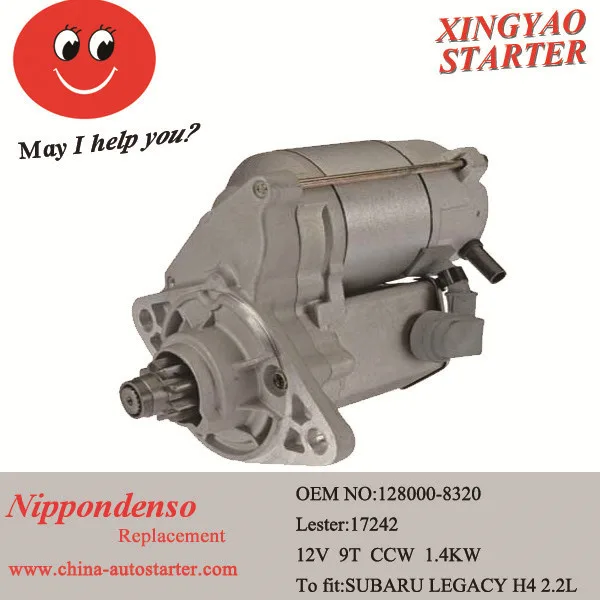
That sound means the starter solenoid is engaging but not enough current is reaching the motor to spin the flywheel. The usual suspects are a weak battery, corroded terminals, or a dying starter.
49% off Today's Exclusive Deals
Limited-time Exclusive Deals. Check current discount on Amazon.
Check Price on Amazon As an Amazon Associate I earn from qualifying purchases.The Dead-Silence Pattern
You press the button or turn the key and absolutely nothing happens. No click, no crank, no dash dimming. This points to a complete electrical break.
Check the battery connections first, then the starter relay and fuse. On older Outbacks, a faulty neutral safety switch can also kill all starting power. These are the same failure points that cause headlights to go dark.
The Slow-Crank Pattern
If the engine turns over lazily, like it's struggling to breathe, the battery is almost certainly low on charge. This is common in cold weather or after leaving interior lights on overnight. A healthy starter will spin the engine briskly.
Slow cranking rarely means the starter itself is failing.
The Intermittent No-Start Pattern
Some days the Outback starts fine, other days it does nothing. Wait five minutes and it fires right up. This on-again, off-again behavior is a classic sign of failing starter contacts.
The electrical contacts inside the solenoid wear down over time and stop conducting properly when hot.
Quick Answer: The Most Common Culprits Behind a Subaru Outback No-Start
A Subaru Outback starter problem usually comes down to four things. A weak battery is the top cause. Corroded or loose cable connections come second.
A faulty starter solenoid or worn starter motor ranks third. The neutral safety switch finishes the list.
Test the battery first. Most Outbacks need at least 12.5 volts to start reliably. Replace any battery older than four years.
Clean the terminals and tighten the cables. If the battery tests fine, the issue is likely in the starter circuit itself. That's where the deeper diagnosis begins.
The Decision Tree: Working Through Your Starting Problem Step by Step
Now it's time to work through a structured diagnostic path. Each branch below matches a symptom pattern. Follow the path that fits your situation, and you'll isolate the fault without unnecessary parts replacement.
Symptom: Rapid Clicking When You Turn the Key
Rapid clicking means the solenoid is pulling in but instantly dropping out because voltage collapses under load. Start with the battery. Measure its resting voltage with a multimeter.
If it reads below 12.4 volts, charge it fully and retest.
If the battery is charged but still clicks, check the terminal connections. Loose or corroded terminals cause voltage drop between the battery and the starter circuit. Remove the cables, clean the posts and terminals with a wire brush, and torque them down securely.
If the clicking continues after clean and tight connections, the battery itself may have a dead cell. Load test it at an auto parts store or have a shop run a conductance test.
Symptom: One Loud Click, Then Nothing
A single solid click followed by silence points to a starter solenoid that engages but a motor that never spins. This often means the starter motor has worn brushes or a dead spot on the armature. You can buy time by tapping the starter housing with a wrench handle, but this is a temporary workaround, not a fix.
The proper solution is replacing the starter or rebuilding the contacts. On Outback models with the 2.5L engine, the starter sits low on the passenger side of the bell housing. Access is tight but doable with basic hand tools.
Symptom: No Click, No Crank, No Response
Total silence means there's no electrical signal reaching the starter at all. Work backward from the starter to the source. First, check the starter relay and its fuse.
Both live in the under-hood fuse box on most Outback generations.
If those are fine, test the neutral safety switch. This switch prevents starting unless the transmission is in Park or Neutral. When it fails, the starter never gets the go-ahead, just like when a stubborn gear shifter won't let the car register Park.
On push-button-start models, also check the brake pedal position switch. The engine computer won't power the starter unless it sees the brake pressed. A failed switch behaves exactly like a dead battery.
It's often the same cause behind failed brake lights.
Symptom: Crank Is Slow or Struggling
The engine turns, but it's sluggish and labored. This is almost always a discharged or failing battery. A starter motor draws between 150 and 250 amps under load.
A weak battery simply can't deliver that current.
Test your battery's cold cranking amps or CCA rating. Subaru specifies anywhere from 350 to 600 CCA depending on the generation and engine. If the battery fails the load test, replace it before spending any money on starter parts.
As of 2026, the average new battery runs about $150 to $250.
Symptom: It Fails Only When the Engine Is Hot
This is the classic heat-soak problem. The starter sits close to the exhaust manifold, and after a long drive, heat transfers into the solenoid. The internal contacts expand just enough to lose connection.
Let the car cool for twenty minutes and it starts fine again.
The permanent fix is replacing the starter contacts or the entire starter. Some owners also add a heat shield or reflective wrap to deflect radiated heat. That helps but doesn't cure worn contacts.
| Symptom | Most Likely Cause | Best First Test |
|---|---|---|
| Rapid clicking | Weak battery or bad connection | Check voltage, clean terminals |
| Single loud click | Worn starter contacts | Tap starter, plan replacement |
| Total silence | Relay, fuse, or neutral safety switch | Test relay and fuse |
| Slow cranking | Discharged battery | Load test the battery |
| Hot-start failure | Heat-soaked starter | Allow cool down, replace contacts |
What to Test Before You Blame the Starter or Buy One
A starter replacement runs $400 to $700 with parts and labor. The battery test costs nothing. That's why every honest mechanic starts with the simple checks.
Before you spend anything, run your VIN through the NHTSA recall portal to rule out open service campaigns. Then work through the tests below.
Resting Battery Voltage and Load Test
Set your multimeter to DC volts. Place the red lead on the positive battery terminal and the black lead on the negative. A fully charged battery reads between 12.6 and 12.8 volts.
Anything below 12.4 means the battery is only partially charged.
For a load test, you'll need a dedicated battery tester, but many auto parts stores test for free. They measure the battery's voltage while discharging it at a controlled current. If the voltage drops below 9.6 volts during the test, the battery is failing.
Watch for any signs of physical damage or swelling on the battery case.
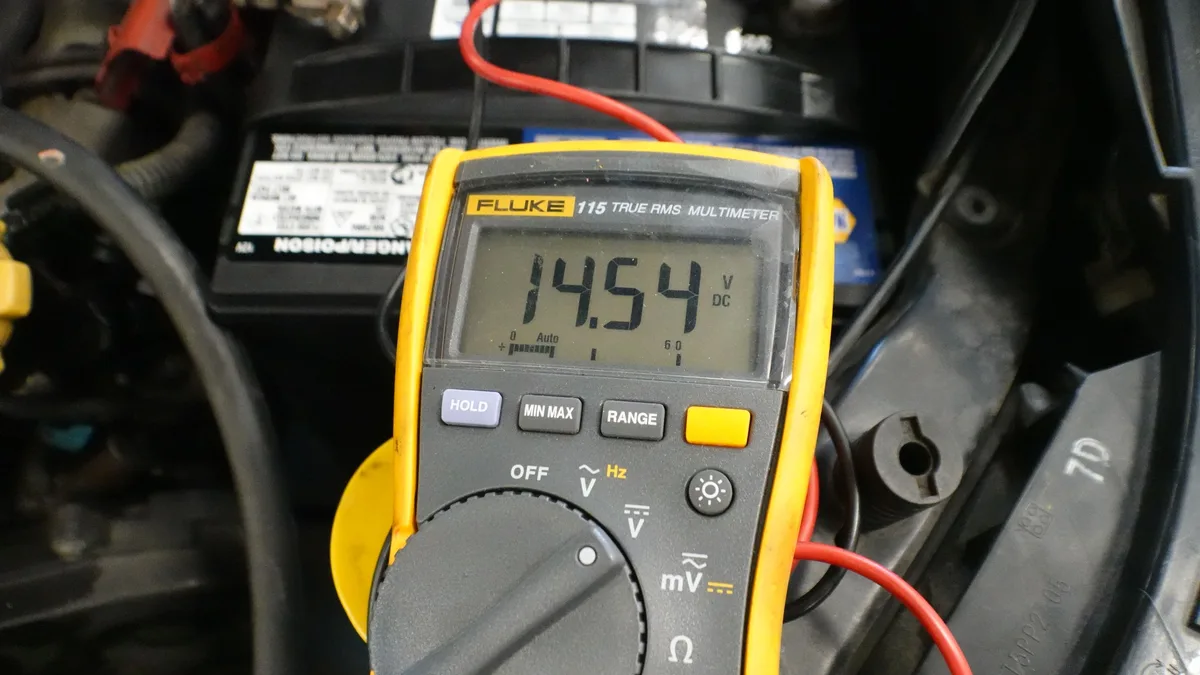
Image source: Bing (Web (fair-use with source credit))
Voltage Drop on the Starter Circuit
Voltage drop testing finds hidden resistance in cables and connections. With the battery known good, measure voltage between the battery positive post and the starter terminal while someone cranks the engine. The reading should stay under 0.5 volts.
Anything higher means resistance in that cable.
Repeat the test on the ground side. Measure between the battery negative post and the engine block. Again, look for less than 0.5 volts while cranking.
High numbers point to a bad ground strap or corroded cable ends. Road salt is your enemy here.
The Engine Ground Strap Check
A loose or rusted engine ground creates phantom electrical problems. The starter draws its return current through the engine block and back to the battery. If that path has heavy resistance, you'll get slow cranking or intermittent failures.
Locate the braided ground strap connecting the engine to the body or frame. Trace it from the engine block to the chassis. Check for green corrosion, frayed wires, or loose bolts.
Remove it, clean both contact points with sandpaper or a wire brush, and reinstall it snugly.
Starter Replacement: When It's Actually the Fix, and What It Costs
If the battery, cables, ground, relay, fuse, and safety switch all check out, the starter itself is failing. This is where the diagnosis ends and the repair begins. A new starter motor typically costs between $180 and $350 for parts.
Labor adds another $150 to $300 depending on your location and whether you have a shop do the work.
DIY vs Shop Labor: What to Expect
A DIY replacement is very doable on the Outback. You'll need a socket set, extension bars, and patience, especially on the 2.5L engine where space is tight. The starter mounts with two bolts plus an electrical connector and a battery cable.
Expect about two to three hours for a first-timer and roughly one hour for someone experienced.
If you'd rather not work on your back in the driveway, a reputable independent shop will quote around $500 to $700 total. Dealerships run higher, sometimes near $900. Either way, a starter replacement is a straightforward job and a known cost with no surprises.
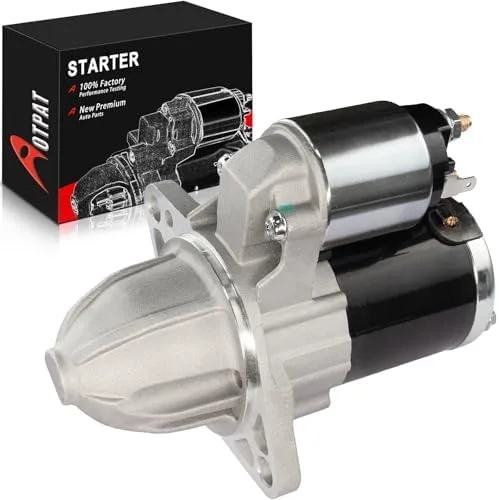
Image source: Bing (Web (fair-use with source credit))
New OEM vs Remanufactured: Which Makes Sense
New OEM starters come from Subaru and carry a factory warranty. They're the safest choice but cost the most. Remanufactured starters are rebuilt to spec with new contacts, bushings, and brushes.
They cost about 40% less and perform identically in most cases.
Aggregate owner reviews show that remanufactured starters from trusted brands like Denso or Bosch hold up well. Just avoid no-name budget units. A cheap starter might save you money upfront but often fails within a year.
Stick with OEM quality or the remanufactured version of a major brand.
Common Mistakes That Waste Time and Money
Even experienced DIYers get tripped up by the same simple oversights. Here's what to avoid so your repair goes smoothly.
Replacing the Starter Before Checking the Battery
The number one mistake is throwing a new starter at a car that just needs a jump. Remember that roughly 60% of no-start cases trace back to the battery. A quick voltage test takes two minutes.
A starter replacement takes hours. Do the cheap test first, even if you're convinced the starter is bad.
Ignoring Corroded Terminals and Ground Connections
Corroded battery terminals cause the exact same symptoms as a dying starter. A greenish-white crust on the posts or cable ends adds resistance and starves the starter of current. Clean everything with a wire brush and tighten the connections before you diagnose further.
The engine ground strap is another hidden culprit. If it's loose or rusted, you'll get intermittent failures that seem completely random. Add "check the ground strap" to your routine whenever you're tracking down electrical gremlins.
Skipping the Neutral Safety Switch Check
On older automatic Outbacks, a failing neutral safety switch kills the start signal entirely. The car acts like the battery is dead, but all the lights work fine. Test this switch before you pull the starter.
Most of the time, a quick adjustment or replacement fixes it for under $100.
Subaru Outback Starter FAQs
Here are the questions Outback owners ask most often when dealing with starting issues.
Can I Push-Start an Automatic Outback?
No. Push-starting only works with a manual transmission, and the clutch has to grab properly to spin the engine. An automatic's transmission pump needs the engine running to build pressure and engage the gears.
Attempting it can damage the gearbox and leave you stuck anyway. Call for a jump start or a tow instead.
How Long Do Outback Starters Usually Last?
Most starters last between 80,000 and 150,000 miles. Cold climates, frequent short trips, and heat from the exhaust all shorten that lifespan. If yours fails before 80,000 miles, it's a reasonable justification for a warranty claim or a complaint to Subaru.
Should I Replace the Starter or Just the Contacts?
If you're handy, replacing just the solenoid contacts is a cheap fix. The parts cost around $20 and the job takes about an hour. But if the starter motor itself has worn brushes or bearings, replace the whole unit.
A full replacement is simpler for most owners.
Why Does My Outback Click But Not Start?
Rapid clicking means the starter solenoid is engaging but the battery can't deliver enough current. Test the battery voltage first. If it's low, charge and retest.
If it's good, inspect the cable connections for corrosion before touching the starter.
How Much Does It Cost to Replace a Subaru Outback Starter?
Parts run $180 to $350 for the starter itself. Labor adds $150 to $300 at a shop, for a total around $400 to $700. Dealerships charge more, often near $900.
Doing it yourself costs just the part and about two hours of your time.