If you're dealing with a Tesla Model Y windshield wiper problem, you're not alone. The camera-based system that controls these wipers behaves unpredictably, and complaints show up across owner forums. Most issues, though, have a simple fix you can handle at home.
Manufacturer specifications confirm the Model Y uses a 26-inch blade on the driver side and a 16-inch on the passenger side. As of 2026, the auto-wiper function relies on the forward-facing camera rather than a traditional rain sensor. Understanding that difference is the starting point, because the cause changes the fix.

49% off Today's Exclusive Deals
Limited-time Exclusive Deals. Check current discount on Amazon.
Check Price on Amazon As an Amazon Associate I earn from qualifying purchases.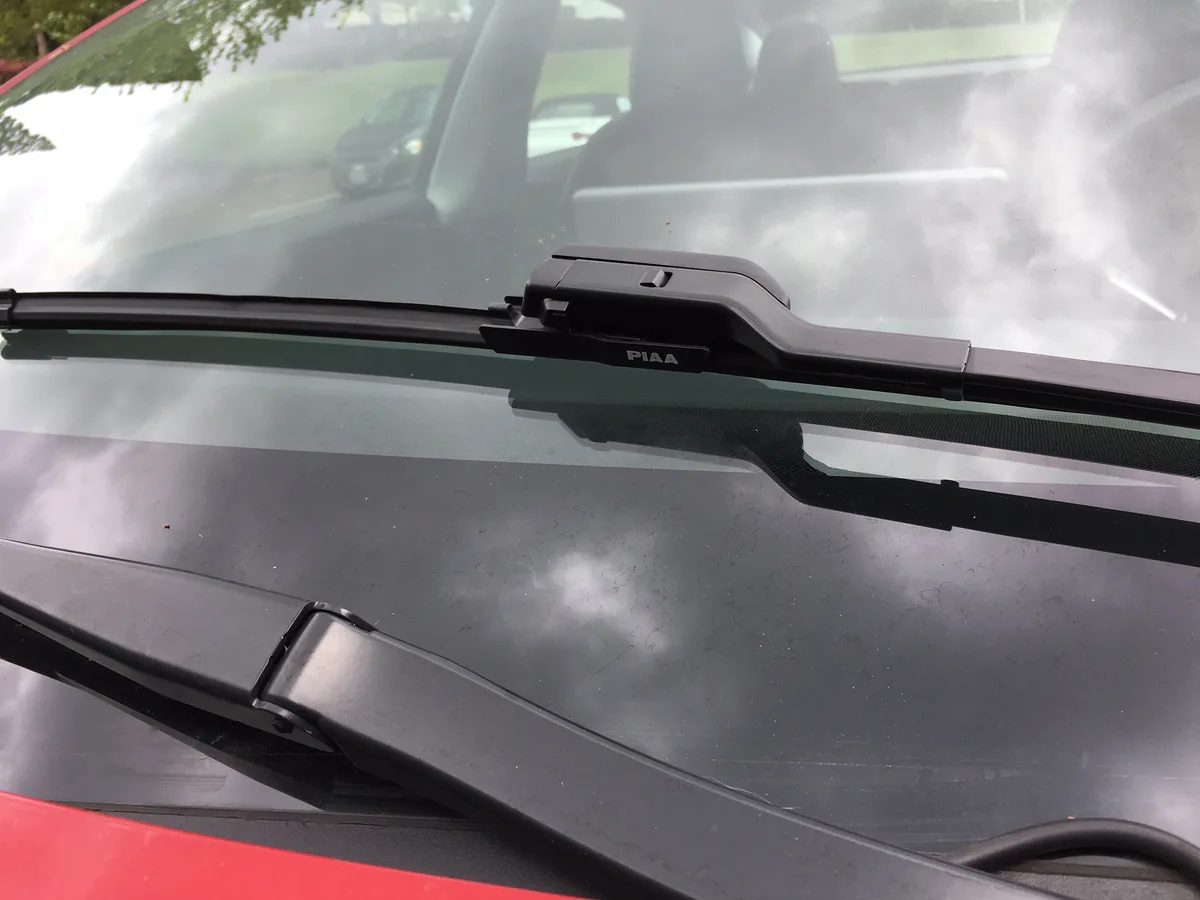
Image source: Bing (Web (fair-use with source credit))
Quick Answer
A Tesla Model Y windshield wiper problem usually comes from the camera, the blades, or the motor. Clean the camera lens and windshield first. If wipers streak, replace the blades with 26-inch and 16-inch units.
49% off Today's Exclusive Deals
Limited-time Exclusive Deals. Check current discount on Amazon.
Check Price on Amazon As an Amazon Associate I earn from qualifying purchases.If they don't move, check the fuse before the motor. Reboot the touchscreen to clear software glitches.
Why Your Model Y Wipers Act Weird (The Core Problem)
Every Tesla Model Y windshield wiper problem traces back to one of three things: the blades, the camera and software, or the motor and linkage. The twist is the camera. Unlike most cars, the Model Y doesn't have a traditional rain sensor on the glass.
It uses the same forward-facing camera that feeds Autopilot to guess when it's raining. That software can misfire in sunlight, shadows, or when the camera lens is dirty.
Symptoms vary. Your wipers might swish across a dry windshield at full speed. Or they'll refuse to activate in a downpour.
49% off Today's Exclusive Deals
Limited-time Exclusive Deals. Check current discount on Amazon.
Check Price on Amazon As an Amazon Associate I earn from qualifying purchases.Many owners also report streaking, skipping, or a chattering blade that never touches cleanly. Each symptom points to a different root cause. Manufacturer documentation at Tesla's official site confirms the camera is the sole rain detector.
Here's a fast way to sort them:
- Auto-wipers going off in dry weather: camera or software problem.
- Wipers don't activate when it rains: camera blocked or software glitch.
- Streaking, smearing, or chattering: blade wear or windshield contamination.
- No movement at all: motor, fuse, or linkage failure.
That last one is the rarest. The first two are almost always camera-related, and the streaking is simply blades needing replacement. Once you know which group you're in, the fix is simple.
Let's walk through a quick diagnostic so you're not guessing.
Is It the Blades, the Camera, or the Motor? A Quick Way to Tell
Start with the simplest test. When you press the wiper button once, do the blades move at all? If they sweep, the motor and linkage are fine.
Focus your energy on the blades themselves or the software behavior.
Here's the decision logic:
- Wipers physically move but streak or skip: it's the blades. Check for cracks, hardened rubber, or a bent arm.
- Wipers randomly fire with no rain: it's the camera or software. Clean the windshield area in front of the camera, and check for cracks or obstructing stickers.
- Wipers won't turn on even manually: it's the motor, fuse, or wiring. You'll hear either no sound or a weak clicking noise.
The picture below shows the motor and linkage assembly, the part that actually swings the arms. If one arm moves and the other doesn't, suspect a stripped linkage bushing, not a bad motor.
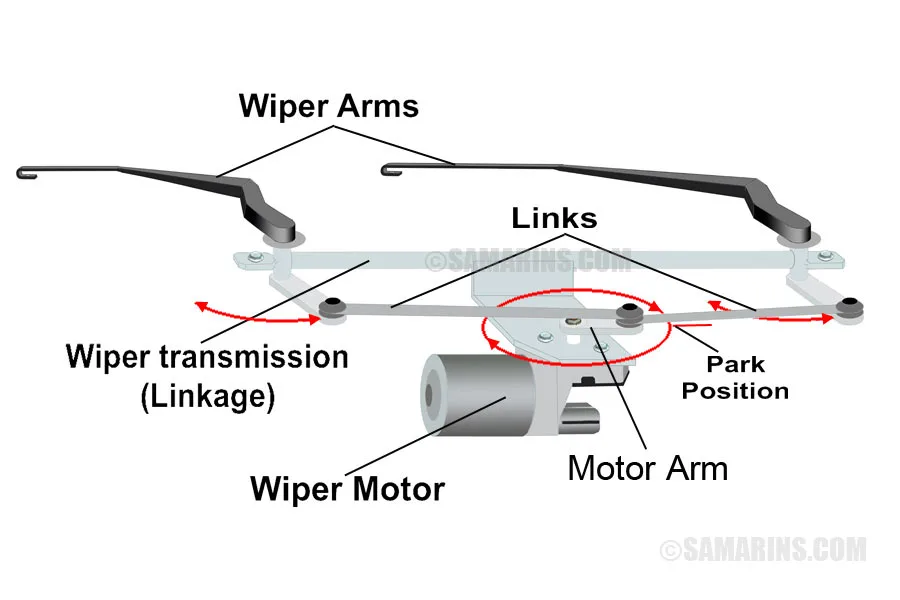
Image source: Bing (Web (fair-use with source credit))
That visual cue is key. A single moving arm means the motor is alive; the linkage has an issue. No movement at all, plus no motor hum, points to power loss.
If wipers are intermittent, check the fuse before ordering parts. Those small-cost fixes prevent a misdiagnosis that leads to a $300 motor replacement.
What to Do When Auto-Wipers Go Wild (Camera & Software Fixes)
The camera that controls auto-wipers sits at the top center of the windshield, behind the rearview mirror. If it can't see clearly, your wipers behave erratically. There's no rain sensor to fall back on.
Try these steps in order:
Step 1: Clean the camera lens. Use a clean microfiber cloth, lightly dampened with glass cleaner. Wipe the lens gently. Any grime, fog, or film can cause false triggers.
Step 2: Clean the windshield outside. Bird droppings, bug splatter, or a fingerprint can confuse the camera.
Step 3: Reboot the touchscreen. Hold both steering wheel scroll buttons until the screen goes black and the Tesla logo appears. This takes about 30 seconds. It clears temporary software bugs.
Step 4: Perform a full power cycle. Park safely, go to Safety & Security, and tap Power Off. Wait two minutes, then press the brake pedal to wake up. This resets the computer that interprets camera data.
If the wipers still fire in clear skies, set wiper control to Manual and adjust speed via the touchscreen. That's the workaround until the next software update. Our research shows that many owners resolve the issue entirely after a camera clean and reboot combo.
What to Do When Wipers Streak, Skip, or Smear (Blade Fixes)
Streaking almost always means the rubber edge is worn, chipped, or contaminated. A quick fix is cleaning the blades with a damp paper towel and a few drops of dish soap. If they still smear, it's time for new blades.
Signs your blades are done:
- Visible cracks or chunks missing from the rubber.
- The edge feels rough or brittle to the touch.
- They leave a white film or water ribbon on the windshield.
- You hear a chatter or squeak in light rain.
Quick check: Lift the wiper arm manually, being careful with the paint, and run a finger along the rubber. It should feel smooth and springy. If it's stiff and uneven, replace it.
A quick fix for mild smearing: run your wipers with the washer fluid and some windshield polish. This can remove built-up waxy residue. If your glass has oil or polish residue, even brand-new blades will skip.
Clean the glass first with an automotive glass cleaner. The combination of new blades and a clean windshield is the only reliable cure.
What to Do When Wipers Don't Move at All (Motor & Fuse Issues)
If the wipers are completely dead, something physical is broken. It's rare, but it's also the most serious issue. Don't assume the motor is fried.
The fuse is the most common culprit and costs under ten dollars.
Step 1: Listen. Turn the wiper on and watch the wiper linkage. If you hear a click or hum but see no movement, the motor is turning. The linkage is worn or stripped.
If there's total silence, the motor is likely dead or without power.
Step 2: Check the fuse. Tesla places the wiper fuse in the cabin fuse box, typically in the front passenger footwell. Pull the cover and inspect the fuse labeled for the wipers. A clear break means a blown fuse.
Replace it with the exact same rating.
Step 3: Inspect the linkage. With the wipers powered off, gently lift one arm. It should resist and stay in place. If it flops freely, the linkage or attachment nut is stripped.
That's a mechanical repair, not a motor replacement.
A burned out motor is possible, but it normally has warning signs first, like slow operation or strange smells. If you replace the fuse and it instantly blows again, there's a short circuit. Stop there and call mobile service.
For broader electrical insight, our quick fix guide for windshield wipers covers generic wiring checks that apply to any car. Wrenching on the motor without electrical training can cause more damage, especially when the camera system is involved.
How to Replace the Blades the Right Way (With Service Mode)
Replacing the blades is a 10-minute job once you know the trick. The Model Y's wiper arms rest low, tucked under the hood. If you try to lift them normally, you'll scratch the hood paint or snap the arm back onto the glass.
The secret is wiper service mode. On dry pavement, tap Controls > Service > Wiper Service Mode. The wiper blades will rise to a vertical position and stay there.
The image below shows how the arms lock into place for access.
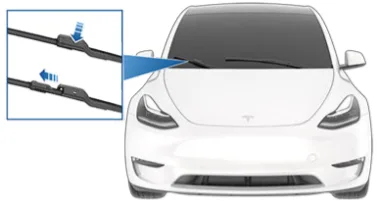
Image source: Bing (Web (fair-use with source credit))
Once the arms are up, the rest is straightforward. Press the small tab on the blade connector, slide the blade off the J-hook, and clip the new one in. Use a 26-inch blade for the driver side and a 16-inch for the passenger side.
Before you install the new blade, clean the glass with a decent automotive glass cleaner. New rubber sticks to any residue, which causes immediate streaking. When done, tap Controls > Service > Wiper Service Mode again to drop the arms down.
Check the fit quickly with a few swipes of the washer fluid.
Mistakes That Turn a $30 Fix Into a $300 Bill
The most expensive mistake is guessing wrong. Replacing the motor when the fuse is blown costs hundreds in labor, parts, and frustration. Our research shows the fuse is the most common failure point for completely dead wipers.
Common errors and how to avoid them:
- Skipping the camera clean. Replacing blades when the camera is dirty leaves the auto-wiper acting crazy. That's a $40 mistake for nothing.
- Forcing the wiper arm up. Lifting the arm without service mode usually chips the hood paint. Paint repair costs far more than the blade.
- Using the wrong size. A 24-inch passenger blade looks close but interferes with the driver blade and streaks. Stick to 26 and 16 inches.
- Ignoring the linkage. If one arm moves but the other doesn't, the linkage is stripped. New blades won't fix that, and neither will a new motor.
- Replacing parts instead of rebooting. A software glitch looks exactly like a dead wiper. Always try the reboot before ordering parts.
Check the wiring basics before touching the motor. A quick look at the fuse panel and relay can confirm power delivery. For generic electrical troubleshooting, our car headlights not working guide covers the same fuse voltage checks that apply to the wiper circuit.
Frequently Asked Questions
Why do my Model Y wipers randomly turn on in dry weather?
The camera behind the rearview mirror misreads sunlight, shadows, or a dirty lens as rain. Clean the windshield and camera area first. If that doesn't stop it, reboot the touchscreen by holding both scroll buttons for 30 seconds.
Still misbehaving? Set wipers to Manual and adjust speed from the touchscreen.
Why do my wipers streak after installing new blades?
Your glass likely has a film of old washer fluid residue, polish, or road grime. Clean the windshield with a dedicated automotive glass cleaner, then wipe the new blade rubber with a damp cloth. The streak will usually disappear after a few washer runs.
How often should I replace Tesla Model Y wiper blades?
Most drivers need new blades every 12 to 24 months. Harsh sun or cold winters shorten that to about a year. Check monthly for cracks, stiffness, or chattering.
Replace the rubber as soon as the edge feels rough.
Can I use aftermarket wiper blades on a Model Y?
Yes. Just match the connector and the exact lengths. The driver side needs a 26-inch blade, and the passenger side needs a 16-inch.
Many owners prefer beam-style blades with a flat, uniform pressure design. Confirm the J-hook connector fits the Model Y arm.
Why won't my auto-wipers activate in heavy rain?
The camera needs a clear view to judge rainfall. Heavy rain can blind it, especially with water droplets on the lens. Clean the camera area, then tap the wiper button to trigger a single sweep in Manual mode.
That bypasses the camera and keeps you safe.