Toyota Camry power window problems show up without warning. One minute you're adjusting the glass, the next it's stuck halfway down. In our research, the 12-volt DC system in Camrys from the XV30 generation (2002, 2006) onward is especially prone to intermittent failures in the door wiring harness.
That single flaw accounts for a huge share of complaints.
49% off Today's Exclusive Deals
Limited-time Exclusive Deals. Check current discount on Amazon.
Check Price on Amazon As an Amazon Associate I earn from qualifying purchases.You don't need a mechanic's bay to figure this out. Most fixes cost under $100 in parts and take less than two hours with basic tools. The key is diagnosing the right component before you buy anything.
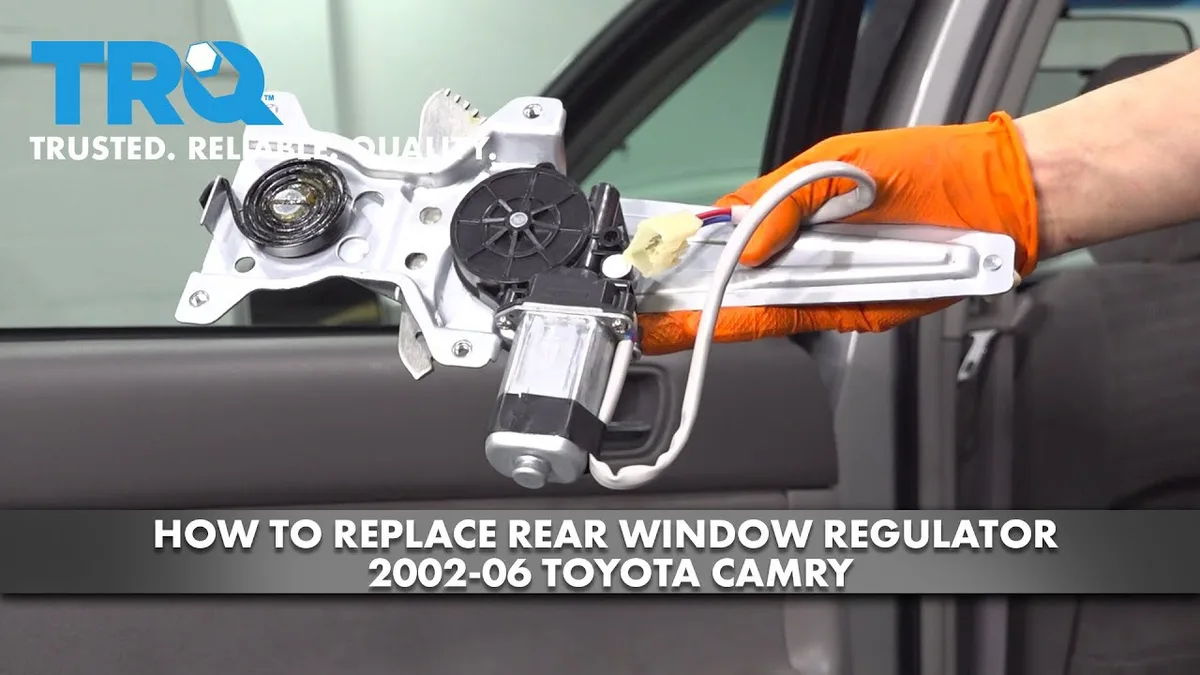
Image source: Bing (Web (fair-use with source credit))
49% off Today's Exclusive Deals
Limited-time Exclusive Deals. Check current discount on Amazon.
Check Price on Amazon As an Amazon Associate I earn from qualifying purchases.Which Window Problem Are You Actually Dealing With?
A power window that won't move could mean one of four things: a dead motor, a broken regulator, a bad switch, or damaged wiring. The fix for each is different. Starting with the wrong guess wastes time and money.
First, isolate the scope. Does only one window fail, or do all of them? If every window is dead, the problem is likely upstream: the main fuse, relay, or master switch.
If just one window is out, focus on that door's components.
Next, listen. Turn the key to "ON" and press the switch. A faint click or humming from inside the door suggests the motor is getting power but the regulator is broken.
49% off Today's Exclusive Deals
Limited-time Exclusive Deals. Check current discount on Amazon.
Check Price on Amazon As an Amazon Associate I earn from qualifying purchases.Total silence usually means an electrical fault.
Finally, check the behavior. Slow movement that stalls points to a failing motor or a clogged window channel. Erratic operation that works sometimes but not others is the classic sign of frayed wires inside the door harness boot.
Use this quick decision guide:
- All windows dead → Check the 20A "POWER" fuse in the interior fuse box. Then test the master switch.
- One window dead, no sound → Test the individual switch, then apply 12V directly to the motor.
- One window dead, with sound → Inspect the regulator cables or gears.
- Window moves erratically → Inspect the wiring harness where it flexes between the door and body.
How the Camry Power Window System Works (The Basics You Need)
A 12-volt DC motor sits inside each door panel, connected to a window regulator. The regulator converts the motor's rotation into vertical glass movement. Most Camrys use a cable-type regulator, though some older models use a scissor or gear mechanism.
Two switches control each window. The individual switch on the door lets that seat's occupant operate their glass. The master switch panel on the driver's door can override every window and includes a lock-out button.
Power flows from the battery through a 20A fuse and a relay. In newer models, the Body Control Module manages the circuit and may store a diagnostic trouble code.
The wiring harness is the weak link. Wires run from the car body into each door through a rubber boot at the hinge. Over thousands of open-close cycles, those wires flex and fatigue.
Copper strands break inside intact insulation, creating an intermittent connection. Per Toyota's service documentation, the XV30 Camry (2002, 2006) has the highest rate of harness failures in the model line.
If you've dealt with a similar glass issue on another vehicle, the troubleshooting logic in our Nissan Rogue power window guide follows the same diagnostic path: fuse first, then switch, then motor.
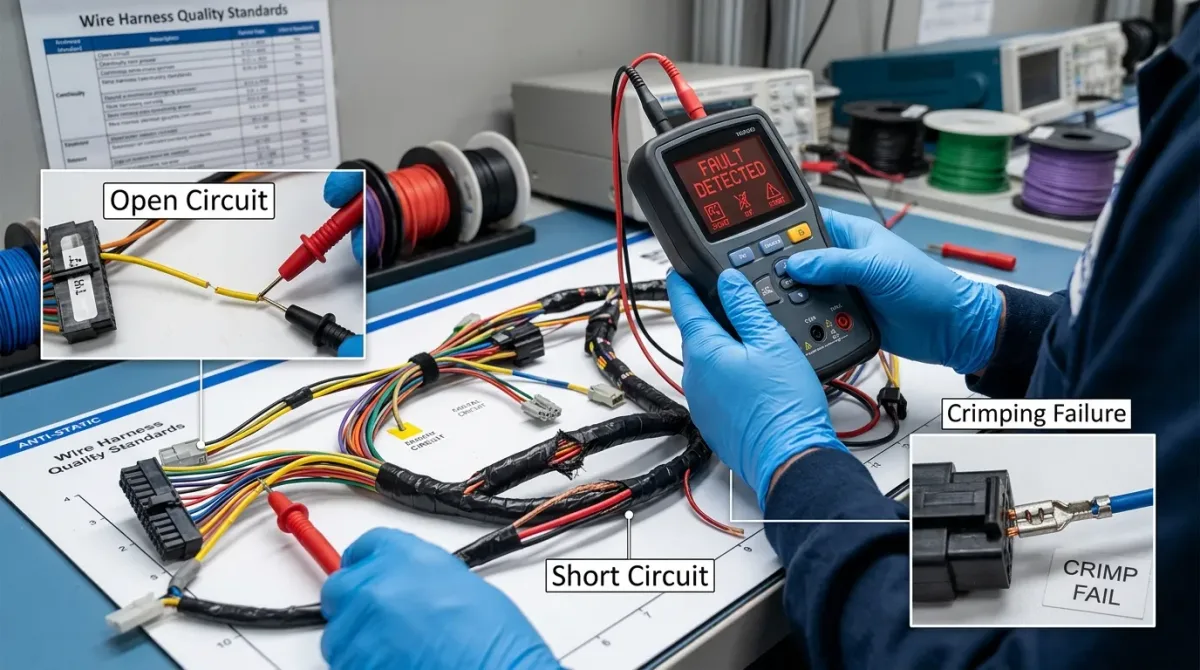
Image source: Bing (Web (fair-use with source credit))
The Step-by-Step Diagnostic Workflow
Follow this order. It moves from the easiest checks to more involved teardowns.
Step 1: Check the fuse. Pull the interior fuse box cover left of the steering wheel. Locate the "POWER" or "DOOR" fuse using the diagram on the cover. If it's blown, replace it with the same amperage.
If it blows again right away, you have a short circuit somewhere.
Step 2: Test the lock-out button. Make sure the window lock switch on the master panel is off. It disables all passenger window switches. A surprising number of "dead windows" are just the lock-out engaged.
Step 3: Isolate master vs. individual switch. Try the window from the master switch. Then try it from its own door switch. If the master works but the individual doesn't, the individual switch is faulty.
If neither works, the problem runs deeper.
Step 4: Listen for motor sound. Press the switch and listen carefully. Any humming, clicking, or grinding? Sound means the electrical circuit is mostly intact.
Silence means a break in the circuit: fuse, relay, switch, wiring, or dead motor.
Step 5: Inspect the door harness boot. Open the door fully and peel back the rubber bellows at the hinge. Look for green corrosion on connectors or wires with broken insulation. Have someone press the switch while you wiggle the wires.
If the window suddenly works, you've found the break.
Step 6: Test the motor directly. Remove the door panel. On most Camrys, this means two Phillips screws and several plastic clips. Disconnect the motor's electrical connector and apply 12V directly from the battery.
If the motor runs, the problem is upstream. If it doesn't, the motor is dead.
This same methodical approach applies to other common electrical faults. Our guide on troubleshooting Kia Sportage alternator problems uses the same start-simple, escalate-slowly framework.
When It's Just the Fuse or Relay
A blown fuse is the simplest fix. Camry interior fuse boxes vary by generation. The 2002, 2006 models have a panel left of the steering wheel.
The 2012+ models move it under the dash on the driver's side.
Pull the fuse with needle-nose pliers and hold it to light. The metal strip inside should be continuous. A break means it's blown.
Replace it with the exact same amperage rating. The power window circuit typically uses a 20A fuse.
If the new fuse blows instantly, stop replacing it. A dead short exists somewhere. Common culprits include chafed wires inside the door or a moisture-corroded motor.
The power window relay is a small cube in the under-hood fuse box. Swap it with an identical relay from another system, like the horn relay, to test. If the windows now work, a $15 relay is your fix.
| Component | Typical Part Cost (2026) | Tools Needed |
|---|---|---|
| Fuse (20A) | $2–$5 | Needle-nose pliers |
| Relay | $10–$25 | Relay puller or pliers |
For context on how electrical shorts can cascade through a vehicle's systems, our Kia Sportage coolant leak article covers how moisture intrusion damages connectors in related harnesses. The corrosion pattern is identical.
When the Switch Is the Culprit
Switches fail from repeated use or moisture getting inside the housing. The master switch panel is the most common failure point because it handles the highest current load.
To test, you need a digital multimeter. Set it to DC voltage. With the key on, probe the switch connector pins while pressing the button.
You should see 12 volts on the power pin and a solid ground connection. If power arrives but doesn't pass through to the motor wire when pressed, the switch internals are worn.
Replacing a door switch takes about 20 minutes. Remove the door panel, disconnect the electrical connector, and release the switch from its mounting tabs. Aftermarket switches run $25 to $75.
OEM Toyota parts are $80 to $150.
On 2012+ Camrys with auto up/down, the system may need recalibration after a switch replacement. Hold the switch in the up position for five seconds after the window fully closes. This re-teaches the anti-pinch feature its travel limits.
If the window still won't respond after a new switch, the problem likely sits in the wiring between the switch and the motor. Our Kia Sportage Bluetooth problem guide covers a similar diagnostic scenario where the controller works but the signal never reaches its destination.
If you're narrowing down the issue, the table below maps symptoms to likely causes:
| Symptom | Most Likely Cause | DIY Difficulty |
|---|---|---|
| All windows dead | Blown fuse or bad relay | Easy |
| One window dead, no sound | Bad switch or broken wire | Medium |
| One window dead, with humming | Failed regulator or motor | Medium-Hard |
| Window moves slowly then stops | Weak motor or debris in channel | Medium |
| Intermittent operation | Frayed wire in door harness | Medium |
Frequently Asked Questions
How much does it cost to fix a Toyota Camry power window?
It depends on the cause. A fuse replacement costs $2 to $5. A relay runs $10 to $25.
An individual switch runs $25 to $150 depending on OEM vs. aftermarket. A full regulator and motor assembly runs $70 to $250 in parts. Dealer labor adds $100 to $300 on top.
Can I drive with a broken power window?
Yes, but you shouldn't leave it long. An open window exposes the interior to rain, dust, and theft. If the window is stuck down, cover it with plastic sheeting and tape as a temporary fix.
In cold weather, a stuck-open window also kills your cabin heat efficiency.
Why do all four windows stop working at once?
The most common cause is a blown power window fuse or a failed master switch. Check the fuse first since it takes two minutes. If the fuse is intact, test the master switch on the driver's door with a multimeter.
What causes a power window to work intermittently?
Frayed wires inside the door harness boot are the number-one cause. The rubber boot at the hinge flexes every time the door opens. Over years, the copper strands inside crack while the insulation stays intact.
Wiggling the wires while pressing the switch usually reveals the problem.
Is a window regulator the same as a window motor?
No. The motor creates the spinning force. The regulator converts that spin into up-and-down glass movement.
Some assemblies combine both into one unit. Others let you replace them separately.
Do Toyota Camrys have a recall for window problems?
Toyota has issued recalls and technical service bulletins for specific model years and defects. Check the NHTSA website at nhtsa.gov using your VIN to see if your Camry is covered.