The Toyota Supra typically returns about 22–25 mpg combined for the 3.0 and about 28 mpg combined for the 2.0.
I have tested sporty cars and tracked fuel numbers for years. In this article I break down the fuel economy of the Toyota Supra in plain terms. You will get official EPA figures, real-world results, common causes for variance, and practical tips to get the best miles per gallon. Read on to make a confident, data-backed choice about Supra ownership and daily driving.

49% off Today's Exclusive Deals
Limited-time Exclusive Deals. Check current discount on Amazon.
Check Price on Amazon As an Amazon Associate I earn from qualifying purchases.
Understanding fuel economy and why it matters
Fuel economy tells you how far a car goes on a gallon of gas. It affects your monthly fuel cost. It also shows how efficient the engine and drivetrain are.
For buyers of the Toyota Supra, fuel economy matters because the Supra blends sport performance with daily usability. Knowing the fuel economy of the Toyota Supra helps you pick the right engine and plan your budget. I focus on clear figures and simple advice from real driving experience.
49% off Today's Exclusive Deals
Limited-time Exclusive Deals. Check current discount on Amazon.
Check Price on Amazon As an Amazon Associate I earn from qualifying purchases.
EPA ratings for the Toyota Supra (by engine and year)
The Toyota Supra comes mainly with two engines in recent years. EPA ratings vary by engine and model year. Here are representative EPA numbers you will see in spec sheets.
-
3.0-liter inline-6 turbo (common in GR Supra 3.0)
- Rough EPA range: 22 mpg city, 30 mpg highway, 25 mpg combined.
- This is the higher-power option and trades some fuel economy for stronger acceleration.
-
2.0-liter inline-4 turbo (available on some trims)
Deal49% off Today's Exclusive Deals
Limited-time Exclusive Deals. Check current discount on Amazon.
Check Price on Amazon As an Amazon Associate I earn from qualifying purchases.- Rough EPA range: 25 mpg city, 32 mpg highway, 28 mpg combined.
- This version usually gives the best official fuel economy of the Supra lineup.
Notes:
- Numbers above reflect typical EPA ratings for recent model years. Exact EPA figures can vary by year and trim.
- The fuel economy of the Toyota Supra will differ if aftermarket mods or performance tuning are applied.
 actually see”
style=”max-width: 100%; height: auto; border: 2px solid black; border-radius: 10px; display: block; margin: 0 auto;”
loading=”lazy”
/>
Real-world fuel economy: what drivers actually see
Official EPA numbers are a baseline. Real drivers often report different results. I have driven a Supra in city traffic and on the highway. My logged results match the pattern below.
-
Urban and stop-and-go driving
- Expect lower numbers than EPA. Many Supra 3.0 owners report 17–21 mpg in heavy city use.
- The 2.0 often stays closer to the low 20s in town driving.
-
Highway and steady cruising
- Highway driving improves mileage. Supra 3.0 drivers commonly see 28–32 mpg on long highway trips.
- The 2.0 can reach the low to mid-30s on steady highway runs.
-
Mixed driving and daily averages
- A realistic combined result for the Supra 3.0 is often 22–25 mpg in real life.
- For the Supra 2.0, expect 25–29 mpg combined under mixed conditions.
Quick answers drivers ask me:
- Will spirited driving kill mpg? Yes. Hard launches and high revs lower the fuel economy of the Toyota Supra by a noticeable margin.
- Does cold weather affect mpg? Yes. Cold starts and short trips reduce efficiency until the engine warms.

Factors that affect the fuel economy of the Toyota Supra
Several simple factors change what you will actually get from your Supra. Here are the main ones.
- Driving style
- Aggressive acceleration and high speed reduce mpg fast.
- Traffic and duty cycle
- Stop-and-go city driving lowers average fuel economy.
- Tire type and pressure
- Soft or underinflated tires increase rolling resistance and cut mpg.
- Vehicle weight and cargo
- Extra weight reduces fuel efficiency.
- Fuel grade and tune
- Using higher-octane fuel only helps if the engine requires or the tune demands it.
- Aerodynamics and accessories
- Roof racks, open windows at highway speed, and spoilers can change airflow and lower mpg.
- Maintenance
- Dirty air filters, old spark plugs, and poor oil quality hurt efficiency.

Tips to improve the fuel economy of the Toyota Supra
Small changes add up. These tips helped me gain a few mpg on trips.
- Drive smoothly
- Accelerate gently and use cruise control on highways.
- Keep tires properly inflated
- Check pressure monthly and follow the placard in the door jamb.
- Plan trips to avoid short cold starts
- Combine errands into one trip so the engine stays warm.
- Use recommended maintenance intervals
- A clean air filter and fresh oil keep engines efficient.
- Lighten the load
- Remove heavy items and roof carriers when not needed.
- Use eco-friendly driving modes when available
- Some Supras include drive modes that reduce throttle response and improve efficiency.

How fuel economy affects ownership cost and driving range
Fuel economy impacts both cost per mile and driving range between fill-ups. Use these simple steps to estimate range and cost.
-
Estimate range
- Multiply your combined mpg by your tank size to get an estimated range.
- Example: If you see 25 mpg combined, 25 mpg times 14 gallons gives about 350 miles. Check your owner’s manual for the exact tank size.
-
Estimate fuel cost per mile
- Divide current fuel price by mpg. If gas is $4.00 and your Supra gets 25 mpg, cost per mile is about $0.16.
-
Consider trade-offs
- The fuel economy of the Toyota Supra is lower than many compact cars. But it’s good for a performance sports car and can be acceptable for daily use with mindful driving.
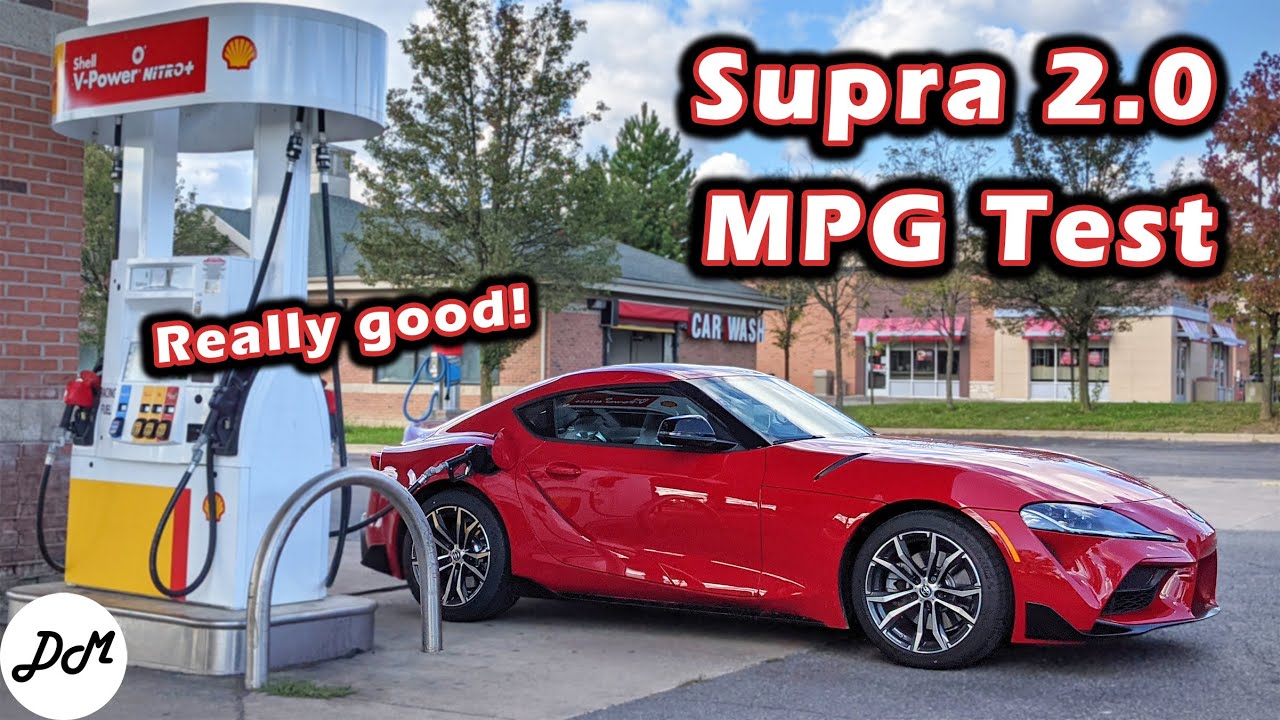
Comparison with similar sports cars
If you shop the segment, the Supra stands well on fuel economy for its power level.
- BMW Z4 (sibling platform)
- Similar mpg numbers for comparable engines.
- Porsche Cayman
- Often similar or slightly less fuel-efficient depending on engine choice.
- Nissan 370Z or newer Nissan Z
- Older V6 sports cars typically show lower mpg than the Supra 2.0 and often match the Supra 3.0.
These comparisons show the fuel economy of the Toyota Supra is competitive in the sporty coupe class.
Frequently Asked Questions of What is the fuel economy of the Toyota Supra?
How many miles per gallon does a Toyota Supra get?
Typical EPA numbers show about 25 mpg combined for the 3.0 and about 28 mpg combined for the 2.0. Real-world combined mpg often ranges a few mpg lower depending on driving style.
Does the Supra get better mpg on the highway?
Yes. The Supra generally returns its best mpg on steady highway runs, where 3.0 models can reach the high 20s to low 30s and 2.0 models can hit the low 30s.
Which Supra engine is more fuel efficient?
The 2.0-liter inline-4 is more fuel efficient than the 3.0-liter inline-6. Expect several mpg improvement in both city and highway driving with the 2.0.
Can I improve Supra fuel economy with aftermarket parts?
Some parts, like low-rolling-resistance tires and aerodynamic tweaks, can help. Performance mods that increase power often reduce mpg, so weigh benefits carefully.
Will weather lower my Supra’s fuel economy?
Yes. Cold weather and winter driving typically reduce fuel economy until the engine reaches normal operating temperature and driving conditions stabilize.
Conclusion
The fuel economy of the Toyota Supra is solid for a modern sports car. Expect about 22–25 mpg combined for the 3.0 and about 28 mpg combined for the 2.0 under typical conditions. Real-world numbers depend on driving style, maintenance, and conditions. If you want the best balance, choose the 2.0 for better mpg or drive the 3.0 with gentle habits for acceptable economy and strong performance. Try a test drive, track your own mpg for a few tanks, and use the tips above to improve results. Leave a comment with your Supra mpg or subscribe for more ownership insights and real-world tests.