A Hyundai Tucson radiator problem usually shows up as an overheating gauge, a sweet coolant smell, or a puddle under the car. It's a common issue, especially on models with plastic end-tank radiators, but the fix isn't always the same.
Manufacturer specifications confirm the cooling system holds roughly 6 to 8 quarts of phosphate-free coolant, depending on your engine. That system has to work perfectly every time you drive. Let's break down exactly what's likely failing and how to diagnose it step by step.

49% off Today's Exclusive Deals
Limited-time Exclusive Deals. Check current discount on Amazon.
Check Price on Amazon As an Amazon Associate I earn from qualifying purchases.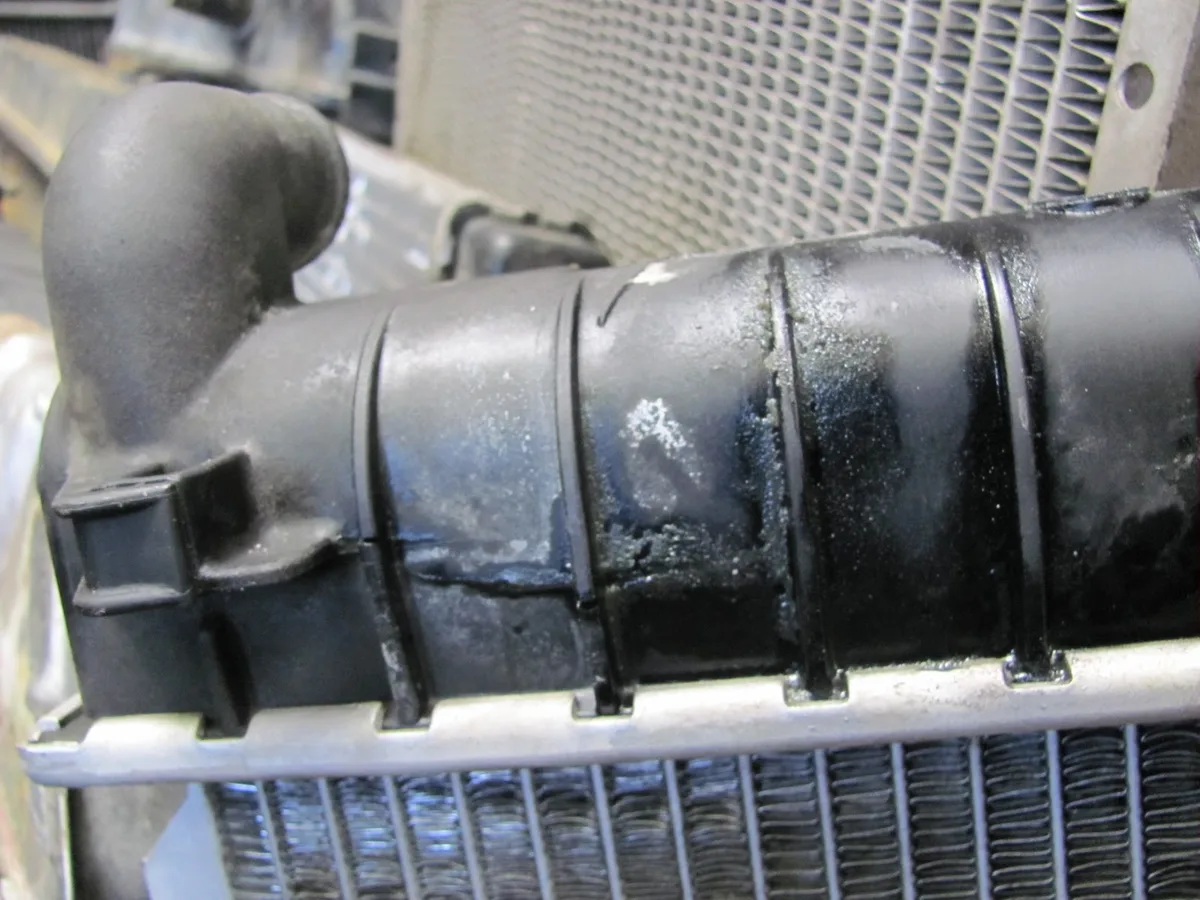
Image source: Bing (Web (fair-use with source credit))
What's Actually Going Wrong With Tucson Radiators
The most frequent failure point isn't the metal core. It's the plastic end tanks. Over thousands of heat cycles, the plastic becomes brittle and cracks, usually near the seams where it's crimped to the aluminum core.
49% off Today's Exclusive Deals
Limited-time Exclusive Deals. Check current discount on Amazon.
Check Price on Amazon As an Amazon Associate I earn from qualifying purchases.This causes a slow leak that gets worse over time.
Another major culprit is internal clogging. Old coolant or the use of incorrect fluid types can create sludge that restricts flow through the narrow radiator channels. This reduces heat transfer, forcing the engine to run hotter.
Manufacturer maintenance schedules recommend a coolant change every 30,000 to 60,000 miles.
Less commonly, the radiator suffers impact damage or corrosion, especially in regions with road salt. A visible leak under the car is often the first symptom of these failures.
49% off Today's Exclusive Deals
Limited-time Exclusive Deals. Check current discount on Amazon.
Check Price on Amazon As an Amazon Associate I earn from qualifying purchases.First, Check the Obvious: Coolant Level and Leak Spots
Before assuming a major failure, start with the basics. Open the hood and locate the coolant reservoir. The level should sit between "MIN" and "MAX" when the engine is completely cold.
Never open the radiator cap on a hot engine. Pressure and superheated coolant will spray out and cause severe burns.
Now look for signs of coolant. It's usually a brightly colored fluid, either green, orange, or pink. Check these spots:
- Under the car, directly below the radiator.
- Along the radiator seams and where hoses connect.
- On the engine block, following gravity down from the thermostat housing.
- Inside the reservoir, checking for oily residue or a milky appearance, which can indicate a head gasket leak.
A slow drip might only leave a faint, sticky residue. Use a bright flashlight and follow any wetness to its source. This visual check often tells you whether the problem is a loose hose clamp or a cracked radiator tank.
The Decision Tree: Is It the Cap, Thermostat, Fan, Water Pump, or Radiator?
Follow this logic based on your primary symptom. Each branch leads to a different test.
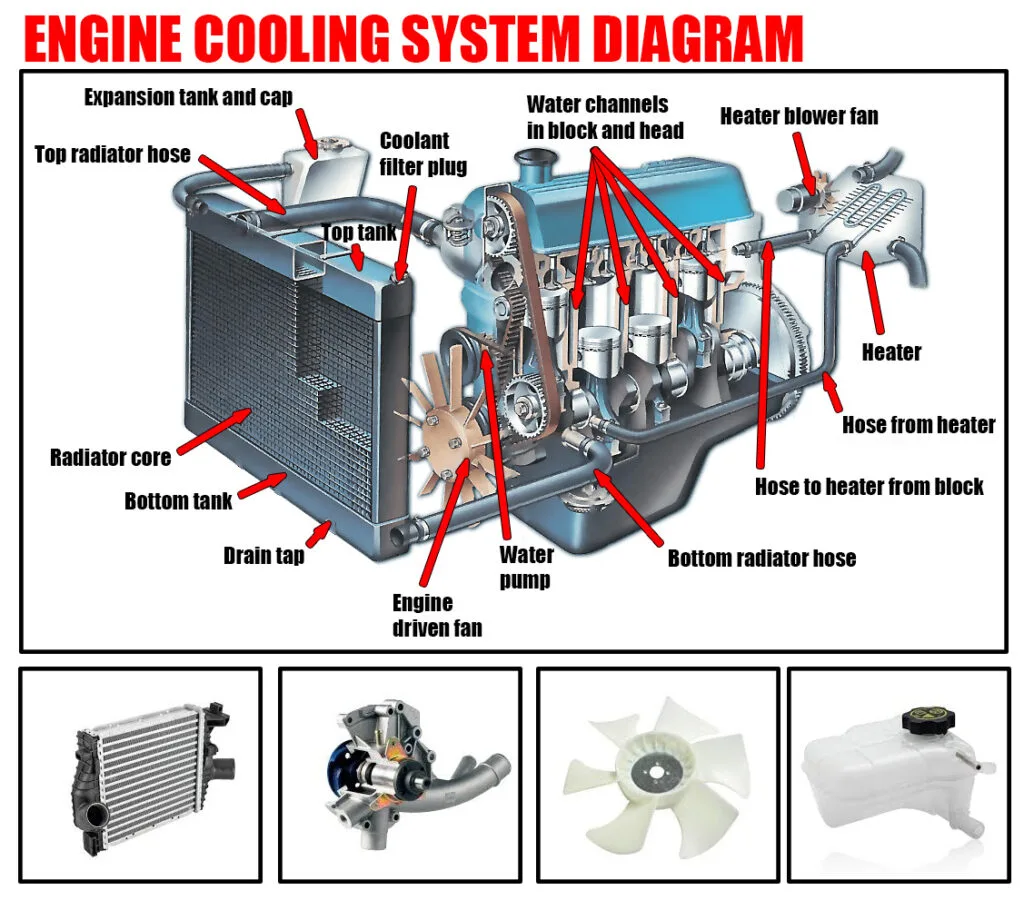
Image source: Bing (Web (fair-use with source credit))
IF the system is low on coolant AND you see no obvious external leak… , THEN suspect an internal leak. Check for white exhaust smoke (head gasket) or bubbling in the reservoir while the engine runs. Confirm with a pressure test or combustion gas test.
IF coolant is full BUT the engine overheats…
, TEST A (Fan): Let the engine idle until it reaches operating temperature, about 180-220°F on the gauge. Observe whether the electric fan kicks on. If not, check the fan fuse and relay.
A dead fan is a prime cause of overheating at idle.
, TEST B (Flow): Feel both the upper and lower radiator hoses after warm-up. The upper hose should be hot. The lower hose should be warm but noticeably cooler.
If both are cold, the thermostat may be stuck closed. If both are equally hot, the thermostat may be stuck open.
- IF the radiator cap won't hold pressure… , THEN test it with a cap tester or replace it. A bad cap can't maintain the required 15-17 psi. Coolant boils at a lower temperature and escapes into the reservoir.
Does It Overheat at Idle or on the Highway? That Tells You More Than You Think
This distinction is a huge diagnostic clue. Overheating at idle but fine at speed almost always points to the electric fan circuit or its relay. At highway speeds, airflow through the grille naturally cools the radiator.
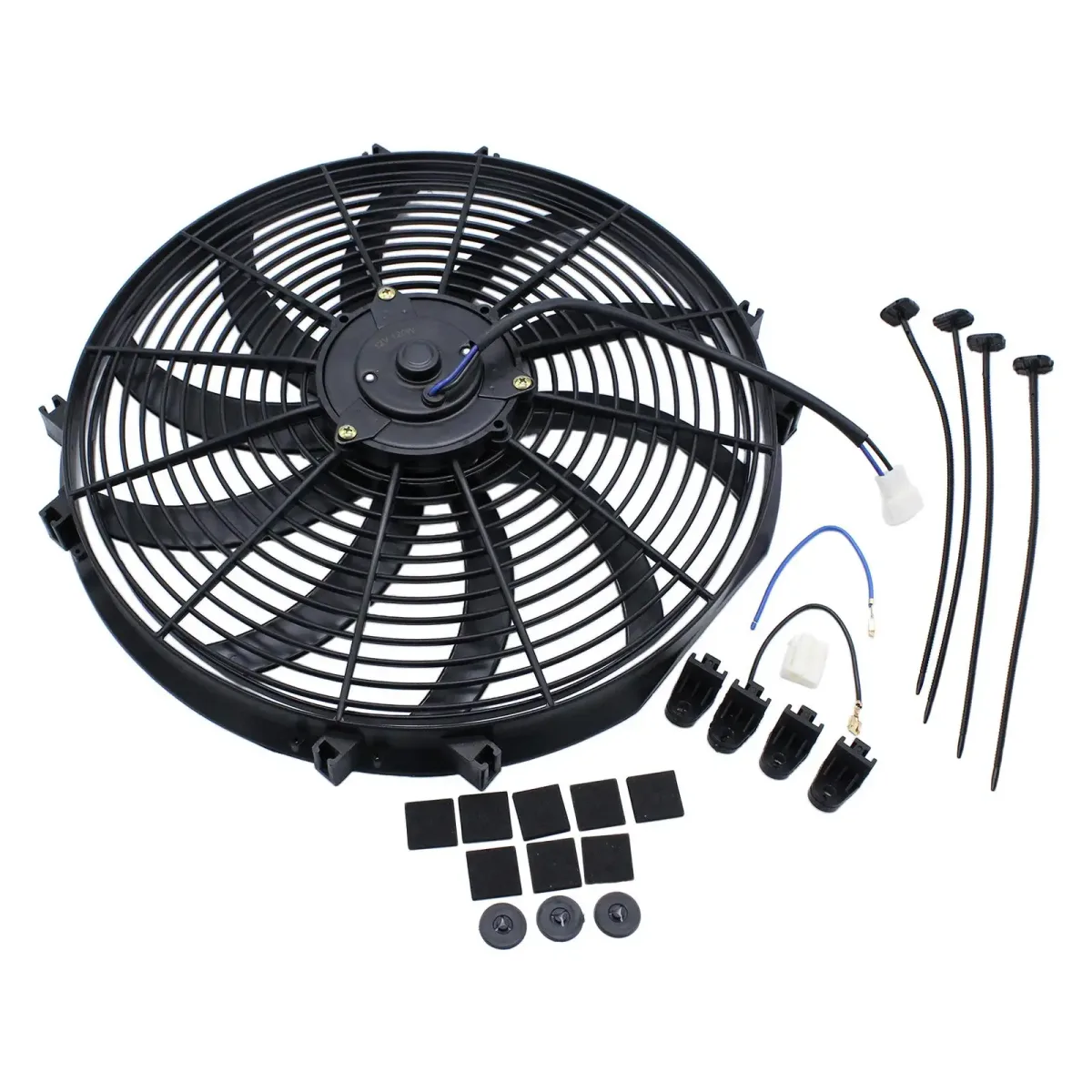
Image source: Bing (Web (fair-use with source credit))
Overheating while driving at speed points to a coolant flow problem. It could be a clogged radiator, a failing water pump, or a severe restriction. A bad water pump might spin but not move enough coolant under load.
If the temperature spikes suddenly under load, an air pocket in the system could be the cause. This often happens after recent work. Properly bleed the system by opening the bleed valve or following the specific burping procedure after any coolant refill.
Common Mistakes That Turn a $150 Fix Into a $1,500 Engine Bill
The biggest mistake is using a stop-leak product. These are temporary fixes that use particles to clog a leak. They also clog the tiny passages in your radiator, heater core, and engine block.
That leads to catastrophic overheating and far more expensive repairs.
Another dangerous shortcut is removing the radiator cap while the engine is hot. This can cause explosive boiling. Always let the system cool completely for several hours before opening anything.
A separate shifting trouble can be misdiagnosed as a radiator problem. The automatic transmission cooler sits inside the radiator on most Tucson models. Contaminated coolant can damage it and cause gearbox symptoms.
Finally, neglecting to flush the entire system when replacing the radiator pushes old debris into the new part. That shortens its life. A complete flush and fill with the correct coolant type is non-negotiable for a lasting repair.
Cost Breakdown: Parts, Labor, and Which Option Is Worth It
As of 2026, a new aftermarket radiator for a Tucson runs $80 to $250. An OEM unit costs $250 to $400. A full shop repair with parts and labor lands between $300 and $600.
The DIY route saves the labor cost, but only if you're comfortable with basic tools.
You'll also need coolant and possibly new hoses. Add $25 to $60 for fluid and $30 to $80 for a thermostat if you're replacing it while you're in there. A driveway swap takes 2 to 4 hours.
| Option | Parts | Labor | Total |
|---|---|---|---|
| DIY | $80-$250 | $0 | $80-$250 |
| Independent shop | $80-$250 | $150-$350 | $300-$600 |
| Dealership | $200-$400 | $200-$400 | $400-$800 |
Paying a pro makes sense if you're under warranty or need the transmission cooler lines done right. Just make sure the diagnosis is confirmed first. A radiator fan that won't turn on often gets mistaken for a radiator failure.
Used antifreeze is hazardous waste, so check EPA guidance on correct disposal before you drain anything.
A salvage yard radiator can also work on a high-mileage car. Expect to pay $50 to $120 for one. But inspect it for cracks and corrosion before you install it.
A damaged core cools worse than your old unit.
FAQs
How long can I drive with a coolant leak?
Zero. Even a slow leak can cause an overheating event that warps the aluminum head. If you see a puddle or steam, pull over at the nearest safe spot and shut the engine off.
A few minutes of driving is all it takes to do serious damage.
What coolant does a Hyundai Tucson use?
Hyundai specifies a phosphate-free ethylene glycol coolant, usually blue or green depending on the model year. Check your owner's manual for the exact type. Mixing incompatible formulas creates sludge that clogs the radiator core and heater core, and that leads straight back to an overheating Tucson.
Can I replace the Tucson radiator myself?
Yes, if you have basic hand tools and a couple of hours. You'll need a socket set, pliers, and a drain pan. The hardest part is bleeding air from the system after the refill.
Automatic models also have transmission cooler lines that need to connect cleanly.
Why is my Tucson overheating but not losing coolant?
A stuck thermostat, failed water pump, or a dead electric fan can all cause this. Let the engine idle and watch the fan. It should spin up near operating temperature.
Then feel both radiator hoses. If the lower one stays cold, coolant is not circulating.
Final Verdict: Fix It Yourself or Take It to a Shop?
Your skill level, the car's value, and the actual diagnosis decide this. If you can change oil and swap a battery, radiator replacement is within reach. If the diagnosis points to a head gasket or a cracked block, stop.
Let a professional handle that work.
Confirm the exact cause first. A pressure test at a shop is cheap and tells you whether the radiator holds spec pressure. If it does, the problem sits elsewhere.
Sometimes that means a heater core issue, where the cabin smells sweet and the windshield fogs. That's a different job from a radiator swap, but the symptoms often overlap.
Whatever you do, don't wait and don't use stop-leak. A $200 fix today keeps a $1,500 engine bill away. That's the real bottom line for any Hyundai Tucson radiator problem.



2 Comments on “Hyundai Tucson Radiator Problem”