That BMW 3 Series coolant leak you’ve spotted is more than a nuisance. It’s a warning. A slow drip from the expansion tank or a faint sweet smell from the engine bay means your cooling system is compromised.
Left unchecked, it leads to overheating and serious engine damage.

49% off Today's Exclusive Deals
Limited-time Exclusive Deals. Check current discount on Amazon.
Check Price on Amazon As an Amazon Associate I earn from qualifying purchases.The cooling system on most 3 Series models operates at around 14.5 to 19.1 psi. A failure at any point, from a cracked hose to a worn gasket, can cause pressure loss and coolant escape. Identifying the exact source visually is the first, most critical step.
That Sweet Smell Under Your BMW: Finding the Coolant Leak
The first sign is often a smell, not a puddle. A sweet, maple-syrup-like odor emanating from the front of the car after you park is a classic indicator of a coolant leak. This scent comes from the ethylene glycol in your antifreeze mixture as it evaporates off a hot engine component.
Our research shows many owners first notice this smell or see a small, brightly colored spot (usually blue or green for BMW-approved coolant) on their garage floor. Don't ignore these early clues. A visual inspection should be your immediate next step.
49% off Today's Exclusive Deals
Limited-time Exclusive Deals. Check current discount on Amazon.
Check Price on Amazon As an Amazon Associate I earn from qualifying purchases.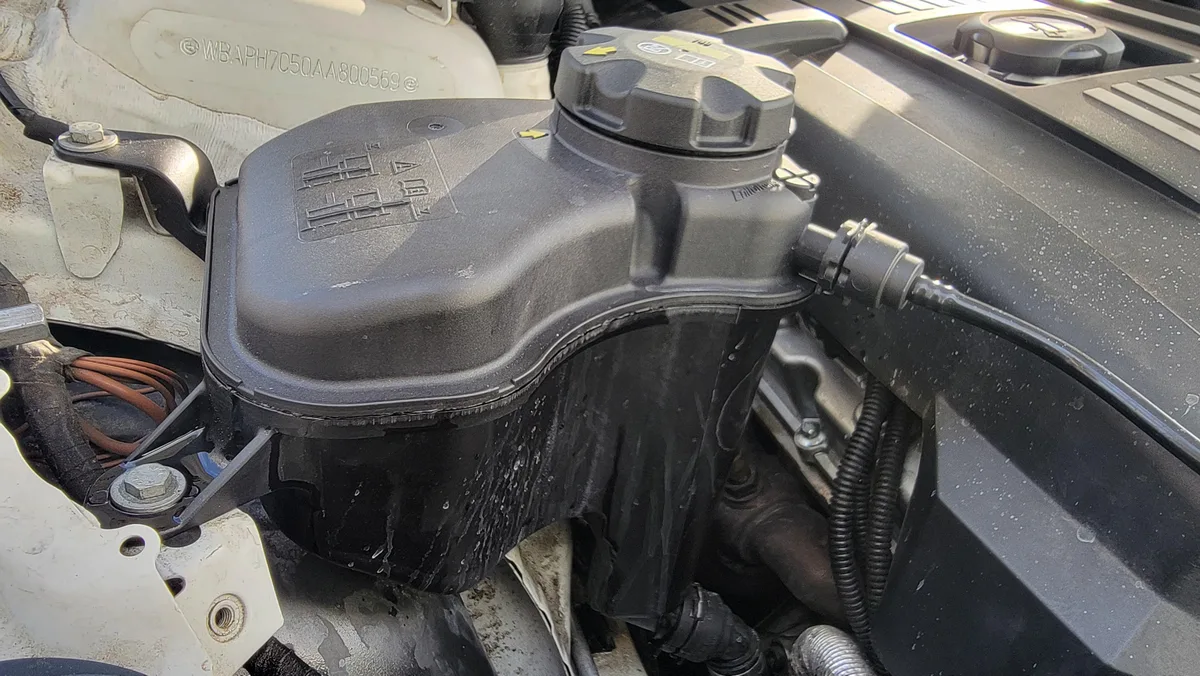
Image source: Bing (Web (fair-use with source credit))
Why Most Coolant Leaks on a BMW 3 Series Hide in Plain Sight
Coolant doesn't always drip straight down. It can travel along hoses, drip onto the subframe, or get blown back by airflow while driving. This makes the actual leak source often several inches away from the visible puddle or stain.
You're looking for the origin, not just the result. Common hideouts include the underside of the thermostat housing, the connection points of the quick-fit hose connectors, and the seam of the plastic expansion tank. A good flashlight and a mirror are essential tools for a proper visual search.
49% off Today's Exclusive Deals
Limited-time Exclusive Deals. Check current discount on Amazon.
Check Price on Amazon As an Amazon Associate I earn from qualifying purchases.How Your BMW 3 Series Cooling System Actually Works
Think of your cooling system as a closed loop. The water pump circulates coolant through the engine block and cylinder head, absorbing heat. The hot coolant then flows to the radiator, where airflow cools it before it returns to the engine.
The expansion tank is the system's reservoir. As coolant heats up, it expands into this tank. The radiator cap (or integrated tank cap) maintains system pressure, raising the coolant's boiling point.
A leak anywhere in this loop, from a hose to the radiator core, breaks that pressure and allows coolant to escape.
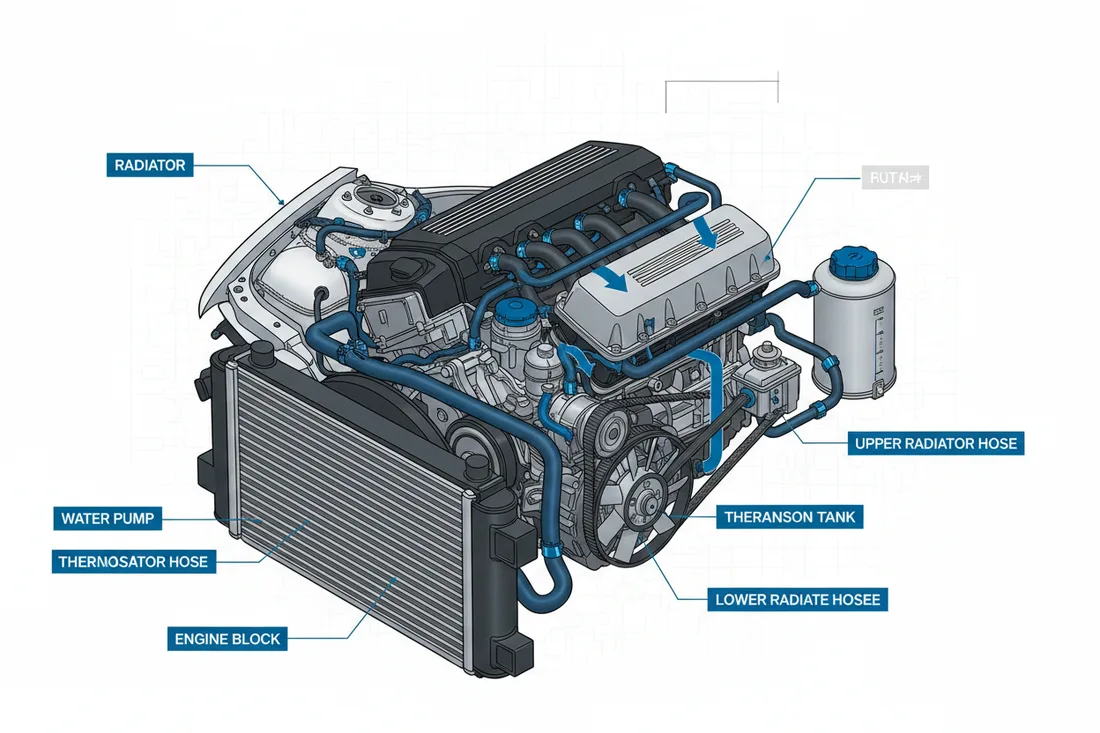
Image source: Bing (Web (fair-use with source credit))
Step-by-Step: Visually Diagnosing a Coolant Leak at Home
A systematic visual inspection saves time and guesswork. Start with the engine cold. The key is to look for residue, moisture, or active drips in a logical order.
- Check the Expansion Tank and Cap: Look for cracks in the plastic, especially along the seam. Check the filler neck for cracks and the cap's rubber O-ring for wear. A weeping tank is the most common failure point on models like the E90.
- Inspect All Hose Connections: Trace every hose from the thermostat housing to the radiator and heater core. Pay special attention to the plastic quick-connect fittings; their internal O-rings degrade over time.
- Examine the Water Pump and Thermostat: Look behind the pulley for weeping from the water pump gasket. Check the thermostat housing, particularly where it bolts to the engine block.
- Look at the Radiator: Scan the top, bottom, and side tanks for crusty residue or wet spots. Check the seams where the plastic tanks meet the aluminum core.
- Check the Heater Core Hoses: These run into the firewall behind the engine. Leaks here often drip onto the transmission bellhousing, making them harder to spot from above.
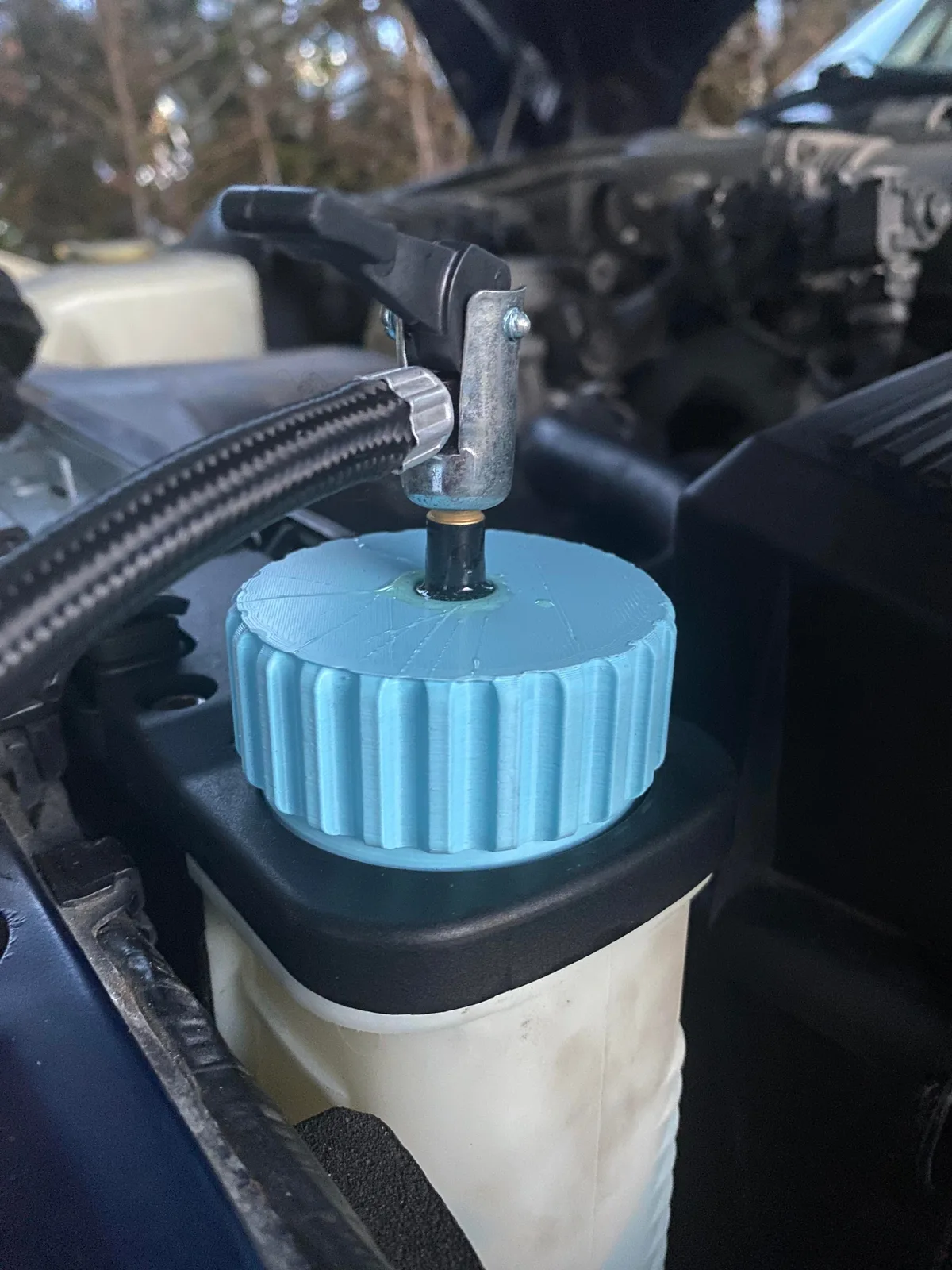
Image source: Bing (Web (fair-use with source credit))
If your visual inspection is inconclusive, a cooling system pressure tester is the next step. It pressurizes the system to simulate operating conditions, forcing a slow leak to reveal itself with a visible drip or spray.
The Most Common Coolant Leak Locations by BMW Generation
Knowing the common failure points for your specific generation (E90 vs. F30 vs. G20, for example) can shortcut your diagnosis.
Each has its well-documented weak spots.
| Generation | Common Leak Points |
|---|---|
| E90/E91/E92/E93 (2006-2013) | Plastic expansion tank (cracks), electric water pump gasket, thermostat housing O-ring. |
| F30/F31/F34 (2012-2018) | Oil filter housing gasket (coolant passages on some engines), expansion tank, various hose connectors. |
| G20/G21 (2019-Present) | Still newer, but early reports point to plastic coolant pipes and connector O-rings. |
For any generation, rubber hoses and their clamps degrade with age and heat cycles. A hose that feels brittle or a clamp that shows corrosion should be replaced proactively, as our analysis of forum discussions indicates these are often overlooked during partial repairs.
Using the wrong coolant type can also cause issues. Always use the manufacturer-specified coolant to prevent internal seal degradation. Information on approved fluids can be found in the owner's manual or through the BMW Technical Information System (TIS).
If you're dealing with overheating symptoms alongside a leak, understanding the cascade of failures is key. A related guide on Hyundai Tucson Engine Overheating explains general overheating principles that apply across brands. Similarly, a persistent leak can cause electrical issues if coolant contacts sensors, a scenario sometimes seen with Hyundai Tucson Check Engine Light problems.
Costs, Parts, and What to Expect at the Shop
Repair costs vary widely depending on the leak source and whether you DIY or visit a specialist. A simple hose clamp or expansion tank cap runs under $30 in parts. A full expansion tank replacement kit, with new hoses and clamps, typically costs $80 to $200 for the parts alone.
Labour is where the bills climb. Independent BMW specialists generally charge less than dealership service departments. A water pump and thermostat job, for example, can run $400 to $800 at an independent shop (parts and labour combined), versus $1,200 or more at a dealer.
Labour rates as of 2026 typically range from $120 to $180 per hour depending on your market.
| Repair | DIY Parts Cost | Shop Estimate (Parts + Labour) |
|---|---|---|
| Expansion tank replacement | $80 – $150 | $300 – $500 |
| Upper/lower radiator hose | $20 – $60 | $150 – $350 |
| Water pump replacement | $150 – $300 | $500 – $900 |
| Oil filter housing gasket (F30) | $20 – $50 | $400 – $700 |
If you're comfortable working on cars, many cooling system repairs are straightforward with basic tools. The E90 expansion tank, for instance, is one of the more approachable DIY jobs. If you're dealing with electrical gremlins alongside mechanical trouble, our guide to Hyundai Tucson Battery Keeps Dying covers how coolant-related shorts can drain electrical systems in unexpected ways.
Always ask a shop whether they use OEM or aftermarket parts. OEM parts from BMW match factory specifications exactly. Quality aftermarket alternatives from brands like Meyle or Wahler can save money without sacrificing reliability, but avoid the cheapest options.
A failed aftermarket thermostat six months after installation costs more in the long run than paying for a quality part upfront.
Mistakes That Turn a Small Coolant Leak Into a Big Engine Problem
The biggest mistake is ignoring it. A slow weep from a hose connector might seem minor. But coolant loss reduces the system's ability to regulate engine temperature.
Over time, this leads to localized hot spots in the cylinder head, which can warp the head or blow the head gasket.
Here are the errors we see most often:
- Topping off without finding the leak. Refilling the reservoir without diagnosing the source just delays the inevitable. You're masking the symptom, not fixing the cause.
- Using the wrong coolant. BMW specifies particular coolant formulations. Mixing incompatible types can cause gel formation, seal degradation, or reduced corrosion protection. Check the owner's manual or the cap on the expansion tank for the correct specification.
- Skipping the bleeding procedure. Air trapped in the cooling system after a repair creates hot spots and erratic temperature readings. BMW systems require a specific bleed screw procedure or a dealer-level scan tool to purge air properly.
- Replacing only the failed component. If your expansion tank cracked at 80,000 miles, the hoses and thermostat are likely near the end of their life too. Replacing everything in the cooling system at once, while you have it apart, prevents a string of sequential failures.
A related concern is internal leaks. If coolant is entering the oil passages, you'll see a milky residue on the oil filler cap. This signals a serious gasket failure.
For symptoms that go beyond simple leaks, our breakdown of Hyundai Tucson Engine Misfire explains how coolant contamination can cause combustion issues. Owners experiencing strange dashboard behavior after overheating events may also want to review our coverage of Hyundai Tucson Steering Problem to understand how temperature-related sensor failures affect power steering assist.
BMW 3 Series Coolant Leak FAQs
How often should I check my BMW coolant level?
Check it once a month with the engine cold. BMW cooling systems are sealed, so a dropping level means the system is losing coolant somewhere. Don't just top it off.
Find and fix the leak before it causes overheating damage.
Can I drive with a small coolant leak?
You can, but you shouldn't for long. Monitor the temperature gauge closely and carry extra coolant. If the gauge climbs toward the red zone, pull over immediately and let the engine cool.
Continued driving risks catastrophic engine failure.
What coolant does a BMW 3 Series use?
Most modern 3 Series models use BMW-approved coolant, which is typically a blue or green HOAT (Hybrid Organic Acid Technology) formula. Never mix different coolant types. The owner's manual specifies the exact requirement for your model year and engine.
Is a coolant leak covered under BMW warranty?
BMW's new vehicle warranty covers cooling system defects for 4 years or 50,000 miles, whichever comes first. Powertrain warranty extends to 6 years or 70,000 miles on certain components. After warranty expiration, repairs are out-of-pocket regardless of the leak source.
How long does a coolant leak repair take?
Simple repairs like a hose or cap replacement take 30 minutes to an hour. A water pump or thermostat replacement runs 2 to 4 hours. An oil filter housing gasket on the F30 can take 4 to 6 hours due to restricted access.
Should I use OEM or aftermarket parts for the cooling system?
OEM parts guarantee fit and performance matching factory specs. Quality aftermarket parts from reputable manufacturers work well for most repairs. Avoid bargain-basement components, especially for the thermostat, water pump, and expansion tank.
A premature failure costs more than the savings.