A Honda Civic alternator problem can leave you stranded with a dead battery and a dashboard full of warning lights. Before you panic and call a tow truck, most charging system issues follow a predictable pattern. With a few basic tests, you can figure out whether the alternator is actually failing or something else is draining power.
The alternator in a Honda Civic outputs between 13.5 and 14.8 volts while the engine runs. Below that range, your battery isn't charging. Above 15 volts, the voltage regulator is failing.
49% off Today's Exclusive Deals
Limited-time Exclusive Deals. Check current discount on Amazon.
Check Price on Amazon As an Amazon Associate I earn from qualifying purchases.Either way, the fix starts with knowing exactly what your system is doing.
Is This Really Your Alternator? Symptoms and First Checks

Image source: Web (Bing) / splinsider.com (Web image (fair-use with source credit))
49% off Today's Exclusive Deals
Limited-time Exclusive Deals. Check current discount on Amazon.
Check Price on Amazon As an Amazon Associate I earn from qualifying purchases.The most common sign of a Honda Civic alternator problem is that red battery warning light on your dashboard. But here's the catch. That light can come on for reasons that have nothing to do with the alternator itself.
A weak battery, corroded terminals, and loose ground wires all trigger the same warning. The key difference is what happens while you drive. If the light stays on after the engine is running, the charging system isn't keeping up.
If your headlights dim, your radio cuts out, or your power windows crawl, the alternator is struggling to supply electrical current.
Our research into owner forums and repair data shows most Civic alternator failures happen between 80,000 and 150,000 miles. That matches manufacturer lifespan expectations. If you're in that range and seeing symptoms, the odds tilt toward a real failure.
49% off Today's Exclusive Deals
Limited-time Exclusive Deals. Check current discount on Amazon.
Check Price on Amazon As an Amazon Associate I earn from qualifying purchases.Before you start tearing things apart, check two quick things. Wiggle the battery terminals by hand. Corrosion or looseness here causes false alarms.
Then listen for a whine or grind from the front of the engine. A worn bearing inside the alternator makes noise long before it dies completely. If you notice other electrical issues at the same time, like a key fob that suddenly stops responding, that points toward a broader voltage issue rather than an isolated component failure.
Your Step-by-Step Diagnostic Workflow
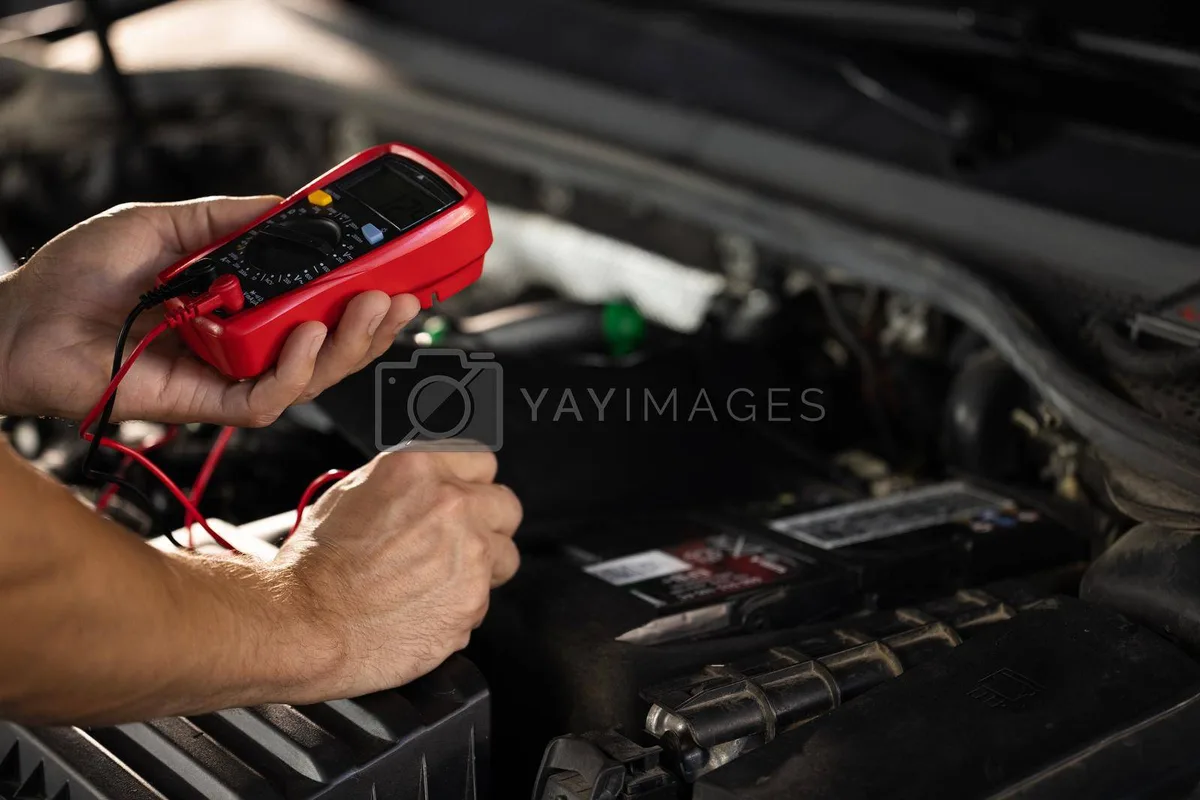
Image source: Bing (Web (fair-use with source credit))
Here's the process professional technicians use, simplified for your driveway. You'll need a basic digital multimeter. As of 2026, a reliable one costs around $15 to $30 at any auto parts store.
Step 1: Test the resting battery. With the engine off, set your multimeter to DC volts. Touch the red lead to the positive terminal and the black lead to the negative. You want to see 12.4 to 12.7 volts.
Below 12.2 means the battery is discharged and needs attention first.
Step 2: Start the engine and test again. With the car idling, measure across the same terminals. A healthy charging system reads 13.5 to 14.8 volts. If you're seeing 12 volts or less, the alternator isn't charging.
Above 15 volts, the internal voltage regulator is failing.
Step 3: Add electrical load. Turn on the headlights, A/C blower to max, and the stereo. The voltage should hold above 13 volts. If it drops significantly, the alternator can't handle real driving demand.
Step 4: Scan for codes. Newer Civics from the 8th generation onward store charging system trouble codes in the PCM. A basic OBD-II scanner catches these and saves guesswork. For vehicles where electrical problems run deeper, our guide on Kia Sportage alternator issues walks through a similar diagnostic path.
Step 5: Check the serpentine belt. Make sure the belt is tight and free of cracks or glazing. A slipping belt turns the alternator too slowly to charge properly, even if the unit itself is fine.
Common Mistakes That Waste Time and Money
The biggest mistake is swapping the alternator without testing first. Aggregate repair shop data shows roughly 15 to 20 percent of alternator replacements turn out to be unnecessary. The real culprit was a bad battery, a corroded ground wire, or a parasitic drain.
Here are the errors we see most often:
Skipping the battery test. A battery that can't hold a charge forces the alternator to work overtime. It fails prematurely. Always test the battery first.
Ignoring the ground strap. The Honda Civic relies on a solid engine-to-chassis ground connection. A rusted or loose ground strap mimics every symptom of a bad alternator.
Choosing the cheapest replacement part. Budget alternators from no-name brands often fail within a year. Quality units from OEM suppliers like Denso last significantly longer.
Forgetting the serpentine belt. A glazed or loose belt slips on the alternator pulley. The alternator works fine, but it's not spinning fast enough to charge.
Not checking for parasitic draw. Something draining power after the engine shuts off kills any battery overnight, regardless of alternator health. This is especially common with aftermarket accessories installed incorrectly.
When electrical problems show up on other systems, like a backup camera that stops working or a dashboard warning light that won't clear, it often traces back to the same root: inconsistent voltage from the charging system.
Repair Paths: DIY, Rebuild, or Professional Replacement
Image source: Web (Bing) / edutap.in (Web image (fair-use with source credit))
You've confirmed the alternator is the problem. Now you have three paths forward, and each fits a different situation.
DIY Replacement works well if you're comfortable with basic hand tools. A Honda Civic alternator swap takes 1.5 to 3 hours depending on your engine layout. The 1.8L in the 8th and 9th generation Civics is relatively accessible.
Newer models with tighter engine bays take longer. You'll need a socket set, a serpentine belt tool or long breaker bar, and a way to support the alternator during removal. Many auto parts stores loan specialty tools for free.
Professional Rebuild replaces the internal wear components: bearings, brushes, and sometimes the voltage regulator. This costs less than a full replacement. Our research shows rebuilds run $80 to $150 at independent shops.
The catch is finding a shop that still does them. Many have shifted to swapping the entire unit.
Full Replacement at a Shop is the fastest option. A shop sources the part, installs it, and handles any belt or tensioner issues at the same time. You pay for convenience and a warranty.
| Path | Typical Cost | Time Needed | Best For |
|---|---|---|---|
| DIY | $150 to $300 (parts only) | 1.5 to 3 hours | Confident DIYers with tools |
| Rebuild | $80 to $150 | 1 to 2 hours at a shop | Older Civics, budget-conscious owners |
| Shop Replacement | $350 to $600 total | 2 to 4 hours | Anyone wanting a warranty and zero hassle |
For a look at how similar repair decisions play out, our breakdown of Mazda CX-5 brake concerns shows how deciding between repair and replacement depends on the same cost-benefit math.
Costs, Specs, and What to Expect
These figures reflect typical US pricing as of 2026 and vary by region and model year.
Part Costs
| Component | OEM (Honda/Denso) | Quality Aftermarket | Budget Aftermarket |
|---|---|---|---|
| Alternator | $300 to $500 | $150 to $280 | $80 to $150 |
| Serpentine Belt | $25 to $45 | $15 to $30 | $8 to $15 |
| Tensioner (if needed) | $50 to $90 | $30 to $60 | $20 to $35 |
Labor Costs
Independent shops typically charge $90 to $150 per hour. A Honda dealership runs $120 to $200 per hour. Alternator replacement is usually a 1 to 2 hour job, so expect $100 to $300 in labor alone.
Technical Specifications
Honda Civic alternators vary by model year and engine. Most produce between 90 and 110 amps of output. The 10th and 11th generation models (2016 and newer) use PCM-controlled voltage regulation.
A simple volt test might not tell the whole story. A diagnostic scan gives you the full picture.
Manufacturer specs confirm the acceptable charging voltage range is 13.5 to 14.8 volts at idle with no electrical load. The National Highway Traffic Safety Administration recommends addressing any charging system warning immediately, since a failed alternator can leave you stranded without power steering or brake assist.
Warranty Considerations
Quality aftermarket alternators typically carry a 2 to 3 year warranty. OEM parts through Honda dealerships come with a 12 month or 12,000 mile parts warranty. Keep your receipt either way.
Having documentation saves you from paying for the same repair twice if a replacement fails within the warranty window.
Expert Tips for Honda Civics Specifically
Honda's charging system has quirks that differ from other brands. Newer Civics, especially the 10th and 11th generation models from 2016 onward, use PCM-controlled voltage regulation. The powertrain computer actively manages alternator output based on driving conditions.
A simple volt test at the battery doesn't always tell you if the system is working correctly. You may need a Honda-specific scan tool to read live charging data.
The 8th and 9th generation Civics with the 1.8L engine are more straightforward. The alternator sits near the top of the engine bay and is relatively easy to access. The 2.4L engine in the Si places it lower, which adds time and frustration to a replacement.
If your Civic is a hybrid with the Integrated Motor Assist system, diagnostics get more complex. The IMA motor handles some charging duties alongside the traditional alternator. A fault code in the hybrid system can mimic a standard alternator failure.
Honda's service bulletin library covers several known IMA-related charging issues by model year.
One practical detail: Honda typically uses Denso as the OEM alternator supplier across most Civic generations. A Denso replacement unit matches the original specs precisely. Aftermarket brands vary widely in output consistency and bearing quality.
Decision Guide: When to Repair, Replace, or Seek Help
Use this logic to figure out your next move based on what you found during diagnosis.
If your voltage test showed normal charging (13.5 to 14.8V) but you're still having electrical problems, the alternator is likely fine. Focus on the battery itself, parasitic draws, or corroded connections. Electrical glitches alongside other issues like a soft brake pedal or steering wheel vibration might point to a failing battery causing system-wide voltage instability.
If voltage is low (below 13V) under load, the alternator is confirmed failing. Decide based on your situation:
You're handy with tools and have 2 to 3 hours free? DIY replacement saves you $100 to $300 in labor. Pick up a quality OEM-spec unit from Denso or a Honda dealer parts counter.
You want it done today with a warranty? Take it to an independent shop. They source the part, handle belt issues, and you drive away the same day.
Your Civic is under 5 years old? A Honda dealership makes sense. Factory warranty coverage might apply, and they have the right scan tools for PCM-related charging faults.
If voltage is above 15V, the internal voltage regulator is overcharging. This damages your battery and can fry sensitive electronics. Don't drive long distances.
Get it to a shop or replace the alternator immediately.
If you're not comfortable with any of this testing, an honest diagnosis at a shop costs $80 to $130. That fee often applies toward the repair. Spending that money to confirm the problem before ordering parts is well worth it.
Frequently Asked Questions
How do I know if it's my alternator or my battery?
Start with a multimeter. With the engine off, a healthy battery reads 12.4 to 12.7 volts. Start the car and measure again.
If voltage jumps to 13.5 or higher, the alternator is charging and the battery is likely the problem. If it stays below 13, the alternator isn't doing its job. Many auto parts stores test batteries for free.
Can I drive my Honda Civic with a bad alternator?
You can, but not for long. The battery has maybe 20 to 40 minutes of reserve charge with no alternator output. As voltage drops, you lose power steering, headlights, and eventually the engine dies.
Drive straight to a shop. Keep accessories off to conserve power.
How much does it cost to fix a Honda Civic alternator?
A quality replacement part runs $150 to $300 for aftermarket or $300 to $500 for OEM. Labor at an independent shop adds $100 to $300. Total cost ranges from $250 to $600 for most Civic models.
DIY drops that to just the part cost.
What causes alternators to fail on a Honda Civic?
The most common causes are worn brushes, failed bearings, or a faulty voltage regulator. Heat, age, and high electrical demand accelerate wear. Most Civic alternators last 80,000 to 150,000 miles.
A weak battery forces the alternator to work harder, shortening its lifespan.
Should I replace the serpentine belt when changing the alternator?
Yes, especially if the belt has over 60,000 miles on it. The belt costs $15 to $45 and takes minutes to install while you already have everything apart. A worn belt can slip on the new alternator pulley and cause the same charging symptoms you just fixed.
Can a bad alternator drain my battery overnight?
Not directly. The alternator only charges while the engine runs. However, a failing alternator with bad diodes can create a parasitic draw that slowly drains the battery after you park.
If your battery dies overnight repeatedly, test for parasitic draw with your multimeter. A reading above 50 milliamps with everything off signals a problem.