A Jeep Wrangler brake problem can show up as a soft pedal, a grinding noise, or a pull to one side. No matter which symptom you feel, the fix starts with a simple diagnosis. Don't ignore it.
Brake fluid specifications for the Wrangler call for DOT 3 or DOT 4, and the factory service schedule recommends a fluid flush every couple of years. As of 2026, that advice hasn't changed. Let's look at what's happening under your Jeep and how to fix it.
49% off Today's Exclusive Deals
Limited-time Exclusive Deals. Check current discount on Amazon.
Check Price on Amazon As an Amazon Associate I earn from qualifying purchases.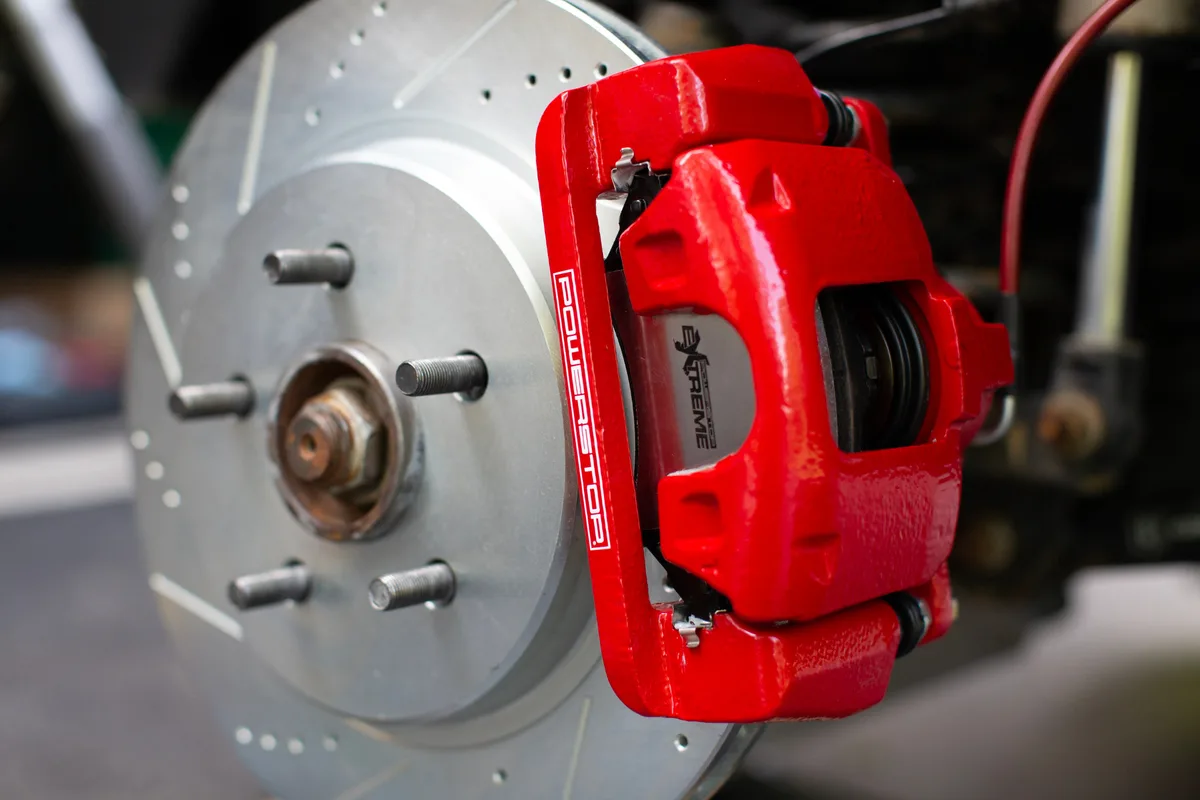
Image source: Bing (Web (fair-use with source credit))
Quick Answer
A Jeep Wrangler brake problem can't be fixed with a one-size answer. Diagnose the symptom first. Soft pedal means air or a leak.
49% off Today's Exclusive Deals
Limited-time Exclusive Deals. Check current discount on Amazon.
Check Price on Amazon As an Amazon Associate I earn from qualifying purchases.Grinding means worn pads and rotors. Pulsation means rotor runout. Tow it if the pedal sinks toward the floor.
That's the shortest safe path to a repair.
Which Brake Symptom Are You Feeling? (Start Here)
Brake problems rarely announce themselves the same way twice. Your Wrangler gives you clues, but you need to know which clue matters.
Start with the pedal. How does it feel under your foot?
49% off Today's Exclusive Deals
Limited-time Exclusive Deals. Check current discount on Amazon.
Check Price on Amazon As an Amazon Associate I earn from qualifying purchases.Soft or Spongy Pedal
If the pedal presses down with little resistance and stops near the floor, you have air in the hydraulic system or a fluid leak. Air compresses, brake fluid doesn't. A spongy pedal means the calipers aren't getting full hydraulic pressure.
Check the master cylinder reservoir level first. If it's low, you're leaking somewhere. Look at the rubber hoses, the steel lines, and the caliper seals.
Pedal Sinks to the Floor
This is the scarier version, and it's urgent. You press, the pedal holds for a second, then slowly drops. That usually means a failing master cylinder, worn internal seals, or a serious leak in a hard line or hose.
This is not a "finish your errands first" issue. If you're stuck on the road, our guide to urgent brake failure steps walks you through what to do right now.
Pulling to One Side
If the Wrangler veers left or right when you brake, you've got uneven braking force. Common causes include a seized caliper, a collapsed rubber hose, or seriously worn pads on one side only.
Grinding or Squealing
Grinding means the pad backing plate is touching the rotor. You've driven past the wear indicators and damaged the rotor surface. Squealing at low speed often means the wear indicators are doing their job, but it can also be glazed pads or rotor rust.
For a full breakdown of both noises, check out our article on grinding brake causes and the squealing side too.
Pulsation Through the Pedal
That rhythmic thumping is almost always rotor runout or uneven pad transfer, commonly mislabeled as "warped rotors." The pedal vibrates in sync with wheel rotation. The fix is a rotor measurement, not just a pad swap.
ABS Light On
The ABS system has detected a fault, often a failed wheel speed sensor or a reluctor ring issue. The base braking system still works, but you've lost anti-lock protection. Diagnose it with a scan tool before assuming the sensors are bad.
Sometimes electrical faults tie into the same circuit, and brake light wiring faults can point you in the right direction.
| Symptom | Likely Cause | Drive or Tow? |
|---|---|---|
| Soft or spongy pedal | Air in lines or low fluid | Drive cautiously to shop |
| Pedal sinks to floor | Master cylinder or leak | Tow it, don't drive |
| Pulling to one side | Seized caliper or hose | Drive, limit speed |
| Grinding noise | Metal-on-metal wear | Tow it, rotors damaged |
| Pulsation | Rotor runout | Drive normally |
| ABS light on | Wheel speed sensor | Drive, but diagnose soon |
What Causes a Wrangler's Brake Problem? The Usual Suspects
Wrangler brake systems work the same way as any modern disc brake setup. Press the pedal, the master cylinder pushes brake fluid through steel lines and rubber hoses, the calipers squeeze the pads against the rotors, and friction slows the wheel. When something in that chain breaks, you feel it.
Worn Pads and Rotors
This is the number one cause. Pads are the sacrificial wear item. They grind down over thousands of miles, and if you wait too long, the metal backing plate chews into the rotor.
Wranglers are heavy, especially four-door Unlimited models, and that extra mass eats pads faster than you'd expect.
Seized Calipers and Rusted Slide Pins
The caliper slides on two metal pins. When those pins corrode, the caliper stops moving freely. The inner pad wears out while the outer pad looks nearly new.
The Jeep pulls hard to that side under braking.
Corroded Brake Lines and Hoses
Rubber hoses break down from the inside and can collapse, trapping fluid pressure. Steel lines rust where they run along the frame, especially in salt-belt states. A pinhole leak in a hard line turns a firm pedal into mush overnight.
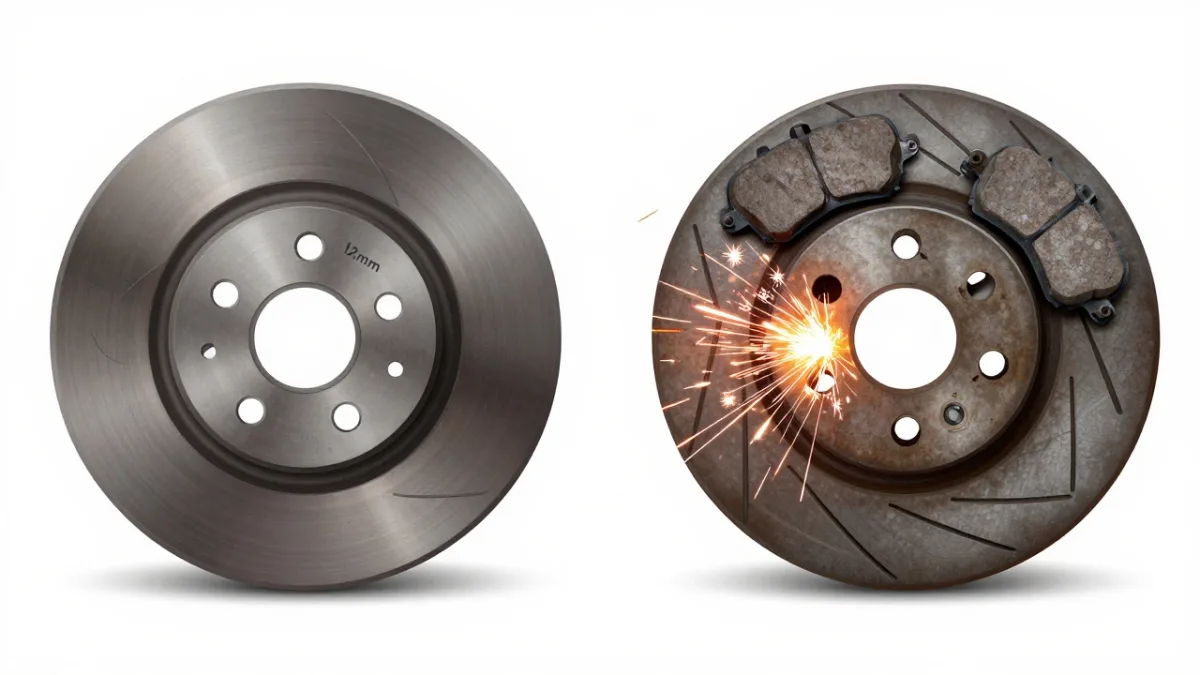
Image source: Bing (Web (fair-use with source credit))
Failing Master Cylinder or Brake Booster
The master cylinder pushes fluid when you press the pedal. Its internal seals wear out, and fluid bypasses the piston. The booster multiplies your pedal force using vacuum from the engine.
A bad booster creates a rock-hard pedal that barely slows the Jeep.
Neglected Brake Fluid
Brake fluid absorbs moisture over time. That moisture lowers the boiling point and causes corrosion inside the calipers. Manufacturer specs generally recommend flushing the fluid every two years or 30,000 miles.
Most Wrangler owners ignore this completely, and it shows.
Oversized Tires and Lift Kits
Bigger wheels and tires increase rotational mass and require more braking force. The stock brakes on older JK and TJ models weren't designed for 35-inch tires. If you've upgraded your tires without upgrading your brakes, your stopping distances have grown dramatically.
That added strain doesn't stop at the brakes. Heavy tires can also put extra wear on the drivetrain over time. If you're noticing odd behavior from the transmission, our guide to the added strain on the drivetrain explains what to watch for.
DIY or Shop? Know When to Turn the Wrench and When to Tow It
Wrangler brake work is genuinely DIY-friendly. The layout is simple, parts are affordable, and there's no exotic tooling required. But you have to be honest with yourself about your skill level.
What's Safely DIY-Friendly
- Pad and rotor replacement
- Caliper replacement, which is bolt-on and needs bleeding
- Brake fluid flush
- Rubber hose replacement
- Slide pin cleaning and greasing
These jobs require basic hand tools, a jack, jack stands, and a torque wrench. The hardest part is usually bleeding the air out of the system afterward.
What Absolutely Requires a Tow Truck
- Pedal sinks to the floor with no visible leak
- A hard line rusted through
- Metal-on-metal grinding on all four corners
- Any brake failure after a recent repair
- You have no idea when the fluid was last changed
If the pedal sinks and you can't find an obvious leak, the master cylinder is failing internally. That's a critical safety part. The cost of towing it is far less than the cost of rear-ending someone at a stoplight.
A Quick Self-Check Before You Decide
Park on flat ground and put the Jeep in neutral with the parking brake off. Press the pedal firmly. It should feel firm and stay firm.
If it slowly sinks under steady pressure, a hydraulic leak or a bad master cylinder is likely. That's a tow and repair situation.
Step-by-Step: Diagnose and Fix a Wrangler Brake Problem Yourself
Let's walk through the diagnosis logically. You don't need a mechanical engineering degree, just patience and a willingness to get your hands dirty.
Step 1: Check the Master Cylinder Reservoir
Pop the cap. The fluid should sit between the MIN and MAX lines. If it's low, you have a leak or heavily worn pads.
Top it off with DOT 3 or DOT 4 fluid from a sealed container. Never mix types. Never use fluid that's been sitting open in your garage.
Step 2: Inspect the Pads and Rotors
Jack up the Jeep, remove the wheel, and look through the caliper. The friction material should be at least 3mm thick. Anything thinner means replacement.
Look at the rotor surface. Deep grooves, blue discoloration from heat, or cracks mean it's done.
Step 3: Measure Rotor Runout
This requires a dial indicator. Mount it to a solid point, zero it, and spin the rotor. Runout should stay within the service manual spec for your Wrangler generation, usually under 0.002 to 0.003 inches.
If it exceeds spec, the rotor needs resurfacing or replacement.
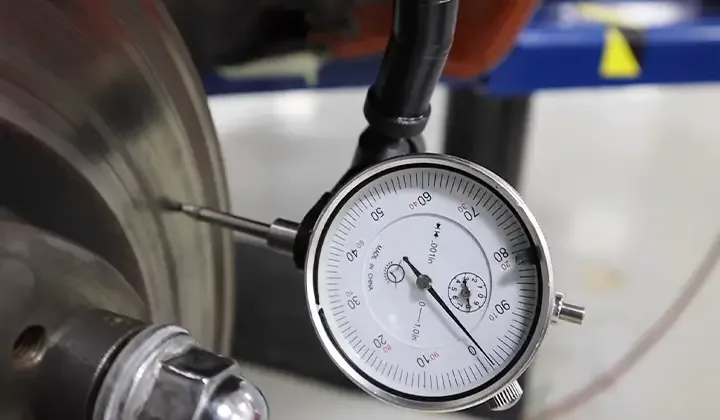
Image source: Bing (Web (fair-use with source credit))
Step 4: Check the Caliper Slide Pins
Remove the caliper, unbolt the pins, and inspect them. They should be smooth and covered in fresh grease. If they're rusty, pitted, or dry, clean them with brake cleaner and a wire brush, then apply high-temp caliper grease.
This single step fixes a massive number of Wrangler brake problems, especially pulling and uneven pad wear.
Step 5: Test the Brake Booster
With the engine off, press the pedal several times until it feels hard. Hold pressure on it and start the engine. The pedal should drop slightly.
If it pushes back against your foot, the booster vacuum line is leaking or the booster itself is bad.
Step 6: Bleed the Brakes
If the pedal feels spongy, you have air somewhere. A two-person manual bleed works well. One person presses the pedal, the other opens the bleeder valve and closes it before the pedal reaches the floor.
Go through every wheel in the correct order, starting with the one farthest from the master cylinder.
Keep track of what you find. A single seized slide pin explains most pulling issues. A low reservoir explains softness.
Corroded rotors explain pulsation. Write it all down before ordering parts.
Real Wrangler Cost Numbers: Parts, Labor, and "While You're In There"
Brake work on a Wrangler is cheaper than almost any other repair, as long as you catch it early. Ignore it, and costs climb fast.
| Job | Parts Cost | Shop Labor | Total Range |
|---|---|---|---|
| Pad replacement | $80 to $150 | $100 to $200 | $180 to $350 |
| Pad-and-rotor job | $300 to $600 | $150 to $350 | $450 to $950 |
| Caliper replacement per axle | $160 to $300 | $150 to $300 | $310 to $600 |
| Brake fluid flush | $25 DIY kit | $100 to $200 | $25 to $225 |
| Big brake upgrade kit | $1,200 to $3,500 | $400 to $800 | $1,600 to $4,300 |
Pad Replacement Only
Expect to pay $80 to $150 for quality pads including the wear sensors and hardware kit. That's the semi-metallic Mopar-style sets that handle off-road abuse. If you're replacing pads only because the rotors are still in spec, this is the whole job.
Pad-and-Rotor Job
This is the standard service for most Wrangler owners. Rotors run $60 to $120 each for aftermarket units. The complete package, pads plus rotors plus hardware, lands between $300 and $600 in parts.
A shop will charge another $150 to $350 in labor depending on where you live.
Caliper Replacement
Seized calipers add $80 to $150 each for remanufactured units. Plus fluid, plus labor. A full front caliper job with new pads and rotors can push $800 total.
Brake Fluid Flush
A proper flush, not just emptying the reservoir, costs $100 to $200 at a shop. If you're doing it yourself, a $25 vacuum bleeder kit and two bottles of DOT 3 fluid get it done.
Big Brake Upgrade Kits
If you've lifted your Wrangler and run heavy 35-inch or larger tires, stock brakes might not cut it. Bolt-on big brake kits range from $1,200 to $3,500. They increase rotor diameter and caliper piston area.
That's significant money, but it changes the whole braking character of the vehicle.
The "While You're In There" Rule
If a caliper is off, the rotors come off cheaply. If the rotors are off, new pads cost almost nothing extra. If the brakes are soaked in fluid from a leak, you should replace both calipers on that axle, not just the leaking one.
The other side isn't far behind.
Watch for rusted bleeder valves on older Wranglers. They snap off easily and turn a simple job into a nightmare. Penetrating oil the night before is cheap insurance.
Brake Mistakes That Cost Wrangler Owners Time, Money, and Safety
Some brake mistakes are common, and they all sound reasonable at the time. Here's what to avoid.
Skipping the Bedding Process
New pads and rotors need a bedding procedure. It transfers an even layer of pad material onto the rotor surface. Without it, you get grabby braking, a pulsing pedal, and poor stopping power.
Following the pad manufacturer's bedding instructions matters.
Forgetting Slide Pin Grease
You cleaned the pins, but you didn't grease them. Now the caliper binds again in a few thousand miles. Use the right high-temp brake grease, not chassis grease.
Apply a thin, even coat to the pins and the rubber boots.
Reusing a Rotor That's Below Spec
You had the rotors resurfaced to save money. But the shop didn't check the minimum thickness stamp. A rotor below minimum thickness can crack or fail under hard braking.
Measure before machining.
Ignoring the Rubber Hoses
A collapsed hose looks fine from the outside. The inner lining can peel and act like a one-way valve. If the caliper won't release or the brake drags, suspect the hose even when it looks new.
Upgrading Tires Without Upgrading Brakes
Larger tires look great. They also add mass that the stock brakes weren't designed to stop. Heavier builds need bigger rotors, better pads, or both.
If your stopping distance feels longer, the problem isn't your imagination.
Frequently Asked Questions
Why does my Wrangler's brake pedal pulse?
Pulsation usually means rotor runout or uneven pad transfer. Measure the rotor with a dial indicator instead of assuming it's warped. Resurface or replace the rotor if it's out of spec.
Bed the new pads properly to prevent it from returning.
Is ceramic or semi-metallic better for a Wrangler?
Semi-metallic pads are the better pick for most Wranglers. They handle high heat, survive off-road grit, and work well with the Jeep's weight. Ceramic pads are quieter and cleaner but can fade faster under heavy towing or trail use.
Stick with semi-metallic for daily and off-road duty.
Why is my ABS light on after a brake job?
The most common cause is a damaged wheel speed sensor wire. It's easy to snag a sensor cable while swapping rotors. Check the connector first.
Then use a scan tool to read the ABS fault code. Sometimes it's just a loose connector, which means a free fix.
Do I really need to flush brake fluid every two years?
Yes, because brake fluid absorbs moisture. That moisture lowers the boiling point and causes internal corrosion. Aggressive reviews and manufacturer service schedules both point to a two-year interval.
If the fluid looks dark or smells burnt, it's overdue.
What's the best way to brake on a long downhill trail?
Use engine braking in a low gear and let the transmission help control speed. Brake in firm, controlled pulses instead of riding the pedal. This prevents heat buildup and brake fade.
If you notice a change in pedal feel, stop and let the brakes cool before continuing.
Final Decision Guide: What to Do Right Now Based on Your Symptom
Use this as a simple decision map.
- Soft or spongy pedal with no leak: Bleed the brakes and check for air. If it still feels soft, inspect the master cylinder.
- Pedal slowly sinks to the floor: Stop driving. Tow the Wrangler and replace the master cylinder or fix the leak.
- Grinding noise when braking: Replace pads and rotors immediately. Do not drive any further than necessary.
- Pulling to one side: Check caliper slide pins and rubber hoses on both sides. Replace the seized parts.
- Pulsation through the pedal: Measure rotor runout first. Resurface or replace rotors and bed the new pads.
- ABS light on with normal braking: Scan the fault code, inspect the wheel speed sensor wires, and replace the sensor if needed.
- Braking feels weak after a lift and larger tires: Stop driving on the stock setup if you can. Plan a brake upgrade before you hit the trail again.
A Jeep Wrangler brake problem rarely fixes itself. It always gets worse with mileage, heat, and dirt. The good news is that most repairs are straightforward and affordable if you catch them early.
Listen to the pedal, check the parts, and make the call.