A Jeep Wrangler coolant leak always seems to show up at the worst time. One morning your Wrangler leaves a green or orange puddle under the front bumper, and you're instantly wondering if you can still drive it. The answer depends entirely on where the leak is, how fast it's dripping, and how low the coolant level is.
Most modern Wranglers run a 16 psi radiator cap and an OAT-based coolant that meets ASTM D3306. As of 2026, the most vulnerable leak points have shifted from the old 4.0L water pumps to the plastic radiator seams on JL models. Before you buy a single part, you need to answer one question: is it safe to drive the thing?

49% off Today's Exclusive Deals
Limited-time Exclusive Deals. Check current discount on Amazon.
Check Price on Amazon As an Amazon Associate I earn from qualifying purchases.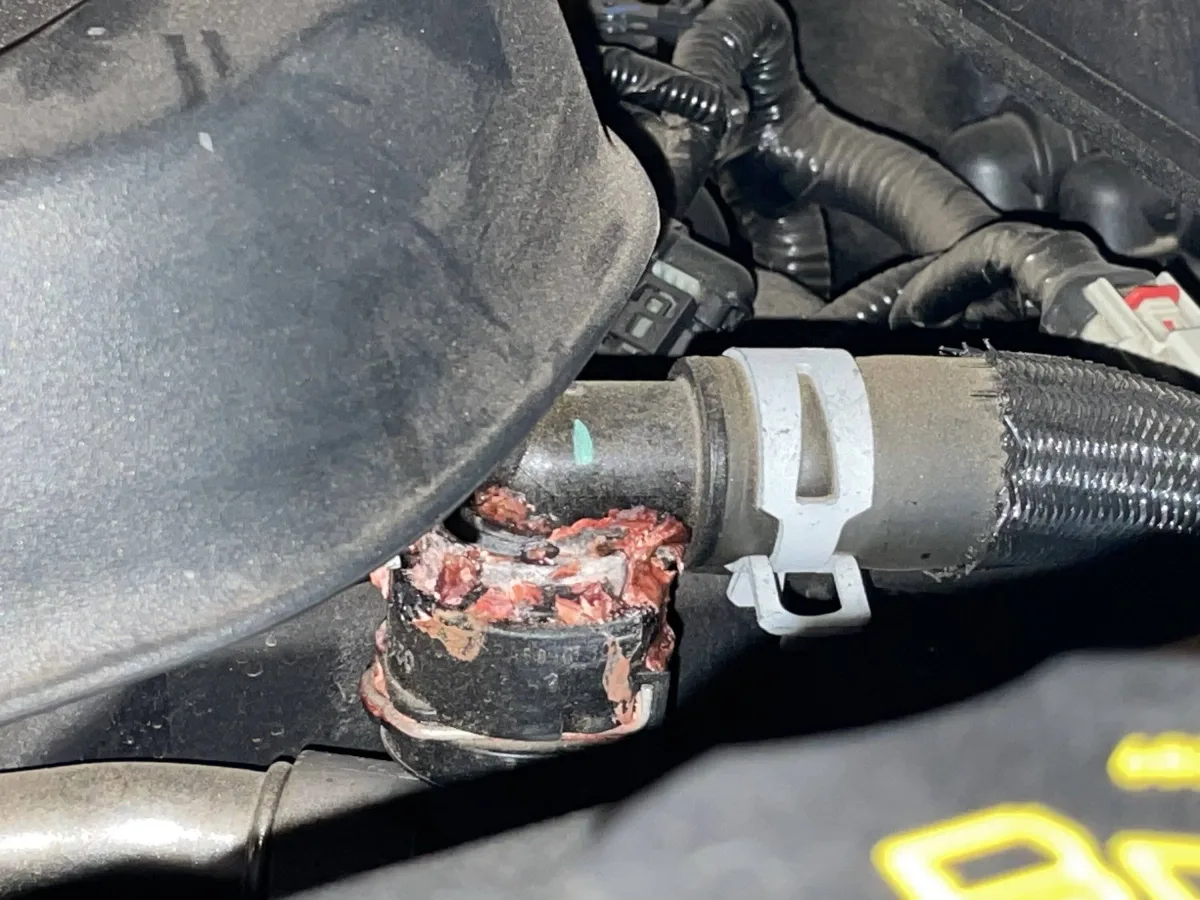
Image source: Bing (Web (fair-use with source credit))
Quick Answer
A coolant leak on a Jeep Wrangler is not an emergency unless the temperature gauge climbs. Slow drips from the water pump weep hole or a radiator seam are repairable at home. Fast loss with overheating means stop driving and tow it.
49% off Today's Exclusive Deals
Limited-time Exclusive Deals. Check current discount on Amazon.
Check Price on Amazon As an Amazon Associate I earn from qualifying purchases.Check the oil cap for milky residue before anything else. Most common leaks cost under $500 to fix.
Stop and Check This First: Is It Safe to Drive?
Here's the short answer. A slow drip with a normal temperature gauge is usually manageable. A leak that drains the reservoir in a few miles is not.
If the needle climbs past the middle, stop the engine immediately.
That's the line you need to draw. A fast loss of coolant plus rising heat means you're risking a warped head. A seep that leaves a stain and nothing else can wait until the weekend.
49% off Today's Exclusive Deals
Limited-time Exclusive Deals. Check current discount on Amazon.
Check Price on Amazon As an Amazon Associate I earn from qualifying purchases.If you see a green or orange puddle under the front axle, check the reservoir before starting the engine.
Look at the oil cap and dipstick. If either looks milky, coolant is mixing with oil. Driving on that will ruin bearings.
Treat it like brake trouble. A single failure ignored can end the whole trip.
Use your senses. A sweet smell inside the cabin points to the heater core. White steam from the exhaust points to a head gasket.
No visible puddle but constant low coolant means a slow burn-off, and you'll need a pressure test to confirm.
Our research shows the Wrangler's cooling system is forgiving only up to about 200°F. Past 220°F, damage adds up fast.
Where's the Leak? Follow the Coolant Trail on a Wrangler
Coolant leaves a trail. Follow it back to the source. Start on a cold engine, open the hood, and look for crusty white, orange, or dark green residue.
That dried residue marks the leak point.
Check these spots in order. Look at the top of the radiator for dampness. Trace both hoses from the radiator back to the engine.
Feel for soft spots or oily film. Inspect the water pump pulley and the weep hole. The weep hole sits on the bottom of the pump housing, and any fresh coolant there means the bearing seal is failing.
Then follow the floor. Does the passenger carpet feel wet? Does the glass fog up when the heat is on?
That's a heater core leak. You might not see an outside puddle because the coolant soaks into the carpet foam.
Under the engine, inspect the oil cooler area. On the 3.6L Pentastar, the oil cooler sits in the valley between the cylinder heads. A leak there pools under the intake and drips off the back of the oil pan.
It's easy to confuse with an oil leak, but coolant feels slippery and smells sweet, not like motor oil.
If the trail leads to the lower radiator hose or the tank seam, that's the famous JL failure. The plastic end tank expands and cracks at the crimp.
| Leak location | Likely source | Telltale sign |
|---|---|---|
| Front of engine, pump area | Water pump | Crust around weep hole |
| Top radiator or cap | Radiator seam or cap | Crack near the crimp |
| Passenger floorboard | Heater core | Wet carpet, foggy glass |
| Valley between heads | Oil cooler | Puddle at rear of oil pan |
| Under upper hose connection | Thermostat housing | Hairline plastic crack |
Use This Decision Tree to Pinpoint the Exact Source
Now you've narrowed the leak to a zone. Time to branch into the exact source.
- Drip from the weep hole or front of the pump? That's a water pump. The bearing seal is failing. It may leak only when hot, so inspect after shutdown.
- Hairline crack at the radiator tank seam? Replace the radiator. Patching a plastic tank is a lost cause.
- Dampness under the upper hose? That's the thermostat housing. On the 3.6L, the plastic housing cracks at the bolt flange.
- Wet carpet or a sweet smell in the cabin? Heater core. Expect a dash-out labor job.
- Puddle near the rear of the oil pan? Oil cooler or heater core inlet tubes. Both drip from the back of the engine.
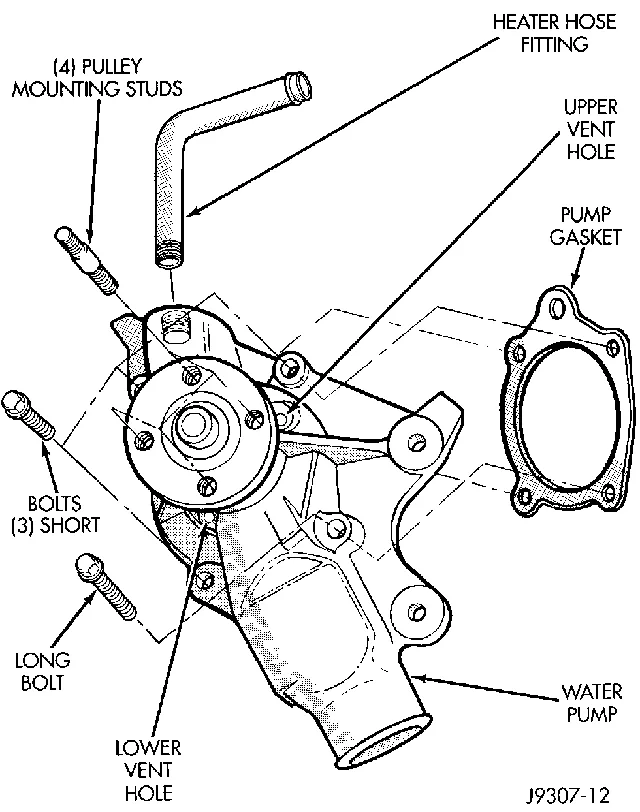
Image source: Bing (Web (fair-use with source credit))
If you're losing coolant and there's no puddle at all, test the radiator cap. A weak 16 psi cap lets coolant boil off as vapor. Also, if the radiator fan never kicks in, the system can push coolant out the overflow tank under pressure.
If none of those fit, run a pressure test. Pressurize to 16 psi and watch for a drop. That will find a slow leak before you spend money on parts.
What It Costs to Fix and What to Replace First
When you know the source, you want the bill. These are typical independent shop rates, not dealership upcharges.
| Fix | Part cost (USD) | Labor estimate | Total range |
|---|---|---|---|
| Water pump | $100–$250 | $150–$300 | $250–$550 |
| Radiator (JL) | $200–$500 | $200–$400 | $400–$900 |
| Thermostat housing | $40–$90 | $100–$200 | $140–$290 |
| Oil cooler | $150–$300 | $300–$500 | $450–$800 |
| Heater core | $100–$200 | $700–$1,200 | $800–$1,400 |
Those are mid-range numbers. The 2.0L turbo costs a bit more because seals are pricey. A heater core hurts because the shop pulls the dash.
A radiator swap is straightforward, so DIYers save the most there.
Before ordering parts, do a pressure test. That one step prevents you from buying a radiator when you actually needed a heater core. Also inspect the overflow tank.
A cracked neck is a cheap, common fix.
In our editorial analysis, most Wrangler coolant leaks fall into two price bands: under $300 for hoses, caps, or a thermostat housing, and over $500 for a water pump or oil cooler. Radiators sit in the middle depending on whether you choose OEM plastic tanks or an aluminum upgrade.
If you're on a budget, fix the cheap stuff first. A bad cap or cracked overflow tank can cause the same symptoms as a blown head gasket. It's rare, but it's a $30 cure.
How to Do the Repair Right and Burp the System
You've replaced the leaking part. Now the job is only half done. If you skip the air bleeding step, the temp gauge spikes and you'll think you failed.
The Wrangler traps air pockets more than most cars.
Follow this order after any repair that opens the cooling system:
- Fill slowly with the correct coolant. Modern Wranglers use an OAT formula that meets ASTM D3306. Check the owner's manual.
- Stop at the cold fill mark. Don't overfill.
- Add a spill-proof funnel to the fill neck. Start the engine and turn the heat to max.
- Let it idle. Air bubbles will surface in the funnel. Top up as the level drops.
- Rev the engine a few times to push air out of the heater core.
- Watch the upper radiator hose. When it gets hot, the thermostat has opened. Run for 10 more minutes.
- Shut off, top off, then pressurize to 16 psi with a coolant pressure tester. 10 minutes without a drop means you're done.
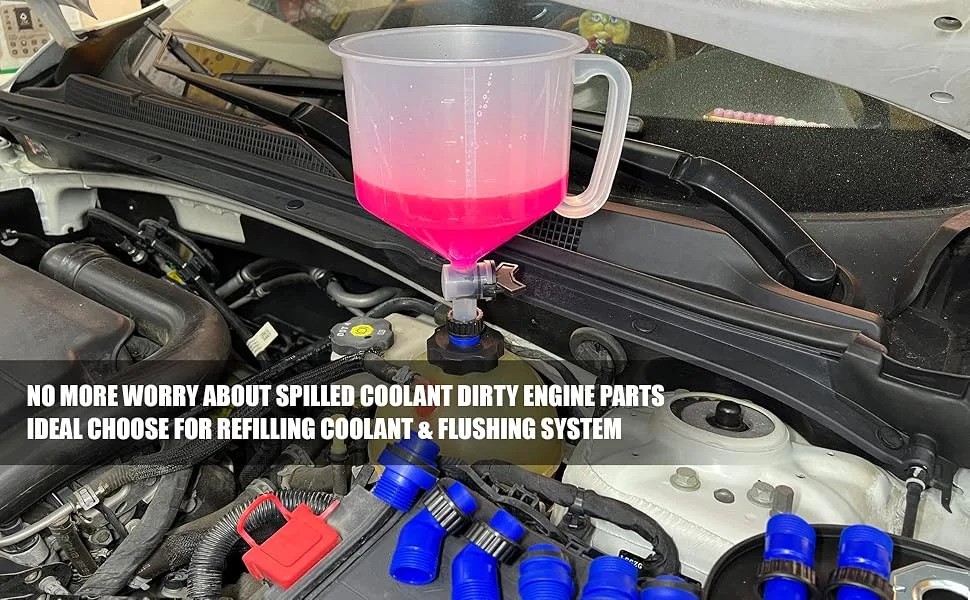
Image source: Bing (Web (fair-use with source credit))
Mistakes happen at step 6. If you don't run the heater, air stays in the core, and you'll have weak heater output after the repair. That's a common DIY backfire.
Also, dispose of used coolant properly. It's hazardous waste. Per EPA guidelines, don't pour it down a drain.
Many parts stores take it for free.
One extra expert tip: use a torque wrench on plastic thermostat housings. The spec for the 3.6L is 89 in-lbs, not "really tight." Over-tightening is the leading cause of housing cracks.
Mistakes That Cost Wrangler Owners Time and Money
A good repair doesn't stop at the leak. These are the mistakes that turn a simple fix into a tow bill.
The first is guessing instead of pressure testing. A pressure tester tells you exactly where the loss happens, even on small seeps. A $40 tester or a shop visit saves you from replacing the wrong part.
The second mistake is mixing coolant types. Modern Wranglers use OAT-based coolant that meets ASTM D3306. Adding a green IAT fluid turns the mixture into a gel.
That sludge blocks the heater core and the thermostat, leaving you with a flush plus the original repair.
Third is trusting stop-leak pour-ins. They can seal a pinhead radiator seam, but the same particles clog heater core fins. A heater core replacement costs far more than a radiator.
Most owner manuals warn against them for that reason.
Other slip-ups we see in aggregate reviews:
- Over-tightening plastic thermostat housings. The spec is 89 in-lbs for the 3.6L.
- Using tap water instead of distilled when mixing coolant. Minerals corrode the block.
- Ignoring the weep hole. A drip buys you a few hundred miles before a total pump failure.
- Replacing the radiator but keeping a weak cap. Then it boils over instead of holding pressure.
Keep the loop simple. Find the leak, use the right fluid, bleed the air, verify with a pressure test. That covers 95% of Wrangler cooling issues.
FAQs and the Final Verdict
How long can I drive with a small coolant leak?
It depends on the leak rate. A few drops overnight is driveable for days if you top up and watch the temp. A puddle after every trip is a one-day limit.
If the gauge rises at all, stop and park it. Coolant loss plus heat damages the head gasket fast.
Why does my Wrangler leak coolant only when the heat is on?
The heater core is the suspect. When you turn the heat to max, hot coolant flows through the core. A tiny crack opens under pressure and drips into the passenger footwell.
You might only smell it or see fogged glass. Check the carpet at the firewall for dampness.
What does the low coolant light actually mean?
It means the coolant level dropped below the sensor in the reservoir or radiator. It's a warning, not a diagnosis. Pull over safely, let the engine cool, and check the level.
If it's low, top it up and inspect for leaks before driving far.
Can I use stop-leak in a Wrangler?
Not recommended. Stop-leak can clog the heater core and the thermostat, creating a much bigger bill. The only case where it makes sense is a trail-side emergency to get you to a shop.
Even then, plan on a flush and a proper repair afterward.
Final Verdict
Start with a cold-engine check. Look for residue, smell the cabin, and use a pressure tester if nothing's obvious. If the leak is slow and the temperature stays normal, a weekend repair is fine.
If the gauge climbs or the puddle spreads fast, park it. Coolant is cheap. An engine is not.