A Jeep Wrangler engine misfire starts as a stumble, a rough idle, or a shake when you hit the gas. Most owners know something is wrong but don't know where to start. This guide fixes that.
Wranglers use different engines across the JK, JL, and TJ generations, and each one misfires for slightly different reasons. The diagnostic path stays the same though. As of 2026, the OBD-II system in every Wrangler records freeze frame data that tells you exactly what the engine was doing when the misfire started.
49% off Today's Exclusive Deals
Limited-time Exclusive Deals. Check current discount on Amazon.
Check Price on Amazon As an Amazon Associate I earn from qualifying purchases.Reading that data first turns a guessing game into a straight line.
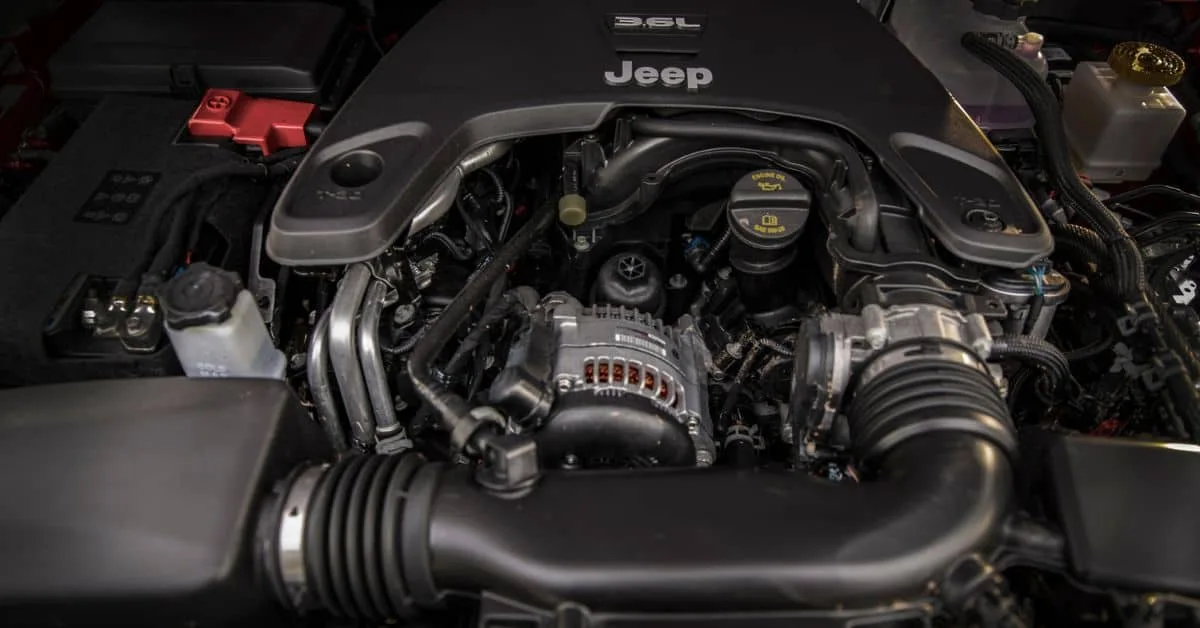
What a Misfire Is Really Telling You
An engine misfire happens when one or more cylinders fails to burn its air and fuel mixture at the right time. The computer spots it by watching crankshaft speed. Every combustion event gives the crank a small kick.
49% off Today's Exclusive Deals
Limited-time Exclusive Deals. Check current discount on Amazon.
Check Price on Amazon As an Amazon Associate I earn from qualifying purchases.When a cylinder misses, that kick disappears and the engine stumbles.
The causes fall into four buckets: ignition, fuel, compression, and sensor feedback. Bad spark plugs, weak coils, dirty injectors, low compression, or a failing crankshaft position sensor can all trigger the same code. The trick is working out which one.
Wranglers complicate things because the engine choices behave differently.
| Engine | Common Misfire Cause |
|---|---|
| 3.6L Pentastar (JK/JL) | Worn rocker arms, oil-fouled spark plugs |
| 2.0L turbo (JL) | Carbon buildup on intake valves |
| 3.8L V6 (JK base, 2007–2011) | Ignition coil failures, valve issues |
| 4.0L straight-six (TJ) | Cracked exhaust manifold, old plugs |
Each engine has quirks, but the diagnostic steps are the same. You read data, narrow down the failed cylinder or the shared cause, then test parts in a logical order.
49% off Today's Exclusive Deals
Limited-time Exclusive Deals. Check current discount on Amazon.
Check Price on Amazon As an Amazon Associate I earn from qualifying purchases.Some misfires trace back to an oil leak that fouls the plug wells. That's common on the 3.6L Pentastar. If you're seeing oil under the Jeep, check for oil leak issues before buying coils.
The light matters too. If the check engine light flashes, stop driving. A flashing light means unburned fuel is pouring into the exhaust.
That can destroy the catalytic converter in about 20 miles. A solid light is less urgent, but still worth fixing soon.
A misfire is never a coincidence. It's your engine telling you that something specific has worn out or failed. Your job is to listen, read the code, and trace it back to the source.
First Move: Read the Codes and the Freeze Frame Data
The first move is always the same. Plug an OBD-II scanner into the port under the dashboard and read the codes. Don't clear them yet.
The ECU stores both the trouble code and a freeze frame.
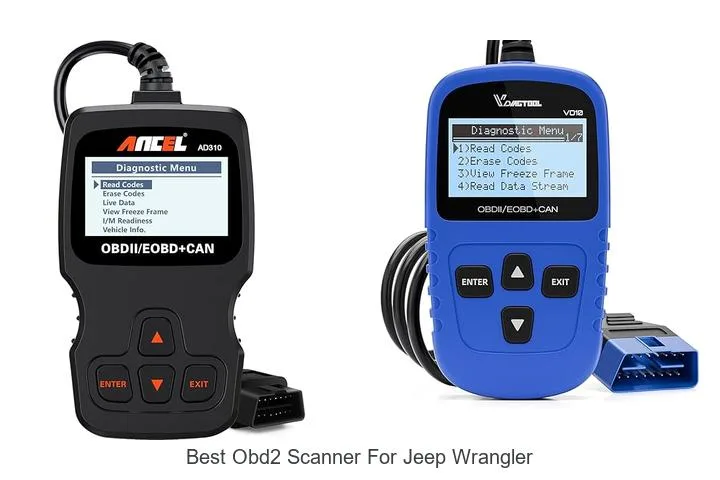
Freeze frame is a snapshot of what the engine was doing at the exact moment the misfire was detected. It records RPM, engine load, coolant temperature, vehicle speed, and fuel trim. That data tells you whether the misfire happened at idle, under load, or during cold start.
The code itself splits you into two paths. A P0300 means the computer can't pin the failure to one cylinder. That means random or multiple cylinder misfires.
A P0301, P0302, P0303, and so on points to a specific cylinder. The last digit is the cylinder number.
| Code | What It Tells You | Typical Suspects |
|---|---|---|
| P0300 | Random or multiple cylinders | Fuel pressure, vacuum leak, sensor failure |
| P0301 | Cylinder 1 misfire | Spark plug, coil, injector, compression |
| P0302 | Cylinder 2 misfire | Same list, just cylinder 2 |
| P0303 | Cylinder 3 misfire | Same list, just cylinder 3 |
| P0304 | Cylinder 4 misfire | Same list, just cylinder 4 |
| P0305 | Cylinder 5 misfire | Same list, just cylinder 5 |
| P0306 | Cylinder 6 misfire | Same list, just cylinder 6 |
On the 3.6L Pentastar, cylinders are numbered from front to back. Cylinder 1 is at the driver's side front on most models.
If you see a code plus a high long-term fuel trim, you're likely looking at a vacuum leak. If the freeze frame shows engine temperature below normal, a stuck thermostat may be part of the problem. Coolant leaks can also create misfires on cold starts because moisture finds its way into the plug wells.
Our guide on coolant leak causes covers that angle.
A stuck thermostat can leave you with a cold cabin too. The heater not working path in our troubleshooting guide is a good side read if your heat is weak.
Write down the code, the freeze frame, and the date. Then clear the code and take a test drive only if the light isn't flashing. A flashing light means stop driving, not diagnosing on the road.
The Decision Tree: Cylinder-Specific vs. Random Misfires
Your code determines your starting point. Follow the branch that matches what your scanner found.
If You Have a P0301, P0302, P0303, etc. (Cylinder-Specific)
A single-cylinder misfire means one cylinder is under-performing. That narrows the list to parts that affect that cylinder directly.
Start with the easy stuff. Swap the ignition coil from that cylinder with a coil from another cylinder. Clear the code and drive.
If the misfire moves to the new cylinder, you found a bad coil. If it stays, the coil isn't the problem. Do the same with spark plugs if you're unsure about them.
Next, check compression. A low reading on that cylinder points to piston rings, valves, or a head gasket. A wet compression test can help you separate ring wear from valve trouble.
Finally, check the injector. A clogged injector on just one cylinder is common on higher-mileage Wranglers. You may need a noid light or a fuel pressure test to confirm it.
Aggregate reviews report that on the 3.6L Pentastar, the most common single-cylinder misfire cause is a failed coil. The second is a worn rocker arm, which usually makes a ticking noise along with the misfire.
If You Have a P0300 (Random / Multiple Cylinders)
A random misfire is a shared-component problem. All cylinders are being fed bad fuel, no fuel, or no spark. Or the computer itself is misreading the crankshaft.
Suspect number one is the fuel system. Low fuel pressure affects every cylinder. Hook up a fuel pressure gauge and compare it to spec.
A weak pump or a clogged filter can cause a P0300 that appears only under load.
The next suspect is intake air. A cracked intake boot or a vacuum leak leans out the mixture on all cylinders. A smoke test is the quickest way to find these leaks.
The crankshaft position sensor can also throw a P0300 because the computer relies on it to detect misfires in the first place. If the sensor's signal is noisy, the computer sees phantom misfires.
As of 2026, aggregate owner feedback points to vacuum leaks as the leading cause of P0300 codes on the 3.6L. Ignition parts are the runner-up. Check shared systems before you touch anything.
The Troubleshooting Process: What to Check in Order
Once you know the branch, work through this sequence. It goes from cheap to expensive, and from easy to hard.
Here's what you'll need:
| Tool | Why |
|---|---|
| OBD-II scanner | Pull codes and freeze frame |
| Feeler gauge | Check spark plug gap |
| Torque wrench | Avoid stripping the head |
| Fuel pressure gauge | Test fuel delivery |
| Compression tester | Check cylinder health |
| Smoke machine | Find vacuum leaks |
Step 1: Check the basics visually.
Open the hood with the engine off. Look for loose wires, cracked connectors, oil in the spark plug wells, or obvious vacuum leaks. A torn intake boot is visible on most Wranglers without removing anything.
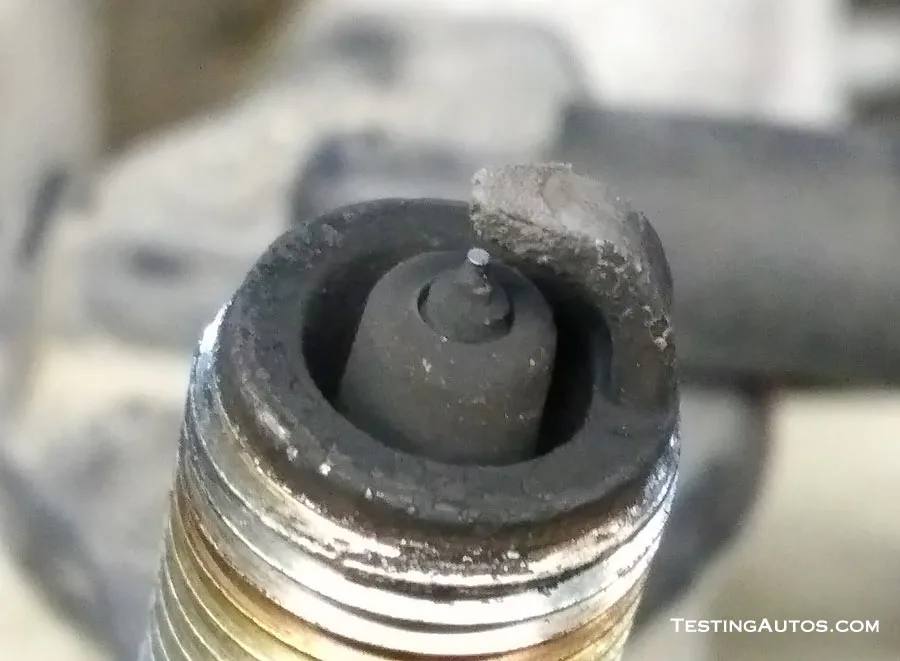
Step 2: Pull and inspect the spark plugs.
Remove the plug from the misfiring cylinder. Check the gap with a feeler gauge. The spec for the 3.6L Pentastar is 0.043 inch.
Check the tip. Carbon fouling points to a rich condition. Oil fouling points to a valve cover gasket leak.
A white, blistered tip points to a lean condition.
Step 3: Test the ignition coil.
Swap the coil to a different cylinder. Clear the code and drive. If the code follows the coil, replace it.
Step 4: Check fuel delivery.
Test fuel pressure with a gauge. Most Wrangler engines need around 50 to 60 psi at idle, depending on the model. Low pressure points to the pump or filter.
A leak-down test can catch a leaking injector.
Step 5: Run a compression test.
Remove all six plugs, disable the fuel system, and crank the engine several times. Compression should be within 15 percent across all cylinders. Low compression means the problem is mechanical, not electrical.
Step 6: Smoke test the intake.
Use a smoke machine or introduce smoke into the intake and watch for leaks. A vacuum leak can show up as a high fuel trim reading.
Step 7: Check the cooling system.
A warm engine that runs too hot can cause misfires. If the electric fan isn't running, engine temp climbs and the computer pulls timing or leans out the mixture. Our guide on cooling fan failures covers what to look for.
Step 8: Read live data.
A bidirectional scanner lets you watch misfire counts while driving. You'll see which cylinder is missing in real time, plus fuel trims and O2 sensor activity.
In our research, most Wrangler owners can complete steps 1 through 4 in under two hours. The compression test adds another thirty minutes if you've never done one. Go slow, take pictures, and label your ignition coils.
Common Mistakes to Avoid (And Why the Parts Cannon Backfires)
When a Wrangler misfires, the first instinct is to buy a full tune-up kit. That's the parts cannon. It's expensive, and it rarely fixes the root cause.
Mistake 1: Replacing all spark plugs and coils at once.
If only one cylinder is misfiring, you only need one coil. Replace them all only if they're at the end of their service interval. Otherwise, you'll spend $600 and still have a misfire if the real problem is an injector.
Mistake 2: Ignoring a flashing check engine light.
A flashing light means unburned fuel is hitting the catalytic converter. That destroys the converter fast. Stop driving and diagnose.
Mistake 3: Skipping the freeze frame.
Without it, you're guessing. The freeze frame tells you whether the misfire happens at idle, under load, or on a cold start. That changes everything.
Mistake 4: Using cheap aftermarket coils.
Aggregate reviews repeatedly show that generic coils fail within months. OEM or high-quality brands are worth the extra money.
Mistake 5: Forgetting to check oil and coolant.
A Wrangler low on oil can trigger misfire codes due to hydraulic tensioner noise. Low coolant can cause misfires when the engine runs hot. Check fluid levels before buying parts.
If the undercarriage has a history of oil leaks, sort that out first.
Mistake 6: Over-torquing spark plugs.
Aluminum heads strip threads easily. The 3.6L Pentastar needs roughly 18 lb-ft. Too much torque and you'll be pulling the head to repair thread damage.
Too little torque and the plug can blow out.
Mistake 7: Assuming the code always names the culprit.
A P0301 can be caused by a failing coil, but it can also be caused by low fuel pressure that just shows up first on that cylinder. Use live data and compression results to confirm.
Mistake 8: Clearing the code and hoping it doesn't return.
That's like taking the batteries out of a smoke detector. The misfire is a symptom. Find the cause.
The cheapest diagnostic tool you own is patience. One deliberate test tells you more than a trunk full of new parts. Even the simplest scanners can show live misfire counters.
Use that data.
Real Scenarios: Misfire Stories from Wrangler Owners
Real-world examples help you recognize your own situation. Here are three patterns that show up constantly in owner discussions.
The Pentastar with a ticking noise.
A 2015 JK owner reports a P0302, a rough idle, and a light tick that gets louder when cold. He does all the tests in order. The coil swap works, but the code returns within a month.
A compression test shows normal readings. A leak-down test finally reveals a worn rocker arm on cylinder 2. Replacing the rocker arm and lifter fixes the misfire permanently.
The lesson: ticking plus a misfire on a 3.6L points to the valve train, not ignition.
The 2.0L turbo with carbon buildup.
A 2020 JL owner reports a P0301 on a 40,000-mile engine. The spark plug is fine. The coil tests fine.
Fuel pressure is good. The dealership finds carbon buildup on the intake valves. This happens because the 2.0L uses direct injection, so fuel never touches the intake valves to clean them.
The lesson: direct-injection engines need walnut shell blasting or chemical cleaning around 60,000 miles.
The 3.8L that died in a parking lot.
A 2009 JK owner reports a P0300, then a no-start. The fuel pressure gauge shows 0 psi. The pump is fried.
This misfire wasn't ignition or compression at all. It was fuel starvation.
The lesson: a random misfire that gets worse and ends in a no-start is almost always fuel delivery.
| Scenario | Code | Root Cause | Fix Cost Range |
|---|---|---|---|
| Cold start stumble | P0301 | Oil in spark plug well | $50–$150 |
| Ticking + misfire | P0302 | Worn rocker arm | $400–$800 |
| Random shake at idle | P0300 | Vacuum leak | $100–$300 |
| Misfire under load | P0303 | Weak fuel pump | $300–$600 |
| Hot engine, random misfire | P0300 | Failing crankshaft sensor | $150–$300 |
What It Costs: Parts, Tools, and Repair Estimates
Misfire repairs range from cheap to painful. The price depends on the root cause and whether you DIY.
| Part or Service | DIY Parts Cost | Shop Cost |
|---|---|---|
| Spark plugs (set of 6) | $50–$90 | $150–$300 |
| Ignition coil (one) | $40–$120 | $150–$350 |
| Fuel injector (one) | $80–$150 | $250–$500 |
| Fuel pump assembly | $200–$400 | $600–$1,000 |
| Rocker arm replacement | $150–$300 | $800–$1,500 |
| Catalytic converter | $300–$800 | $1,200–$2,500 |
| Smoke test | n/a (DIY $50 for a smoke machine rental) | $100–$200 |
The inflator is the catalytic converter. That's why we keep telling you to stop driving on a flashing light.
Tools pay for themselves fast. A decent OBD-II scanner costs $30 to $100. A compression tester costs $30 to $50.
A fuel pressure gauge costs $40 to $60. A smoke machine rental runs about $50 per day.
If you have none of these, the tools cost less than one dealership diagnostic fee. And you'll keep them for the next problem. If you're not comfortable turning wrenches, use our guide on troubleshooting common car issues to understand what a shop should be checking.
Frequently Asked Questions
Can I drive with a flashing check engine light?
No. A flashing light means the catalytic converter is being damaged. Stop at a safe location and shut the engine off.
Have the Jeep towed or fix the immediate cause before driving.
What is the most common cause of a Jeep Wrangler engine misfire?
On the 3.6L Pentastar, it's a failed ignition coil. On the 2.0L turbo, it's carbon buildup on intake valves. On the 3.8L, it's often coil failure or an exhaust leak.
The exact cause depends on your engine.
How much does it cost to fix a Jeep Wrangler misfire?
A single spark plug repair costs about $50 to $150 if you DIY. A dealership replacement for the same part runs $150 to $300. A mechanical failure like a rocker arm can run $800 to $1,500 at a shop.
Do I need to replace all six coils if one fails?
No. Replace only the failing coil unless the others are near the end of their service life. Coils fail independently.
Replacing all six at once wastes money.
Can a bad battery cause a misfire?
Rarely, but a weak battery can cause low voltage to the coils and injectors. A low voltage misfire usually comes with other electrical problems. Charge the battery and retest before chasing parts.
Why does my Wrangler misfire only on cold mornings?
Cold weather thickens oil and shrinks plastics. Common cold-start misfire causes include weak coils, dirty plugs, coolant intrusion into the plug wells, or a failing crankshaft position sensor. The freeze frame data will confirm the conditions.
Final Verdict: When to DIY and When to Walk Away
A Jeep Wrangler engine misfire is one of the most fixable problems you'll face. The diagnostic process is logical, the tools are affordable, and most causes sit within reach of a home mechanic.
DIY if you have basic hand tools, a scanner, and the patience to work through the decision tree. You'll save $200 to $500 in labor on average. Everyone can handle a coil swap, a spark plug replacement, or a vacuum leak fix.
Walk away if you find low compression on a cylinder, a failed rocker arm you're not comfortable replacing, or if the misfire returns after all eight steps. Those jobs involve the valve train, timing, or engine internals. They need a professional with specialized tools and tolerances.
One last thought: track your freeze frame data on every scan. It builds a history that helps you spot patterns before they become expensive failures. And if your Jeep also has dash lights staying on after the repair, revisit your grounds and charge the battery before driving.
A clean electrical system keeps your new parts working.