If your Subaru Outback suspension noise has you worried, you're not alone. That clunk, creak, or rattle coming from under the car is a top complaint among owners, especially as vehicles age past 60,000 miles. Manufacturer specifications indicate that suspension components are designed to last, but real-world roads and weather take a heavy toll.
Identifying the source is the first step toward a permanent fix. Common repair records point to a handful of wear items that fail first on models from 2015 onward. Let's match your specific sound to the right component.

49% off Today's Exclusive Deals
Limited-time Exclusive Deals. Check current discount on Amazon.
Check Price on Amazon As an Amazon Associate I earn from qualifying purchases.What That Noise Actually Is: Match the Sound to the Situation
A suspension noise diagnosis starts with paying attention to the details. What you're hearing, when you hear it, and what you feel in the seat or steering wheel are all clues. A deep clunk over a speed bump feels different from a light rattle on a washboard road.
First, categorize the sound. Is it a single clunk or knock? That often points to a loose part like a sway bar link.
Is it a continuous creak or groan? That suggests a dry or worn bushing or bearing. Does it happen only on turns, or only when braking?
49% off Today's Exclusive Deals
Limited-time Exclusive Deals. Check current discount on Amazon.
Check Price on Amazon As an Amazon Associate I earn from qualifying purchases.This context is everything.
Keep in mind that brake noise is a common red herring. A high-pitched squeal that only appears when you press the pedal is a brake issue, not a suspension issue. If you're hearing a squeal when braking, that's a separate problem to address.
The Outback Suspension Noise Decision Tree
Use this workflow to narrow down the cause. Start by noting exactly when the noise occurs during your drive.
When does the noise happen?
49% off Today's Exclusive Deals
Limited-time Exclusive Deals. Check current discount on Amazon.
Check Price on Amazon As an Amazon Associate I earn from qualifying purchases.- If it clunks once over bumps or speed humps: Then suspect sway bar end links or a loose ball joint.
- If it creaks or groans during slow, tight turns: Then look at strut mount bearings or dry control arm bushings.
- If it clunks when braking or accelerating from a stop: Then the rear lower control arm bushings are a prime suspect.
- If it's a hum or growl that gets louder with speed: Then you're likely dealing with a wheel bearing, not suspension.
- If it's a metallic rattle over rough pavement: Then check exhaust heat shields first, as they mimic suspension noise.
Quick Diagnostic Guide
| Noise Type & Trigger | Most Likely Culprit | Secondary Possibility |
|---|---|---|
| Single clunk over bumps | Sway bar end link | Ball joint |
| Creak on tight turns | Strut mount bearing | Control arm bushing |
| Clunk under braking | Rear control arm bushing | Subframe bolt |
| Constant hum with speed | Wheel bearing | Tire tread noise |
| Metallic rattle on rough road | Exhaust heat shield | Loose undertray |
Front-End Culprits: Sway Bar End Links, Strut Mount Bearings, and Ball Joints
The front suspension on most Outbacks uses a MacPherson strut design. The parts that wear out and make noise are often simple and affordable.
Sway bar end links are the #1 source of front-end clunks. These small rods connect your sway bar to the strut or control arm. Their ball-and-socket joints wear out, creating play.
The classic test is to have someone rock the steering wheel left and right while you listen and feel for a clunk near the front wheel.
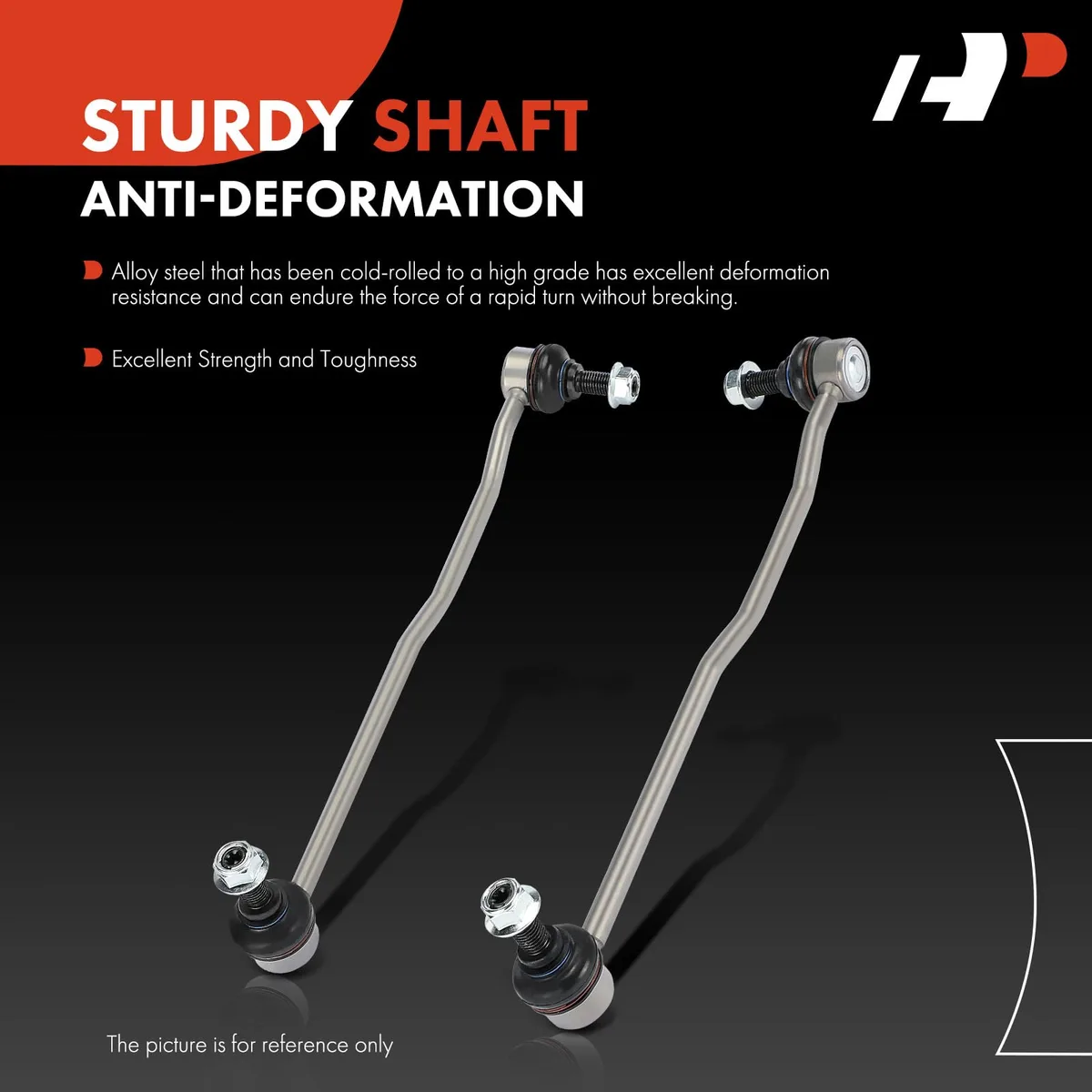
Image source: Bing (Web (fair-use with source credit))
Strut mount bearings cause a creaking or grinding noise when turning the wheel at low speeds, like in a parking lot. The bearing allows the strut to rotate with the steering. When it fails, you'll hear it most with the windows down, turning the wheel fully.
Ball joints connect the control arm to the steering knuckle. A worn ball joint can clunk over bumps and may cause vague steering. A serious failure here is a safety risk, as it can lead to loss of control.
Per NHTSA safety guidelines, any play in a ball joint warrants immediate inspection.
Rear-End Culprits: Control Arm Bushings, Subframe Bolts, and the Fake-Out Heat Shield
The Outback's rear multilink suspension has a notorious weak point: the rear lower control arm rearward bushing. This rubber bushing deteriorates, causing a clunk or knock during braking, acceleration, or when going over small bumps. Aggregate repair data shows this is a common fix on models with over 80,000 miles.
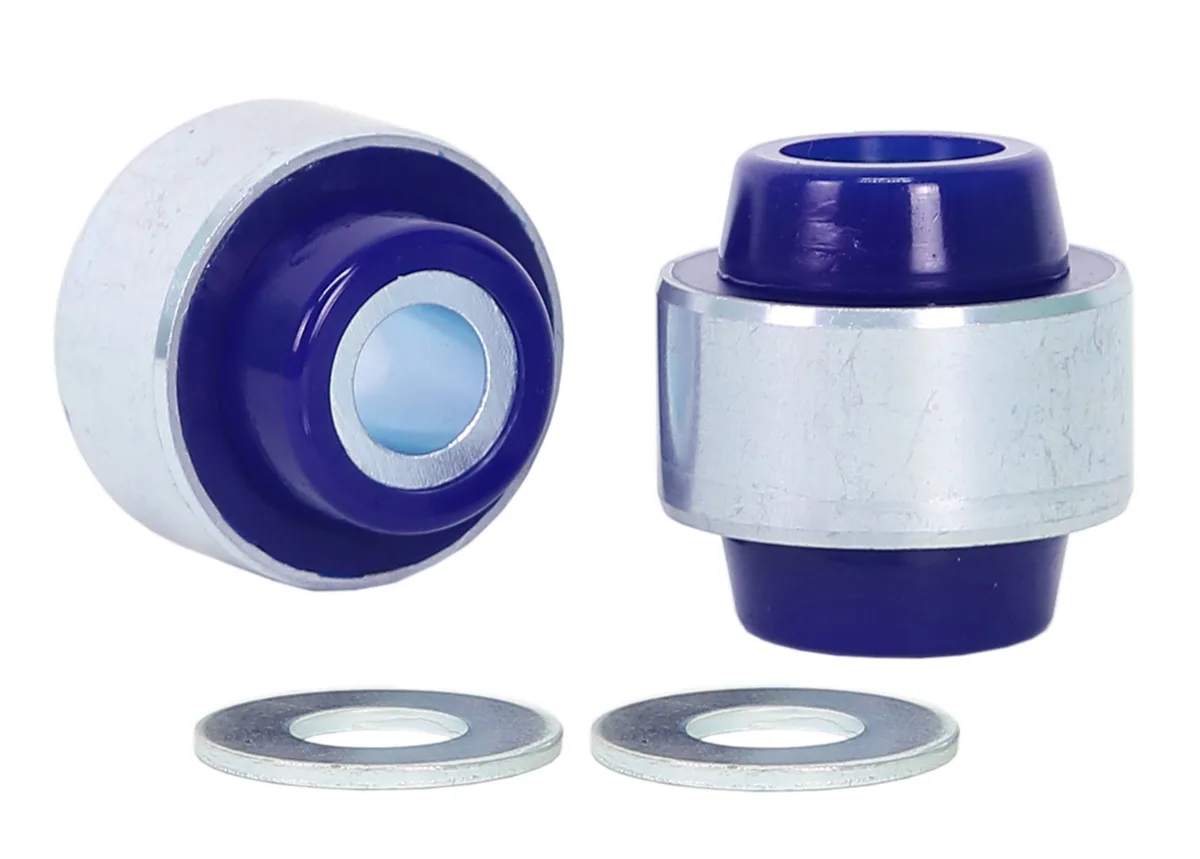
Image source: Bing (Web (fair-use with source credit))
Loose rear subframe bolts can also cause a rear clunk. The subframe holds the entire rear suspension assembly. If its mounting bolts loosen, the subframe shifts slightly under load, creating a knock.
A proper torque check with a wrench is the only way to diagnose this.
Finally, never overlook exhaust heat shields. These thin metal shields rust and rattle at specific engine RPMs or over certain road textures. They sound exactly like a loose suspension part.
Tap on them with your hand; if they're loose or cracked, you've found your fake-out noise.
Confirming the Fix Before You Order Parts: A Step-by-Step Workflow
Confirming the source before buying parts saves time and money. Follow this sequence.
- Safe Lift & Support: Always use a jack on the designated lift points and secure the car on jack stands. Never work under a car supported only by a jack.
- Visual Inspection: Look for torn rubber boots on ball joints, cracked or oozing bushings, and rust damage.
- The Shake Test: Grab the wheel at the 12 and 6 o'clock positions and shake it. Rocking indicates a bad wheel bearing. At 3 and 9 o'clock, play often points to tie rod ends.
- Pry Bar Check: With the wheel off, use a long pry bar to gently apply pressure to control arm bushings. Excessive movement or visible cracking confirms they're worn.
- The Handshake: Grab a sway bar end link and try to shake it by hand. Any noticeable clunk or play means it needs replacement.
- Post-Repair Road Test: After replacing a part, test drive over the same road section that originally caused the noise. Listen carefully.
Mistakes That Waste Time and Money
The most common error is parts-cannon diagnostics. This is when you replace sway bar links, struts, and control arms all at once because you're unsure. Start with the cheapest, most likely part first.
Ignoring rusted hardware is a huge headache. Suspension bolts in salt-belt regions often seize. Have penetrating oil and a breaker bar ready.
You may need to heat a stuck nut with a torch.
Using low-quality aftermarket parts seems like a saving but often fails within a year. For bushings and ball joints, quality matters. Check reviews for brands that last.
If your noise started after installing a lift kit, the geometry change may have stressed components or created contact points. The problem might be the lift itself.
Finally, don't confuse suspension noise with brake noise. A squeal when braking is often just worn brake pad indicators. Our brake noise diagnosis guide can help you sort that out.
And if your brake pedal feels soft or sinks to the floor, that's a separate brake system failure that needs attention now.
What to Buy, What It Costs, and When to Hire a Pro
After confirming the source, the next decision is OEM versus aftermarket. For sway bar end links and control arm bushings, quality aftermarket brands perform just as well as Subaru originals. Names like Moog and Whiteline show up repeatedly in positive owner reviews.
For strut mounts and ball joints, some Outback owners prefer sticking with OEM for fitment certainty.
Typical Parts and Labor Costs (as of 2026)
| Component | Parts (DIY) | Shop Labor | Total at a Shop |
|---|---|---|---|
| Sway bar end links (pair) | $30 to $80 | $80 to $150 | $110 to $230 |
| Strut mount bearing (front) | $50 to $120 each | $150 to $300 per side | $200 to $420 per side |
| Rear lower control arm bushing | $40 to $100 | $200 to $400 | $240 to $500 |
| Ball joint (front lower) | $40 to $90 | $150 to $250 | $190 to $340 |
| Rear subframe bolt retorque | $0 | $50 to $100 | $50 to $100 |
Prices vary by region and shop rate. Salt-belt areas often run higher labor costs because seized hardware adds time.
When to DIY: Sway bar end links are a solid first project. Most Outback owners with basic tools and a weekend morning can knock them out. You'll need a floor jack, jack stands, a socket set, and a torque wrench.
When to hire a pro: Strut mount bearing replacement requires a spring compressor, which is dangerous if used incorrectly. Rear bushing presses also need specialty tools. If you're not comfortable with either, pay the labor cost and sleep well.
Frequently Asked Questions
Why does my Outback clunk after new struts?
New struts with worn strut mount bearings will still clunk on turns. Double-check the mount bearing and its hardware. Also verify that the top strut nut is torqued to spec.
Under-torquing is a surprisingly common oversight.
Is a creaking rear suspension dangerous or just annoying?
A creaking bushing alone usually isn't dangerous short-term. But it signals deterioration. If the bushing collapses fully, it changes your alignment and affects braking stability.
Get it inspected within the next few weeks.
Can I drive with a bad sway bar end link?
Yes, technically. Your car will still steer and stop. But the sway bar won't control body roll properly.
In emergency maneuvers, the car will lean more than designed. It's a cheap part. Replace it soon.
Why does my Outback make noise only in cold weather?
Rubber bushings stiffen in cold temperatures. A bushing that's marginal in summer may groan loudly in winter. This is especially common with the rear lower control arm bushings.
Warm weather often quiets it down until the part fully fails.
How do I know if it's suspension noise or brake noise?
Brake noise (squeal, grind, pulse) changes with braking force and happens only when you press the pedal. Suspension noise happens over bumps, turns, or road irregularities regardless of braking. If you hear grinding while driving but not braking, it's more likely a wheel bearing.
A thorough brake noise guide can help you tell them apart.
Should I get a wheel alignment after replacing suspension parts?
Yes. Anytime you replace a control arm, ball joint, strut, or bushing, the geometry shifts. Even if it drives straight, toe and camber angles are likely off.
Plan on a four-wheel alignment, typically $100 to $160, as part of the total repair cost.