The Tesla Model 3 door handle problem usually shows up in one of three ways: the handle stays flush, it presents but won't open, or it sticks out and won't retract. The worst part is that the fix is completely different for each scenario.
As of 2026, aggregate owner reports and Tesla service bulletins point to three main culprits: frozen mechanisms in cold weather, a weak 12V battery, and a failed door handle actuator. The National Highway Traffic Safety Administration sets latch retention standards under FMVSS 206, and Tesla's design complies. That's cold comfort when your car looks brand new and won't let you in, so let's walk through the symptom triage first.

49% off Today's Exclusive Deals
Limited-time Exclusive Deals. Check current discount on Amazon.
Check Price on Amazon As an Amazon Associate I earn from qualifying purchases.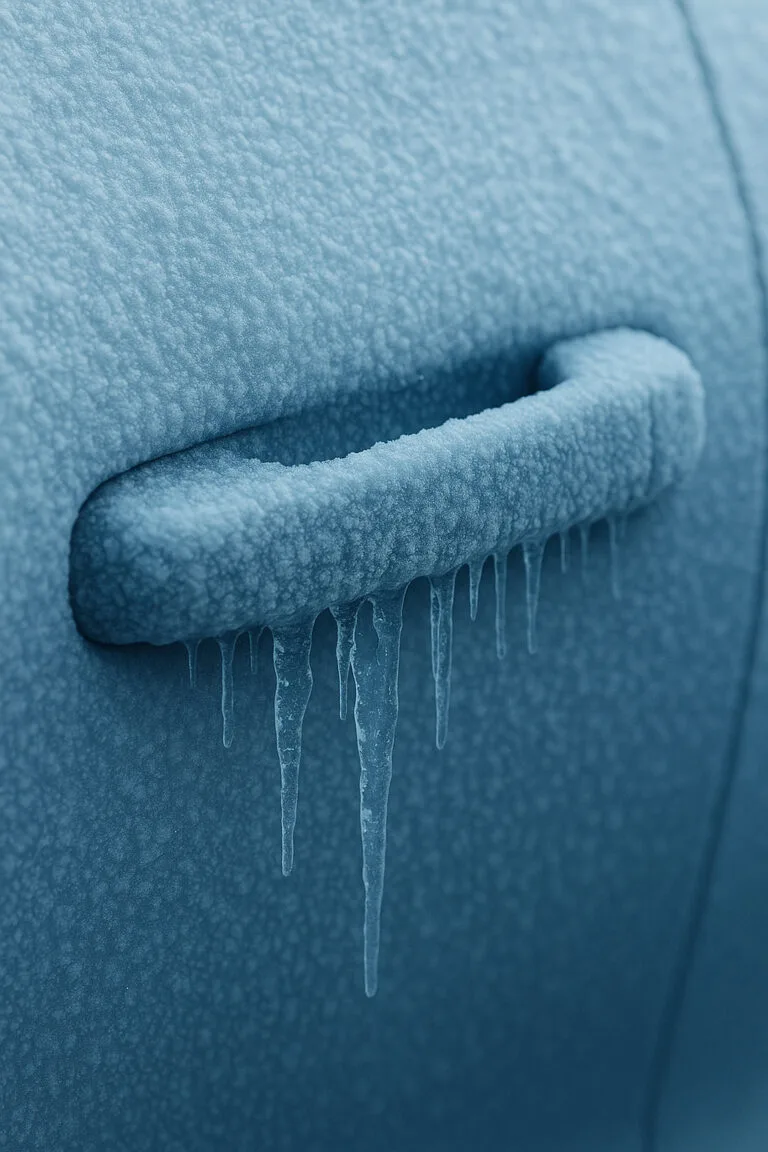
Image source: Bing (Web (fair-use with source credit))
Quick Answer
A Tesla Model 3 door handle problem usually means one of three things. Frozen ice, a dead 12V battery, or a failed actuator. Check if the window drops when you pull.
49% off Today's Exclusive Deals
Limited-time Exclusive Deals. Check current discount on Amazon.
Check Price on Amazon As an Amazon Associate I earn from qualifying purchases.Listen for a motor hum. No sound means no power. Use the front manual release to get inside.
First, What Exactly Is Happening? A Quick Symptom Triage
Before we get into fixes, let's identify exactly what your car is doing. The symptom tells you which branch of the decision tree you're on. Use this quick triage guide, then jump to the matching fix in the next section.
| What You See | Most Likely Cause | Where It Leads |
|---|---|---|
| Handle never presents | 12V battery dead, car asleep, phone key not connecting | Decision Tree |
| Handle presents, door stays shut | Frozen latch, failed actuator, broken cable | Decision Tree |
| Handle sticks out, won't retract | Moisture freezing, broken spring, debris | Decision Tree |
| Clicks or whirs but door won't move | Actuator gear stripped, latch seized | Decision Tree |
| Interior button works, outside doesn't | Handle harness corrosion, actuator motor | Decision Tree |
If your handle never presents, the car didn't wake up. The Model 3's handles are electronically driven, so the system needs enough 12V power to extend them. A phone key sitting in your pocket often causes a delay, but no presentation at all usually means the low-voltage battery is too weak to boot the door controller.
If the handle presents but the door still won't open, you're dealing with a mechanical or electrical failure past the handle itself. The latch could be frozen, the actuator motor could be dead, or the release cable could be stretched. That's a different repair path entirely.
49% off Today's Exclusive Deals
Limited-time Exclusive Deals. Check current discount on Amazon.
Check Price on Amazon As an Amazon Associate I earn from qualifying purchases.A handle that extends and then stays out is almost always moisture and ice. Water gets into the pivot, freezes, and locks the mechanism in place. It's annoying, but it's also the easiest fix.
Warm water or de-icer usually resolves it within minutes.
The last common symptom is an electronic click with zero movement. That singular sound tells you the actuator is getting power, but the gear or latch isn't moving. It's a mechanical failure, not a battery problem.
The Decision Tree: Frozen Handle, Dead 12V Battery, or Failed Actuator?
Now that you've triaged the symptom, here is the decision framework. Answer these four questions in order, and you'll isolate the fault within minutes.
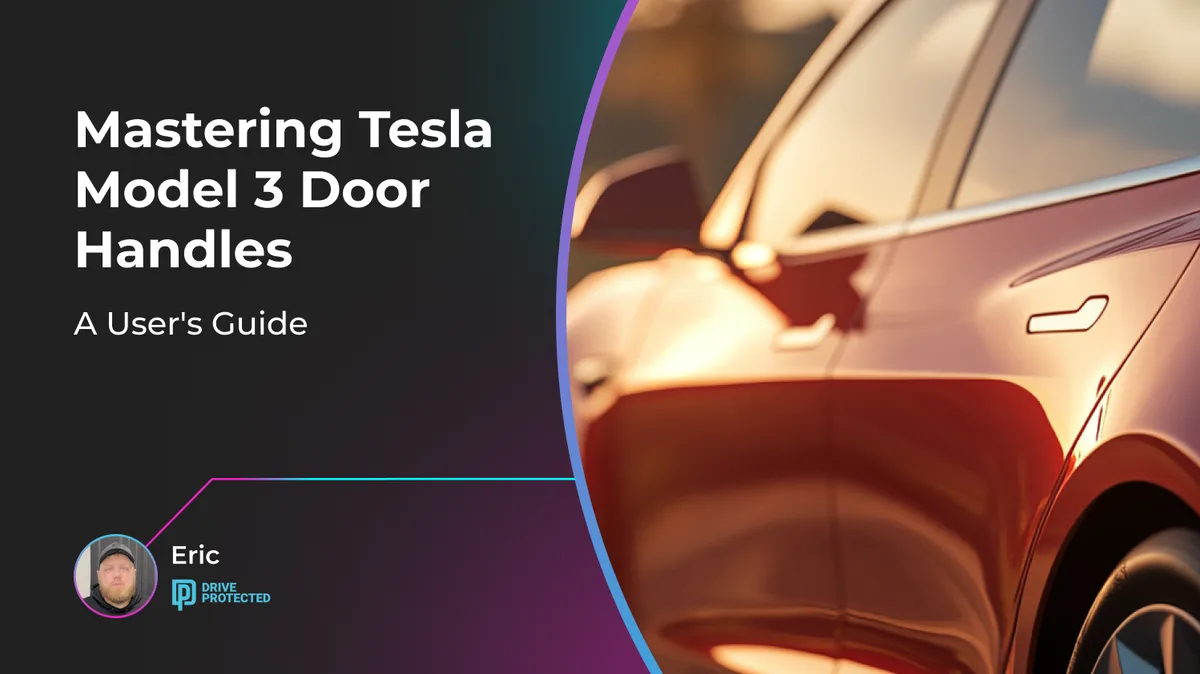
Image source: Bing (Web (fair-use with source credit))
Question 1: Is the temperature near or below freezing?
If yes, treat it as ice first. It might feel like a total failure when it's actually just water frozen in the pivot. This is the cheapest and fastest fix, so always rule it out first.
If it's above 40°F and dry, skip this branch.
Question 2: Does the car respond to your phone key or the app?
Open the Tesla app. Does it show the car awake? Can you trigger the flash or honk?
If no, the car is in deep sleep or the 12V battery is flat. The handles won't present because they're electrically actuated. The fix is waking the vehicle or bypassing the 12V entirely.
Jump to the frunk trick in the next section.
Question 3: Does the handle present but the door feel locked?
Press the handle and watch the window. If the window drops a finger's width, the car recognizes you and is trying to open. The failure is in the latch, the actuator rod, or the cable.
If the window doesn't drop, the car hasn't processed the request. That points to the door control module or a worn harness.
Question 4: Do you hear a gear click when you pull?
A single click means power is reaching the actuator. But if the door stays shut, the internal gear is stripped or the latch is seized. This is a parts replacement job, not a software or battery issue.
That's the whole tree. Now let's get into how the system works, then the step-by-step fixes.
How Model 3 Handles Actually Work (and Why They Fail in Real Weather)
The Model 3 uses fully electronic door handles. There is no physical rod connecting the handle to the latch. Instead, a small electric motor extends the handle when the car unlocks.
When you pull it, that motion triggers a switch, and the latch releases electronically.
That design is why the system is vulnerable in three specific ways.
First, the 12V battery does all the heavy lifting. If that battery is weak, the door controller can't extend the handles or energize the latch. The car can still look "asleep" while the main battery has plenty of charge.
In our research, this is the most common single cause of the Tesla Model 3 door handle problem. When the 12V battery drops, everything from the door handles to a weak horn starts acting up.
Second, the handle sits flush against the door skin. Rain and melted snow find their way into the pivot gap. Below 32°F, that water expands into ice and locks the handle solid.
If the glass is frozen to the weather stripping, you're dealing with a stuck window before the handle even matters.
Third, the front doors include a manual release cable. It attaches to the latch directly, bypassing the motor. This is your absolute fallback when the battery is dead.
The rear doors don't have this cable under normal conditions, which is why Tesla fit a separate emergency release inside the rear door pockets. Tesla's owner documentation lays out both release paths clearly.
The Highland refresh (2024 onward) uses the same handle philosophy but updated internals. Aggregate reviews report fewer early-life failures, but ice and 12V battery problems still show up in cold climates.
The key takeaway? Know which release path still works when everything else fails. Your front cable is mechanical, and nothing can take that away from you.
Step-by-Step Fixes for Each Branch (Including the Frunk Jump-Start Trick)
Here's where we fix things. Each fix maps to a branch in the decision tree, so jump straight to the one that matches your symptom.
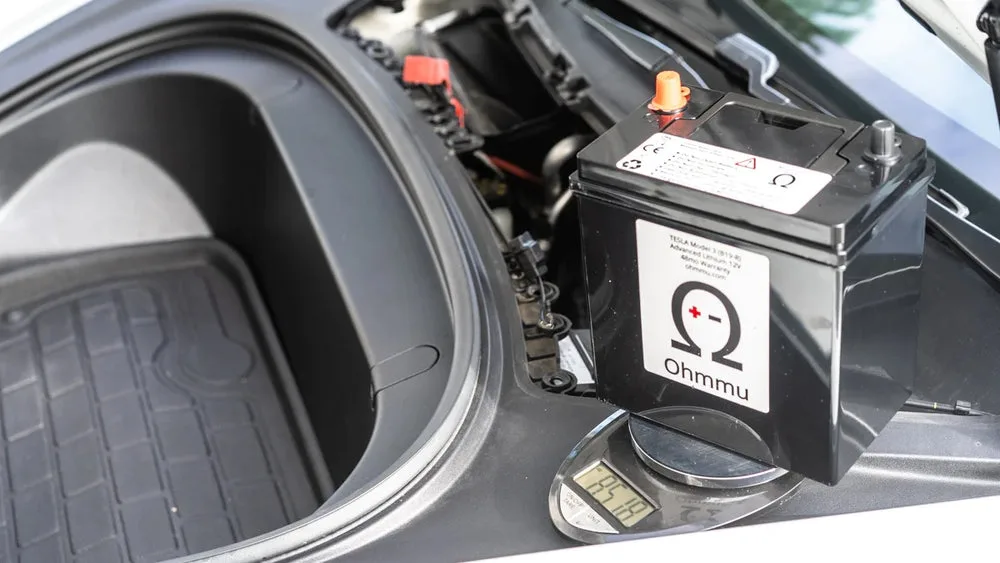
Image source: Bing (Web (fair-use with source credit))
Fix 1: Frozen handle (the ice branch)
Open the Tesla app and use the heater system to warm the cabin. Set the temperature to maximum and turn on the front defroster. Even a minute of heat warms the door glass enough to soften the ice.
If you're outside the car, pour water at 100 to 120°F over the handle. Not boiling water. Boiling water can crack the glass or warp the paint.
De-icer spray works even faster. Use several passes, then press the handle firmly once. Don't hammer it.
The ice will shear.
Fix 2: Dead 12V battery (the no-power branch)
Every Model 3 has a hidden frunk access panel. Remove the small tow-hook cover on the front bumper nose cone. Inside, you'll find two wires.
Connect a 12V booster pack to them, and the car wakes instantly.
That gives you enough power to pop the frunk, where the 12V battery lives. From there, you can jump-start the low-voltage system properly. The important thing is knowing the procedure before you need it.
A locked car with a flat battery is the most common emergency call Tesla Roadside receives.
Fix 3: Actuator failure (the click-but-no-move branch)
Use the front-door manual release. It's a small tab inside the door speaker grille, near the switch. Pull it toward you, and the latch releases mechanically.
It won't hurt anything.
Once you're inside, lower the window using the door switch. If that fails too, you have a power window that won't move, which is a separate electrical issue.
Fix 4: Stuck extended handle
Spray de-icer directly into the gap where the handle meets the door. Work it back and forth gently. If it doesn't move, it's a broken spring, not ice.
Make a service appointment.
DIY vs Tesla Mobile Service: What It Costs and When to Stop Guessing
Some Tesla Model 3 door handle problems are a five-minute DIY fix. Others need a technician. Here's how to know which you're facing, and what each path actually costs as of 2026.
The warranty shortcut first.
Every Model 3 still under Tesla's bumper-to-bumper warranty (4 years, 50,000 miles in the US) has door handles covered. That includes the actuator, latch assembly, wiring harness, and software. Call Tesla Mobile Service through the app.
They'll come to your driveway, replace the faulty part, and leave.
DIY if you're handy.
Replacing the actuator motor is genuinely doable at home. You'll remove the inner door panel, unclip the wiring connectors, and swap a small motor assembly. The part runs $60 to $200 aftermarket.
Total time: 45 to 90 minutes.
Call a pro if you see these signs.
A corroded connector, a stretched manual release cable, or a misaligned latch needs proper diagnosis. The same goes for any intermittent issue that sometimes works. Intermittent faults are usually harness or module problems, not a failed motor.
That's the kind of safety-critical failure you want a professional to inspect.
| Option | Cost Estimate | Time | Skill Level |
|---|---|---|---|
| DIY actuator swap | $60-$200 parts | 45-90 min | Intermediate |
| Tesla Mobile Service (under warranty) | $0 | 30-60 min | None needed |
| Tesla Mobile Service (out of warranty) | $150-$400 | 30-60 min | None needed |
| Dealership repair | $200-$500 | Same day | None needed |
Our honest take? If the car is under warranty, don't DIY. Let Tesla eat the cost.
If it's out of warranty and you're comfortable with a door panel, the actuator swap is a solid Saturday project. Anything intermittent? Hand it to a pro.
Common Mistakes That Turn a Minor Handle Problem into a Big Repair
The handle is stuck and your screwdriver looks like the right answer. Stop right there. Prying on a flush handle almost always scratches the paint and bends the trim.
That turns a five-minute de-icing job into a $300 bodywork bill.
Our research shows the most damaging move is boiling water. It can crack the side glass or warp the door skin. Warm water works just as fast and carries none of that risk.
Another classic is pulling the interior manual release with panic-level force. The cable is sturdy, but the attachment clip is plastic. Yank it hard enough and you'll snap the clip.
That means a new door latch assembly instead of a simple battery recharge.
People also skip the 12V battery when troubleshooting. If it's weak, the handles will keep acting up even after you replace the actuator. Test the battery first, because it's cheap and it rules out the most common cause.
Finally, avoid petroleum-based lubricants like WD-40. They thicken in cold weather and attract dust. Use a silicone-based product if you must lubricate, or leave it dry per Tesla's service guidance.
Frequently Asked Questions
Why won't my Tesla Model 3 door handle present?
The most common cause is a weak 12V battery. The handles are electronically actuated, so they won't extend without enough low-voltage power. Try waking the car with the app or using the frunk access wires.
If it's above freezing and the battery is healthy, check the actuator motor.
Can I open a Tesla Model 3 if the 12V battery is completely dead?
Yes. Remove the tow-hook cover on the front bumper and connect a jump pack to the two exposed wires. That powers the frunk latch so you can access the 12V battery.
The front doors also have manual release cables inside for entry.
How do I open a Tesla Model 3 from the outside with a dead battery?
Use the front bumper wires to power the frunk, then access the 12V battery. Once you have voltage, the door handles can present normally. If you're already inside, use the front manual release cable near the door switch.
Is the door handle covered under warranty?
Yes. Tesla's bumper-to-bumper warranty covers door handles for 4 years or 50,000 miles. That includes the actuator, latch, wiring, and software.
Schedule a mobile service appointment through the app and Tesla will fix it in your driveway.
How do I thaw a frozen Tesla Model 3 door handle?
Use warm water, not boiling water. Pour it gently over the handle seam, or use a de-icer spray. You can also turn on the cabin heater through the app to warm the door.
Never pry the handle with a tool.
Can I replace the door handle actuator myself?
Yes, if you're comfortable removing the inner door panel. The part costs $60 to $200 aftermarket, and the job takes about an hour. Just confirm your car is out of warranty first, because Tesla will do it for free while covered.