There's nothing quite like stepping into a cold Model Y and seeing that amber tire pressure warning glowing on the screen. It's one of the most common reasons owners visit Tesla forums, and the "Tesla Model Y tire pressure problem" is usually not a problem at all. It's a notification that a sensor read a pressure drop, and it needs your attention.
Manufacturer specifications call for 42 psi (290 kPa) when the tires are cold. That's higher than most traditional cars, and it surprises a lot of new EV owners. As of 2026, Tesla has kept that spec consistent across Model Y trims.

49% off Today's Exclusive Deals
Limited-time Exclusive Deals. Check current discount on Amazon.
Check Price on Amazon As an Amazon Associate I earn from qualifying purchases.The good news is that most warnings are simple to resolve with an air pump and a few minutes of your time. Let's walk through what's actually happening and exactly what to do.
Why Your Model Y Tire Pressure Warning Is On
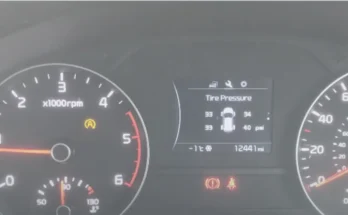
Your Model Y's Tire Pressure Monitoring System (TPMS) is a direct sensor system. Each wheel has a sensor that reads actual pressure and transmits it to the car's computer. When a reading drops roughly 25% below the placard pressure, around 31 to 32 psi, the warning triggers.
The causes fall into three main buckets:
49% off Today's Exclusive Deals
Limited-time Exclusive Deals. Check current discount on Amazon.
Check Price on Amazon As an Amazon Associate I earn from qualifying purchases.- Temperature drops. Cold weather contracts the air inside the tire. A 10°F drop reduces pressure by about 1 psi. A 30°F overnight swing can easily drop you from 42 psi to 39 psi.
- A slow leak. A nail, screw, or a damaged tire bead lets air escape gradually over days or weeks. These are real problems that need a repair.
- Recent tire service. If you just had tires rotated, replaced, or the wheels swapped, the sensors might not have re-learned their positions, or a sensor got damaged during mounting.
Here's how to tell which one you're dealing with. Check the live pressure readings on your Tesla mobile app or the vehicle's touchscreen. If all four tires are low by similar amounts, it's almost certainly temperature-related.
If only one tire is significantly lower than the other three, you've got a leak.
The One Rule That Confuses Everyone: Cold PSI vs. Hot PSI
The single biggest source of confusion is "cold tire pressure." Tesla's 42 psi spec assumes the tires haven't been driven for at least three hours or have been sitting overnight. That's the baseline.
Once you drive, the tires heat up from friction and road contact. The air inside expands. Hot pressure readings can be 3 to 5 psi higher than cold readings.
49% off Today's Exclusive Deals
Limited-time Exclusive Deals. Check current discount on Amazon.
Check Price on Amazon As an Amazon Associate I earn from qualifying purchases.That's completely normal.
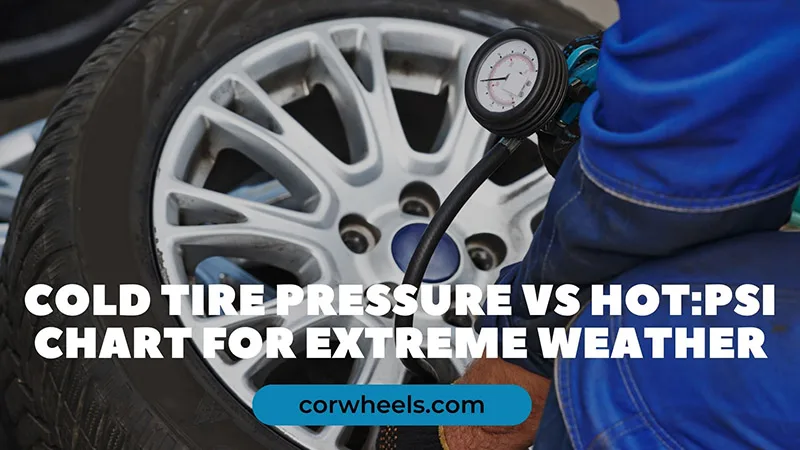
Image source: Bing (Web (fair-use with source credit))
Here's the practical breakdown:
| Condition | Expected Reading | Action |
|---|---|---|
| Cold overnight, before driving | Exactly 42 psi | None, you're good |
| After 30 minutes of highway driving | 44 to 47 psi | None, this is normal |
| Cold morning after a 20°F drop | 39 to 40 psi | Inflate to 42 psi |
| One tire at 35 psi while others read 42 psi | Leak suspected | Inspect and repair |
The golden rule is to only set pressure when the tires are cold. If you fill them to 42 psi while they're hot, they'll drop to roughly 37 to 38 psi once they cool down. That's how you end up chasing the warning all week.
Aggregate user reports confirm that owners who chase hot readings create more problems than they solve. Check the pressure first thing in the morning, or after the car has been parked for several hours. That's the only number that counts.
Step-by-Step Troubleshooting: Cold Snap or Real Leak?
You need to decide if this is a false alarm or a real issue. Here's a workflow that takes about five minutes.
Step 1: Check the current readings. Open the Tesla app and look at the tire pressure tile. Or go to Controls, then Service, then Tire Pressure on the touchscreen. Compare the four readings.
Step 2: Apply the if/then logic.
- If all four tires are between 38 and 41 psi and it's cold outside, that's a temperature issue. Inflate all four to 42 psi and move on.
- If one tire is 5 or more psi lower than the others, or below 35 psi, it's a leak. Inspect the tire before driving.
- If a tire is below 25 psi, do not drive on it. Call Tesla Roadside Assistance.
Step 3: Inspect for visible damage. Look at the low tire's tread and sidewall. Check for a nail, screw, a bulge, or a cut. If you see a puncture, mark its location with chalk.
Step 4: Decide.
- No visible damage and pressure above 30 psi? Inflate to 42 psi, then watch the reading over the next 24 hours.
- Visible damage or pressure below 30 psi? Don't drive. A sidewall bulge or a large puncture is a blowout risk.
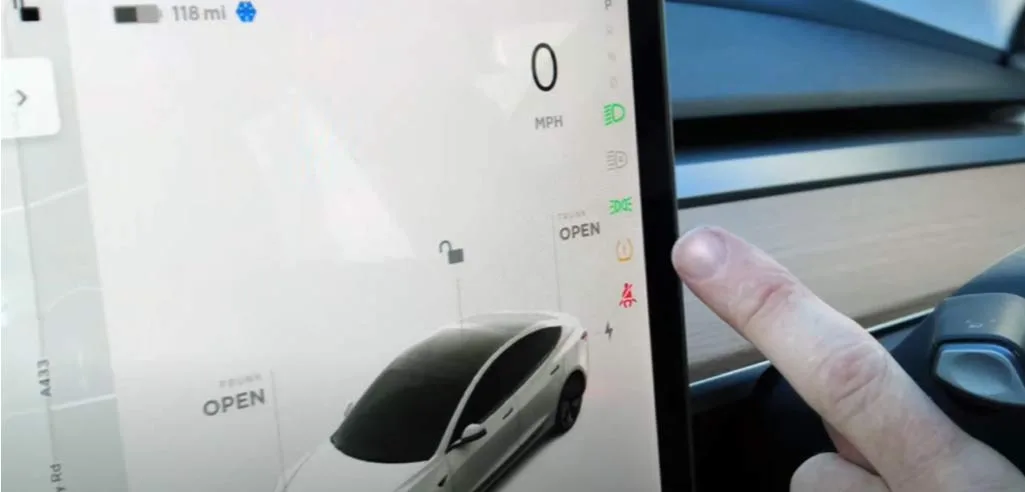
Image source: Bing (Web (fair-use with source credit))
If the pressure holds after 24 hours, you likely caught a temperature fluctuation. If it drops again, you have a slow leak that needs professional repair.
Fixing It Yourself: Inflating, Resetting TPMS, and Knowing When to Stop
Inflating a Model Y tire is straightforward, but a few details make it easier.
What you'll need:
- A portable 12V or USB tire inflator, or a gas station air pump
- A digital tire pressure gauge (optional but helpful for verification)
- The Tesla mobile app for live readings
The inflation process:
- Park on a level surface. Unscrew the valve stem cap on the tire.
- Attach the air hose firmly. Listen for a hiss. If you hear escaping air, reseat the hose.
- Add air in short bursts. Stop when the gauge or app reads 42 psi.
- Replace the valve cap snugly. Repeat for the other three tires.
Resetting the TPMS. The Model Y doesn't have a manual reset button. The system updates automatically once you drive. After inflating, take the car for a short drive above 15 mph for a few minutes.
The warning should clear on its own.
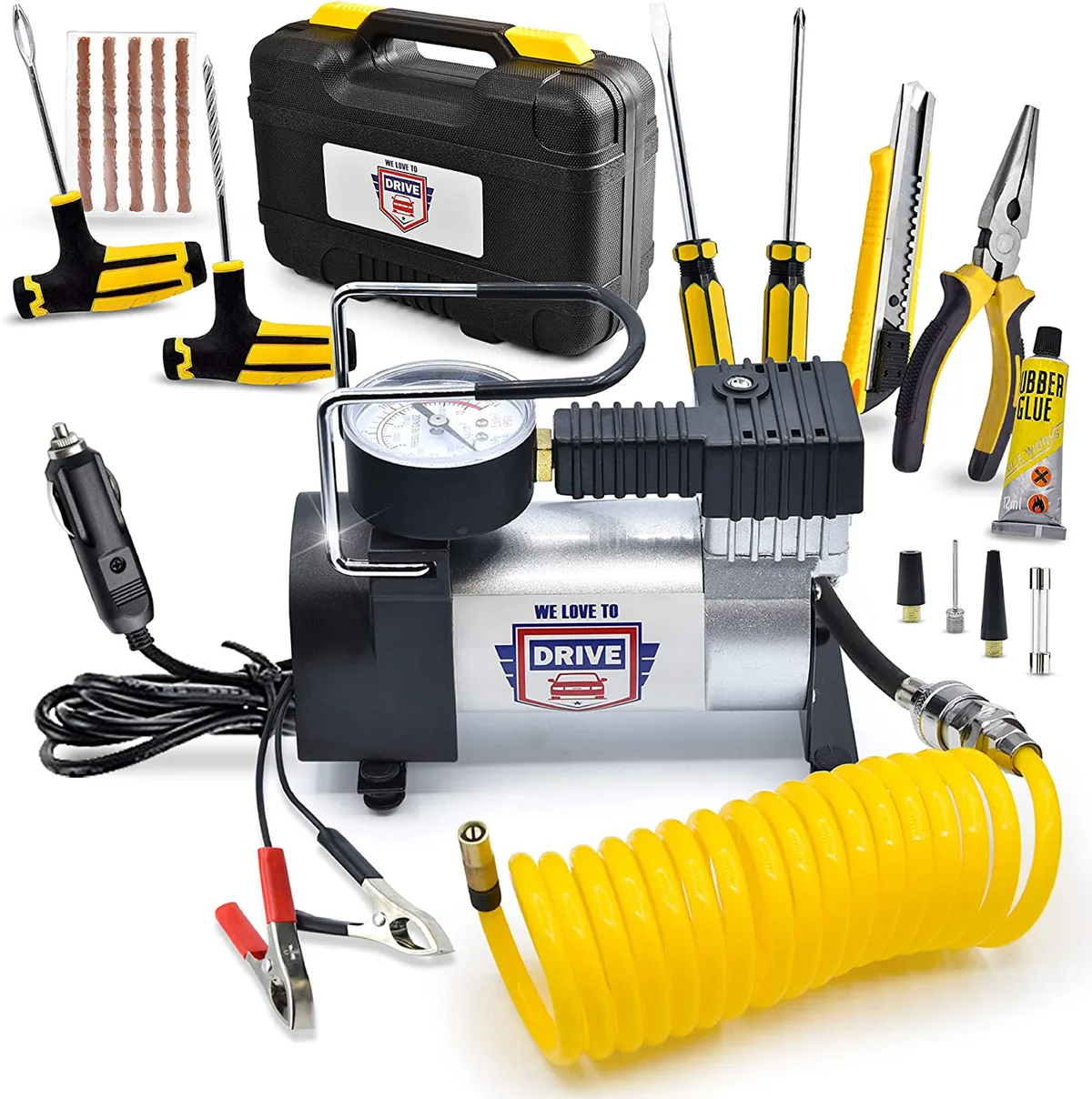
Image source: Bing (Web (fair-use with source credit))
When to stop and get a pro:
- The tire won't hold air above 35 psi, even after filling.
- You see the sidewall bulging or the cord is exposed.
- The TPMS sensor itself is damaged or the valve stem is cracked.
- A tire shop measured the puncture and it's larger than 1/4 inch in the tread.
Your Model Y doesn't come with a spare tire. It includes a repair kit with sealant and an inflator. That's fine for emergencies and getting you to a shop, but it's not a permanent fix.
If you use the sealant, the tire must be professionally cleaned and repaired afterward. Some shops charge extra for removing sticky sealant.
Common Mistakes That Make the Warning Come Back
Getting the warning to clear is one thing. Keeping it away is another.
Overinflating because of hot readings. You fill to 42 psi after driving. Once the tires cool, they're sitting at 38 to 39 psi. The warning returns the next cold morning.
Always use the cold baseline.
Ignoring a slow leak. Some owners top off the tire every week and tell themselves it's fine. A tire losing 2 to 3 psi per week has a leak. It could be a nail, a corroded wheel bead, or a damaged valve stem.
Every one of those gets worse with time. If you're ignoring this, you might also be missing issues with other critical systems like grinding brakes, which compounds the risk.
Using a faulty gauge. Gas station gauges are frequently inaccurate. If you're consistently chasing the warning, test your gauge against a second one.
Not checking after tire rotation. When tires are rotated, the TPMS sensors move with the wheels. The car figures out the new positions after a short drive. But if a shop damages a sensor during mounting, you'll get a warning immediately.
Assuming the warning always means a leak. Cold weather is the most common trigger, especially in fall and winter. A sudden 25°F temperature drop will trigger the warning in roughly half of Model Y owners. It's normal.
Driving on an underinflated tire. A tire at 30 psi can still drive, but it's unsafe. Underinflation causes excessive heat buildup, poor handling, and can lead to a blowout. Don't ignore it for a week.
Winter, Road Trips, and Heavy Loads: Real-World Scenarios
Cold snaps are the biggest trigger for false warnings. A 20°F drop overnight takes your tires from 42 psi down to about 40 psi. That's enough to light up the TPMS warning.
If you park in a heated garage, the warning might appear after you pull out into freezing air. The sensors read the temperature change quickly. It clears once the tires warm up during driving.
Road trips bring the opposite problem. Highway driving heats tires significantly, and pressures rise 4 to 6 psi above the cold baseline. Resist the urge to let air out of a hot tire.
When it cools down, you'll be underinflated again.
Heavy loads change the equation too. If you're packed full of passengers and luggage, the tires work harder. Tesla's placard on the B-pillar still calls for 42 psi for most situations.
For maximum load details, check your owner's manual.
Before a long trip, do a quick walkaround:
- Check cold pressure the morning of departure.
- Look for cuts, bulges, or embedded nails.
- Make sure your portable inflator is charged.
- Fix any slow leak before you leave.
High altitude changes ambient pressure, but you don't need to adjust tire pressure for elevation. The tire's internal pressure stays balanced. Don't add air just because you're driving through mountains.
Properly inflated tires are a safety system. If you're heading out and already dealing with other car troubles, don't ignore them. Give the brakes a quick check before you load up.
The National Highway Traffic Safety Administration requires TPMS in all new vehicles, and the Model Y's system is designed to alert you before pressure becomes dangerous.
Frequently Asked Questions
Why does my tire pressure warning come on when it gets cold?
Cold air contracts. Every 10°F drop reduces tire pressure by about 1 psi. A 30°F overnight swing pushes a cold tire from 42 psi down to 39 psi, which triggers the TPMS warning.
It's physics, not a leak.
Is 42 psi too high for my Model Y?
No. Tesla specifies 42 psi cold for the Model Y to support the vehicle's weight, maximize range, and promote even tread wear. EVs are heavier than traditional cars and need more pressure.
Trust the placard on the B-pillar.
Can I drive on a tire with 35 psi?
You can, but you shouldn't drive far. Below 35 psi, the tire runs hotter, wears faster on the edges, and handles badly. Inflate to 42 psi as soon as you can.
If one tire keeps dropping to 35 psi, you've got a leak.
How long does it take for the TPMS warning to reset?
After inflating to 42 psi, drive for a few minutes above 15 mph. The system updates in real time and the warning clears on its own. There's no manual reset button.
If it stays on, a sensor may need professional diagnosis.
What if my tire pressure warning still doesn't go away?
Check the actual pressure with a trusted gauge. If the tires are at 42 psi and the warning persists, the TPMS sensor may be failing or the wheel may have a slow leak. A tire shop can test the sensor and verify the repair.
Or schedule Tesla mobile service if the car is under warranty.