That little yellow light on your dash can ruin a good day fast. If you're staring at a Jeep Wrangler check engine light, the first question isn't "what's wrong?" It's "how do I handle this without getting ripped off?" We've got you covered.
Modern Wranglers use the OBD-II standard (SAE J1979) to report faults through standardized diagnostic trouble codes. As of 2026, that means any owner with the right scanner can pull the exact code a dealership would read, and most of the time the fix is simpler than you'd expect. Let's walk through this step by step.

49% off Today's Exclusive Deals
Limited-time Exclusive Deals. Check current discount on Amazon.
Check Price on Amazon As an Amazon Associate I earn from qualifying purchases.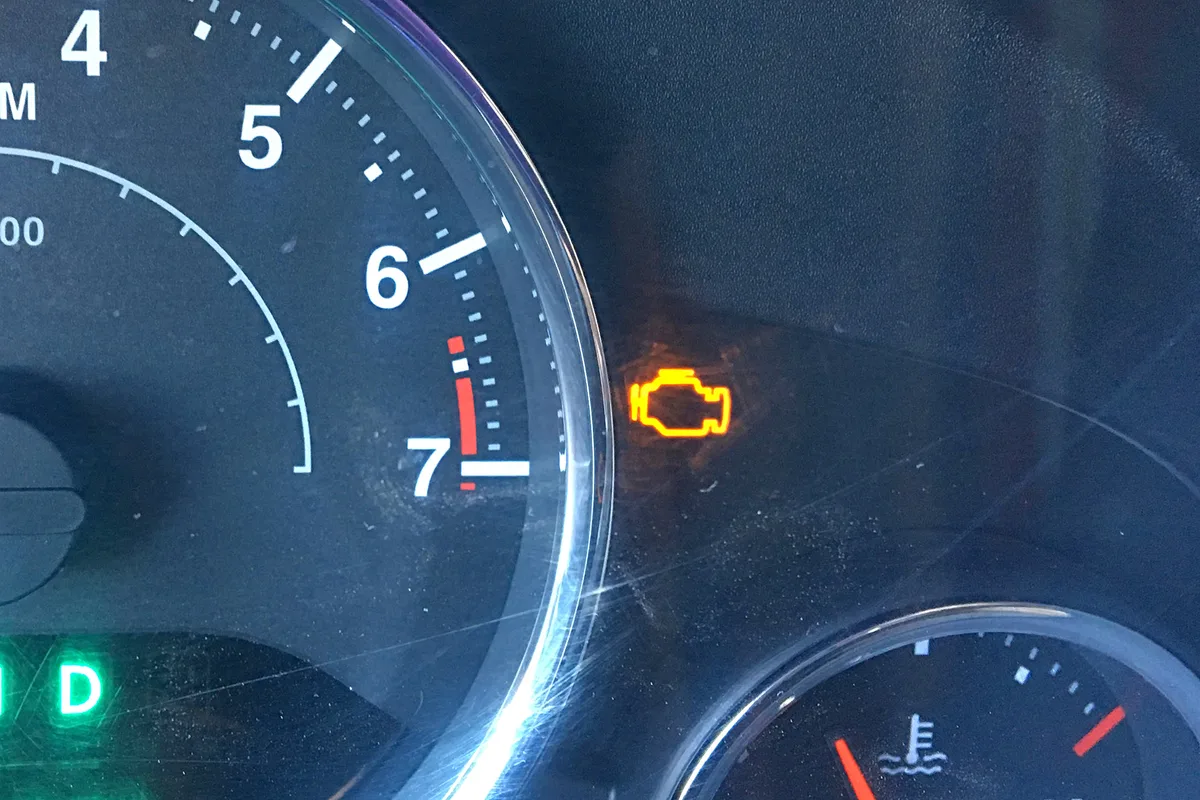
Image source: Bing (Web (fair-use with source credit))
Quick Answer
A solid check engine light on a Jeep Wrangler means a stored fault code. Your Jeep is safe to drive, but scan it soon. A flashing light means active misfire damage is happening.
49% off Today's Exclusive Deals
Limited-time Exclusive Deals. Check current discount on Amazon.
Check Price on Amazon As an Amazon Associate I earn from qualifying purchases.Pull over and shut the engine off immediately. That's the whole difference.
Solid or Flashing: What the Light Means for Your Wrangler
Let's make the distinction crystal clear, because it changes everything that follows.
A solid check engine light means the engine control module (ECM) detected a problem and logged a code. The engine still runs in a safe fail-safe mode. You can drive to work, but plan a diagnosis soon.
Ignore it for weeks, and a small issue snowballs into a big bill.
49% off Today's Exclusive Deals
Limited-time Exclusive Deals. Check current discount on Amazon.
Check Price on Amazon As an Amazon Associate I earn from qualifying purchases.A flashing check engine light is the Wrangler screaming at you to stop. It usually means a severe misfire is dumping raw fuel into the exhaust and overheating the catalytic converter. That's how a $30 ignition coil repair turns into a $1,500 converter replacement.
Park it. Shut it down. Get a tow if needed.
A third scenario matters too: the light comes on, the Wrangler runs fine, then the light turns off by itself. That's usually an intermittent sensor or a loose gas cap. The code stays stored in the ECM, so scanning reveals the fault history.
Here's the rule of thumb:
- Solid light, smooth idle, no power loss = scan when convenient
- Solid light, rough running or poor power = scan soon, limit driving
- Flashing light, especially under load = stop immediately, call a tow
Off-road, that calculus shifts. A solid light with no performance change is often fine to finish the trail. A flashing light means the engine is actively damaging itself.
Stop and investigate.
Reading the Codes: OBD-II Scanners and the JL/JT Security Gateway
The Wrangler's OBD-II port sits under the dashboard, left of the steering column. It's a standard trapezoid connector, same as every car sold since 1996. Plug in a scanner, turn the ignition to the RUN position without starting, and the ECM hands over every stored code.
That standard exists because the EPA's OBD-II requirements mandate emissions-related monitoring on all modern vehicles. The codes themselves follow SAE J1979, so a $20 reader speaks the same language as a dealership tool.
Your scanner options:
- Cheap Bluetooth dongle ($20 to $40): Pairs with your phone and an app like Torque. Reads codes and live data like coolant temperature and fuel trims. Best budget option.
- Mid-range handheld reader ($60 to $150): Standalone unit like Foxwell or Innova. Works without a phone and reads extra manufacturer data.
- Professional tool ($200 to $600+): Bi-directional controls, ABS and airbag access, special resets. Overkill unless you repair Wranglers regularly.
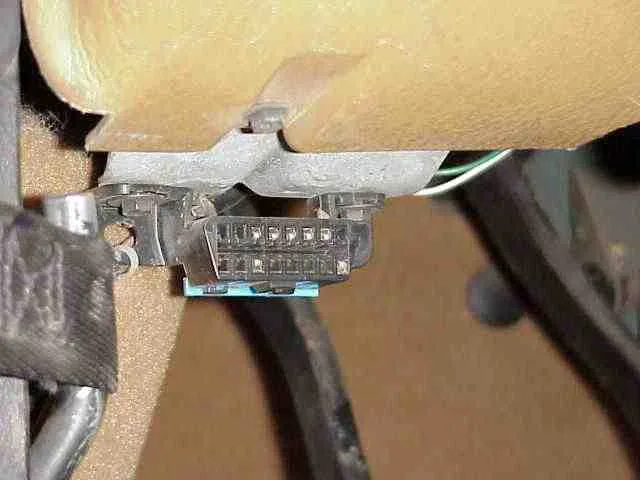
Image source: Bing (Web (fair-use with source credit))
Now the TL Wrangler (2018 and newer) throws a wrench in the works. The JL and JT models use a security gateway module that blocks generic OBD-II readers from talking to the engine computer. A $20 dongle might power on but show "no communication."
Three paths around it:
- Buy a scanner built for the gateway, like JScan with a bypass cable
- Use a reader that supports Gateway mode, which many 2023+ tools do
- Take it to a shop with the Mopar WiTECH system
JK (2007 to 2018) and TJ (1997 to 2006) owners are fine. Any standard OBD-II scanner plugs straight in. The gateway restriction only affects JL and JT lines.
One pro tip: always check the freeze frame data before clearing codes. That snapshot records engine speed, load, and coolant temperature at the exact moment the fault triggered. It's often the clue that tells you whether a code is a fluke or a pattern.
The Most Common Jeep Wrangler Check Engine Light Codes
Some codes show up on Wranglers so often they're practically folklore. Here are the ones you're most likely to see. All are P-codes, the standard diagnostic trouble codes from SAE J1979.
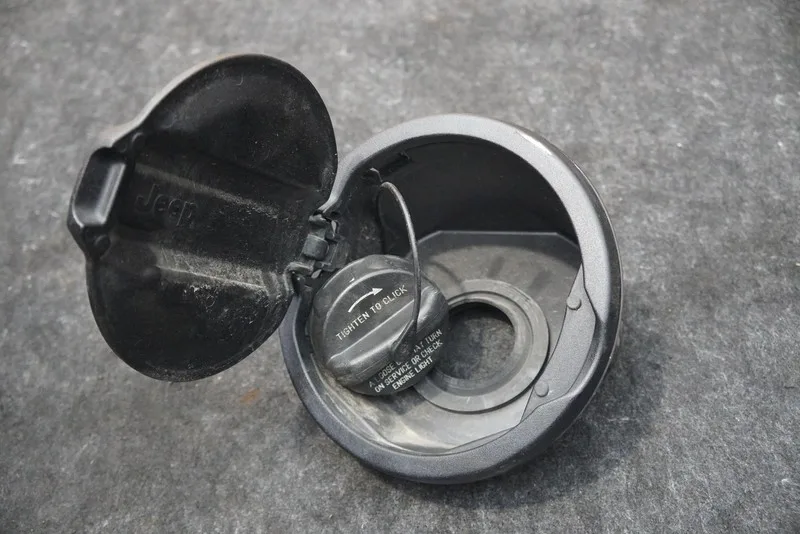
Image source: Bing (Web (fair-use with source credit))
P0455 and P0456: EVAP System Leaks
These are the gas cap codes, and they lead the charts by a mile. P0455 means a large leak in the evaporative emissions system. P0456 means a small leak.
Most of the time, the culprit is a gas cap that wasn't tightened until it clicked.
The fix is almost laughably easy: turn the cap at least three clicks, drive for a day, and the light often clears itself. If the code returns, the EVAP purge valve or a cracked vacuum hose is the usual suspect.
P0128: Thermostat Stuck Open
Jeep's 3.6L Pentastar is famous for this one. The ECM expects the engine to reach a minimum coolant temperature within a set time. If the thermostat sticks open, coolant flows too fast and the engine never warms up properly.
You'll notice the temperature gauge sitting lower than normal, and fuel economy drops because the engine stays in cold-start mode longer. The fix is a new thermostat and housing, roughly $150 to $300 if you DIY.
P0300 and P0301 to P0306: Cylinder Misfires
P0300 is a random misfire across multiple cylinders. Numbered codes point to a specific cylinder. On Wranglers, common causes are weak ignition coils, fouled spark plugs, or cracked plug boots that let moisture in.
A flashing check engine light with P0300 is the classic "stop driving" scenario. That misfire is dumping fuel into the exhaust, and the catalytic converter is taking the hit.
P0171 and P0174: Lean Air-Fuel Mixture
P0171 means Bank 1 is running too lean. P0174 means Bank 2. When both appear together, it points to a vacuum leak, a dirty mass airflow (MAF) sensor, or a failing fuel pump.
Wranglers with aftermarket cold-air intakes frequently throw these codes because the intake pulls in unmetered air past the MAF.
P0520: Oil Pressure Sensor Circuit
This one is common on the 3.6L V6 and the older 3.8L. A faulty oil pressure sensor sends a crazy reading that triggers the CEL. It rarely means you've actually lost oil pressure, but verify the real oil level before trusting it.
P0016 and P0017: Camshaft-Crankshaft Correlation
These codes mean the camshaft and crankshaft aren't staying in sync. That points to timing chain stretch or a bad variable valve timing (VVT) actuator. On the Pentastar, a stretched timing chain is a known failure, and it's a major repair.
If you see these, don't drive more than necessary.
Quick reference table:
| Code | System | Typical Fix | Drive? |
|---|---|---|---|
| P0455 | EVAP large leak | Tighten gas cap | Yes |
| P0456 | EVAP small leak | New cap or purge valve | Yes |
| P0128 | Cooling system | Replace thermostat | Yes, but monitor |
| P0300 | Misfire | Coils, plugs, boots | No if flashing |
| P0171/4 | Fuel mixture | Fix vacuum leak, clean MAF | Yes, short trips |
| P0520 | Oil pressure circuit | Replace sensor | Yes, verify oil |
| P0016/17 | Timing correlation | Major engine work | Avoid driving |
Step-by-Step Diagnostic Workflow: From Gas Cap to Serious Repair
Treat this like a flow chart, not a guessing game. Work through these branches in order, and you'll solve most check engine light issues without replacing parts blindly.
Branch 1: Is the gas cap a possibility?
Always start here because it costs nothing. Pull the cap off, inspect the rubber seal for cracks or debris, and reinstall it until you hear three clicks. Then clear the code with your scanner.
If the light returns within a day, the leak is elsewhere. If it stays off for 50 miles, you fixed it. Motor on.
Branch 2: Does the Wrangler run smooth or rough?
The engine's behavior narrows everything down.
- Smooth idle, no power loss: Likely a sensor issue. The thermostat code, EVAP leak, or oxygen sensor will show up in the scan.
- Rough idle, vibrating, smells like fuel: Serious misfire or vacuum leak. Address this before driving more.
- Stalling under load: Could be fuel pressure, MAF sensor, or a failing crank position sensor.
This quick check tells you how fast you need to act.
Branch 3: What does live data tell you?
This is where most DIYers skip ahead and hurt themselves. A code tells you the symptom. Live data tells you the cause.
Watch three critical values with your scanner:
- Long-term fuel trim: If it exceeds +10%, you have unmetered air sneaking in
- Coolant temperature: If it stays under 180°F, the thermostat is stuck open
- O2 sensor voltage: Stuck at 0.45V means a lazy sensor or an exhaust leak
Let the engine idle and watch these numbers shift. They'll point you straight to the failed component.
Branch 4: Clear the code, verify the fix, run a drive cycle
After the repair, clear the code. Then don't just drive around the block. Run a proper drive cycle that includes:
- Cold start and idle for two minutes
- City driving with stops and starts
- Highway cruise at 55 to 70 mph for ten minutes
The ECM runs readiness monitors during this pattern. If the fault is really fixed, the light stays off. If the problem persists, the light returns, usually within 50 to 100 miles.
Branch 5: The light returns after a few days
That means you have an intermittent issue, or you fixed a symptom rather than the root cause. Re-scan and compare the new freeze frame data with the old. Same code means dig deeper.
A new code might mean two separate problems compounding each other.
Safe to Drive or Call a Tow? A Wrangler Owner's Decision Guide
This is where a wrong call can cost you thousands.
Safe to drive: EVAP codes, P0128, lean codes without rough idle
If the Wrangler drives normally and the code says "thermostat" or "gas cap," you're fine to drive to work for a few days. A faulty thermostat won't damage the engine. It just runs less efficiently.
A lean code with a smooth idle is also safe for short trips to get parts.
Caution zone: O2 sensor codes, P0420, mild misfires
These deserve attention within a few days. A P0420 (catalytic converter efficiency below threshold) won't strand you on the highway, but it's warning that the converter is degrading. Driving for a week or two is fine, but don't ignore the fix.
Replacing a converter before it fully fails is much cheaper than replacing one after it clogs.
Pull over now: Flashing CEL, P0300 misfire, P0016/P0017
A flashing CEL is your Wrangler saying "stop before I ruin my exhaust." A random misfire destroys catalytic converters quickly. If you're on the highway, don't slam the brakes. Pull over safely, turn the engine off, and arrange a tow.
Off-road, you've got a tougher call. Let the engine cool for 15 minutes, then restart and see if the flashing returns. If it flashes immediately again, stop.
If it stays solid, you can crawl back to camp slowly. Keep the RPMs low and the load light.
Emergency indicators to never ignore
A check engine light alone doesn't mean you're about to explode. But treat it as a red flag if it comes with any of these:
- Oil pressure gauge reading low or zero
- Temperature gauge spiking toward the red
- Strong fuel smell inside the cabin
- Engine losing power at highway speeds
Any of those combinations means drive to the shoulder and call for help. If you also feel a soft brake pedal, treat that as a separate brake system failure and stop immediately.
Common Mistakes That Turn a Cheap Fix into an Expensive Repair
Clearing the code before you understand it is the biggest mistake. The warning light disappears, so you think the problem is gone. The fault stays stored, and the issue worsens while you drive.
Always read the code and the freeze frame first.
Replacing parts based on the code alone is another classic. A P0128 code points to the thermostat, but low coolant can trigger the same code. If the engine runs hot instead of cold, you might have a cooling system leak with a different fix entirely.
A P0301 misfire could be a coil, plug, or injector. Guessing means paying for parts you didn't need.
Ignoring a flashing CEL is the most expensive move. A bad misfire dumps fuel into the catalytic converter. Converter replacement on a Wrangler runs $1,000 or more, versus a $30 spark plug.
Stop driving and diagnose properly.
Using cheap aftermarket sensors creates false codes. A low-end O2 sensor can produce incorrect readings, triggering a P0171 or P0420. Then you chase ghosts.
Spend the extra money on OEM or quality brand sensors.
Before you buy parts, check the NHTSA recall database for your year and model. Some Wrangler engine issues, like the JL manual transmission stall risk, have free factory fixes. A recall can turn a $500 repair into a $0 repair.
Finally, don't clear the codes and skip the drive cycle. If you reset the ECM and drive a mile, the readiness monitors never run. The light stays off for a day, then returns.
Run a 15 to 30 minute mixed drive cycle to verify the repair.
Jeep Wrangler Check Engine Light FAQs
How long does it take for the check engine light to reset?
Most Wranglers clear the light after 20 to 50 miles of normal driving once the fault is fixed. A proper drive cycle includes a cold start, city stops, and a 10 minute highway cruise. If the light stays off for 100 miles, the repair worked.
Can a bad O2 sensor really waste gas?
Yes. A failed O2 sensor can lower fuel economy by 10 to 15 percent. The engine runs blind without accurate exhaust data, so the ECM richens the mixture.
You might also fail an emissions test. Replacing it early saves money at the pump.
Does cold weather trigger more check engine lights?
Cold air can cause misfires, especially on older Wranglers with worn spark plugs or cracked ignition coil boots. Thermostat codes and lean codes also happen more in winter because the engine struggles to reach operating temperature. It's a seasonal quirk, not a different problem.
Is it safe to buy a Wrangler with the check engine light on?
It's a bargaining chip, not a reason to walk away. Read the codes before negotiating and look for signs of recent leaks. A gas cap code is a $10 fix, but a P0016 timing code means serious money.
Use the light to lower the price, then fix it yourself. If the engine bay looks wet around the valve covers, a lubrication issue could be waiting. Also test the gearbox for shifting resistance before you commit.
What should I do if the light flashes while off-roading?
Stop and assess immediately. Shift to neutral and see if the engine is rough or making noise. If it is, shut down and wait 15 minutes.
Restart and see if the flashing returns.
If it does, find a tow or carefully limp out with low RPMs. For manual models, check whether the clutch feels weak during the crawl, but keep engine diagnosis the priority. The CEL is the engine talking to you, so listen before you add drivetrain repairs on top.