A Jeep Wrangler radiator problem usually doesn't announce itself politely. It shows up as a green puddle under the bumper, a temperature gauge creeping past center, or a sweet smell rolling out from under the hood. The tricky part is that "radiator problem" can mean several completely different failures.
Most Wranglers run with a 16 psi pressure cap and coolant temps between 200 and 220 degrees Fahrenheit. Even a tiny shift in that system changes everything. The good news is that you can trace the symptom back to the exact failing part without guessing.

49% off Today's Exclusive Deals
Limited-time Exclusive Deals. Check current discount on Amazon.
Check Price on Amazon As an Amazon Associate I earn from qualifying purchases.Let's get into it.
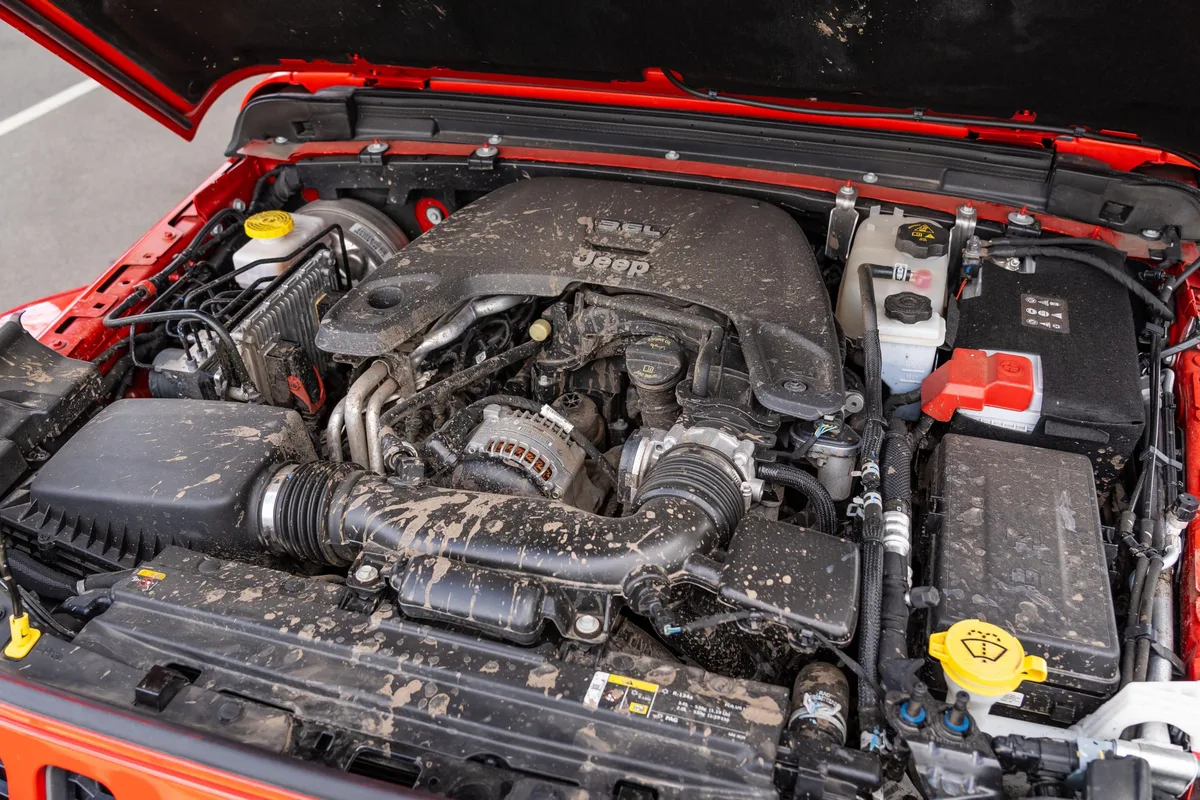
Image source: Bing (Web (fair-use with source credit))
49% off Today's Exclusive Deals
Limited-time Exclusive Deals. Check current discount on Amazon.
Check Price on Amazon As an Amazon Associate I earn from qualifying purchases.Are You Dealing With a Leak, a Clog, or a Dead Water Pump?
Start by putting the failure into one of three buckets: leak, clog, or failed component. That single decision narrows down the repair fast.
If you see coolant under the engine, check the radiator first. Plastic end tanks crack at the seams where the metal bracket joins. Heat cycling, vibration, and age cause those hairline fractures.
A pressure test will reveal them instantly.
If there's no puddle but the Wrangler still overheats, think about flow. A clogged radiator or a failing water pump both limit coolant circulation. Run the engine and feel the radiator surface.
49% off Today's Exclusive Deals
Limited-time Exclusive Deals. Check current discount on Amazon.
Check Price on Amazon As an Amazon Associate I earn from qualifying purchases.A warm top with a cold bottom says blockage. A radiator that's lukewarm everywhere says the water pump isn't moving coolant.
- Leak = visible puddle, white crust, or dried coolant trails
- Clog = overheating with no visible loss and cold spots on the core
- Component = erratic temp swings, weeping water pump, fan that never spins
This is also a good time to understand why coolant ends up on your driveway in the first place. The cause is often a cracked tank, but it can also be a failed seal or heater core.
Quick Clues: When It Overheats and What That Points To
Overheating patterns tell you more than any single visual check. Think about when the needle climbs. That clue points in a specific direction.
If the Wrangler overheats only at idle, the fan or fan clutch is usually the culprit. At speed, airflow through the radiator works by itself. But sitting still, the fan has to pull air.
A dead electric fan or a worn mechanical clutch means hot air just sits there.
If it overheats on the highway but stays cool in traffic, the airflow is being blocked. That's a clogged radiator core, a collapsed lower hose, or a stuck thermostat slowing the coolant.
| Overheat Condition | Likely Cause | Where to Look |
|---|---|---|
| Only at idle | Electric fan or fan clutch failure | Fan not engaging |
| Only at highway speed | Clogged radiator, collapsed hose | Radiator core, lower hose |
| Right after startup | Stuck thermostat | Thermostat housing |
| Under load (towing, climbing) | Weak water pump or clog | Water pump weep hole |
Combustion leaks also produce overheating, especially with the 3.6L Pentastar. A failed head gasket pushes air into the cooling system, creating air pockets that spike the temp gauge.
The Diagnostic Runbook: Pressure Test, Cold Spots, and the P0128 Code
Working through a cooling system complaint is easier with a fixed runbook. You're not guessing. You're eliminating variables.
First, grab a coolant pressure tester. With the engine cold, pressurize the system to the cap rating, 16 psi. Watch for a pressure drop.
Any loss points to a leak. While it's under pressure, inspect the radiator seams, hoses, water pump, and heater core for drips. This alone finds most faults.
Second, perform a cold-spot test. Warm the engine to operating temperature and carefully touch the radiator from top to bottom. The core should be evenly warm.
If the bottom tank stays cool, the core is blocked. A point cold spot in the middle means the radiator has debris packed in the fins.
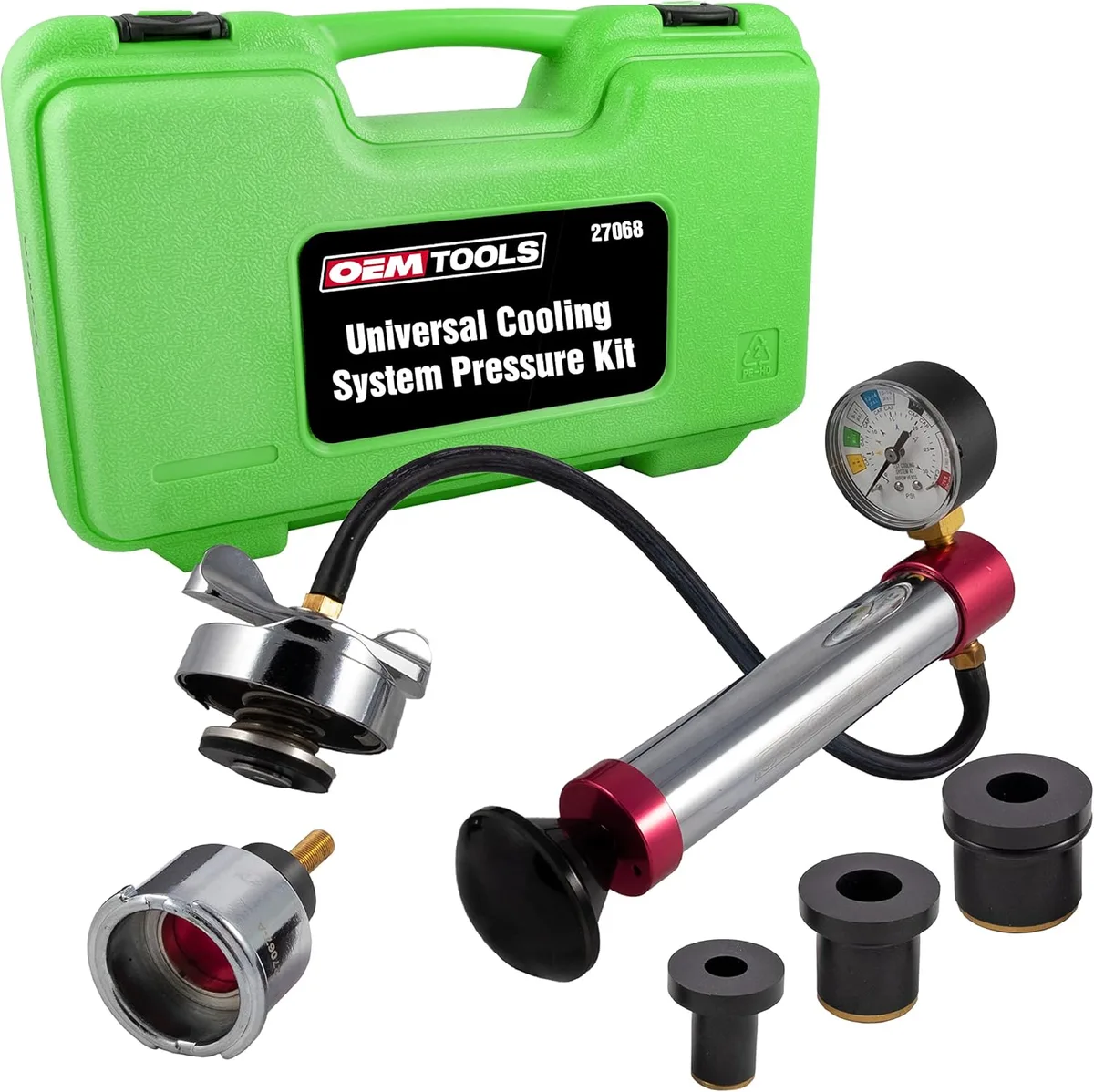
Image source: Bing (Web (fair-use with source credit))
Third, run the OBD-II scan. A stored P0128 code means the coolant temperature stays below the thermostat's minimum regulation temperature. That's usually a stuck-open thermostat or a faulty temperature sensor.
For the JK and JL Wranglers, air pockets after a coolant change also trip this code, so you'll need to bleed the system properly.
Manufacturer specifications indicate the thermostat should open fully around 195 degrees Fahrenheit. If the gauge sits well below that, the thermostat is working against you.
Wrangler Radiator Decision Tree: Trace the Symptom to the Repair
Here is the practical branch-by-branch path for the most common Wrangler radiator failures. Follow the symptom and stop at the first match.
- Coolant puddle under the center of the front bumper → Cracked radiator seam. Replace the radiator.
- Coolant puddle on the passenger side, near the serpentine belt → Water pump weep hole. It's leaking. Replace the water pump and check the belt.
- Overheats at idle, but the fan spins slowly → Fan clutch is worn or the electric fan relay is dead. Test the fan and replace if needed.
- Overheats at highway speed after mud or sand → The radiator fins are packed with debris. Flush out the grille and radiator fins with a hose.
- Temperature gauge bounces between normal and hot → Air pocket or low coolant. Bleed the system and top up.
- Sweet smell inside the cabin, plus a foggy windshield → Heater core is leaking. Track down the blocked heater core before it soaks the carpet.
- White smoke from the exhaust → Suspect a head gasket leak. Do a combustion leak test before touching the radiator.
Each branch leads to the same conclusion: stop driving, fix it, and test again. Ignoring any point in that chain costs you more money.
Which Parts Actually Fix It: Radiator, Thermostat, Cap, or Water Pump
Once you've identified the failing part, you need to pick the right replacement. Not all Wrangler radiators are the same.
The factory JK and JL radiators use plastic end tanks crimped onto an aluminum core. They work fine until the plastic ages and cracks. An all-aluminum radiator costs a bit more but removes that failure point entirely.
If you wheel or tow, that upgrade is worth the money.
Thermostats are cheap, so don't use this as a cost-cutting moment. Stick with the factory 195 degree rating. A lower temp thermostat won't fix an overheating engine.
It just delays the inevitable hot run.
The radiator cap is the most forgotten part. A cap that won't hold pressure lowers the coolant boiling point. That causes boil-over and mysterious coolant loss.
Replace it every time you replace the radiator. It costs almost nothing.
For the 3.6L Pentastar, the water pump is a known weak spot. The bearing fails and coolant leaks from the small weep hole at the bottom. The good news is that aftermarket water pumps are now sold with a metal impeller instead of the plastic original.
On automatic Wranglers, also inspect the transmission cooler lines where they enter the radiator. Coolant contamination there often causes slipping gears.
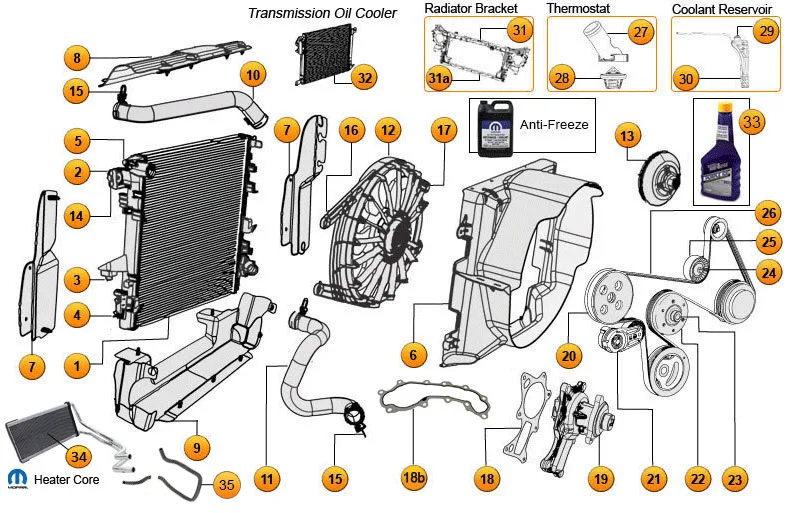
Image source: Bing (Web (fair-use with source credit))
When you replace any of these parts, use a fresh 50/50 mix of OAT coolant and distilled water. Also check the overflow tank. A cracked tank creates a vacuum leak that makes the whole system behave strangely.
Cost Reality Check: DIY vs Shop Labor and What a Fair Price Looks Like
As of 2026, a plastic-tank radiator for the JK or JL runs $150 to $300. An all-aluminum replacement goes up to $550. Add a thermostat, cap, and hoses and you're looking at $250 to $500 in parts before labor.
| Part | DIY Part Cost | Shop Total (Parts + Labor) |
|---|---|---|
| Radiator (plastic tank) | $150-$300 | $600-$1,000 |
| All-aluminum radiator | $300-$550 | $800-$1,300 |
| Water pump | $100-$250 | $400-$700 |
| Thermostat | $20-$50 | $150-$300 |
DIY saves you $300 to $500 in labor, provided you own a basic socket set and a drain pan. A coolant pressure tester rents for about $50. A shop will pressure test, inspect, and replace the radiator in a few hours.
You'll spend a weekend.
Also factor in the thermostat and cap. They're cheap, and replacing them while the radiator is out costs you nothing extra.
Mistakes That Make a Cooling Problem Worse (And How to Avoid Them)
One wrong move while fixing a cooling system can turn a $200 radiator job into a $2,000 engine failure. These are the common errors we see in forum threads and service records.
- Adding cold water to a hot engine. It can crack the block or cylinder head. Wait for the engine to cool first.
- Overfilling the overflow tank. Excess pressure seeks the weakest point. That's usually a new radiator seam.
- Using stop-leak additives. They seal radiator cracks but clog the heater core and transmission cooler. You trade a puddle for a blocked system.
- Mixing coolant types. Different OAT and HOAT formulas can gel when combined. Stick with the same spec.
- Skipping the bleed step. Air pockets cause hot spots. The Pentastar engine is especially prone to this. Follow the factory bleed procedure on a level surface.
Stop-leak is the worst offender in our research. It never fixes the root cause and often damages the heater core. If you see muddy oil or a milky cap, look for oil leaking from the engine into the cooling system.
That points to a head gasket failure, not the radiator.
Used coolant is hazardous waste. Per EPA guidelines on used antifreeze, don't pour it down a drain. Seal it in a labeled container and drop it at a local recycling center.
Jeep Wrangler Radiator FAQs
Here are the questions Wrangler owners ask most when the temperature gauge climbs.
Can I drive my Wrangler with an overheating engine?
No. Even one serious overheat can warp the cylinder head and blow the head gasket. Pull over and shut the engine off.
Let it cool completely before adding coolant or opening the cap. Getting the cap off a hot system can also send boiling coolant straight at your face.
Why does my Wrangler lose coolant but show no leak?
Small leaks can evaporate before they hit the ground. Check the overflow tank for cracks, the radiator cap for a worn seal, and the heater core for a sweet smell inside the cabin. A pressure test will find a hidden leak quickly.
Should I replace the radiator or try to repair it?
Plastic-tank radiators can't be repaired reliably. A cracked seam means replacement. All-aluminum units can sometimes be re-welded, but labor costs usually equal a new radiator.
Replacement is the better investment in both cases.
What coolant does my 3.6L Wrangler take?
Use OAT coolant with a 50/50 mix of distilled water. Check your owner's manual because the 4.0L and 3.8L use different specs. Never mix OAT with older green formulas.
The wrong coolant promotes corrosion and clogs the heater core.