A Nissan Rogue engine misfire means one or more cylinders aren't igniting fuel properly. You'll feel it as a rough idle, hesitation when you accelerate, or a check engine light that won't quit. The 2.5-liter QR25DE engine found across most Rogue generations uses a coil-on-plug ignition setup.
When a spark plug or coil pack fails, the whole engine feels it.

49% off Today's Exclusive Deals
Limited-time Exclusive Deals. Check current discount on Amazon.
Check Price on Amazon As an Amazon Associate I earn from qualifying purchases.Per OBD-II standards, the engine control module logs a P0300 code for random misfires or P0301 through P0304 for cylinder-specific events. That happens once the misfire rate crosses roughly 2% per 200 to 1,000 revolutions. The threshold exists to protect your catalytic converter from unburned fuel.
Here's how to figure out what's wrong and what it'll take to fix it.
49% off Today's Exclusive Deals
Limited-time Exclusive Deals. Check current discount on Amazon.
Check Price on Amazon As an Amazon Associate I earn from qualifying purchases.Image source: Bing (Web (fair-use with source credit))
Quick Answer: What Your Rogue's Misfire Likely Means
A Nissan Rogue engine misfire means one or more cylinders aren't igniting fuel properly. The most common causes are worn spark plugs, failing ignition coils, or dirty fuel injectors. A flashing check engine light signals a severe misfire.
Stop driving immediately to avoid catalytic converter damage. Diagnosis starts with an OBD-II scanner reading the stored trouble codes.
Symptoms You'll Feel and What They Point To
A misfire doesn't always announce itself dramatically. Sometimes it creeps in over a week or two before you notice something's off. Here's what Rogue owners report most across all three generations.
49% off Today's Exclusive Deals
Limited-time Exclusive Deals. Check current discount on Amazon.
Check Price on Amazon As an Amazon Associate I earn from qualifying purchases.Rough idle. The engine vibrates at stoplights or in park. You might feel it through the steering wheel or seat. A single-cylinder misfire creates a rhythmic shake.
A random misfire across multiple cylinders feels more erratic, like the engine is stumbling over itself.
Hesitation under acceleration. You press the gas and the Rogue jerks or surges instead of pulling smoothly. The misfiring cylinder drops power for a split second each combustion cycle. At low speeds it feels like a hiccup.
Under load it feels like a significant power cut.
Flashing check engine light. This is the serious one. A steady light means a stored code. A flashing light means the misfire is active right now and severe enough to damage the catalytic converter.
Pull over safely and shut the engine off.
Loss of power. The engine feels flat on hills or when merging onto highways. The CVT transmission may hold higher RPMs to compensate for the missing combustion events.
Poor fuel economy. Unburned fuel from a misfire wastes gas directly. Aggregate owner reports suggest a noticeable MPG drop of 10 to 20 percent when a misfire persists over several days.
Fuel smell from the exhaust. Raw fuel exiting the tailpipe means it never ignited in the combustion chamber. That strong gasoline odor is also cooking your catalytic converter from the inside out.
Each symptom narrows the diagnosis. A rough idle that smooths out at higher RPMs often points to an ignition problem. Hesitation under load might indicate a fuel delivery issue.
If your Rogue is shaking noticeably, the general diagnostic logic for engine vibration causes applies here too. And knowing the difference between a steady versus flashing check engine light tells you how urgently you need to act.
The Diagnostic Workflow From Code to Cause
This is where a systematic approach saves you money. Guessing leads to replacing parts that weren't broken.
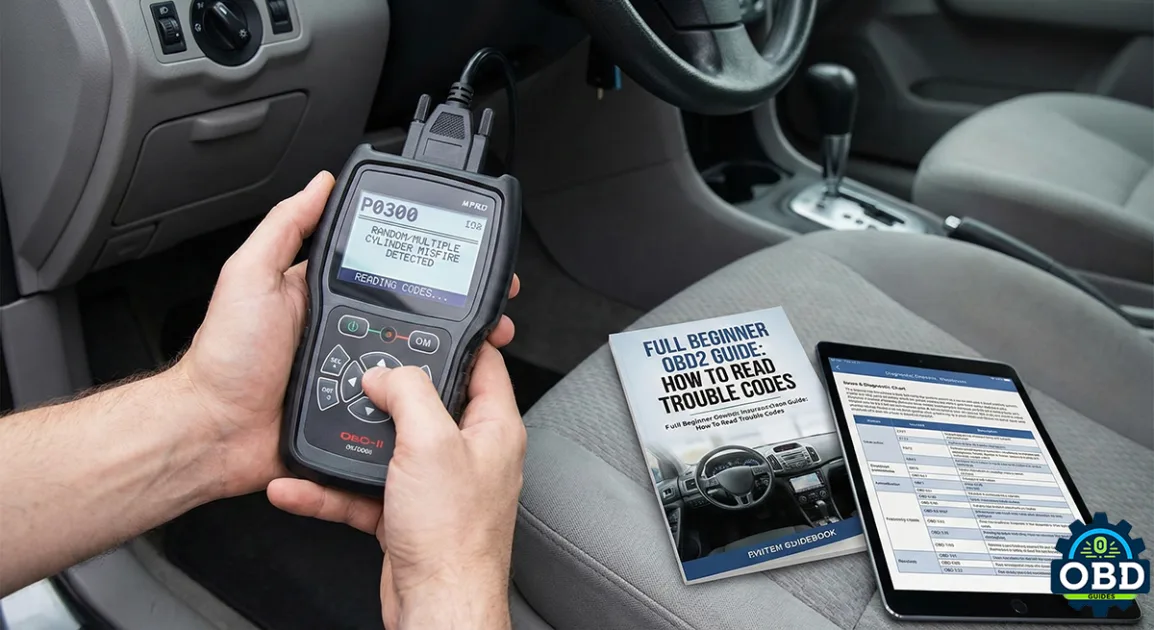
Image source: Bing (Web (fair-use with source credit))
Step 1: Pull the codes. Plug an OBD-II scanner into the port under the dashboard. Read all stored codes, pending codes, and history codes. Write them down or screenshot them.
Step 2: Interpret the code pattern. The code tells you where to look.
- P0300 (random misfire) points to a system-wide issue: vacuum leak, fuel pressure problem, or contaminated MAF sensor
- P0301 through P0304 (cylinder-specific) points to one cylinder's ignition coil, spark plug, or injector
Step 3: Check freeze frame data. The scanner captures engine conditions at the moment the misfire occurred. Note the RPM, engine load, coolant temperature, and vehicle speed. A misfire at idle suggests something different than one at highway speed.
Step 4: Swap test the coils. Move the suspect ignition coil to a different cylinder. Clear the codes and drive. If the misfire code follows the coil, you've found your culprit.
This single test eliminates guesswork.
Step 5: Inspect the spark plugs. Pull the plug from the affected cylinder. Look for oil fouling, carbon buildup, worn electrode gaps, or cracks in the porcelain. Manufacturer specs call for a gap of approximately 1.1 millimeters (0.043 inches) on OEM NGK plugs for the QR25DE.
Step 6: Test fuel injectors. Use a mechanic's stethoscope to listen for the injector's clicking pulse. Compare sound across all four cylinders. A silent or weak injector is a strong suspect.
Resistance testing with a multimeter gives you hard data.
Step 7: Check for vacuum leaks. Cracked intake hoses or a failing intake manifold gasket cause lean conditions that trigger misfires. A smoke test reveals leaks you can't see with the naked eye.
Step 8: Compression test. If ignition and fuel systems check out, test cylinder compression. The QR25DE should read between 178 and 199 PSI per cylinder. No cylinder should deviate more than 14 PSI from the others.
The same cylinder-specific diagnostic logic helps when you're narrowing down similar engine symptoms across different vehicles. The EPA's OBD-II guidelines outline how the on-board diagnostics system classifies misfires, if you want the regulatory details behind those trouble codes.
Common Causes by Generation and Mileage
Not every generation of the Rogue fails the same way. Knowing which problems cluster around which years helps you skip straight to the most likely culprit.
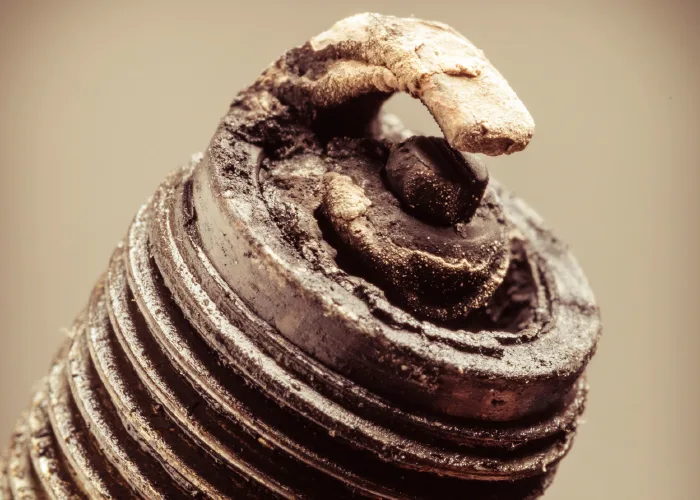
Image source: Bing (Web (fair-use with source credit))
First Generation (2008 to 2013)
The earlier QR25DE engines are prone to oil consumption past 100,000 miles. Oil seeps past worn valve stem seals and fouls the spark plugs. You'll see a rough idle that worsens when the engine is hot, plus fouled plugs coated in oil when you pull them.
Ignition coil failures are common here too. The coil-on-plug boots crack over time, especially in hot climates. A visual inspection won't always catch it.
Check for carbon tracking on the boot or test the coil's resistance with a multimeter.
Second Generation (2014 to 2020)
Carbon buildup on the intake valves becomes a real issue past 60,000 to 80,000 miles. The direct-injection system sprays fuel directly into the combustion chamber, so the intake valves never get washed by fuel. Carbon accumulates, prevents proper valve seating, and causes misfires.
The variable valve timing (CVVT) solenoid is another known failure point. Dirty engine oil clogs the solenoid and disrupts valve timing at specific RPM ranges. Regular oil changes with the correct 0W-20 weight oil are critical for this generation.
Third Generation (2021 to present)
These are newer, so major misfire patterns are less documented as of 2026. However, the 2.5-liter KR25DDET engine shares some of the same direct-injection carbon buildup concerns. The e-POWER hybrid variants add complexity because the gasoline engine primarily acts as a generator, changing when and how misfires show up.
Mileage-Based Patterns
| Mileage Range | Most Likely Cause |
|---|---|
| Under 30,000 miles | Rare. Check for loose connections, software updates, or factory defects |
| 30,000 to 60,000 miles | Spark plug wear (stock plugs due around 30K) |
| 60,000 to 100,000 miles | Ignition coil degradation, early carbon buildup, CVVT solenoid issues |
| Over 100,000 miles | Oil consumption fouling plugs, worn valve stem seals, injector problems |
A cooling system problem can also contribute to engine misfires if overheating causes uneven expansion. And if your Rogue is losing oil between changes, that consumption could be the root cause of fouled plugs entirely.
Mistakes That Make Misfire Diagnosis Worse
The most expensive mistake isn't a bad repair. It's a misdiagnosis that leads to replacing parts you didn't need to touch.
Swapping all four coils without testing first. It feels thorough, but it wastes money if only one coil failed. The swap test takes ten minutes and costs nothing.
Ignoring the specific code. P0300 and P0303 demand completely different approaches. A random misfire code means you're chasing a system-wide problem. A cylinder-specific code tells you exactly where to look.
Treating them the same burns time and cash.
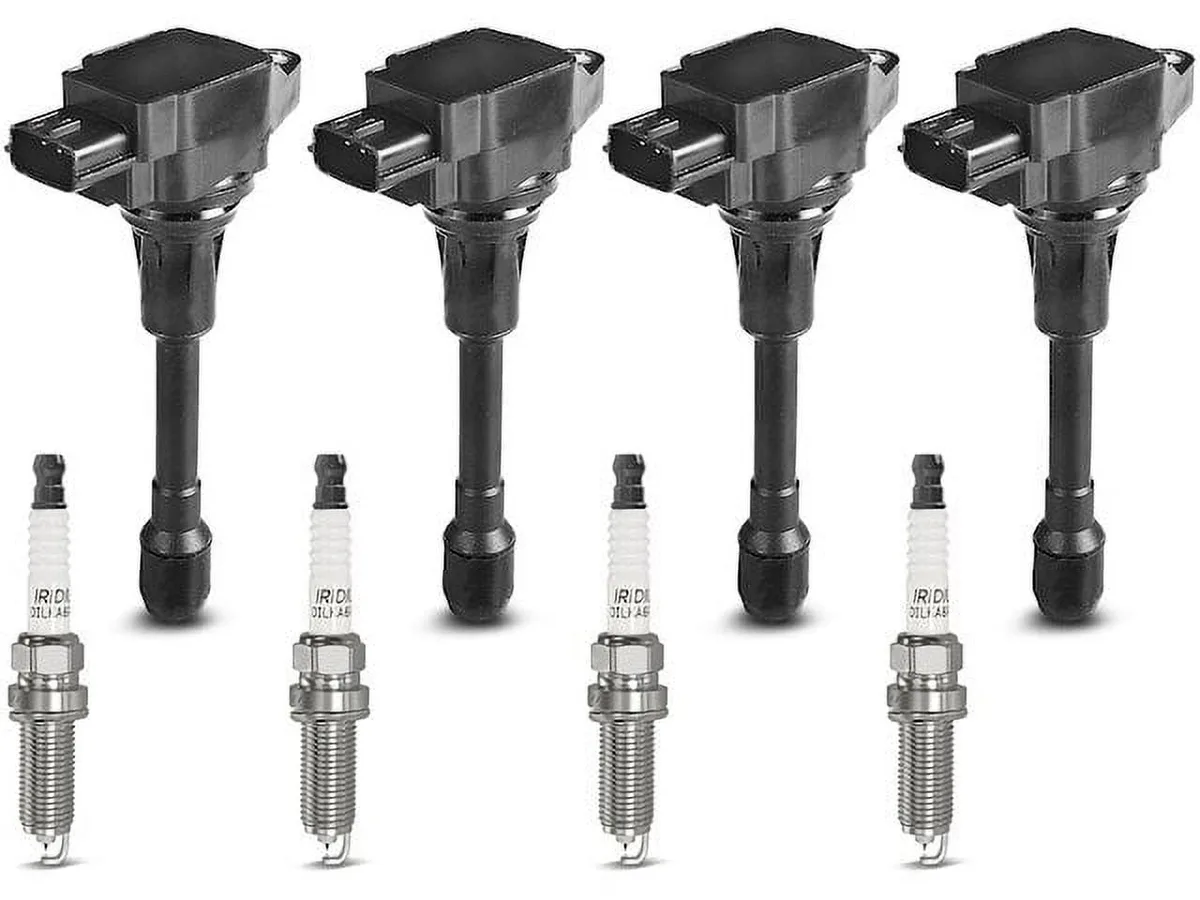
Using cheap aftermarket spark plugs. The QR25DE is particular about plug specifications. NGK and Denso are the OEM suppliers. Off-brand plugs with the wrong heat range or resistance can trigger new misfires within months.
Driving with a flashing check engine light. Every combustion cycle sends raw fuel into the catalytic converter. A $30 coil becomes a $1,500 converter replacement if you keep driving.
Skipping the oil change before diagnosis. On the QR25DE, dirty oil directly affects the CVVT solenoid. If the oil is black and past its change interval, a simple oil change might resolve the misfire before you touch anything else.
Not checking for vacuum leaks. A cracked intake hose costs $15 to replace. Skipping that step means you might replace injectors or coils that were working fine all along. Vacuum leaks are the most overlooked cause of P0300 random misfires.
An engine that keeps stalling alongside misfire symptoms might point to a deeper fuel or air delivery problem. And if your Rogue is overheating, check the cooling system before blaming the ignition.
What the Repair Will Cost You
Knowing the price range helps you decide between a DIY fix and a shop visit.
| Repair | DIY Cost | Shop Cost |
|---|---|---|
| Spark plug replacement (4 plugs) | $15 to $40 (parts only) | $100 to $250 |
| Single ignition coil | $25 to $60 (part only) | $150 to $300 |
| Fuel injector cleaning | $10 to $30 (cleaner additive) | $150 to $400 |
| Fuel injector replacement | $75 to $150 per injector | $200 to $500 per injector |
| CVVT solenoid replacement | $30 to $80 (part only) | $150 to $350 |
| Vacuum hose repair | $5 to $20 (hose and clamps) | $75 to $150 |
| Catalytic converter (if damaged) | $150 to $400 (aftermarket) | $800 to $2,500 (OEM) |
Labor times at a dealership typically run $120 to $180 per hour depending on your region. Independent shops often charge $80 to $130 per hour. A spark plug swap takes roughly 30 to 60 minutes.
Injector replacement runs one and a half to three hours.
The financial logic is straightforward. A $25 coil swap done early prevents a $1,500 catalytic converter replacement. That's the math that should drive every decision once you've confirmed the misfire.
When to Stop Driving and Get Help Immediately
Some misfires are safe to drive on briefly. Others are not.
Stop right now if:
- The check engine light is flashing
- The engine is shaking violently
- You smell raw fuel strongly from the exhaust
- The engine temperature gauge is climbing above normal
- The Rogue is losing power to the point where it won't maintain speed
Short drive acceptable if:
- The check engine light is steady (not flashing)
- The engine runs reasonably smooth with only slight hesitation
- Coolant temperature stays in the normal range
- No strong fuel odor
A flashing light is non-negotiable. The unburned fuel entering the exhaust system reaches the catalytic converter at extreme temperatures. The converter substrate melts.
That's a $1,500 to $2,500 repair that was completely avoidable. If you're unsure whether you can make it home, the safest move is to call for a tow. Your key fob won't help you here either if the engine stalls in a dangerous spot.
If the engine is overheating alongside the misfire, that changes the urgency. A radiator or cooling issue combined with a misfire means you could be looking at head gasket damage if you keep pushing it.
Frequently Asked Questions
Can I drive my Nissan Rogue with a misfire code?
It depends on the severity. A steady check engine light with a mild misfire might be okay for a short trip to the mechanic. A flashing light means stop immediately.
Continuing to drive risks catalytic converter damage that turns a small repair into an expensive one.
What is the most common cause of a Nissan Rogue engine misfire?
Worn spark plugs are the number one cause, especially past 30,000 miles when the factory plugs are due for replacement. Ignition coil failure is the second most common, followed by vacuum leaks and fuel injector issues depending on the generation.
How much does it cost to fix a misfire on a Nissan Rogue?
A spark plug replacement costs $15 to $40 DIY or $100 to $250 at a shop. A single ignition coil runs $25 to $60 for the part or $150 to $300 installed. The total depends on which component is causing the problem.
Will a misfire clear itself?
Occasional, intermittent misfires can trigger and then clear. But if the root cause is a worn plug or failing coil, the code will keep coming back. Clearing the code without fixing the underlying problem just delays the inevitable and risks further damage.
What does P0300 mean on a Nissan Rogue?
P0300 indicates a random or multiple cylinder misfire. The engine control module detected misfires across more than one cylinder. Common causes include vacuum leaks, low fuel pressure, a contaminated MAF sensor, or worn ignition components affecting multiple cylinders.
How long do spark plugs last in a Nissan Rogue?
Nissan recommends replacing the spark plugs every 30,000 miles for standard copper plugs. Iridium or platinum plugs can last up to 100,000 miles depending on the specific part used. Check your owner's manual for the specification matching your model year.