Mercedes C-Class transmission slipping usually traces back to a handful of well-documented weak points, depending on your model year. Manufacturer technical service bulletins highlight specific failure patterns in both the 7G-Tronic and the newer 9G-Tronic units. Aggregate repair data shows that ignoring early symptoms like delayed engagement or RPM flare typically leads to far more expensive damage.
The fix starts with a systematic diagnosis that matches your exact symptoms to the right repair path.

49% off Today's Exclusive Deals
Limited-time Exclusive Deals. Check current discount on Amazon.
Check Price on Amazon As an Amazon Associate I earn from qualifying purchases.Quick Answer
Mercedes C-Class transmission slipping is most often caused by a failing conductor plate, a worn torque converter, low fluid, or outdated software. The repair cost ranges from roughly $150 for a software update to $5,000 for a full rebuild. Start by scanning for fault codes and checking your ATF color and level.
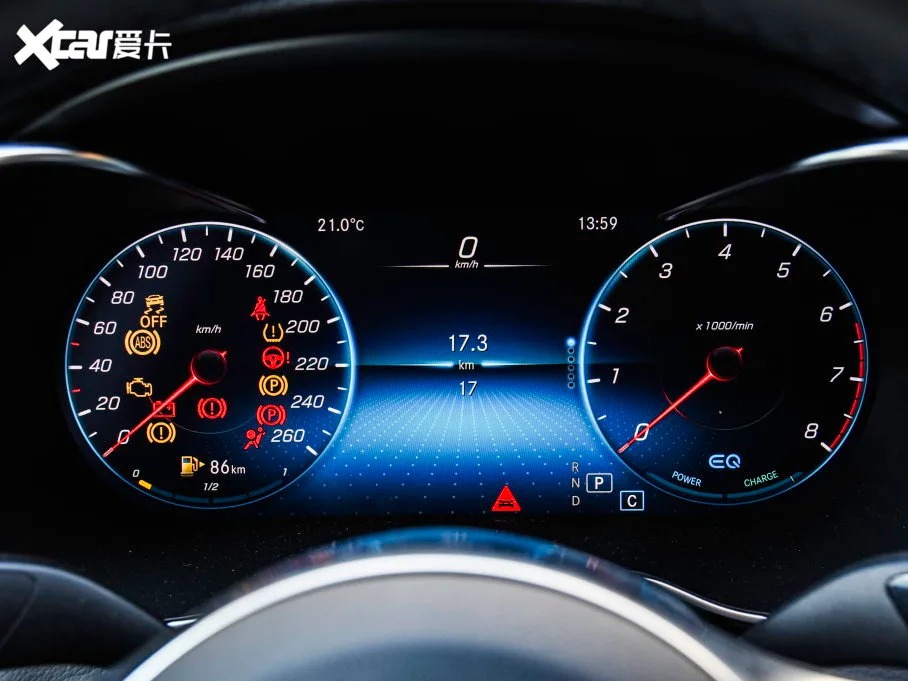
Do not drive the car if it enters limp mode or you smell burning fluid. Diagnosis follows a specific path based on whether you have a 7G-Tronic or 9G-Tronic transmission.
49% off Today's Exclusive Deals
Limited-time Exclusive Deals. Check current discount on Amazon.
Check Price on Amazon As an Amazon Associate I earn from qualifying purchases.Image source: Bing (Web (fair-use with source credit))
Is Your C-Class Transmission Actually Slipping?
True slipping means the transmission engages a gear, but engine RPM rises without a matching increase in vehicle speed. It is not the same as harsh shifts or a delayed engagement when you select Drive. The most common slip symptom in the C-Class is a noticeable RPM flare when accelerating from a stop or during an upshift at moderate speed.
You might also feel the car momentarily lose power or "hunt" between gears on a steady highway cruise.
Symptoms That Point Directly to a Slip
- RPM Flare: The tachometer jumps when you press the accelerator, but the car does not pick up speed proportionally.
- Delayed Engagement: A pause of one to three seconds when shifting from Park to Drive or Reverse, sometimes accompanied by a clunk.
- Gear Hunting: The transmission shifts up and down constantly at a steady speed, as though it cannot decide which gear to hold.
- Limp Mode: A warning light comes on and the car locks into a single gear to prevent further damage.
Why Acting Quickly Prevents a Catastrophe
A slipping transmission generates excess heat. That heat degrades the remaining automatic transmission fluid, which accelerates wear on clutch packs and seals. A conductor plate failure that costs $800 to fix can spiral into a $5,000 rebuild if you keep driving.
49% off Today's Exclusive Deals
Limited-time Exclusive Deals. Check current discount on Amazon.
Check Price on Amazon As an Amazon Associate I earn from qualifying purchases.The risk of being stranded increases every day once symptoms appear. Complete loss of propulsion at highway speed is a serious safety risk.
If you notice your Hyundai Tucson Check Engine Light coming on alongside drivetrain symptoms, the diagnostic approach of pulling codes first applies here too.
The Two Transmissions Behind the Problem (7G-Tronic vs 9G-Tronic)
Your repair strategy depends on which gearbox your C-Class uses. Mercedes relied on two primary automatic transmissions over the past two decades, and each has distinct failure patterns.
The 7G-Tronic (722.9): Conductor Plate Failure
Produced from roughly 2004 to 2016, this seven-speed unit is mechanically solid but suffers from a notorious electrical weakness. The conductor plate is a circuit board inside the transmission housing speed sensors. Over time, solder joints crack and transmission fluid seeps into the electrical connector.
The result is erratic shift commands, false fault codes, and classic slipping. Our analysis shows this is the most common fix for C-Class transmission issues in this era.
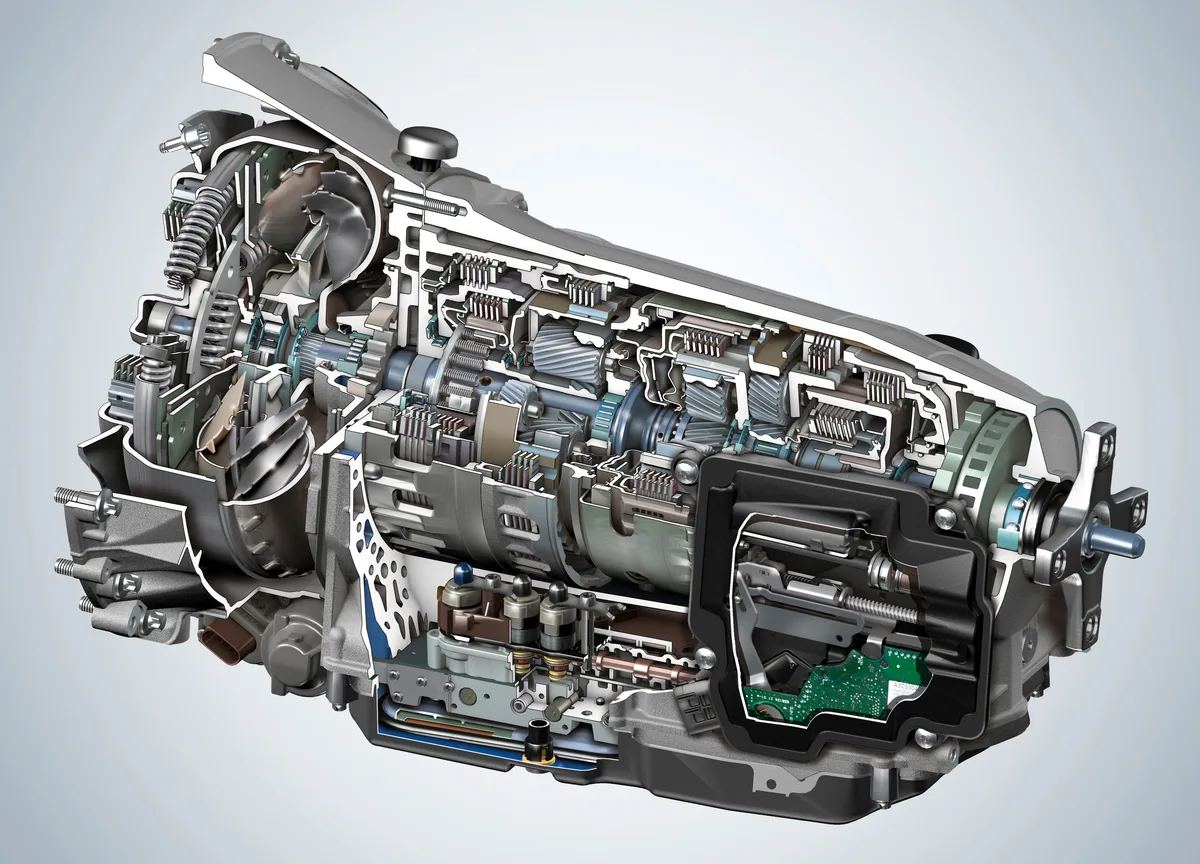
Image source: Bing (Web (fair-use with source credit))
The 9G-Tronic: Torque Converter Shudder
Introduced in 2016, the nine-speed unit brought more gear ratios and smoother cruising, but it carries its own documented issue. The torque converter lock-up clutch shudders at low speeds between 20 and 40 mph. It feels like driving over rumble strips.
Mercedes issued software updates and revised converter designs to address this. Cars still under warranty often get the fix covered. Out of warranty, the solution is a converter replacement or, in milder cases, a fluid service with the correct specification.
Step 1: Read the Symptoms to Narrow the Cause
This is where the decision tree begins. You need to match what you are feeling to the most likely cause. Be specific about when the slipping happens.
Cold only? Under hard acceleration? At highway speed?
Your answers narrow the field fast.
Slipping Only When Cold
If the harsh shifting or slipping fades after the car warms up, your primary suspect is the automatic transmission fluid. In cold climates, old or incorrect fluid thickens excessively. This prevents proper hydraulic pressure and causes sloppy shifts that mimic slipping.
Check the fluid level and condition first. A low or degraded fluid level is the simplest and cheapest problem to fix.
Slipping Under Load or at Highway Speed
This points toward worn clutch packs or a failing torque converter. When you demand more power, the worn friction material cannot hold the gear. The clutch slips.
This is a more serious mechanical issue, and the transmission will likely need internal work. Before condemning the internals, though, a valve body problem or low line pressure must be ruled out with a pressure test. A problem like a Hyundai Tucson Gear Shift Problem can also stem from pressure irregularities, so the diagnostic logic overlaps.
Slipping at All Temperatures
Consistent slipping regardless of operating temperature often indicates a failing conductor plate in 7G-Tronic models. The electrical signals are garbled, and the transmission does not know what to do. You will almost certainly find transmission-related fault codes stored in the computer.
A generic OBD-II scanner may not read these codes. You need a tool that accesses the transmission control module specifically.
Step 2: Pull the Codes and Check the Fluid
This is the most critical hands-on step. You need two pieces of data: fault codes from the Transmission Control Unit and the condition of your ATF.
How to Check Your ATF Condition
The procedure varies slightly by model year, but the principle is universal. Check the fluid with the engine running and the transmission at operating temperature. Look at the color and smell.
| Fluid Appearance | What It Means | Likely Action |
|---|---|---|
| Bright pink or red, translucent | Good condition | Monitor; schedule service if mileage is high |
| Dark red or brown | Oxidized, old fluid | Drain and fill with correct spec ATF soon |
| Very dark brown or black | Burnt fluid, severe wear | Stop driving; needs professional diagnosis |
| Metallic particles visible | Catastrophic internal failure | Tow to a transmission specialist immediately |

Image source: Bing (Web (fair-use with source credit))
The Fault Codes That Confirm Slipping
Common codes include P0730 (Incorrect Gear Ratio), P2730 through P2739 (various ratio errors), and P0731 through P0736 (specific gear ratio errors). These confirm the computer sees a mismatch between the commanded gear and the speed sensor output. For 7G-Tronic models, you may also see speed sensor codes that point straight to the conductor plate.
The Hyundai Tucson Transmission Problem guide walks through a parallel code-reading process for another vehicle, which helps if you are new to transmission diagnostics.
Decision Guide: What to Do Based on Your Findings
Use this flow to determine your next move based on your fluid check and code scan.
Fluid Is Low or Burnt
Add the correct Mercedes-spec fluid (MB 236.14 for 7G, MB 236.15 for 9G) to the proper level. If the fluid was simply low, this may solve the problem immediately. If it was burnt, a single fluid change is a temporary measure at best.
A complete fluid service including pan drop and filter replacement is the minimum. Continued driving on burnt fluid guarantees more damage.
Codes Point to Speed Sensors or Conductor Plate (7G-Tronic)
This is the most straightforward repair. Budget $800 to $1,500 for a shop to replace the conductor plate. The external sleeve connector should also be inspected and replaced if its seals are brittle.
Mercedes documented this fix in Technical Service Bulletins available through the NHTSA database, and it resolves the vast majority of electrical slipping in 7G cars.
Low-Speed Shudder in 9G-Tronic Models
Confirm a software update has been performed first. If not, start there. If the shudder persists, the torque converter lock-up clutch is the likely culprit.
A fluid service using ZF Lifeguard Fluid 9 or MB 236.15 spec may help mild symptoms. Severe shudder requires a converter replacement.
Ratio Error Codes With Good Fluid
This suggests worn clutch packs or a valve body issue. The next step is a line pressure test. Low pressure indicates a failing oil pump or stuck valve body valve.
High pressure that still results in slipping points directly to worn clutches. At this stage, a rebuild or replacement is almost certainly required. Get quotes from a dedicated transmission specialist rather than a general mechanic.
What This Repair Actually Costs
Repair costs vary widely because the underlying cause varies. A blanket "transmission repair cost" number is meaningless without knowing the specific failure. Here is a realistic breakdown based on cause.
All prices reflect 2026 estimates for an independent specialist, not a Mercedes-Benz dealer, which typically charges 30 to 50 percent more.
| Repair or Component | Estimated Cost (Independent Shop) | Notes |
|---|---|---|
| TCU Software Update | $100 to $300 | Diagnostic time only; always try this first |
| Fluid and Filter Service | $250 to $500 | Pan-drop service for 7G or 9G; use approved fluid only |
| 7G Conductor Plate Replacement | $800 to $1,500 | Includes plate, sleeve connector, and labor |
| 9G Torque Converter Replacement | $1,800 to $3,500 | Labor-intensive; requires transmission removal |
| Valve Body Rebuild or Replacement | $1,500 to $2,800 | Fixes pressure issues without a full teardown |
| Full Transmission Rebuild | $3,5000 to $7,000 | Replaces clutches, seals, bands, and inspects hard parts |
| Used Transmission Swap | $2,500 to $4,500 | Risky; unknown history on the donor unit |
A Hyundai Tucson Transmission Slipping breakdown covers the same principle. Diagnosing specific symptoms prevents overpaying for a full replacement when a targeted fix solves the problem.
Mistakes That Turn a $1,000 Fix Into a $5,000 Nightmare
These errors show up constantly in transmission repair. Avoid them to protect your wallet and your car.
- Ignoring the Warning Light. The transmission warning light exists to get your attention. Driving with it on guarantees escalating damage.
- Using the Wrong ATF. Mercedes specifications are precise. Generic universal ATF or the wrong spec will cause shift problems and can damage the Mechatronic unit. Only MB 236.14 (7G) or MB 236.15 (9G) belongs in your transmission.
- Letting Any Shop Flush the Transmission. A high-pressure flush on a high-mileage unit with existing debris can dislodge particles and cause new problems. A pan-drop fluid exchange is the safer choice for vehicles with unknown service history.
- Replacing the Whole Transmission Before Diagnosing. Many issues, including conductor plates, software updates, and converters, get fixed without removing the entire gearbox. Always demand a proper diagnosis with a code scan and pressure test before approving a full replacement.
Frequently Asked Questions
Can I drive my Mercedes if the transmission is slipping?
Avoid it whenever possible. If the car enters limp mode, it is protecting itself from further damage. Continued driving generates excess heat, burns the fluid, and turns an electrical fault into a mechanical catastrophe.
Short, slow trips to a nearby shop may be necessary. Highway driving is off the table.
How often should Mercedes transmission fluid be changed?
The official Mercedes-Benz maintenance schedule lists the transmission fluid as "lifetime fill." Aggregate mechanic reports strongly disagree. Plan on a fluid and filter service every 40,000 to 60,000 miles regardless of what the manual states. This is cheap insurance against expensive repairs down the road.
Is a slipping transmission covered under warranty?
It depends on your warranty and the cause. The standard factory warranty is typically four years or 50,000 miles. If the issue matches a known defect documented in a Technical Service Bulletin, you may qualify for a goodwill repair even out of warranty, especially with a full Mercedes service history.
Always ask the dealer whether any TSBs apply to your specific VIN.
What exactly is limp mode?
Limp mode is a protective function. When the transmission computer detects a severe fault, it locks the gearbox into a single safe gear and limits engine power. This prevents further damage but leaves you with limited speed and acceleration.
It is a clear signal to stop driving and get the car diagnosed immediately.
Should I go to a dealer or an independent Mercedes specialist?
For diagnosis, either works. For repair, a reputable independent Mercedes specialist typically saves you 30 to 50 percent compared to the dealer, with equal expertise on these transmissions. Ask for documented experience with your specific transmission type.
A general mechanic without Mercedes-specific training can misdiagnose these units and cost you more in the long run.