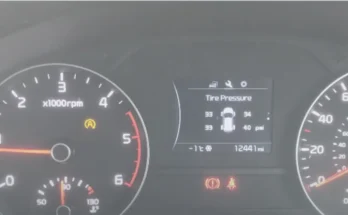
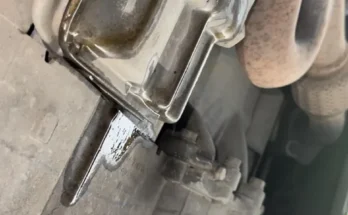
If you've noticed your Mazda CX-5 transmission slipping, you're not alone. It's one of the more common drivetrain complaints across both the first and second generation models, especially those with the Skyactiv-Drive 6-speed automatic. The good news is that not every case of slipping means a full rebuild.
Our research into owner complaints, manufacturer service data, and NHTSA records shows that transmission fluid degradation and software calibration issues account for a large share of reported problems. Mazda's official support page lists specific maintenance intervals and fluid specifications that directly affect shift quality. Let's break down exactly what's happening, what to check first, and when to get professional help.

49% off Today's Exclusive Deals
Limited-time Exclusive Deals. Check current discount on Amazon.
Check Price on Amazon As an Amazon Associate I earn from qualifying purchases.Quick Answer
Mazda CX-5 transmission slipping typically means the Skyactiv-Drive automatic is failing to hold or engage gears properly. Low or degraded transmission fluid is the most common cause. A software update from Mazda may resolve the issue on newer models.
In some cases, worn clutch packs or faulty solenoids require mechanical repair. If the "AT" warning light is on, stop driving and get it diagnosed immediately.
Why Accurate Diagnosis Matters for CX-5 Transmission Slipping
Here's the thing about transmission slipping. It's a symptom, not a diagnosis. Dozens of different issues can cause your CX-5 to slip between gears, and each one demands a different repair.
49% off Today's Exclusive Deals
Limited-time Exclusive Deals. Check current discount on Amazon.
Check Price on Amazon As an Amazon Associate I earn from qualifying purchases.Misdiagnosis is the single biggest cost driver in transmission repair. Owner complaints filed with the National Highway Traffic Safety Administration reveal a pattern of CX-5 owners quoted for full transmission replacements when the actual issue was a software update or a simple fluid service. That's the difference between a $200 fix and a $3,500 rebuild.
What Makes CX-5 Transmissions Unique
The Skyactiv-Drive 6-speed uses a lock-up torque converter that engages earlier than most conventional automatics. Mazda designed it that way for fuel efficiency. The tradeoff is tighter tolerances inside the clutch packs and more sensitivity to fluid condition.
Mazda specifies their own proprietary fluid, Mazda ATF-MV, for this transmission. Using a generic automatic fluid that doesn't meet that spec can cause exactly the kind of slipping you're experiencing. The fluid isn't just a lubricant here.
It's a hydraulic medium the transmission control module relies on for precise clutch engagement timing.
49% off Today's Exclusive Deals
Limited-time Exclusive Deals. Check current discount on Amazon.
Check Price on Amazon As an Amazon Associate I earn from qualifying purchases.Why Generic Advice Falls Short
Most online transmission guides treat all automatics the same. They don't account for the Skyactiv system's adaptive shift learning, its specific TCM software versions, or the failure patterns that show up in the CX-5 versus other Mazda models.
If you're also dealing with a check engine light alongside the slipping, the diagnostic trouble codes narrow things down. A P0730 points to an incorrect gear ratio. A P0741 signals a torque converter clutch problem.
P0751 through P0756 point at shift solenoids. Each code steers the repair in a different direction.
How the Skyactiv-Drive 6-Speed Transmission Works
Knowing how your CX-5's transmission works makes the slipping easier to understand. You don't need an engineering degree. Just a working mental model.
The Core Components
The Skyactiv-Drive combines a torque converter with two clutch packs and a planetary gear set. Unlike a traditional automatic that relies entirely on the torque converter for power transfer, this unit locks up the converter much earlier in the driving cycle.
The key parts to know:
- Torque converter, transfers engine power to the transmission input shaft
- Lock-up clutch, mechanically connects the engine to the transmission at higher speeds for efficiency
- Forward clutch packs, friction plates that engage specific gear ratios
- Shift solenoids, electro-hydraulic valves that direct fluid flow to engage and disengage gears
- Valve body, the hydraulic control center that routes pressurized fluid
- Transmission control module (TCM), the computer that reads sensors and commands shifts
The Adaptive Learning System
The TCM in your CX-5 doesn't follow a fixed shift schedule. It learns your driving habits and adjusts shift points and line pressure over time. This adaptive logic is a feature, but it also means the transmission can mask developing problems until they become severe.
When clutch packs start wearing, the TCM compensates by increasing hydraulic line pressure. You won't notice the slip at first. By the time you feel the RPM flare or the delayed engagement, the compensation has already maxed out.
That's why early detection matters.
Why Heat Is the Enemy
Transmission fluid breaks down under heat. The CX-5's recommended operating temperature sits between 170 and 220 degrees Fahrenheit. Sustained temperatures above 250 degrees accelerate fluid oxidation fast.
Stop-and-go city driving, towing (which Mazda does not recommend for the CX-5), and hot climates all push fluid temperature higher. Once the fluid degrades, its friction properties change. The clutch packs can't grip the way they did with fresh fluid.
Symptoms of Transmission Slipping in the Mazda CX-5
Not sure if what you're feeling is actual slipping or just normal Skyactiv behavior? Here's how to tell.
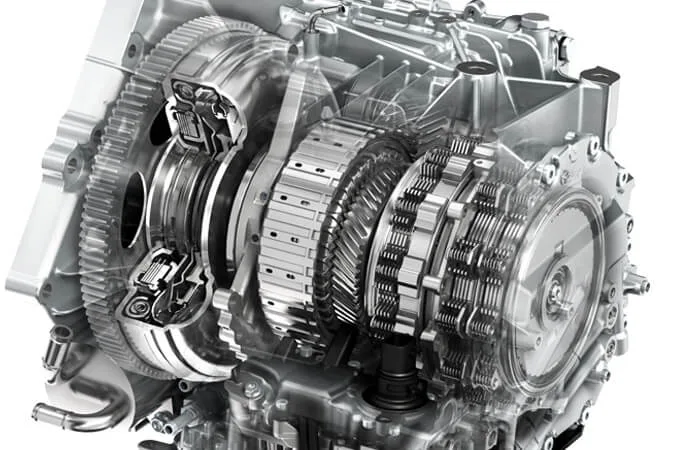
Image source: Bing (Web (fair-use with source credit))
The Most Common Signs
Transmission slipping shows up in specific, recognizable ways:
- RPM flare during acceleration, the engine revs up but the vehicle doesn't speed up proportionally. This is the classic slip.
- Delayed engagement, you shift from Park to Drive and there's a noticeable pause before the transmission grabs. Two to three seconds is abnormal.
- Gear hunting, the transmission jumps between gears instead of holding one steady, especially at cruising speed.
- Shuddering at light throttle, a vibration or rumble between 20 and 45 mph that feels like driving over a rumble strip. This often points to the torque converter lock-up clutch.
- Burning smell, overheated transmission fluid produces a distinct acrid smell, sometimes described as burnt sugar.
- "AT" warning light, Mazda's transmission warning indicator on the dashboard.
What Normal Behavior Looks Like
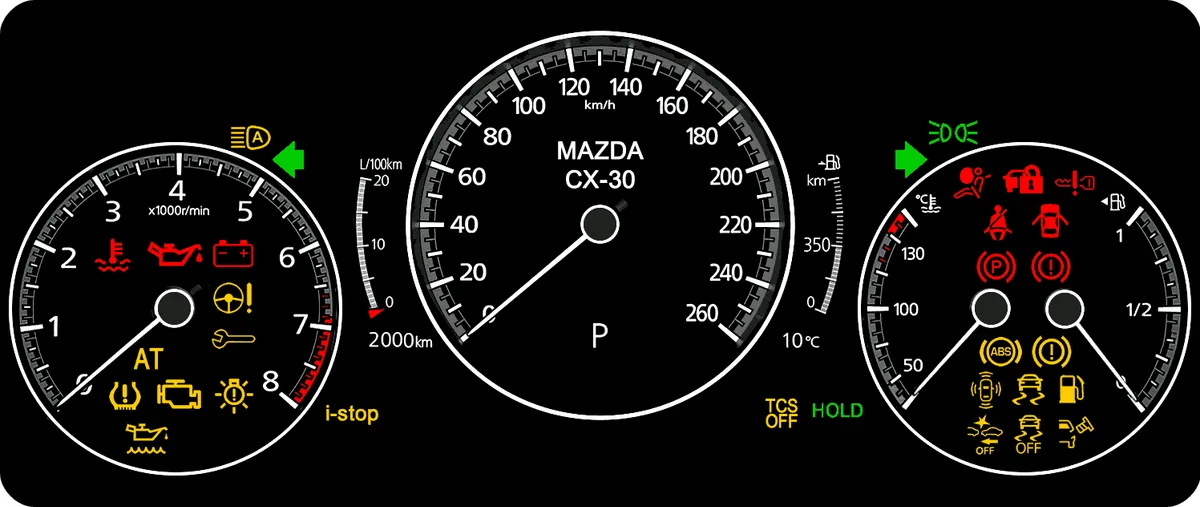
Image source: Bing (Web (fair-use with source credit))
Some things that feel like slipping but aren't:
- Quick, firm shifts, the Skyactiv-Drive shifts decisively by design. A firm shift isn't a slipping shift.
- Slight RPM drop between gears, normal. That's the clutch packs engaging.
- Cold-weather delayed engagement, on mornings below 20 degrees Fahrenheit, a brief one-to-two-second delay while the fluid warms can be normal.
- Eco mode behavior, in normal or eco mode, the transmission shifts earlier and holds higher gears longer. That can feel sluggish but isn't slip.
Quick Road Test
If you suspect slipping, try this basic test on a flat, open stretch of road:
- Come to a complete stop.
- Shift to Drive and accelerate firmly to 40 mph.
- Pay attention to whether the engine RPM rises without a corresponding increase in speed.
- Repeat at part throttle, around 30 to 50 mph, and listen for shuddering.
If the RPM climbs but the car doesn't pull, or it surges and then catches, that's slipping. If shuddering shows up only at light throttle during steady cruising, that's more likely a torque converter lock-up issue.
What Causes CX-5 Transmission Slipping (And What Doesn't)
Knowing the actual cause saves you time, money, and the headache of a misdiagnosis. Here's what the data shows.
The Top Five Real Causes
| Cause | How Common | Typical Fix |
|---|---|---|
| Low or degraded transmission fluid | Very common | Fluid drain and fill, possibly pan and filter service |
| Outdated TCM software calibration | Common (especially 2013–2016) | Software update at a Mazda dealer |
| Worn clutch pack friction plates | Moderate (high-mileage vehicles) | Clutch pack replacement or transmission rebuild |
| Faulty shift solenoid | Moderate | Solenoid replacement, sometimes valve body |
| Failing torque converter | Less common | Torque converter replacement |
What Doesn't Cause Transmission Slipping
There's a lot of misinformation out there. A few things that don't cause genuine slip:
- Low engine oil, that affects engine performance, not transmission engagement.
- A bad engine air filter, restricts airflow and reduces power, but doesn't cause slip.
- Brake drag, can feel like the car is being held back, but it's not transmission slip.
- Worn tires, inconsistent traction can feel like surging, but the RPM-to-speed relationship stays normal.
The Role of Maintenance History
Vehicles with no documented transmission fluid service past 60,000 miles show up disproportionately in slip complaint data. Mazda's maintenance schedule calls for a fluid change at that interval under normal driving. Under severe use (frequent stop-and-go, hot climates, mountain driving), that interval drops to 30,000 miles.
If you bought your CX-5 used without service records, assume the fluid hasn't been changed. That's your starting point.
A transmission problem can develop from something as simple as neglected fluid maintenance, regardless of vehicle make.
What To Do When Your CX-5 Transmission Starts Slipping
Don't panic, but don't ignore it. Here's the approach that transmission specialists recommend.
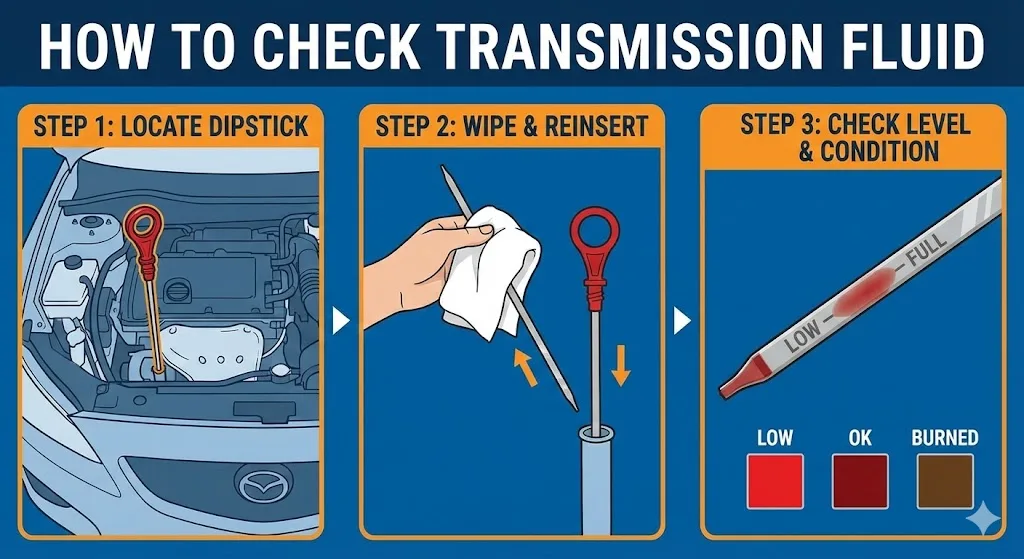
Image source: Bing (Web (fair-use with source credit))
Immediate Steps (Do These Today)
- Check your dashboard for warning lights. If the "AT" light or check engine light is on, avoid driving unless necessary. Limp mode is a safety feature, not a nuisance.
- Check the transmission fluid. With the engine running and the transmission warmed up, pull the dipstick if your model has one (some 2017 and later models require a scan tool). The fluid should be clear reddish-pink. Dark brown or a burnt smell means degraded fluid.
- Pull diagnostic trouble codes. Use an OBD-II scanner that reads transmission codes, not just engine codes. A basic scanner works for code retrieval, but a full-system scanner gives you live data.
The Professional Diagnostic Path
If the fluid looks okay and the slipping continues, it's time for a shop visit:
- Initial diagnostic (1 to 2 hours of labor, roughly $100 to $200): The technician scans all systems, checks fluid pressure with a gauge at the diagnostic port, and performs a road test with live data monitoring.
- TCM software check: The dealer verifies whether your TCM has the latest calibration. As of 2026, Mazda has released multiple Skyactiv-Drive software updates addressing shift quality. This is sometimes covered under warranty extension or a TSB.
- Pressure test results: Line pressure readings below manufacturer spec at idle or stall indicate an internal hydraulic issue, pointing toward solenoid, valve body, or pump problems.
Rebuild vs. Replace
If the diagnosis points to internal mechanical wear:
- Solenoid or valve body replacement, the least expensive internal repair, usually $500 to $1,500.
- Full transmission rebuild, replaces worn clutch packs, seals, and gaskets. Expect $2,500 to $4,500.
- Remanufactured transmission, a factory-rebuilt unit. Installed cost runs $2,800 to $4,000.
- Used transmission from a salvage yard, cheapest option, but unknown mileage and no warranty. Not recommended unless budget is extremely tight.
A transmission slipping issue on any vehicle follows the same logic: fluid first, software second, mechanical third.
Preventing Future Transmission Problems
Once you've fixed the immediate issue, prevention keeps it from coming back. These aren't optional. They're the difference between a transmission that lasts 150,000 miles and one that fails at 80,000.
Fluid Maintenance Schedule
| Driving Condition | Change Interval |
|---|---|
| Normal use | Every 60,000 miles |
| Severe use (stop-and-go, hot climate, mountain driving) | Every 30,000 miles |
| Fleet or commercial use | Every 25,000 miles |
Always use Mazda ATF-MV or an equivalent fluid that meets the same spec. A gear shift problem on any car can stem from using the wrong fluid type.
Driving Habits That Help
- Let the transmission warm up before heavy acceleration. Give it 30 to 60 seconds of gentle driving on cold mornings.
- Stop completely before shifting between Drive and Reverse. Shifting under load stresses the clutch packs.
- Don't tow beyond Mazda's rated capacity. The CX-5 isn't designed for towing in most markets.
- Address early warning signs immediately. A slight delay in engagement today becomes a full slip in six months.
Keep Software Current
Ask your Mazda dealer to check for TCM updates at every service visit. Software updates are often free, even outside warranty, when they address documented shift quality issues. If your vehicle has a separate cooling system problem, that can indirectly raise transmission temperature too.