The Tesla Model Y suspension noise you're hearing is one of the most common owner complaints for this vehicle. It could be a clunk over speed bumps, a creak when you reverse, or a squeak on cold mornings. You're not imagining things, and you're not alone.
The Model Y weighs around 4,400 lbs, which puts serious stress on rubber bushings and ball joints. On rough roads, those parts wear faster than most drivers expect. Understanding the sound is the first step to fixing it safely and without spending a fortune.
49% off Today's Exclusive Deals
Limited-time Exclusive Deals. Check current discount on Amazon.
Check Price on Amazon As an Amazon Associate I earn from qualifying purchases.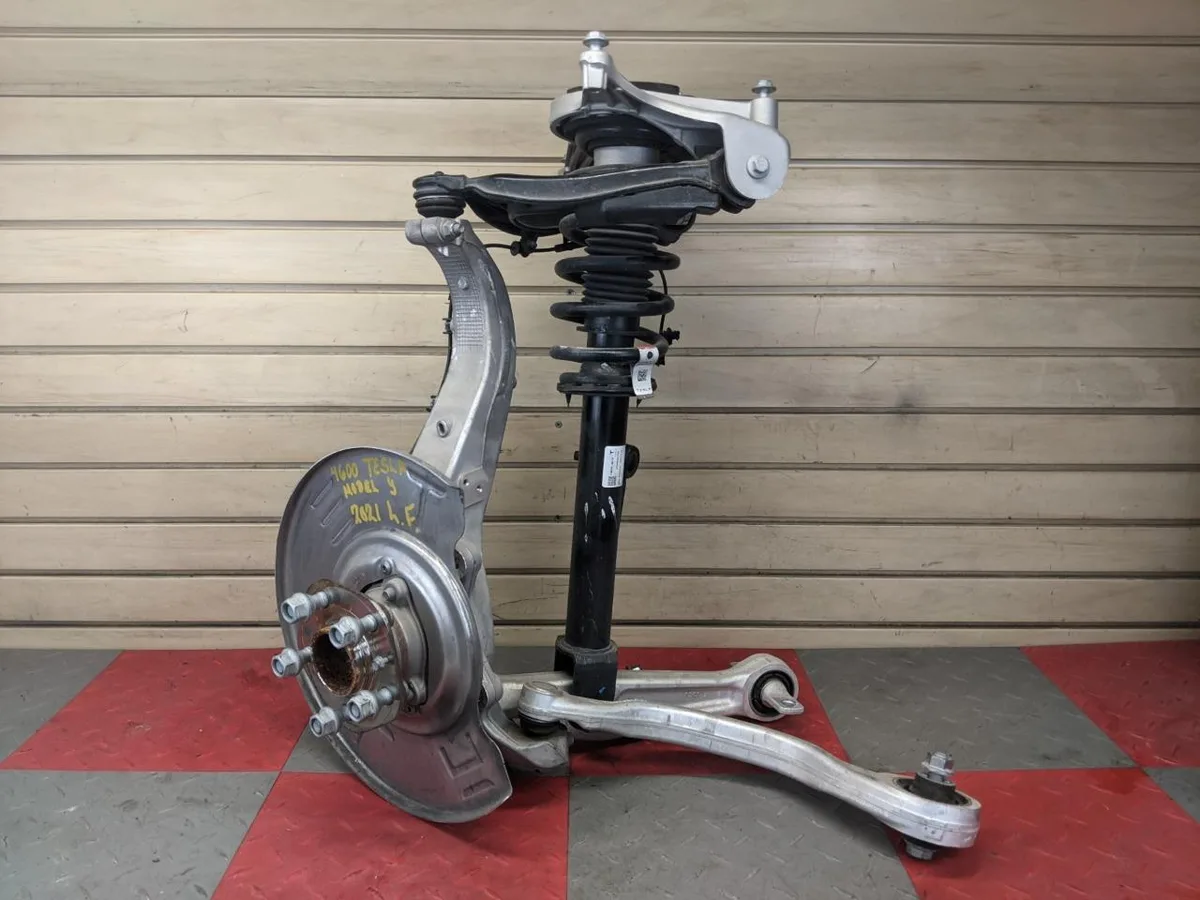
Image source: Bing (Web (fair-use with source credit))
Quick Answer
Tesla Model Y suspension noise usually comes from worn control arm bushings. Creaks often come from strut bearings. Clunks point to control arms and links.
49% off Today's Exclusive Deals
Limited-time Exclusive Deals. Check current discount on Amazon.
Check Price on Amazon As an Amazon Associate I earn from qualifying purchases.Diagnose by sound first, then inspect. Most fixes are affordable.
First, Some Quick Context: Why Model Y Suspensions Make Noise
The Model Y isn't a light vehicle. It carries a battery pack under the floor, so curb weight lands around 4,400 lbs. That weight rests on the same kind of suspension parts found in lighter gas cars.
Components work harder, especially on broken pavement.
The front uses MacPherson struts. The rear uses an independent multi-link setup. Both rely on rubber bushings, ball joints, and links to absorb movement.
49% off Today's Exclusive Deals
Limited-time Exclusive Deals. Check current discount on Amazon.
Check Price on Amazon As an Amazon Associate I earn from qualifying purchases.When those parts age, metal starts to contact metal. That's when you hear a clunk or a creak.
Not every noise means a broken part. Cold weather stiffness causes a temporary squeak. But a repeating clunk over bumps usually points to wear.
It can also be mistaken for drivetrain sounds, so listen carefully before ordering parts.
Per the NHTSA complaint database, suspension noise appears as a recurring issue for the Model Y. That's not a safety recall. It just confirms this problem affects many owners.
Most of these noises come from a single worn part, and replacement is straightforward once you know what to check.
Step 1: Identify the Noise Before You Touch Anything
You need answers to three questions. When does the noise happen? Where is it coming from?
Does it change with speed or steering?
Start with a quiet road. Listen for the noise over different surfaces. Then run two simple tests.
The speed bump test. Drive slowly over a bump and listen during compression. Do it again with the wheels straight, then with a slight turn. This isolates the front struts and control arms.
The full-lock steering test. Find a flat, empty area. Turn the wheel all the way to one side and drive a slow circle. Listen for clicking or popping.
Repeat on the other side. A click at full lock usually means a worn CV joint or top strut bearing. A creak during the turn points to a ball joint or bushing binding.
Cold weather matters too. A squeak that fades after five minutes is often just rubber bushings hardening overnight. That's a nuisance, not a failure.
A clunk that happens every time, hot or cold, needs attention.
Also, separate suspension noise from brake-related noise. If the sound changes when you press the pedal, the trouble is probably in the brakes, not the suspension.
Step 2: Match Your Symptom to the Likely Suspension Part
Now compare what you heard to the table below. It covers the most common Model Y noises and their typical causes.
| Sound | When It Happens | Likely Part | Urgency |
|---|---|---|---|
| Clunk | Over bumps, sharp impacts | Front lower control arm bushing | Medium |
| Clunk | Potholes, uneven roads | Sway bar links | Low to Medium |
| Creak | Slow turns, reversing | Top strut bearing | Low |
| Squeak | Cold mornings, first miles | Dry rubber bushing | Low |
| Click | Full-lock turns | CV joint or tie rod end | High |
| Dull thud | Speed bumps, rear | Rear camber arm bushing | Medium |
| Rattle | Rough pavement | Sway bar link or subframe bolt | Medium |
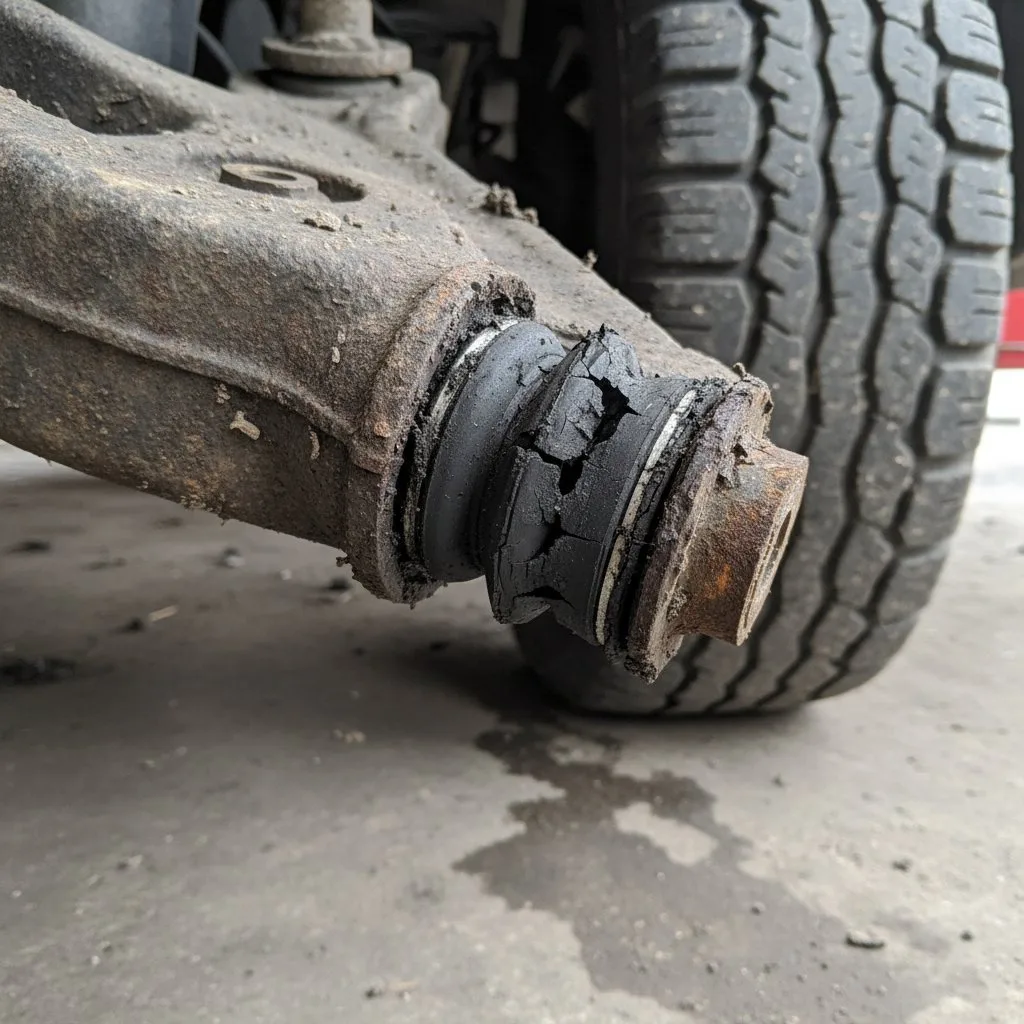
Image source: Bing (Web (fair-use with source credit))
The most common culprit is the front lower control arm bushing. The Model Y has a known weakness here. The rubber tears or separates from the metal, letting the arm move more than it should.
You'll hear a clunk that feels like it's right under your feet. Aggregate owner reviews indicate this often shows up between 40,000 and 70,000 miles.
A creak when turning usually means the top strut bearing is dry or worn. It's a small part and cheap to replace. Sway bar links are another frequent offender.
They connect the anti-roll bar to the control arm. The small ball joint inside wears out, producing a clunk or rattle on uneven roads.
If the noise only appears when the climate system runs, check for air conditioning compressor noises first. Suspension sounds don't stop and start with a button press.
Step 3: Inspect Like a Service Tech (Without a Lift)
You don't need a full workshop to find the worn part. You need a flashlight, a jack, and a pair of jack stands. If you're not comfortable lifting the car, skip the pry bar test and head straight to a shop.
If you're handy, this confirms the diagnosis.
Start with a visual inspection. Look at each control arm bushing for cracks, splits, or oily residue. A healthy bushing is clean and rubbery.
A worn one is discolored or torn. Grip the sway bar links and wiggle them. If you hear a click or feel free play, they're done.
Check the tires too. Uneven wear on the inner or outer edge points to an alignment issue, often caused by worn bushings. Feathering or scalloping means the suspension has shifted.
Wet spots around the strut housing? That's a sign of a fluid leak and usually means the damper is failing.
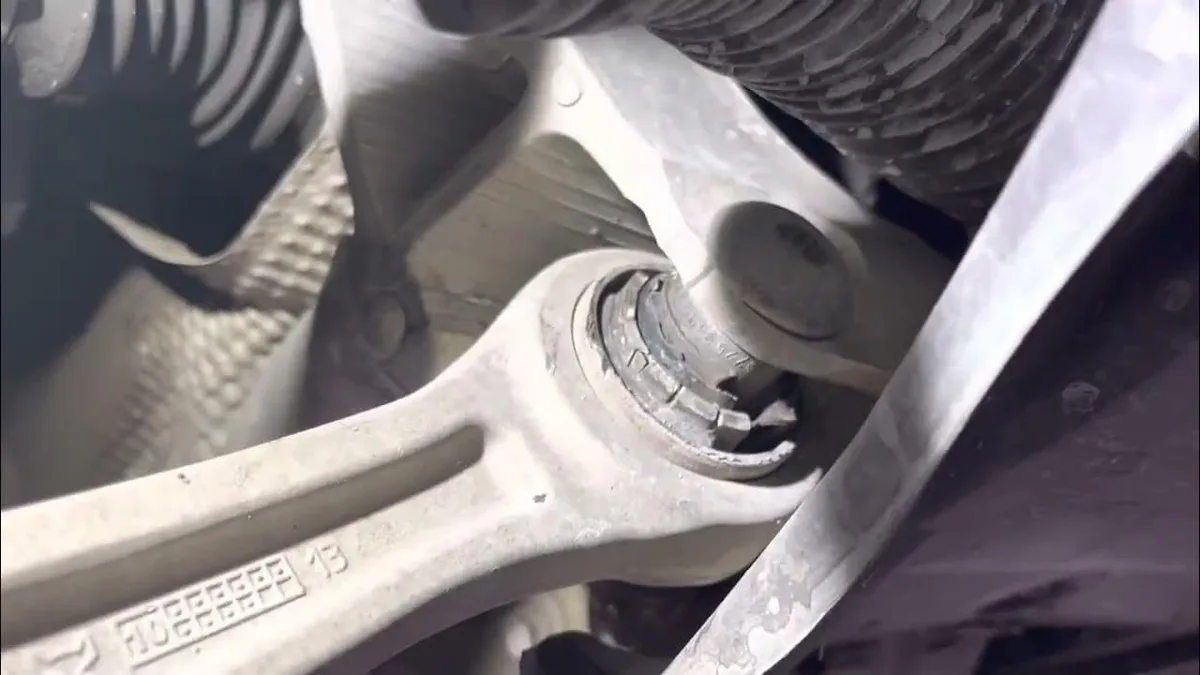
Image source: Bing (Web (fair-use with source credit))
If you have a pry bar, place it under the control arm and lift gently. Watch for movement in the bushing or ball joint. Any visible play means replacement is needed.
The Tesla owner's manual portal includes the official service manual with torque specs and removal steps.
You can also torque-check the sway bar link bolts. Loose bolts are more common than you'd think, especially after a previous repair. A quick check can save you from replacing parts that are still fine.
On later software versions, Tesla's Service Mode shows live damper readings for adaptive suspension models. It's a handy sanity check before you pull anything apart.
Step 4: Choose Your Repair Path
Once you know which part is bad, decide who fixes it. Your choice depends on warranty status, skill level, and how comfortable you are working near high-voltage components.
DIY repair. If you have floor jacks, torque wrenches, and a decent socket set, suspension work on the Model Y is doable. The official service manual walks you through each step. Control arms and sway bar links are straightforward.
The biggest risk is reusing torque-to-yield bolts. Never do that. You also need to support the car correctly to protect the battery and subframe.
Done suspension work before? This is a weekend project. Learning on a 4,400-lb EV?
Maybe not.
Independent EV shop. Out-of-warranty owners often pick an independent shop that specializes in electric vehicles. They have the tools and knowledge but charge less than Tesla. Expect to pay roughly 30 to 50 percent less on labor.
Make sure they use OEM-compatible parts and follow the torque specs from the service manual.
Tesla Service Center. If your Model Y is within the basic warranty, which covers 4 years or 50,000 miles, go to Tesla first. Suspension issues caused by defective parts are covered. They also handle software-side diagnostics and service bulletins.
Out of warranty, expect higher costs. An official control arm replacement can run several hundred dollars per side.
Here's a typical US pricing picture as of 2026:
- Sway bar link replacement: $80 to $180 per side
- Control arm replacement: $250 to $550 per side
- Top strut bearing replacement: $200 to $350 per side
- Full front suspension refresh: $800 to $1,500 at an independent shop
Factor in a wheel alignment after any control arm or bushing work. A poor alignment will eat new parts quickly. Budget another $100 to $200 for that.
If you hear a sharp clunk and the steering feels loose, don't drive it. That combination suggests a ball joint or tie rod failure. Have it towed and address any brake problems or other safety items at the same time.
Mistakes That Turn a Small Fix Into a Big Bill
The biggest mistake is the parts cannon. Replacing struts when the noise was a bushing costs hundreds for nothing. Match the part to the symptom before buying anything.
Reusing torque-to-yield bolts is another common error. These bolts are designed to stretch when tightened. Once removed, they must be replaced.
Reusing them risks a loose suspension joint that fails later.
Ignoring a small clunk is also costly. A worn bushing will keep flexing until it tears completely. Then the control arm knocks against the subframe and the alignment shifts.
You'll go through tires, and the repair bill grows.
Some owners also mistake tire noise for suspension noise. A rhythmic hum that fades when you touch the brakes is often a wheel bearing or squeaking brakes, not a control arm. Listen carefully before you order parts.
Finally, don't install lowering springs without upgrading dampers. The stock dampers can't handle the reduced travel. You'll get a harsh ride, premature wear, and new suspension noises within months.
Expert Tips for Keeping the Model Y Suspension Quiet Long-Term
Keep your tires at the recommended cold pressure. For the Model Y, that's around 42 psi depending on your wheel size. Underinflated tires beat up the suspension and create noise you'll chase for weeks.
Rotate tires every 6,000 to 8,000 miles or according to your service interval. Even wear keeps the ride quiet and extends the life of your control arm bushings.
Adjust your road habits. Slow down for speed bumps instead of hitting them square. Avoid potholes when you can.
Take driveway angles slowly so the suspension doesn't bind. These small changes cut stress on bushings and ball joints significantly.
In cold climates, a little silicone-based lubricant on the top strut bearings can quiet a morning squeak. Check your owner's manual for approved products. Don't use generic grease that can degrade rubber bushings.
Consider OEM rubber bushings over polyurethane. Polyurethane lasts longer but transmits more noise and vibration. For a daily driver, the quieter factory rubber is usually the better choice.
Noise Diagnosis Quick Reference
This table condenses the whole guide into one glance.
| If you hear… | Check this first | Action |
|---|---|---|
| Clunk over bumps | Front control arm bushings | Inspect for tears, replace if worn |
| Creak when turning | Top strut bearing | Grease or replace bearing |
| Squeak on cold mornings | Rubber bushings | Let it warm up, inspect for cracks |
| Click at full lock | CV joint or tie rod end | Stop driving, get professional help |
| Rattle on rough roads | Sway bar links | Torque check, replace if loose |
| Dull rear thud | Rear camber arm bushings | Inspect and replace bushing |
Small creaks and cold squeaks are low risk. You can drive on them while you plan a repair. Sharp clunks with a loose steering wheel, a wobble at speed, or a popping sound during turns are not.
Tow it to a shop and let a professional look first.
Frequently Asked Questions
Is suspension noise on a Tesla Model Y covered under warranty?
Yes, if the car is within the basic warranty. That's 4 years or 50,000 miles, whichever comes first. Tesla covers control arms, bushings, and links that fail under normal use.
Wear items like tires and brake pads are excluded. Describe the noise clearly when booking service.
How long do Tesla Model Y control arms last?
Most owners see control arm bushing wear between 40,000 and 70,000 miles. Rough roads, potholes, and aggressive driving reduce that number. Cold climates can crack the rubber faster.
Regular visual inspections help you catch wear before it turns into a loud clunk.
Can I drive with a clunking suspension?
A small clunk is usually safe for short trips, but it will get worse. Worn bushings cause uneven tire wear and alignment issues. If the noise comes with a loose steering feel or a vibration, stop driving.
A failing ball joint or tie rod can separate at speed. That's a serious safety risk.
Why does my Model Y squeak on cold mornings?
Rubber bushings harden in cold weather, causing a high-pitched squeak until they warm up. It usually fades after a few miles of driving. If the squeak stays or gets louder, check for a dry top strut bearing or a cracked bushing.
Both need replacement.
Will a wheel alignment fix suspension noise?
No. An alignment corrects tire angles, but it won't fix a worn bushing or a loose link. However, you should get an alignment after any suspension repair.
It prevents premature tire wear and keeps the new parts working as designed.